
 Request A Quote


How to determine the right lumen output for outdoor flood lighting
 FACEBOOK
 TWITTER
 LINKEDIN
Determining the ideal lumen count for outdoor flood lighting is the most critical step in ensuring your project provides both safety and large space illumination. In technical terms, lumens measure the total amount of visible light emitted by a source. Unlike the old watt-based system, which measured power consumption, lumen-based output planning focuses on actual performance. For a residential yard, you might only need a few thousand lumens to create a welcoming atmosphere, whereas an industrial compound or a sports field requires tens of thousands of lumens to achieve the high lux levels necessary for safe movement and competition.
The logic of selection depends on three variables: the scale of the area, the mounting height, and the intended purpose. As you lift a light fixture higher on a wall or pole, the light naturally dissipates over the distance, requiring a higher lumen count to maintain uniform illumination on the ground. By matching your fixture’s output to the specific task—whether it is general security, pathway guidance, or high-speed athletic play—you ensure the light is functional without being wasteful. Proper planning prevents the “black hole” effect of under-lighting and the aggressive glare of over-lighting, resulting in a professional, balanced environment that serves your specific outdoor needs year-round.
What lumens measure and why they matter outdoors
In the world of LEDs, the lumen definition is the only accurate way to judge a light’s power. While watts tell you how much electricity the fixture uses, lumens tell you the volume of light it produces. This distinction is vital for wide-area lighting because efficiency varies between different LED chips. Two different 50-watt flood lights can have wildly different lumen outputs, meaning one might be significantly brighter than the other despite using the same amount of energy.
Perceived lighting quality also depends on how these lumens are concentrated. Outdoors, you are competing with total darkness, so the raw output must be high enough to create a safe contrast. However, more is not always better; the goal of a professional layout is to provide enough lumens to reveal obstacles and motion without creating “blind spots” caused by excessive brightness. Understanding this relationship helps you choose fixtures that prioritize performance and visibility over simple power consumption.
How space size and purpose influence lumen needs
Your output planning must begin with a clear assessment of the space size. A small residential driveway typically requires 1,500 to 3,000 lumens to provide enough light for a driver to see the pavement and the garage door. In contrast, a large commercial parking lot or a service yard may require 10,000 to 20,000 lumens per fixture to ensure security cameras can capture clear footage and that employees can move safely between vehicles and buildings.
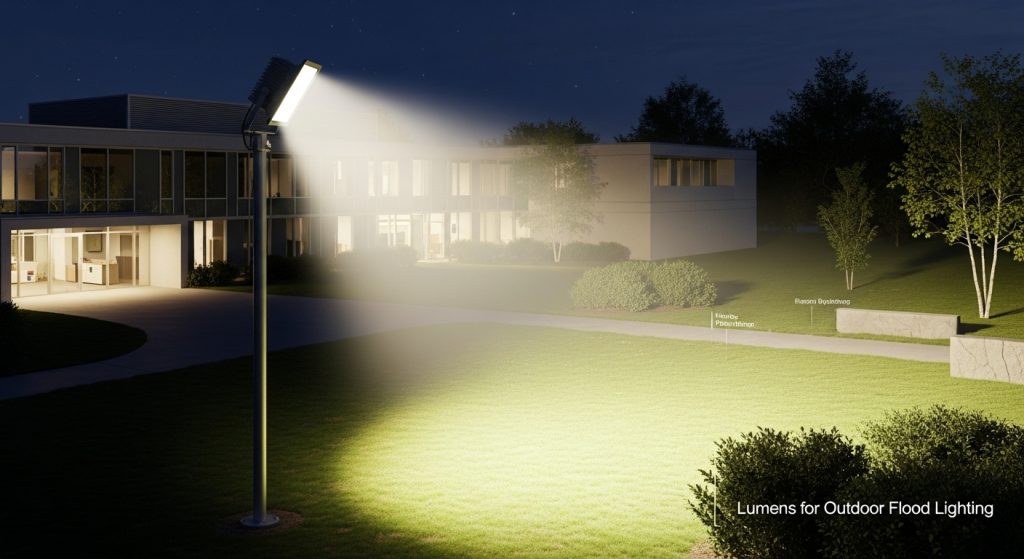
The lighting purpose also shifts the requirement. If the goal is “ambient” lighting for a backyard patio, a lower lumen range is preferred to maintain a relaxing atmosphere. For “security flood lighting,” you need a higher intensity that can startle intruders and illuminate dark corners. By categorizing your outdoor zones by their primary use, you can ensure each light is “sized” correctly—providing task-oriented brightness where it’s needed and softer illumination where comfort is the priority.
Where different lumen ranges work best in outdoor areas
To simplify your area illumination project, it helps to categorize your needs into standard output range buckets. Small, localized tasks like lighting a doorway or a garden path usually fall in the 500 to 1,500-lumen range. General yard and perimeter lighting for most suburban homes thrive between 2,000 and 5,000 lumens, providing a broad wash of light that covers the grass and the fence line without disturbing the neighbors.
For large open spaces such as industrial compounds, entry gates, or large rural properties, the requirements jump to 10,000 lumens or more. These high-output ranges are designed to “pierce” through the darkness over long distances. By matching the lumen count to the coverage categories of your property, you ensure you don’t over-invest in industrial-strength hardware for a small garden, nor do you leave a large warehouse yard in a dangerous, dim twilight.
How mounting height and spread change lumen requirements
The mounting height of your fixture acts as a natural “dimmer.” Due to the inverse square law, as you double the distance of the light from the ground, the intensity on the surface drops significantly. Therefore, a fixture mounted at 20 feet on a pole needs a much higher lumen count than the same fixture mounted at 10 feet on a garage wall to achieve the same brightness on the pavement.
Beam spread further complicates this. A narrow-beam light concentrates its lumens into a small “hot spot,” making it look very bright but covering very little ground. A wide-angle flood light spreads its lumens across a massive area, which reduces the perceived brightness at any single point. To achieve a professional result, you must adjust your output adjustment based on the height and the desired width of the beam. Coordinating these three factors—height, spread, and lumens—is the only way to guarantee a safe and well-lit environment.
Why high-output lights like COB flood lights matter outdoors
For projects requiring an intense, concentrated light source, COB lighting (Chip-on-Board) is the premier choice. These fixtures feature multiple LED chips mounted directly onto a substrate to create a single, high-intensity “point source.” This results in an incredibly high lumen density, allowing a relatively small fixture to produce a massive amount of light. This is ideal for situations where you need to project a beam over a long distance, such as lighting a tall building facade or a deep industrial yard.
The high lumen output of COB lights must be balanced with efficiency balance. Because they produce so much light from a small area, they can generate significant heat and cause intense glare if not managed with proper reflectors. However, for large-scale outdoor tasks where raw power and “punch” are the priorities, COB technology provides the necessary intensity to ensure even the darkest corners of a facility remain visible and secure.
How industrial and wide areas affect lumen decisions
In industrial illumination, the goal is often uniform coverage across a massive footprint. Large yards, shipping docks, and logistics centers cannot rely on a single light source. Instead, they require a grid of high-lumen fixtures to ensure there are no “shadow zones” between stacks of containers or parked trucks. The scale of these large area lighting projects often demands fixtures in the 20,000 to 50,000-lumen range.
When planning for an industrial compound, you must prioritize “lux” (light on the ground) over simple “point brightness.” If one light is too intense compared to the others, it creates a visual distraction that can lead to accidents. By distributing high-lumen fixtures at regular intervals and heights, you create a stable, predictable environment that supports heavy machinery operation and 24/7 security monitoring. Precision in lumen planning is the difference between a hazardous yard and a productive facility.
How sports and stadium lighting shifts lumen planning
Sports lighting represents the highest tier of output planning. Athletic fields and courts require extreme field visibility to ensure players can track fast-moving objects safely and that spectators can follow the action. This usually requires a massive jump in lumens—often exceeding 100,000 lumens for a professional stadium—coordinated with tall pole planning to minimize glare and shadows.
Uniformity is non-negotiable in sports. If one part of the court is significantly dimmer than another, it creates a “flicker” effect for the eyes as players move through the space. To prevent this, multiple high-output fixtures with specific beam angles are layered to create a seamless “cloud” of light. By matching the lumen target to the competition level—ranging from casual community tennis to broadcast-level soccer—you ensure the lighting system meets the rigorous standards of modern athletics.
Which mistakes occur when estimating outdoor lumen requirements?
One of the most frequent estimation errors is guessing the light’s power based on the physical size of the fixture. Many modern, compact LED floods can produce more light than bulky, older halogen units. Another common blunder is an output mismatch caused by ignoring mounting height. Buying a 3,000-lumen light for a 25-foot pole will result in a dim, unusable glow on the ground that fails to provide any real security or safety.
Planning flaws also occur when you don’t match the output to the use case. Over-lighting a small driveway can blind you every time you pull in, while under-lighting a perimeter fence makes your security cameras useless. To avoid these blunders, you should always refer to a lumen-per-square-foot guide or conduct a site survey at night with a powerful flashlight. By visualizing the light before you buy, you can ensure a professional result that is efficient, effective, and comfortable.
How to decide the right lumen range for your space
Before finalizing your output planning, a thorough environment assessment is necessary to ensure the hardware is a perfect match for your home or facility. Use this selection checklist as a final safeguard to ensure your outdoor space is safe and professional.
- Primary Task: Is the light for security, social ambiance, or high-speed sports?
- Area Size: Have you calculated the total square footage that needs coverage?
- Mounting Height: Are the fixtures high enough to provide a broad spread without output adjustment issues?
- Beam Angle: Do you need a narrow beam for distance or a wide wash for a yard?
- Glare Control: Is the lumen count modest enough to protect your visual comfort and your neighbors?
- Efficiency: Does the fixture offer a high lumen-per-watt ratio to save on energy?
- Maintenance: Is the light easily accessible if the high lumen output requires cleaning or adjustment?
How wide-area flood lights and sports lighting systems relate to lumen needs
Flood lights, high bay and sports lighting refer to the primary systems used for wide-area lighting. In professional output planning, these categories represent different tiers of lumen requirements. While a standard flood light might cover a driveway, sports lighting systems utilize massive lumen counts to ensure every inch of an athletic field is bright and safe for players.
How high bay tower lights connect to outdoor illumination scale
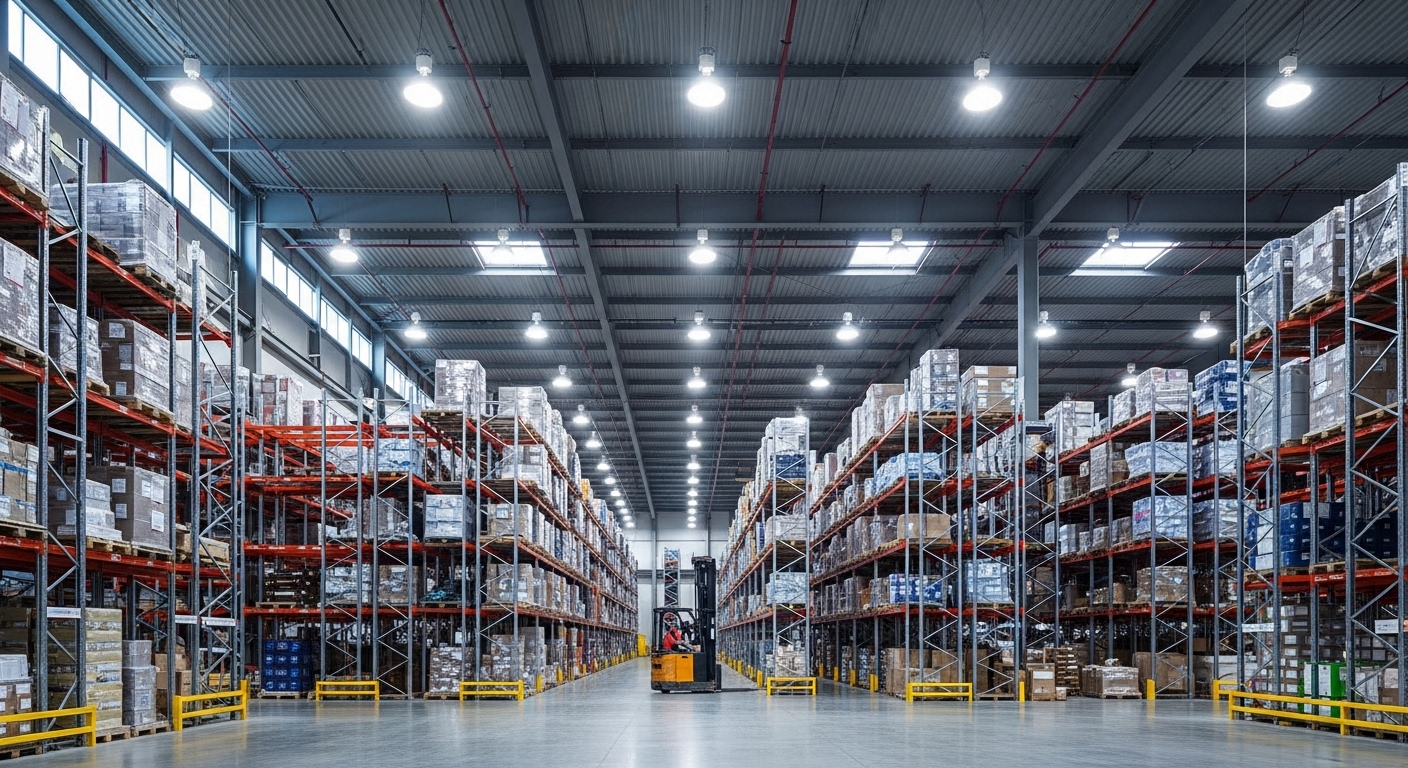
A Tower high bay light warehouse unit provides a similar performance scale to large outdoor flood lights. Both are designed for large space lighting where the source is mounted high above the ground. Understanding the parallel between indoor industrial heights and outdoor pole heights is the key to selecting the right lumen “punch” for any high-clearance environment.
Why COB flood lights are favored for high-output outdoor flood applications
Choosing an LED COB flood light is the most efficient way to achieve high lumen output. COB flood lighting is preferred for industrial yards and building facades because it provides a powerful, single-source beam. This technology is the top choice for projects where raw power and far-reaching visibility are the primary requirements for safety and security.
How sports light pole design influences outdoor lumen planning
The design of Sports light pole stadiums significantly dictates your output planning. Because field lighting requires extreme uniformity from great heights, the pole’s elevation and the fixture’s lumen count must be perfectly coordinated. Choosing the right pole height allows you to maximize the efficiency of your high-lumen flood lights while protecting the comfort of everyone on the field.
How ceiling and mounting height affect output needs in tall spaces
Following a High bay lights ceiling height guide is essential for any mounting height decision. The distance between the light and the floor is the primary variable in output adjustment. By matching your lumens to your height, you ensure the light reaches the ground with the necessary intensity to support industrial tasks or safe outdoor navigation.


- 10 Meters Lamp Post
- 10 Meters Pole
- 1000w Led Projector
- 100W LED Tunnel Light
- 12 Meters Lamp Post
- 12 Meters Pole
- 1200w Led Projector
- 15 Light Pole
- 1500w Led Projector
- 150W LED Tunnel Light
- 1800w Led Projector
- 2 In 1 Solar Flood Light
- 200w Led Tunnel Light
- 50w Led Tunnel Light
- 6 Meters Lamp Post
- 6 Meters Pole
- 8 Meters Lamp Post
- 8 Meters Pole
- 800w Led Projector
- 80w Led Tunnel Light
- Colourful Decorative Light
- Conical post
- Courtyard Lamp
- courtyard light
- courtyard lighting fixture
- Decorative Landscape Light
- Decorative road Light
- Flood Light For Courtyard
- Flood Light for Garden
- Flood Light For Outdoor
- Foot Led High Bay Lights
- high bay led lights 100w
- industrial lampshade
- industrial LED shed lights
- industrial magnifying glass with light
- Integrated Solar Flood Light
- led courtyard lamp
- led courtyard light
- led high bay light 100w
- LED Projector For Stadium
- Led UFO High Bay 150W 5000k
- Lighting Plants Mining Price
- Maintenance Free LED Street Light
- Pic Controlling Tunnel Light
- PLC controlling tunnel light
- Post Top Garden Light
- RGB Landscape Light
- Rgbw Decorative Light
- Smart Tunnel Light
- solar courtyard lamp
- solar courtyard light
- Solar LED Road Light
- Solar Street Light For 10 Meter Pole
- Solar Street Light For 12 Meter Pole
- Solar Street Light For 6 Meter Pole
- Solar Street Light For 8 Meter Pole
- Split Type Solar Flood Light
- Sporting Projector
- Stadium Led Projector
- Street Lighting Post
