
 Request A Quote


How Many Lumens Do I Need for Garden Pathway Lighting
 FACEBOOK
 TWITTER
 LINKEDIN
Choosing the right brightness level for your yard starts with understanding how light affects the human eye in dark environments. Lumens represent the total amount of light output visible to you, and getting this number right is the difference between a welcoming path and a hazardous one. When you plan garden pathways, you must account for the specific needs of your terrain, the width of the walkway, and the safety illumination required for different users. A low-intensity glow might work for a decorative flower bed, but a main walkway demands a more deliberate approach to visibility comfort.
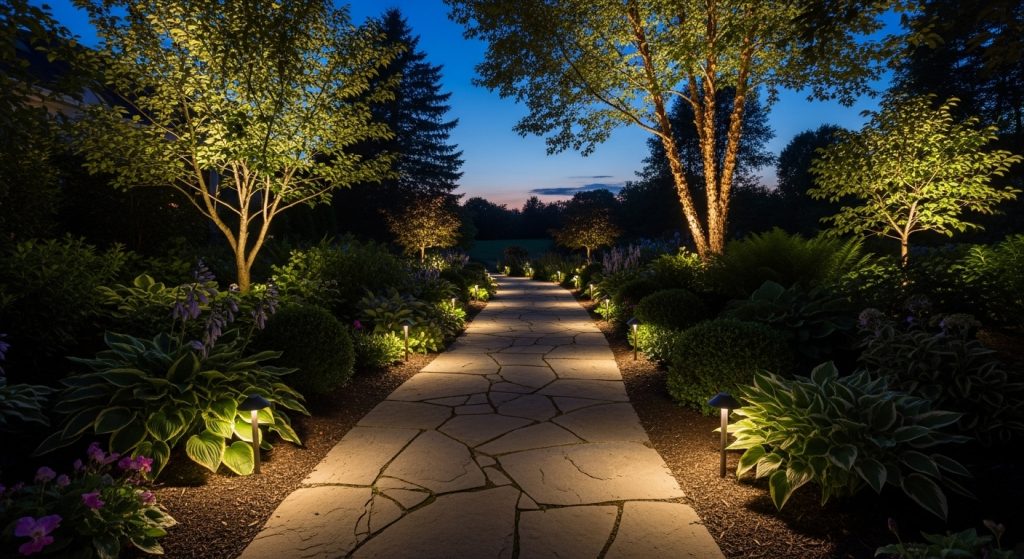
Proper lumen selection ensures that your home’s exterior remains navigable while maintaining the atmospheric charm of your landscape design. Planners often emphasize that lighting should guide the way without overwhelming the senses with excessive glare. By considering the physical scale of your yard and the intended usage of each route, you can pick a brightness range that provides security and beauty. This systematic approach transforms your night garden from a dark mystery into a safe, multi-layered environment that you can enjoy with complete confidence every night.
What do lumens measure and why are they important for pathways
In lighting design, a lumen quantifies the total amount of visible light emitted by a source. You might be used to buying bulbs based on wattage, but that only measures power consumption, which is less relevant with modern LED technology. By focusing on light output instead, you gain a precise understanding of how much brightness perception your eyes will experience on the path. This measurement is the only way to ensure that your hardware provides the visual clarity needed to spot obstacles or changes in terrain.
When you evaluate fixtures, checking the lumen rating helps you predict the distance the light will travel and how effectively it will illuminate the ground. It serves as the primary metric for safety and performance in any outdoor lighting project. Understanding this value allows you to compare different products accurately, ensuring your yard gets the light it deserves without wasting energy on fixtures that underperform.
Why garden pathways require different lumen levels than other outdoor areas
Pathways differ from other outdoor zones because they require a close-range, high-precision light consistency. Unlike a floodlight that covers a massive area from high above, your path lights are usually close to your feet, making visual comfort a top priority. If the lumen level is too high at this low elevation, you will struggle with blinding glare that makes it harder to see the surrounding garden.
Proper pathway safety relies on a soft, steady glow that leads the eye along the route rather than distracting it with intense hot spots. You want to avoid deep, dark shadows that can hide tripping hazards like roots or loose stones. By selecting a lumen range specifically for foot traffic, you maintain the relaxing mood of your backyard while providing the safety illumination needed for guests and family. This tailored approach respects the natural darkness of the evening while giving you the confidence to move around your property securely.
How pathway width influences the needed lumen output
The physical size of your walkway is a major factor in determining your final brightness needs. A narrow, two-foot garden trail only requires a small coverage area, meaning you can achieve great results with a low lumen count. In these intimate settings, keeping the light soft helps maintain the garden scale and prevents the lighting from feeling aggressive.
However, if you are lighting a wide, five-foot stone promenade, you need a higher light output to ensure the illumination reaches all the way across the surface. Ensuring a uniform brightness from edge to edge prevents the “islands of light” look where only the very center of the path is visible. Planners often recommend that as your pathway scale grows, your lumen count should increase to compensate for the larger surface area. By matching the brightness to the width of the path, you create a professional and safe environment where the entire walking surface is clear and well-defined for anyone using the route.
How material and surface reflectivity affect how many lumens are needed
The color and texture of your path material change your perception of brightness significantly. Darker surfaces like mulch, aged wood, or dark brick have high light absorption, meaning they soak up the rays and appear much dimmer to your eyes. To maintain safety on these paths, you often need to select a higher lumen output to overcome the lack of surface reflectivity.
On the other hand, light-colored pavers, concrete, or white gravel bounce the light back toward you, making a low-lumen fixture feel much more powerful. This perceived output is a vital part of your planning process, as it allows you to save on energy if your materials are naturally reflective. You must account for how the ground “swallows” or “throws” the light when deciding on your final numbers. If you ignore these material differences, you may end up with a path that looks murky and dangerous, even if you followed a generic lumen guide for residential yards.
Why color temperature can influence perceived brightness on pathways
The “warmth” or “coolness” of your bulbs affects the visual response and overall perception adjustment of your lighting layout. Cooler lights with high color temperature, such as those around 4000K, often appear brighter and sharper to your eyes even if the lumen count is the same as a warmer bulb. This crisp light can improve visual clarity for security but might feel too clinical for a relaxing backyard.
Warmer tones, like a golden 2700K, provide a softer look that many homeowners prefer for creating a cozy ambiance. However, because warm light feels less intense, you might choose a slightly higher lumen level to achieve the same feeling of safety on a dark night. Balancing the tone with the brightness allows you to customize the atmosphere of your garden to match your home’s architecture. By understanding how color influences your sight, you can fine-tune the lumens to ensure that the path is both safe to walk and beautiful to look at.
How lumens connect with spacing and number of fixtures
Your choice of lumens is inseparable from your fixture spacing strategy. If you choose fixtures with a high lumen count, you can often place them further apart because the light “reaches” further across the ground. However, this can sometimes lead to an uneven look with intense bright spots and dark gaps. Most designers recommend using more fixtures with a lower lumen output to achieve better light uniformity along the entire route.
Proper coverage mapping involves ensuring that the pools of light overlap just enough to create a seamless path without any black holes. If you want a minimalist look with fewer poles, you must ensure each one is powerful enough to bridge the distance to the next light. By coordinating the brightness of each unit with the distance between them, you create a professional lighting plan that provides a safe and steady guide for your footsteps through the yard.
What practical lumen ranges work for common garden pathway situations
Matching your brightness levels to the specific usage context of your yard ensures that you do not over-design or under-light your home. For a quiet, decorative path used only for occasional strolls, 100 to 150 lumens provide a subtle comfort lighting that respects the night environment. If the path leads to a main entry where you carry groceries or welcome guests, you should aim for 200 to 300 lumens to ensure maximum clarity and security.
Shared family routes that children or elderly members use often benefit from a more consistent, higher-output glow of around 300 to 400 lumens. This hierarchy of light allows you to prioritize safety in high-traffic zones while keeping the rest of your garden feeling peaceful and secluded. By varying the intensity based on how you move through your property, you create a smart system that puts the light exactly where it is needed most for your daily life.
What checklist should be completed before finalizing lumen selection
Before you finalize your hardware selection, a thorough light planning review is necessary to ensure your choices fit the reality of your site. This selection checklist acts as your final validation before installation, helping you avoid common errors that lead to poor visibility or wasted energy. By checking the physical and environmental traits of your paths, you can buy your fixtures with absolute certainty.
- Measure the exact width of your garden pathways to determine the required light spread.
- Evaluate the color of your path surface to account for light absorption or surface reflectivity.
- Confirm that your chosen post height allows the lumens to reach the walking surface effectively.
- Select a color temperature that aligns with the visual comfort of your home’s exterior.
- Mark out the distance between fixtures to ensure there are no dark gaps in your coverage mapping.
- Identify high-risk areas like stairs or intersections that need extra safety illumination.
- Check for sunlight exposure if you are planning on using solar-powered fixtures to maintain output.
What are garden post top landscape lighting systems that provide pathway lighting
Garden post top landscape lighting units are the primary choice for area-wide garden lighting. These elevated post top fixtures sit high enough to push light over low-level plants, making them far more effective for long paths than small ground spots. They provide a steady, reliable glow that serves as the backbone of a safe and beautiful outdoor lighting design for your property.
How do solar landscape lamp posts serve garden pathways without wiring
A Solar landscape lamp post offers incredible installation flexibility because it uses solar power to stay bright without any wires. You can place these poles in the furthest corners of your property without ever digging a trench through your lawn. They are an eco-friendly and cost-aware way to ensure that even remote garden paths remain safe and visible after the sun has set.
How do aluminum 3M and 4M garden lights fit into pathway planning
Using Aluminum 3m 4m garden light poles allows for a wide lumen distribution from an elevated position. At a post height of 3 or 4 meters, the light spreads much further, meaning you can use higher-output fixtures to cover a larger section of the path with a single pole. Their rust-proof construction ensures they remain a permanent and attractive part of your yard for many years.
How does sunlight availability affect performance of solar garden lights on pathways
The effectiveness of solar pathway lights is entirely dependent on sunlight exposure for daily solar charging. The panels must receive several hours of direct sun to ensure the battery has the power to maintain its light output through the entire night. If your path is under a heavy tree canopy, you may need to choose a fixture with a larger battery to ensure it stays bright during the winter months.
Why garden lights color temperature matters for perceived brightness and comfort
Choosing the right Garden lights color temperature is essential for visual comfort and perceived brightness. While a cooler temperature might appear sharper to your eyes, a warmer tone often feels more welcoming for a residential path. Understanding how color affects the look of your yard helps you balance the practical need for safety with the emotional goal of a relaxing garden environment.



- 10 Meters Lamp Post
- 10 Meters Pole
- 1000w Led Projector
- 100W LED Tunnel Light
- 12 Meters Lamp Post
- 12 Meters Pole
- 1200w Led Projector
- 15 Light Pole
- 1500w Led Projector
- 150W LED Tunnel Light
- 1800w Led Projector
- 2 In 1 Solar Flood Light
- 200w Led Tunnel Light
- 50w Led Tunnel Light
- 6 Meters Lamp Post
- 6 Meters Pole
- 8 Meters Lamp Post
- 8 Meters Pole
- 800w Led Projector
- 80w Led Tunnel Light
- Colourful Decorative Light
- Conical post
- Courtyard Lamp
- courtyard light
- courtyard lighting fixture
- Decorative Landscape Light
- Decorative road Light
- Flood Light For Courtyard
- Flood Light for Garden
- Flood Light For Outdoor
- Foot Led High Bay Lights
- high bay led lights 100w
- industrial lampshade
- industrial LED shed lights
- industrial magnifying glass with light
- Integrated Solar Flood Light
- led courtyard lamp
- led courtyard light
- led high bay light 100w
- LED Projector For Stadium
- Led UFO High Bay 150W 5000k
- Lighting Plants Mining Price
- Maintenance Free LED Street Light
- Pic Controlling Tunnel Light
- PLC controlling tunnel light
- Post Top Garden Light
- RGB Landscape Light
- Rgbw Decorative Light
- Smart Tunnel Light
- solar courtyard lamp
- solar courtyard light
- Solar LED Road Light
- Solar Street Light For 10 Meter Pole
- Solar Street Light For 12 Meter Pole
- Solar Street Light For 6 Meter Pole
- Solar Street Light For 8 Meter Pole
- Split Type Solar Flood Light
- Sporting Projector
- Stadium Led Projector
- Street Lighting Post
