
 Request A Quote


Garden Post Top and Landscape Lighting Solutions
 FACEBOOK
 TWITTER
 LINKEDIN
When you step into your backyard after the sun goes down, the quality of your outdoor illumination dictates whether the space feels welcoming or off-limits. Garden post top and landscape lighting are much more than just pretty fixtures; they are functional tools that define the boundaries and mood of your home’s exterior. By integrating these elements into your landscape design, you transform dark corners into usable living areas while significantly boosting pathway safety. It is about creating a balance where light guides your footsteps without overwhelming the natural beauty of the greenery.
Correct hardware selection ensures your garden remains accessible and secure long after twilight. While decorative lighting adds a layer of charm and personality, its primary job is to provide clear sightlines and highlight the textures of your plants and stonework. Poorly planned setups often lead to glare or patches of pitch black, which can make walking through the yard a hazard. As you approach your lighting plan, focusing on how different heights and styles interact with your space allows you to build a reliable and beautiful environment. These solutions work together to extend your living space outdoors, making your garden a safe, vibrant place for relaxation and gathering.
What is the role of post top lights in garden and landscape lighting
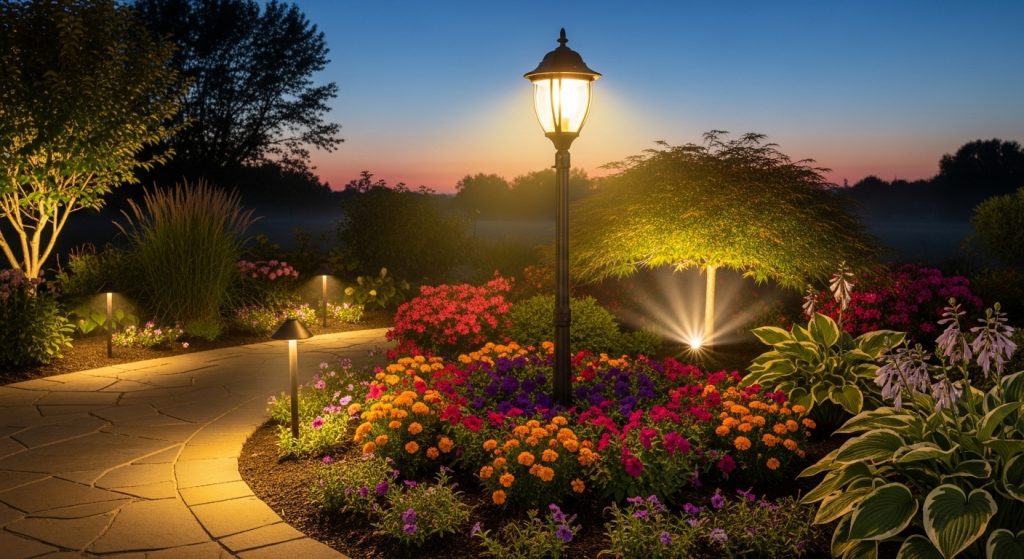
Post top lights act as elevated beacons that provide broad, high-level illumination for your yard. Usually installed on pillars or poles, they are essential for boosting outdoor visibility across wide areas. Their position allows them to cast a gentle wash of ambient light that guides people along driveways or main entries.
These fixtures are the primary choice when you need a reliable source of post top lighting that covers more ground than low-level path lights. Because they sit higher, they push light over obstacles like shrubs, ensuring large sections of your property do not fall into shadow. You will often find them marking the start of a walkway where they serve as both a visual landmark and a practical safety feature. The height of these units gives you a clear sense of space. By providing a consistent glow from above, they help your eyes adjust to darkness. Placing them at key intersection points creates a network of light that makes the outdoor area feel open and secure.
How do landscape lights differ from garden post top lights
While post top units focus on area-wide brightness, landscape lights are about precision. These ground-mounted fixtures focus on specific plants, walls, or features. Using light layering helps you avoid the flat, washed-out look that comes from using only one type of fixture. Ground-level spots or well lights create depth by casting light upward, which contrasts with the downward or outward glow of post tops.
The functional differences involve how much ground you cover. Landscape lighting usually has a tighter beam to highlight a tree or a fountain. Post top lights, however, aim for a broad circle of light to make the area walkable. Combining both allows for a design balance where you have enough light to move around safely, but also enough shadows and highlights to keep the garden looking interesting. If you only used high poles, your yard would look like a parking lot. If you only used ground spots, you would struggle to see the path in front of you. By mixing both, you control the focal points and the general brightness simultaneously.
Why lighting height and placement matter in garden environments
The lighting height you choose dictates how far the light travels before it hits the ground. If you place a post top too high, the light might scatter too much, losing its intensity by the time it reaches your feet. If it is too low, you might deal with blinding glare every time you look in that direction. Matching the height to the scale of your garden ensures that the light distribution feels natural and comfortable. A small, intimate garden needs lower posts, while a sprawling lawn can handle taller, more powerful poles.
Placement is just as vital for visual comfort. You want to avoid placing lights where they create long, confusing shadows across stairs or uneven ground. Think about the sightlines from your windows and your porch; you don’t want a bright bulb staring back at you. Proper placement means the light source is often hidden or shielded, so you see the effect of the light rather than the bulb itself. This careful positioning helps you navigate the yard without eye strain, ensuring that every step you take is well-lit and predictable.
How solar and wired garden lights change installation and use
Your choice between solar lighting and wired systems depends heavily on your installation planning. Wired lights offer a constant, reliable power source that works regardless of the weather. They provide a steady brightness all night long, which is a major plus if you prioritize security. However, they require digging trenches and running cables, which can be a big job if your garden is already finished.
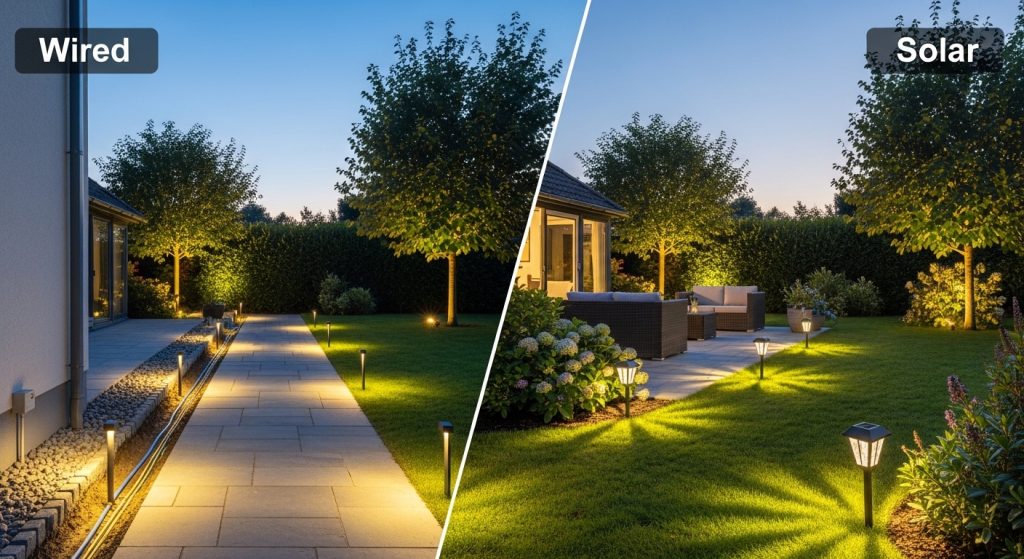
Solar lights are the ultimate choice for ease. You can push them into the ground or mount them on a post in minutes without any electrical work. They charge during the day and turn on at dark, which is great for remote corners where power isn’t available. The trade-off is that their performance depends on solar charging and weather. A cloudy day might mean a dim light by midnight. When you plan your layout, think about where your power outlets are and which areas get the most sun. Mixing both types often works best, using wired lights for main paths and solar units for decorative spots further away.
How brightness levels should be chosen for garden paths and features
Picking the right brightness levels is a delicate task. You want enough light for pathway lighting so no one trips, but you don’t want your garden to feel like a high-security zone. For walking paths, a lower, softer light is usually better because it allows your eyes to keep their night vision. Over-illuminating an area can actually make the surrounding dark spots feel even darker and more intimidating.
Focus on light comfort by choosing fixtures that direct their glow downward toward the ground. For decorative features, like a large oak tree or a stone wall, you can use slightly higher intensity to draw the eye. The goal is to create a hierarchy of light where the path is clear but the features stand out. This approach prevents a “wall of light” effect and keeps the garden feeling cozy. By selecting different lumen levels for different zones, you guide people through the space naturally, using light to show them exactly where to look and where to walk.
How color temperature influences the look and feel of garden lighting
The color temperature of your bulbs changes the entire mood of your yard. Warm lighting, usually around 2700K to 3000K, gives off a golden glow that feels cozy and inviting. It is the best choice for social areas like patios or fire pits because it mimics the feel of a sunset or a candle. Warm tones also tend to look more natural against wood and stone, creating a relaxing outdoor ambiance.
Cooler light, around 4000K or 5000K, has a crisp, blueish tint. While it is great for security or work areas because it helps you see detail, it can feel a bit harsh in a garden setting. It can make plants look slightly ghostly or artificial. Most people find that staying on the warmer side of the scale creates a more harmonious look with the natural environment. By keeping your color tones consistent across the yard, you avoid a messy, mismatched look. Choosing the right “warmth” ensures your garden feels like an extension of your home’s interior rather than a sterile commercial space.
What common mistakes reduce the effectiveness of garden lighting solutions
One of the most frequent design mistakes is a lighting imbalance, where one area is flooded with light while another is pitch black. This creates a “glare-and-shadow” effect that is hard on the eyes. Another blunder is placing solar lights in the shade of large trees. Without enough sunlight exposure, those fixtures will never reach their full potential, leading to performance issues and dim paths.
You should also watch out for “light pollution” where your fixtures point toward the sky or your neighbor’s house. Using unshielded bulbs is a common error that ruins the night sky and causes discomfort. Many people also forget about maintenance; if you don’t clean the lenses or trim the grass around low-level lights, their effectiveness drops quickly. Avoiding these blunders starts with a slow walk through your yard at night to see where the gaps are. A little bit of careful adjustment goes a long way in making a simple lighting setup look professional and well-thought-out.
What should be reviewed before finalizing a garden lighting plan
Before you buy your fixtures, a quick layout review ensures you aren’t wasting money on lights you don’t need. You should walk through your garden and mark the spots that actually need light for safety and the ones that just need a decorative touch. This lighting strategy helps you stay on budget while getting the best results.
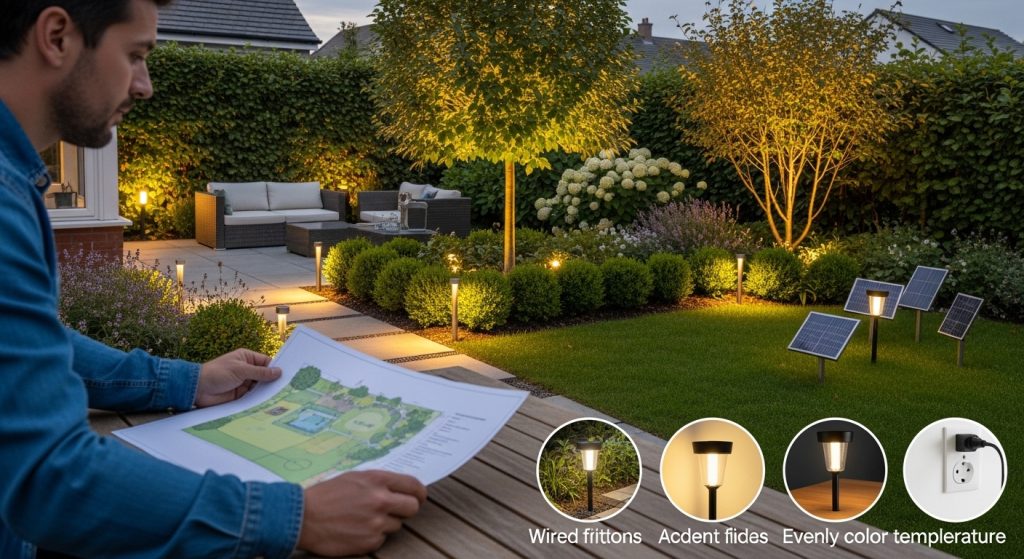
Use this planning checklist to finalize your project:
- Identify the main walking paths that need consistent pathway safety.
- Decide which trees or architectural features you want to highlight for aesthetics.
- Check the sun levels in different parts of the yard to see if solar is a viable option.
- Locate your outdoor power outlets if you plan on using a wired system.
- Verify that your chosen heights won’t cause glare for people sitting on the patio.
- Ensure all fixtures have the same color temperature for a unified look.
- Plan for future growth; make sure your lights won’t be swallowed by bushes in a year.
What are solar garden post top lights and how do they work
Solar garden post top light fixtures are self-contained units that use built-in panels to gather energy. These post top fixtures turn on automatically at dusk, using solar power stored in internal batteries. They are the perfect solution for adding light to the end of a driveway or a garden entrance where running electrical wires would be too expensive or difficult.
What types of outdoor garden light posts are commonly used
Choosing from different Outdoor garden light posts allows you to match the style of your home. These garden posts range from modern aluminum designs to classic wrought-iron styles. The right outdoor fixtures provide the physical height needed to push light over low-growing plants, ensuring that your paths stay visible even as your garden grows throughout the season.
How do solar landscape lamp posts support sustainable garden lighting
Using a Solar landscape lamp post is a great way to embrace renewable energy in your backyard. These systems provide solar landscape lighting without increasing your monthly power bill. Because they don’t rely on the grid, they continue to work even during power outages, keeping your property secure and well-lit while reducing your environmental footprint.
Why are aluminum garden light posts used in 3m and 4m heights
Aluminum 3m 4m garden light poles are popular because they are lightweight and rust-proof. At a post height of 3 or 4 meters, these aluminum posts are tall enough to light up large gathering areas or long driveways. Their durability makes them a smart long-term investment for any weather, as they won’t corrode or peel like cheaper materials might over time.
How should garden lamp post height be selected for different areas
Following a Garden lamp post height guide helps you maintain the correct garden scale. A lamp post height that is too tall can feel overwhelming in a small courtyard, while a short post might get lost in a large, open lawn. Matching the height to the surrounding trees and structures ensures that the light spreads effectively without looking out of place.
How do solar and wired post lights compare for garden use
When you look at Solar vs wired post lights, the choice usually comes down to your power source needs. A solar vs wired comparison shows that while solar is easier to install, wired lights offer unmatched reliability and brightness. For main security areas, wired is often best, while solar is fantastic for adding a decorative touch to the further reaches of your property.
Why a landscape lighting layout plan is important before installation
Creating a Landscape lighting layout plan prevents you from over-lighting your yard. By defining different lighting zones, you can ensure that your layout planning covers all the important paths without creating light pollution. A good plan helps you visualize where the shadows will fall, allowing you to adjust your fixtures before you start digging any holes.
How many lumens are needed for garden pathway lighting
The Garden pathway lighting lumens guide suggests that you don’t need massive light intensity for safety. Usually, a lower pathway lumens count—around 100 to 200—is enough to show the way without causing glare. Keeping the brightness low on paths helps maintain a relaxing atmosphere and prevents the garden from feeling like a brightly lit stadium at night.
How sunlight availability affects solar garden lighting performance
For Solar garden lights sunlight is the most important factor. Solar charging requires direct sunlight exposure for several hours a day to keep the lights bright all night. If you place your fixtures under a porch or deep in the woods, they will struggle to perform, leading to dim lights that turn off shortly after the sun goes down.
How does color temperature change the appearance of garden lights
The Garden lights color temperature determines the final garden ambiance. Choosing between warm vs cool light is the fastest way to change the feel of your outdoor space. Warmer tones are almost always preferred for social areas, while cooler tones can be used sparingly for high-security zones where detail is more important than mood.



- 10 Meters Lamp Post
- 10 Meters Pole
- 1000w Led Projector
- 100W LED Tunnel Light
- 12 Meters Lamp Post
- 12 Meters Pole
- 1200w Led Projector
- 15 Light Pole
- 1500w Led Projector
- 150W LED Tunnel Light
- 1800w Led Projector
- 2 In 1 Solar Flood Light
- 200w Led Tunnel Light
- 50w Led Tunnel Light
- 6 Meters Lamp Post
- 6 Meters Pole
- 8 Meters Lamp Post
- 8 Meters Pole
- 800w Led Projector
- 80w Led Tunnel Light
- Colourful Decorative Light
- Conical post
- Courtyard Lamp
- courtyard light
- courtyard lighting fixture
- Decorative Landscape Light
- Decorative road Light
- Flood Light For Courtyard
- Flood Light for Garden
- Flood Light For Outdoor
- Foot Led High Bay Lights
- high bay led lights 100w
- industrial lampshade
- industrial LED shed lights
- industrial magnifying glass with light
- Integrated Solar Flood Light
- led courtyard lamp
- led courtyard light
- led high bay light 100w
- LED Projector For Stadium
- Led UFO High Bay 150W 5000k
- Lighting Plants Mining Price
- Maintenance Free LED Street Light
- Pic Controlling Tunnel Light
- PLC controlling tunnel light
- Post Top Garden Light
- RGB Landscape Light
- Rgbw Decorative Light
- Smart Tunnel Light
- solar courtyard lamp
- solar courtyard light
- Solar LED Road Light
- Solar Street Light For 10 Meter Pole
- Solar Street Light For 12 Meter Pole
- Solar Street Light For 6 Meter Pole
- Solar Street Light For 8 Meter Pole
- Split Type Solar Flood Light
- Sporting Projector
- Stadium Led Projector
- Street Lighting Post
