
 Request A Quote


Can PV + LED Cut costs, Reliably? High End Lighting Manufacturers 2026 Explained
 FACEBOOK
 TWITTER
 LINKEDIN
Can PV + LED cut costs, reliably? In 2026, High End Lighting Manufacturers face a decisive test. Efficiency claims are common, but proof is rare. What happens when solar and LEDs meet rain, aging batteries, and real construction budgets? We examine architectures, control strategies, and total cost. The verdict may surprise decision-makers.
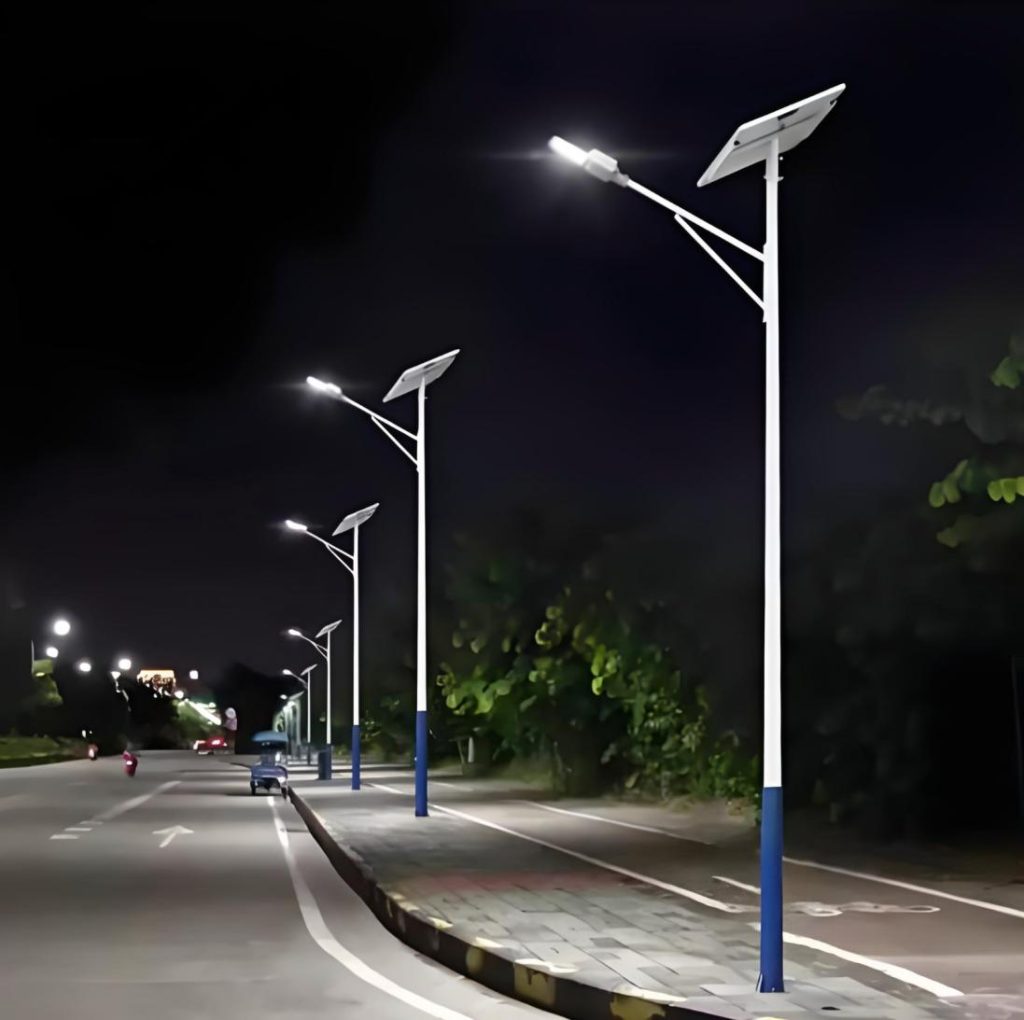
How PV + LED Cuts Costs Without Cutting Corners
PV (photovoltaic) + LED is no longer experimental. Mature LED optics reduce power demand. Modern solar modules turn daylight into dependable energy. Smart controllers keep systems balanced when weather changes. The result is clear: fewer kilowatt-hours bought from the grid, lower installation complexity, and consistent light at night.
As a manufacturer focused on LED and solar since 2011, Dawn Lighting sees the same pattern across projects: when you match LED loads to PV and storage correctly, total cost of ownership drops. When you choose the right configuration – off-grid or grid-connected – reliability stays high even through rainy seasons and grid outages.
LED luminaires today reach 130 – 170 lm/W. Compared to legacy HPS at 70 – 90 lm/W, you get the same light with 40 – 60% less power. Add solar generation and you remove most or all grid dependence. The result is a leaner budget over the asset life.
• Lower operating expenditure: A 40 W LED running 12 hours/night uses about 175 kWh/year. At $0.12/kWh, that is $21 per pole per year – already low. PV can offset this.
• Civil works savings: Trenching and cable can run $50 – 150 per meter depending on soil and restoration. Avoiding 1 km of trench can save roughly $100,000 in many projects.
• Predictable maintenance: LEDs typically offer L70 at up to 100,000 hours. At 12 hours/day, that is about 22 years to L70. LiFePO4 batteries deliver 3,000 – 5,000 cycles at 70 – 80% depth of discharge – 8 – 12 years with proper control.
• Resilience dividend: When grids fail, off-grid poles stay on. This reduces emergency call-outs and safety risks around intersections, campuses, and industrial gates.
Two Paths: Off-Grid and Grid-Connected
Off-Grid Solar Street Lights
These systems work independently from the utility grid. Solar panels charge batteries by day; stored energy powers LEDs at night. There are no cables to trench or pull. That makes off-grid a strong fit for rural roads, parks, perimeters, and locations without grid coverage.
An intelligent control system manages charging and discharging. It protects batteries and adjusts output to weather, securing lighting through consecutive rainy days. The big advantage is energy independence: zero grid outages and no electricity bills for those poles. Maintenance is predictable – focused on batteries and periodic inspection.
Grid-Connected Solar Street Lights
These systems connect to the public grid. The PV array supplies daytime energy and can feed excess back to the grid. At night or in low-sun seasons, the grid tops up any shortfall. This is a practical choice for urban corridors and campuses where a grid is present and billing or incentive frameworks allow energy feedback.
In short:
• Off-grid = zero purchased kWh for each light, plus no trenching.
• Grid-connected = minimal net grid kWh over the year, with the grid acting as a buffer for reliability.
How High End Lighting Manufacturers Build Reliability
Reliability is not an accessory; it is designed in. At Dawn Lighting, we integrate the whole chain – poles, PV systems, and lithium batteries – across three factories. This gives precise control over matching LED power, PV area, and storage capacity.
Our Approach
• R&D to tune LED drivers and optics for lower wattage without losing brightness.
• Intelligent control to maximize battery life and maintain night hours in bad weather.
• Consistent manufacturing so every component fits and performs together.
Since 2011, we have delivered 500+ international projects. That experience matters when you size a system for monsoon climates versus arid zones, or when you choose between off-grid autonomy and grid-connected energy feedback. Being part of the Dawn Group gives us the scale for mass production and the partnerships to deliver on time.
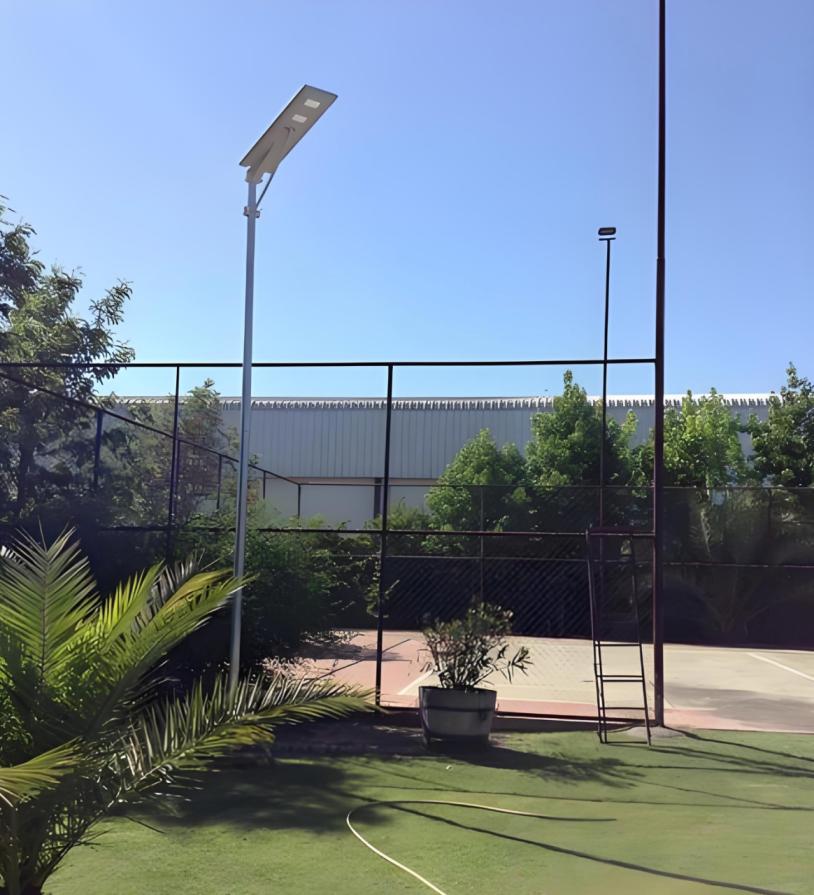
Where the Savings Actually Come From
It helps to separate one-time costs from ongoing costs.
Off-Grid Cost Logic
• Installation: No trenching, no long cable runs, and no transformer tap. The pole, PV, LED, and battery arrive as an integrated system. For dispersed sites, avoiding groundworks can shift the budget significantly.
• Energy: Annual purchased energy per pole = 0 kWh. If your tariff is T per kWh, your yearly bill for those poles is 0 × T. That is bill certainty.
• Maintenance: Intelligent control smooths charge/discharge and extends battery service life. Maintenance centers on scheduled battery checks or replacements rather than emergency call-outs.
Grid-Connected Cost Logic For High End Lighting Manufacturers
• Energy balancing: Annual net bill depends on the difference between PV production and LED consumption. If PV ≥ load over the year, net purchased kWh approaches zero. If PV < load, you only pay the gap. When feed-in is allowed, surplus generation offsets costs further.
• Resilience: The grid supplies power when the sky is dark for days, so lighting hours stay stable. You can tune PV size to meet energy goals without oversizing storage.
• Simple logic, reliable outcome: Off-grid removes the energy bill and many civil works. Grid-connected turns the grid into a safety net while PV cuts the peak of your bill.
Reliability In Rainy Weeks: Sizing That Works
Reliability is engineered. Here is a simple sizing logic for an off-grid pole that must ride through three rainy days.
• Nightly load: 40 W × 12 h = 0.48 kWh
• Three-day autonomy: 0.48 × 3 = 1.44 kWh usable
• Battery sizing (80% depth of discharge): 1.44 / 0.8 ≈ 1.8 kWh nominal
• Practical pick: ~1.9 – 2.0 kWh LiFePO4 pack
Now PV sizing for the worst month:
• Energy to recover daily: 0.48 kWh ÷ 0.85 (charging losses) ≈ 0.56 kWh
• Worst-month sun hours: assume 3.5 peak sun hours
• Panel size: 0.56 / 3.5 ≈ 0.16 kWp → choose ~160 – 200 Wp
Add intelligent control to stretch runtime:
• Time-based dimming: 100% for first 4 hours, 60% in low traffic hours → ≈ 25 – 30% energy saving
• Motion boost: raise to 100% only when needed
• State-of-charge logic: avoid deep discharge; protect for battery life
With this setup, the pole maintains safety lighting in continuous rain and returns to full output when the sun appears. LiFePO4 at 80% depth of discharge yields 3,000+ cycles. Reducing average depth by 20% with smart dimming can extend life into the 10 – 12 year range. Clean panels twice a year; this often preserves 5 – 10% yield that would otherwise be lost to dust.
What Customers Get With Dawn Lighting
• Integrated Supply Chain: Poles, PV, and lithium batteries from our three factories, reducing interfaces and delays.
• Project Design Ability: We right-size PV, storage, and LED load to your climate and lighting levels. Fewer surprises, stronger performance.
• Intelligent Control: Battery charging/discharging is managed for durability and night assurance, even through continuous rainy weather.
• Energy Independence Options: Choose off-grid for resilience and no utility charges, or grid-connected to optimize lifecycle cost and reliability.
• Proven Delivery: 500+ deployments delivered globally since 2011 in diverse terrain and policy settings.
• Mass Production Support: Grow from proof-of-concept to city-scale with consistent processes, quality, and timelines.
How to Choose: A Beginner’s Sequence
• Define Light Levels: Verify lux targets and nightly duration. Efficient LEDs with engineered optics achieve requirements at lower power.
• Pick The Path: Off-grid for remote or trench-constrained sites. Grid-connected where grid conditions are stable and energy feedback is allowed.
• Size For Weather: Evaluate solar resource and consecutive low-insolation days. Match PV sizing and storage to the longest downtime scenario.
• Plan The Rollout: Pilot first, then validate illuminance and hours. Replicate the same BOM to scale predictably.
At Dawn Lighting, we guide you through each step. Our team turns requirements into a line-by-line system design and a clear cost outline.
Call to Action
Ready to see whether PV + LED can cut your lighting costs, reliably? Contact Dawn Lighting for a site assessment and a tailored off-grid vs grid-connected plan. We will propose a lighting design, size PV and storage for your climate, and outline total cost of ownership so you can decide with confidence.
Dawn Lighting: light up a better life and illuminate the road to the future. For cities, campuses, and communities seeking dependable savings, the combination of PV + LED – designed and delivered by High End Lighting Manufacturers – has never been more practical.


- 10 Meters Lamp Post
- 10 Meters Pole
- 1000w Led Projector
- 100W LED Tunnel Light
- 12 Meters Lamp Post
- 12 Meters Pole
- 1200w Led Projector
- 15 Light Pole
- 1500w Led Projector
- 150W LED Tunnel Light
- 1800w Led Projector
- 2 In 1 Solar Flood Light
- 200w Led Tunnel Light
- 50w Led Tunnel Light
- 6 Meters Lamp Post
- 6 Meters Pole
- 8 Meters Lamp Post
- 8 Meters Pole
- 800w Led Projector
- 80w Led Tunnel Light
- Colourful Decorative Light
- Conical post
- Courtyard Lamp
- courtyard light
- courtyard lighting fixture
- Decorative Landscape Light
- Decorative road Light
- Flood Light For Courtyard
- Flood Light for Garden
- Flood Light For Outdoor
- Foot Led High Bay Lights
- high bay led lights 100w
- industrial lampshade
- industrial LED shed lights
- industrial magnifying glass with light
- Integrated Solar Flood Light
- led courtyard lamp
- led courtyard light
- led high bay light 100w
- LED Projector For Stadium
- Led UFO High Bay 150W 5000k
- Lighting Plants Mining Price
- Maintenance Free LED Street Light
- Pic Controlling Tunnel Light
- PLC controlling tunnel light
- Post Top Garden Light
- RGB Landscape Light
- Rgbw Decorative Light
- Smart Tunnel Light
- solar courtyard lamp
- solar courtyard light
- Solar LED Road Light
- Solar Street Light For 10 Meter Pole
- Solar Street Light For 12 Meter Pole
- Solar Street Light For 6 Meter Pole
- Solar Street Light For 8 Meter Pole
- Split Type Solar Flood Light
- Sporting Projector
- Stadium Led Projector
- Street Lighting Post
