
 Request A Quote


How to Plan Landscape Lighting Layout for Courtyards
 FACEBOOK
 TWITTER
 LINKEDIN
Creating a successful courtyard lighting plan is a sophisticated design task that requires you to harmonize functionality with a refined aesthetic. Because courtyards are often enclosed or semi-enclosed spaces, light behaves differently than in open fields; it bounces off walls and creates intimate pockets of shadow. A well-thought-out design strategy ensures that your outdoor area transitions from a daytime retreat to a secure, vibrant evening space. Without a deliberate plan, you risk a lighting balance that is either too harsh, causing discomfort, or too dim, making navigation a challenge.
The primary goal of layout planning is to facilitate safe circulation while enhancing the unique architectural features of your home. By mapping out your space, you can ensure visual comfort by hiding light sources and focusing on the effects they create.
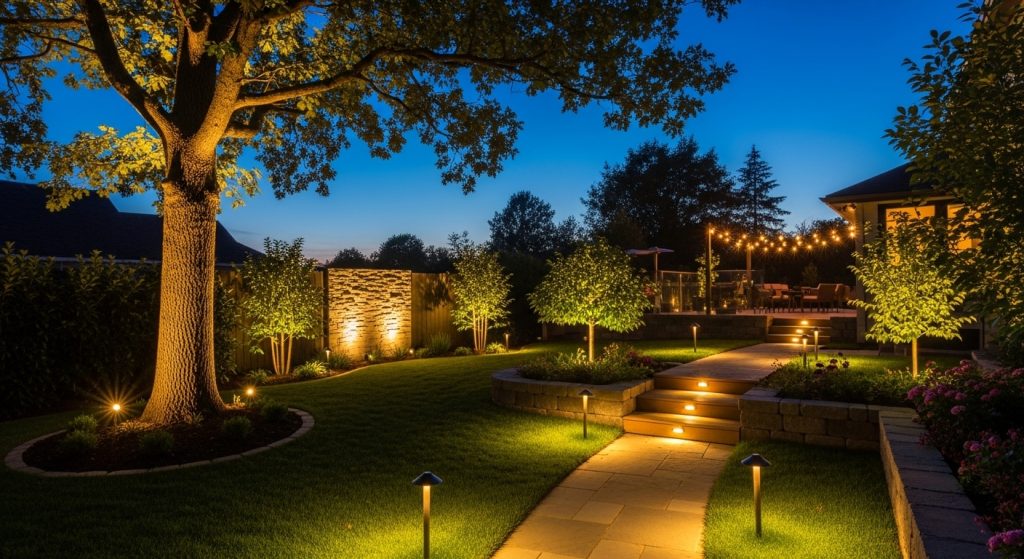
A professional layout guides your eyes through the space, highlighting textures on stone walls or the delicate leaves of a Japanese Maple. This intentional arrangement transforms a dark square into a multi-layered environment that feels like an extension of your indoor living room. Ultimately, a solid plan acts as your roadmap for a successful installation, ensuring you have the right fixtures in the right places to enjoy your courtyard for years to come.
What should be considered first when planning courtyard lighting
Before you look at fixture catalogs, you must evaluate the primary space function of your courtyard. How do you intend to use the area after dark? A space meant for quiet evening reading requires a different approach than one designed for large dinner parties. You should identify the user activity hubs—such as a dining table, a fire pit, or a central fountain—to determine your lighting purpose. Safety is the baseline; you must ensure that all walkways and changes in elevation are clearly visible to prevent trips and falls.
Once the functional needs are met, you can think about the mood and atmosphere. Do you want a romantic, low-light glow or a bright, festive environment? Thinking about the mood helps you decide how many lights you truly need. You should also consider the sightlines from inside your house. Since courtyards are often visible through large windows, your lighting should look as good from the kitchen sink as it does from the patio chair. By prioritizing navigation and atmosphere together, you build a foundation for a layout that is as practical as it is beautiful.
How to divide a courtyard into lighting zones
A professional design strategy involves breaking your courtyard into three distinct lighting zones. First, the ambient zone provides the general wash of light that defines the boundaries of the space. This is often achieved through perimeter lighting or soft downlighting from trees. Second, the task lighting zone focuses on high-traffic areas where you need clear visibility for specific actions. This includes lighting for stairs, outdoor kitchens, and the main entry paths to ensure everyone can move with confidence.
Third, the accent lighting zone is where you add drama and personality. This is used to “paint” the space by highlighting statues, water features, or specific architectural details like an arched doorway. By treating these as separate layers, you avoid a flat, boring look. Layering allows you to turn specific zones on or off depending on the occasion. For a quiet night, you might only use the accent and ambient layers, while a party might require all three to be at full strength. This zoned approach gives you total control over the visual depth of your courtyard.
How brightness levels affect courtyard lighting layout
Selecting the right brightness planning is a delicate task in an enclosed courtyard. In these smaller spaces, light can easily become overwhelming if you use too many high-lumen bulbs. Your lumen selection should be purpose-driven; you might need higher intensity for a cooking station, but very low levels for a decorative garden bed. Using too much light ruins the “night vision” of your guests and makes the surrounding dark areas feel even more intimidating.
The key to visual comfort is avoiding over-illumination. You want to see the effect of the light—the glow on the wall or the brightness on the path—rather than the blinding source of the light itself. Aim for a balanced distribution where no single area is significantly brighter than the rest. This creates a soft, even transition that is much easier on the eyes. By carefully matching the brightness to the usage of each zone, you ensure that your courtyard feels cozy and inviting rather than like a sterile, over-lit parking lot.
Why color temperature matters in courtyard lighting design
The color temperature of your bulbs dictates the “temperature” of your courtyard’s mood. Most designers prefer warm lighting (around 2700K to 3000K) for residential courtyards because it mimics the cozy feel of a sunset or a fireplace. This light tone is particularly effective at making natural materials like wood, brick, and stone look rich and inviting. It creates a relaxing atmospheric lighting that encourages people to linger and socialize.
Cooler light tones (above 4000K) can feel clinical or industrial in a small courtyard, often making plants look ghostly or artificial. However, you might use a slightly cooler tone to mimic moonlight if you are high-lighting a large tree from above. Consistency is vital for a cohesive design; mixing warm and cool bulbs in the same area can look messy and unplanned. By sticking to a primary temperature and using it across all your fixtures, you create a unified look that ties the various elements of your courtyard together into a single, beautiful environment.
How spacing and fixture placement influence courtyard lighting feel
Your placement logic is the difference between a professional-looking space and a cluttered one. Fixture spacing should be determined by the “throw” or the beam angle of the lights you choose. You want the edges of the light pools to overlap slightly so that there are no “black holes” along your walkways. A well-planned coverage map ensures that the entire path is safe without requiring a dense forest of poles and fixtures.
Placement also involves glare control. You should position fixtures so that the bulb is shielded from view, directing the light toward the target rather than the eyes of your guests. This is often called “lighting the destination, not the source.” Think about the visual paths you want people to follow; by placing lights at the end of a path or near a seating area, you intuitively guide people through the space. Proper spacing keeps the courtyard feeling open and airy, using light to expand the perceived size of the area after dark.
What design patterns help make courtyard lighting intuitive
Using established lighting patterns helps you create a space that feels natural to navigate. One effective pattern is “path-finding,” where you use a progression of light to draw the eye toward an entrance or a focal point. Another is “silhouetting,” where you place a light behind a plant to show its shape against a wall. These techniques create layered illumination that adds a sense of luxury and depth to your courtyard design.
Creating a clear visual focus is also essential. You should pick one or two main features—like a large urn or a specific tree—to be the brightest spots in the layout. This gives the eye a place to rest and creates a sense of order in the design. By repeating certain patterns, like a specific light on every third pillar, you create a rhythm that makes the courtyard feel intentional and balanced. These patterns act as silent guides, making the space feel familiar and comfortable for everyone who enters it.
What common mistakes reduce the success of a courtyard lighting plan
A frequent design mistake is a lighting imbalance where decorative elements are lit beautifully, but the stairs are left in the dark. You must never sacrifice navigation for aesthetics. Another common blunder is “random placement,” where lights are scattered without any clear rhythm or purpose, leading to a chaotic look. This often happens when fixtures are bought one-by-one rather than as part of a total layout.
You should also watch out for visual disruption caused by harsh, unshielded bulbs. If you can see the bare filament of a bulb, the glare will ruin the ambiance of the entire courtyard. Many people also forget to consider the height of their fixtures; putting a tall pole in a small courtyard can feel aggressive and out of scale. Avoiding these blunders requires you to step back and look at the space as a whole, ensuring that every light serves a specific purpose and contributes to the overall harmony of the design.
What checklist should be completed before implementing a courtyard lighting layout
Before you start digging trenches or mounting fixtures, a thorough pre-installation review ensures that your planning checklist covers all the bases. This layout validation step saves you from expensive changes later and ensures a smooth setup. By checking the physical and electrical constraints of your courtyard now, you can move forward with confidence.
- Create a scaled diagram of the courtyard including all plants, furniture, and structures.
- Identify the specific lighting zones (Ambient, Task, Accent).
- Select the desired color temperature for a cohesive look.
- Mark the exact fixture spacing and positions on your map.
- Calculate the total lumen selection to ensure you have enough power.
- Check for sunlight levels if you plan to use any solar-powered fixtures.
- Verify the location of outdoor power outlets and transformers.
- Conduct a “flashlight test” at night to visualize the light patterns on your walls and floors.
What are garden post top landscape lighting systems used in courtyards
Garden post top landscape lighting fixtures are elevated post top fixtures that provide excellent ambient light for larger courtyards. These are ideal for central locations or corners where you need a wide, even wash of courtyard landscape lighting. They sit high enough to push light over furniture and low-level plants, ensuring that the main body of the courtyard stays visible and inviting.
How do solar post lights fit into courtyard landscape lighting plans
Integrating a Solar garden post top light is a fantastic way to add solar lighting without the need for underground wiring. This provides power autonomy, allowing you to place lights in remote corners or in finished areas where digging would be impossible. They are perfect for adding a decorative and safe glow to your layout while keeping your installation costs low.
How solar landscape lamp posts support courtyard lighting without wiring
A Solar landscape lamp post offers unmatched installation flexibility for courtyard designs. Because these solar lamp posts are self-contained, you can add them to your layout at any time. They are particularly useful for historical courtyards or paved squares where you want to provide overhead light without damaging the existing stonework or landscaping.
How does sunlight availability affect solar courtyard light performance
The Solar garden lights sunlight levels in your courtyard are the most important factor for solar performance. Because courtyards often have high walls, you must ensure your fixtures get enough solar charge during the day. Evaluating performance in shade is vital; if a corner stays dark all day, a solar light will not have the power to stay bright through the night.
Why color temperature selection changes courtyard lighting atmosphere
Choosing the right Garden lights color temperature is the fastest way to set your courtyard ambiance. Whether you prefer warm vs cool tones, your choice will define the mood of the space. Warm tones are almost always preferred for social courtyard areas, as they create a welcoming and relaxing feel that makes the outdoor space an extension of your home.



- 10 Meters Lamp Post
- 10 Meters Pole
- 1000w Led Projector
- 100W LED Tunnel Light
- 12 Meters Lamp Post
- 12 Meters Pole
- 1200w Led Projector
- 15 Light Pole
- 1500w Led Projector
- 150W LED Tunnel Light
- 1800w Led Projector
- 2 In 1 Solar Flood Light
- 200w Led Tunnel Light
- 50w Led Tunnel Light
- 6 Meters Lamp Post
- 6 Meters Pole
- 8 Meters Lamp Post
- 8 Meters Pole
- 800w Led Projector
- 80w Led Tunnel Light
- Colourful Decorative Light
- Conical post
- Courtyard Lamp
- courtyard light
- courtyard lighting fixture
- Decorative Landscape Light
- Decorative road Light
- Flood Light For Courtyard
- Flood Light for Garden
- Flood Light For Outdoor
- Foot Led High Bay Lights
- high bay led lights 100w
- industrial lampshade
- industrial LED shed lights
- industrial magnifying glass with light
- Integrated Solar Flood Light
- led courtyard lamp
- led courtyard light
- led high bay light 100w
- LED Projector For Stadium
- Led UFO High Bay 150W 5000k
- Lighting Plants Mining Price
- Maintenance Free LED Street Light
- Pic Controlling Tunnel Light
- PLC controlling tunnel light
- Post Top Garden Light
- RGB Landscape Light
- Rgbw Decorative Light
- Smart Tunnel Light
- solar courtyard lamp
- solar courtyard light
- Solar LED Road Light
- Solar Street Light For 10 Meter Pole
- Solar Street Light For 12 Meter Pole
- Solar Street Light For 6 Meter Pole
- Solar Street Light For 8 Meter Pole
- Split Type Solar Flood Light
- Sporting Projector
- Stadium Led Projector
- Street Lighting Post
