
 Request A Quote


How do you plan and choose lawn bollard and pathway lighting for outdoor spaces
 FACEBOOK
 TWITTER
 LINKEDIN
When you design a landscape, the way you manage light at ground level dictates both the safety and the personality of your property. Lawn bollard and pathway lighting are the primary tools for providing outdoor lighting that guides the eye and the foot. These fixtures are short, vertical posts—bollards—specifically engineered to cast light downward or outward across walking surfaces. By integrating these elements into your yard, you move beyond simple visibility; you create a sophisticated pathway illumination that defines boundaries and highlights the natural textures of your garden.
Strategic planning is essential to balance functional safety with visual comfort. A well-chosen bollard should prevent trips and falls while contributing to the overall design harmony of your home’s exterior. Choosing the right fixture selection involves evaluating how different heights, beam spreads, and materials will interact with your local weather and your specific garden layout.
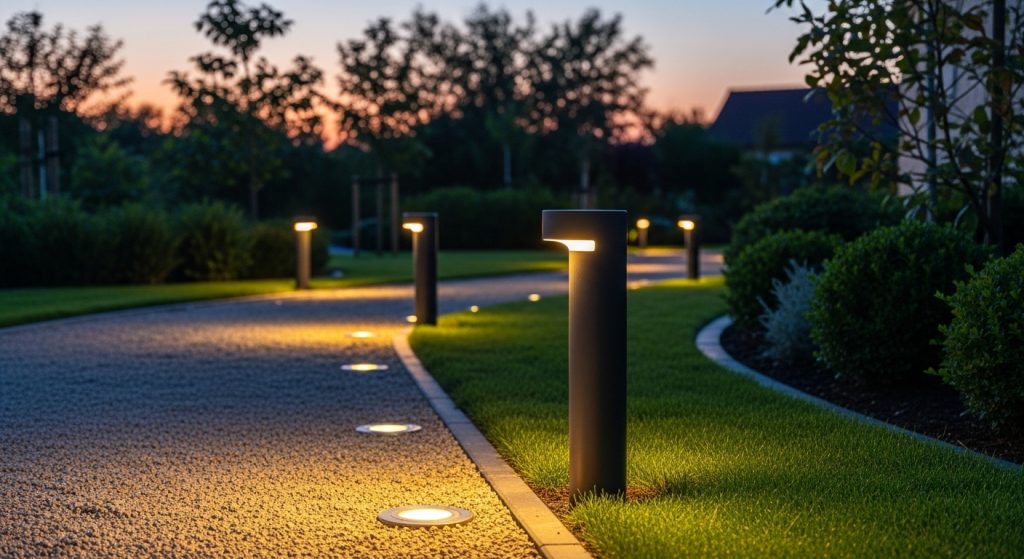
Whether you prefer the sleek lines of modern geometry or the soft glow of traditional styles, your goal is to create a seamless transition from the house to the horizon. By following a logical planning process, you ensure your outdoor space remains a secure, inviting retreat long after the sun has set.
What roles do lawn bollard and pathway lights play in outdoor spaces
In a high-quality landscape, bollard lights serve as the primary source of safety illumination. Their low-to-the-ground position ensures steps, curves, and edges are clearly defined, helping you and your guests navigate the yard with confidence. Unlike high-mounted floodlights, bollards keep the light focused exactly where your feet land, reducing the risk of accidents without overwhelming the space with excessive brightness.
Beyond safety, these fixtures provide essential ambient lighting that shapes the character of your nighttime environment. They act as luminous sculptures that add vertical interest to flat lawns and flower beds. When placed correctly, they can lead the eye toward a specific focal point, such as a water feature or a prized tree, making them an inseparable part of your garden design. By creating a subtle rhythm of light and shadow, they transform a dark yard into a multi-layered space that feels secure and professionally curated.
How the shape and style of bollard lights influence outdoor design
The fixture style you choose acts as an architectural statement during the day and a light-sculpting tool at night. Round bollards typically offer a soft, 360-degree spread that is ideal for open lawns, while square or geometric designs often provide a more directional, modern glow. Choosing a shape that reflects the lines of your home ensures a sense of visual aesthetics that makes the lighting feel like a deliberate part of the property rather than an afterthought.
The way a bollard is louvered or shielded also dictates its design harmony. Some styles feature perforated metal that casts intricate patterns on the ground, adding a decorative layer to the path. Others utilize a hidden light source that reflects off internal surfaces for maximum glare control. By matching the physical form of the light to your garden’s theme—be it minimalist, cottage, or industrial—you create a unified look. The right style does not just light a path; it enhances the visual experience of your entire outdoor living area.
Why brightness and beam distribution matter for pathway lighting
Successful brightness planning for pathways is a delicate task. You need enough lumens to ensure clarity, but too much light can cause blinding glare that ruins your night vision. The goal is to provide visual comfort by selecting lamps that distribute light evenly across the walkway rather than creating intense hot spots. Modern LEDs allow you to choose precise brightness levels that guide without distracting.
Light distribution is determined by the fixture’s optics. A bollard with a downward throw keeps the light on the pavement, which is perfect for preventing light pollution and keeping the night sky dark. If your path is wide, you might need a wider beam angle to ensure the light reaches from edge to edge. By coordinating the brightness with the beam shape, you create a soft, safe environment where the transitions between light and dark are smooth and predictable for every user.
How spacing influences even illumination of lawns and paths
The fixture spacing you choose is the foundation of a reliable lighting rhythm. If you place bollards too far apart, you end up with black holes along the path that can hide tripping hazards. If they are too crowded, the yard can feel cluttered and over-illuminated. A professional layout ensures uniform coverage, where the edge of one light beam overlaps slightly with the next.
Your spacing is directly tied to the height of the bollard. Taller fixtures generally have a wider footprint of light, allowing for more distance between units. Shorter bollards require tighter spacing to maintain a continuous path. By mapping out your layout before installation, you can decide exactly how many fixtures you need to achieve a seamless glow. This careful arrangement ensures the path is not just lit, but is effectively mapped by light, making navigation intuitive for anyone walking through the space.
How material and durability affect long-term outdoor lighting performance
Your material selection is the biggest factor in the service life of your outdoor system. Bollards are in constant contact with ground moisture, irrigation, and yard maintenance equipment. Choosing materials like high-grade aluminum or stainless steel provides the weather durability needed to prevent rust and structural failure. These metals hold their finish better than cheaper plastics, which can become brittle and fade under UV exposure.
Checking the outdoor rating is a non-negotiable step in the planning process. You should look for fixtures with high IP (Ingress Protection) ratings, which verify the internal electronics are sealed against dust and water. A robust material combined with proper sealing ensures your lights can survive heavy rain and seasonal temperature swings. By investing in durable hardware from the start, you reduce the need for frequent replacements and ensure your garden remains well-lit and beautiful for many years.
How to balance energy use and maintenance for lawn and pathway lights
When you evaluate power options, you must choose between the reliability of wired systems and the flexibility of solar units. Wired bollards provide a consistent brightness that doesn’t fade, making them the superior choice for main security paths. However, they require maintenance planning that includes checking electrical connections and protecting buried cables. Many homeowners prefer the ease of solar bollards for decorative garden areas where digging trenches is not an option.
Achieving energy efficiency is simpler with modern LED technology, regardless of your power source. LEDs use a fraction of the energy of old halogen bulbs, significantly lowering your operating costs. For solar options, ensure that battery capacity matches your local sun exposure to guarantee a full night’s run time. By choosing high-efficiency fixtures and a power source that fits your maintenance capacity, you create a sustainable lighting system that adds value to your property without creating a heavy workload.
What common mistakes undermine pathway and bollard lighting effectiveness
A frequent design mistake is the runway effect, where lights are placed in a perfect, straight line on both sides of a path. This can look industrial and cold. Instead, staggered spacing often creates a softer, more natural look. Another common blunder is a light imbalance caused by using fixtures that are too bright for the space, which creates harsh contrast and ruins the evening ambiance.
Planning errors often involve ignoring the growth of your landscape. A bollard that works perfectly today might be completely covered by a bush in two years. You must also account for glare; if the light source is not properly shielded, it can blind pedestrians as they approach. Avoiding these blunders requires a site survey at night with a flashlight to visualize where the light needs to go. By anticipating how your garden will grow, you can place your bollards in spots where they will remain effective and visible for the long haul.
What steps should be included in a lawn and pathway lighting plan
Before you buy your hardware, a thorough design review ensures that your installation readiness is high. This process helps you avoid the “buy and regret” cycle by matching your fixtures to the reality of your land. Taking these steps now ensures a smooth setup and a professional result that enhances your home’s curb appeal.
- Conduct a site assessment to identify key navigation points and hazards.
- Determine your brightness planning goals (soft accent vs. high safety).
- Select a fixture style that matches your home’s architecture.
- Map out your fixture spacing to ensure uniform coverage.
- Verify the IP rating and material durability of your chosen bollards.
- Choose between solar and wired power based on your installation capacity.
- Review the placement relative to future plant growth and irrigation heads.
What types of outdoor waterproof lawn lights are suitable for pathways
Outdoor waterproof lawn lights are essential for maintaining safety in wet climates. These pathway fixtures are built with a high waterproof rating to protect the internal LED drivers from heavy rain and ground moisture. Choosing waterproof hardware is the only way to ensure your pathway illumination remains reliable through all seasons.
How do solar spiral bollard lights fit into garden pathway lighting
Integrating a Solar spiral bollard light adds a unique spiral design to your walkway. As a solar option, these fixtures are incredibly easy to install, as they require no wiring. They provide a decorative, 360-degree light pattern that is perfect for adding a touch of visual interest to garden paths without increasing your power bill.
What makes geometric outdoor lawn lights a design choice for gardens
Geometric outdoor lawn light fixtures offer a sharp, modern garden style. These geometric lighting units use clean lines and bold shapes to complement contemporary architecture. They are a top choice for planners who want the lighting to act as a prominent landscape feature that looks just as good during the day as it does at night.
Why modern perforated lawn lights are chosen for aesthetic appeal
A Modern perforated lawn light is a premier choice for decorative lighting. The laser-cut patterns create a stunning design impact by casting intricate shadows across the ground. These fixtures are ideal for areas where you want to create a relaxing, high-end ambiance while still providing enough light for safe walking.
How spacing guides help planners achieve even coverage with bollards
Following a Bollard light spacing guide is the best way to ensure uniform illumination. A clear spacing strategy helps you calculate exactly how many poles you need to avoid dark gaps. This prevents the pool of light effect and ensures the entire path is a continuous, safe route for your family and guests.
How brightness recommendations influence solar bollard light choice
Solar bollard lights brightness is a key factor in your solar brightness planning. Because solar units have limited battery power, matching the lumens recommendation to your specific pathway needs is vital. Choosing the right brightness ensures your lights stay on through the entire night without draining the battery too quickly.
Why lawn lights need appropriate IP ratings for outdoor use
A Lawn lights IP rating guide explains how well a fixture is sealed against the elements. A high IP rating is a guarantee of weather protection, ensuring dust and water cannot enter the housing. This is the most important specification to check for long-term reliability in any outdoor garden setting.
How bollard lights compare to post lights in garden lighting design
A Bollard vs post lights fixture comparison helps you decide which height is right for your yard. While bollard vs post heights vary, bollards are usually better for direct path lighting, while taller post lights are better for wide area illumination. Choosing the right height ensures the light reaches the ground effectively without causing glare.
What installers should know about solar bollard light installation steps
To Install solar bollard lights successfully, you must focus on site preparation. Proper solar installation involves finding a spot with maximum sun exposure and ensuring the ground is level. Because there are no wires, you can often finish the entire setup in a fraction of the time it takes for a wired system.
How lawn light materials affect look and longevity in landscape lighting
The Lawn light materials guide outlines why material durability is critical for an outdoor finish. High-quality metals like aluminum resist corrosion much better than plastic, ensuring your fixtures stay beautiful for years. Picking the right material is a long-term investment in both the look and the safety of your landscape.



- 10 Meters Lamp Post
- 10 Meters Pole
- 1000w Led Projector
- 100W LED Tunnel Light
- 12 Meters Lamp Post
- 12 Meters Pole
- 1200w Led Projector
- 15 Light Pole
- 1500w Led Projector
- 150W LED Tunnel Light
- 1800w Led Projector
- 2 In 1 Solar Flood Light
- 200w Led Tunnel Light
- 50w Led Tunnel Light
- 6 Meters Lamp Post
- 6 Meters Pole
- 8 Meters Lamp Post
- 8 Meters Pole
- 800w Led Projector
- 80w Led Tunnel Light
- Colourful Decorative Light
- Conical post
- Courtyard Lamp
- courtyard light
- courtyard lighting fixture
- Decorative Landscape Light
- Decorative road Light
- Flood Light For Courtyard
- Flood Light for Garden
- Flood Light For Outdoor
- Foot Led High Bay Lights
- high bay led lights 100w
- industrial lampshade
- industrial LED shed lights
- industrial magnifying glass with light
- Integrated Solar Flood Light
- led courtyard lamp
- led courtyard light
- led high bay light 100w
- LED Projector For Stadium
- Led UFO High Bay 150W 5000k
- Lighting Plants Mining Price
- Maintenance Free LED Street Light
- Pic Controlling Tunnel Light
- PLC controlling tunnel light
- Post Top Garden Light
- RGB Landscape Light
- Rgbw Decorative Light
- Smart Tunnel Light
- solar courtyard lamp
- solar courtyard light
- Solar LED Road Light
- Solar Street Light For 10 Meter Pole
- Solar Street Light For 12 Meter Pole
- Solar Street Light For 6 Meter Pole
- Solar Street Light For 8 Meter Pole
- Split Type Solar Flood Light
- Sporting Projector
- Stadium Led Projector
- Street Lighting Post
