
 Request A Quote


What IP rating should outdoor lawn lights have to withstand rain and dust exposure
 FACEBOOK
 TWITTER
 LINKEDIN
When you select lighting for your garden or driveway, the term “waterproof” is often too vague to guarantee safety. Instead, you should look for the ingress protection (IP) rating, a standardized code that defines exactly how well a fixture’s housing prevents external elements from reaching its internal electronics.
An IP rating is composed of two numbers: the first represents the dust rating (solid ingress), and the second indicates the weather resistance against liquids. For lawn lights that sit close to the ground, where they are vulnerable to mud splatter, heavy rain, and airborne debris, choosing the correct rating is a foundational step in ensuring the safety of your home’s electrical system.
A high-quality lawn light should generally feature an IP rating of at least IP65 to ensure total outdoor durability. This level of protection means the fixture is completely dust-tight and can withstand low-pressure water jets from any direction—essentially making it “monsoon-proof.”
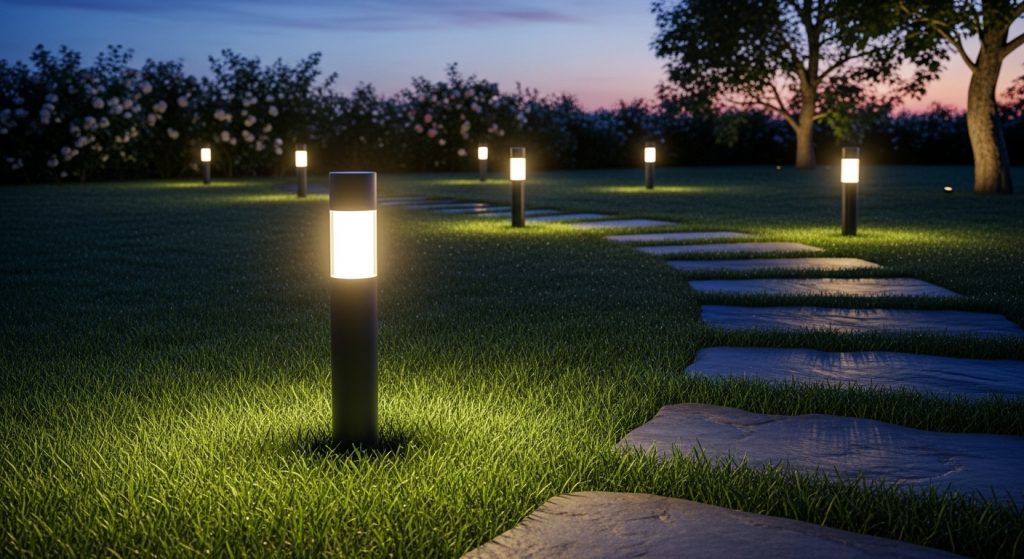
Without a verified rating, moisture can seep into the light engine, causing corrosion, short circuits, or a premature failure of the LED. By matching the IP rating to your local climate and the specific exposure levels of your yard, you can invest in lighting that remains functional and bright through every season. Understanding this code allows you to move beyond marketing claims and toward a technical validation of a product’s true resilience.
What an IP rating means and how to read it
The IP coding system is an international standard used to categorize the degrees of protection provided by mechanical casings. It is a simple two-digit shorthand: the first digit (0–6) measures solid ingress protection, such as fingers, tools, or fine dust. A “6” is the highest possible score for solids, meaning the unit is entirely dust-tight. The second digit (0–8) measures liquid protection, ranging from no protection at all to complete submersion in water for extended periods.
For your outdoor lighting, you are usually looking for a “6” as the first digit to ensure that garden soil and fine particles cannot enter the housing. The second digit is where the variation happens based on your needs. For most lawn applications, a “5” or “6” for liquids is standard, while lights placed near a pool or in a low-lying flood zone might require a “7” or “8.” Understanding this structure gives you the power to choose a fixture that is perfectly sealed for the environment it will call home.
Why rain and dust protection matter for outdoor lawn lighting
Your yard is a harsh environment where fixtures face constant weather exposure. When rain hits a hot light fixture, it can create a vacuum effect that pulls moisture through weak seals. Once inside, this water can lead to component protection failure, causing the delicate LED chips and drivers to corrode or short out. Even if the light doesn’t fail immediately, trapped moisture can cause “fogging” inside the lens, which significantly reduces the light output and ruins the aesthetic of your landscape.
Dust is an equally dangerous, though often overlooked, threat. In many regions, wind-driven sand and garden debris can find their way into small gaps in the housing. Over time, this buildup acts as an abrasive that can damage internal seals or coat the light source, causing it to overheat. Prioritizing long-term durability means choosing a fixture that remains a sealed environment, keeping the internal parts pristine. A properly rated light reduces the risk of electrical hazards and ensures that your investment continues to provide a clear, beautiful glow for many years.
What IP ratings are typically recommended for rain protection
For most residential and commercial lawn settings, liquid ingress protection is the primary concern. While an IP44 rating can handle light splashes, it is often insufficient for exposed garden areas where wind-driven water impact is common. Most professionals recommend a minimum of IP65 for rain resistance. This rating ensures that the light can handle a heavy downpour and the direct spray from a garden hose or irrigation system without the risk of leakage.
If your property is in an area prone to coastal storms or high-pressure rain, moving up to IP66 provides an extra layer of security. This level of protection is designed to withstand “powerful water jets,” ensuring that even the most intense weather cannot breach the casing. By selecting a rating that exceeds the average rainfall intensity of your area, you build a “safety buffer” into your lighting plan. This proactive choice prevents the common cycle of replacing dimming or flickering lights after every major storm season.
What IP ratings are needed for dust and debris resistance
Because lawn lights are positioned near the earth, they face constant garden exposure from kicked-up dirt, lawnmower clippings, and fine sand. To prevent dust ingress, you should almost always insist on a first digit of “6.” A dust-tight rating is essential because even microscopic particles can eventually interfere with the fixture’s thermal management or cloud the optics. This is especially vital for paths and lawns where wind can drive debris against the base of the pole.
Maintaining high debris protection keeps the internal “light engine” clean, which is critical for the longevity of the LEDs. If dust enters the housing, it can act as an insulator, trapping heat and causing the lights to dim or burn out faster than they should. A “6” rating provides the peace of mind that regardless of how much gardening or wind occurs around the fixture, the sensitive electronics inside remain in a factory-clean state. This focus on solid-state protection is the key to a reliable and efficient outdoor lighting system.
How rating levels correlate with lifespan and maintenance needs
There is a direct link between a high IP rating and the service life of your outdoor hardware. A fixture with superior weatherproofing is built with high-quality gaskets, silicone seals, and precision-fit parts. These robust construction methods prevent the internal degradation that kills cheaper lights. While you might pay more upfront for a higher-rated unit, the “cost per year” is significantly lower because you aren’t replacing failing units every 24 months.
Furthermore, choosing a high IP rating results in a major maintenance reduction. You won’t need to spend time disassembling fixtures to clean out dead insects, mud, or moisture from the inside of the lens. A well-sealed light maintains its clarity and brightness with nothing more than an occasional wipe of the exterior. By investing in a high-performing seal, you free yourself from the frustration of constant troubleshooting and ensure that your garden always looks its best with minimal effort.
How climate and local conditions influence the right IP rating
Your local climate should be the ultimate guide for your rating adjustment. If you live in an area with a heavy monsoon season or frequent dusty winds, “standard” ratings may not be enough. You should look for extreme exposure ratings (IP66 or higher) to account for the intensity of the elements. In colder regions, where snow and ice can sit against the fixture for weeks, a higher rating ensures that as the snow melts, the water doesn’t find its way into the casing through capillary action.
Similarly, if your lawn lights are placed near a sprinkler head that hits them with high-pressure water daily, you should choose a fixture rated for water jets rather than just rain. Those in coastal areas must also consider that salt-laden air can be more “invasive” than fresh water; a tighter IP seal helps prevent salt from entering and corroding the internal connections. By tailoring your selection to the specific environmental stressors of your property, you ensure that your lighting remains a dependable asset.
Common mistakes when choosing IP ratings for outdoor lights
A frequent selection error is assuming that a fixture labeled “outdoor use” is automatically prepared for all weather conditions. Many entry-level lights only meet IP44, which is fine for a covered porch but is a rating mismatch for an open lawn where it will be hit by heavy rain. Another common blunder is choosing a high liquid rating but ignoring the dust rating; a light that is “waterproof” but not “dust-tight” will eventually suffer from internal clouding and performance issues.
Homeowners also sometimes ignore the long-term durability trade-offs of cheaper materials. A plastic housing might have a high IP rating on day one, but after a year of UV exposure, the material can warp or crack, ruining the seal entirely. To avoid these blunders, you should always verify the full IP code and look for fixtures made from durable metals like aluminum that can maintain their “seal integrity” for many years. Choosing based on data rather than vague labels is the only way to guarantee a successful project.
What review steps should be done before finalizing an IP-rated light
Before you commit to a purchase, a thorough site assessment is necessary to ensure the hardware is a perfect fit for the location. This selection checklist acts as your final product validation, helping you avoid expensive replacements shortly after installation. By reviewing these factors, you can move forward with a lighting plan that is as durable as it is beautiful.
- Exposure Check: Will the light be in an open area or under a roof overhang?
- Water Source: Are there nearby sprinklers or high-pressure hoses used for cleaning?
- Dust Levels: Does your area experience high winds or have sandy soil?
- Code Verification: Is the full IP code (e.g., IP65) clearly listed on the product specs?
- Material Check: Is the housing made of a material like aluminum that won’t warp over time?
- Warranty Review: Does the manufacturer stand behind the IP rating with a solid warranty?
- Mounting Review: Is the base designed to keep the seals away from standing water or mulch?
Is lawn bollard pathway lighting popular in outdoor design?
Lawn bollard pathway lighting refers to the vertical bollard fixtures used to provide pathway illumination. Because these units are situated at ground level, they are the most susceptible to dirt and moisture. Choosing a high IP rating for these fixtures is the most critical step in ensuring that your walkway remains safe and well-lit through all weather conditions.
Why outdoor waterproof lawn lights are important for rain and dust resistance
Investing in Outdoor waterproof lawn lights is a long-term commitment to safety. Waterproof protection prevents the internal “shorting out” that often happens during heavy storms. By ensuring your lights are rated for weather exposure, you protect your home’s electrical circuit and maintain a reliable, glowing garden year-round.
How geometric outdoor lawn lights integrate style with weather resistance
A Geometric outdoor lawn light proves that high geometric design and weather durability can go hand-in-hand. These modern fixtures often use hidden gaskets and internal seals to maintain their sleek look while offering top-tier IP protection. This allows you to maintain a contemporary aesthetic without sacrificing the longevity of your outdoor lighting system.
Why modern perforated lawn light patterns must also meet IP ratings
Modern perforated lawn light fixtures use decorative patterns that can sometimes make them more vulnerable to dust and water. Proper weatherproofing is essential for these styles to ensure that the internal light source stays clean and dry, allowing the patterned illumination to remain sharp and beautiful without being dimmed by internal debris.
How material choices affect weather resistance and IP performance
The Lawn light materials guide explains why material durability is the backbone of any IP rating. High-quality aluminum and stainless steel provide the structural strength needed to keep seals tight and the outdoor finishing pristine. Choosing the right metal ensures that your fixtures don’t degrade over time, keeping your landscape bright and secure for decades.


- 10 Meters Lamp Post
- 10 Meters Pole
- 1000w Led Projector
- 100W LED Tunnel Light
- 12 Meters Lamp Post
- 12 Meters Pole
- 1200w Led Projector
- 15 Light Pole
- 1500w Led Projector
- 150W LED Tunnel Light
- 1800w Led Projector
- 2 In 1 Solar Flood Light
- 200w Led Tunnel Light
- 50w Led Tunnel Light
- 6 Meters Lamp Post
- 6 Meters Pole
- 8 Meters Lamp Post
- 8 Meters Pole
- 800w Led Projector
- 80w Led Tunnel Light
- Colourful Decorative Light
- Conical post
- Courtyard Lamp
- courtyard light
- courtyard lighting fixture
- Decorative Landscape Light
- Decorative road Light
- Flood Light For Courtyard
- Flood Light for Garden
- Flood Light For Outdoor
- Foot Led High Bay Lights
- high bay led lights 100w
- industrial lampshade
- industrial LED shed lights
- industrial magnifying glass with light
- Integrated Solar Flood Light
- led courtyard lamp
- led courtyard light
- led high bay light 100w
- LED Projector For Stadium
- Led UFO High Bay 150W 5000k
- Lighting Plants Mining Price
- Maintenance Free LED Street Light
- Pic Controlling Tunnel Light
- PLC controlling tunnel light
- Post Top Garden Light
- RGB Landscape Light
- Rgbw Decorative Light
- Smart Tunnel Light
- solar courtyard lamp
- solar courtyard light
- Solar LED Road Light
- Solar Street Light For 10 Meter Pole
- Solar Street Light For 12 Meter Pole
- Solar Street Light For 6 Meter Pole
- Solar Street Light For 8 Meter Pole
- Split Type Solar Flood Light
- Sporting Projector
- Stadium Led Projector
- Street Lighting Post
