
 Request A Quote


LED Road and Street Lights for Municipal Projects
 FACEBOOK
 TWITTER
 LINKEDIN
LED road and street lights for municipal projects serve as a primary foundation for modern public infrastructure. You must look beyond simple illumination when planning these upgrades. These systems impact how your community functions after the sun sets. Choosing the right fixtures improves road safety for drivers and pedestrians alike. You can reduce traffic accidents by ensuring clear visibility on every corner.
Your lighting design choices also define the character of your local neighborhoods. You should select lights that fit the specific scale of your streets. High-output lamps work best for major arterial roads with heavy traffic. Softer lights might suit quiet residential areas where comfort is a priority. These decisions help you meet your goals for energy efficiency and environmental care.
Proper maintenance planning keeps your system running without unexpected failures or costs. You need to consider how long each fixture will last in the field. Reliable lights mean your crews spend less time performing emergency repairs. This approach helps you manage your long-term budget with much more precision. You are building a system that serves your citizens for many decades. Selecting quality components ensures the best value for every taxpayer dollar spent.
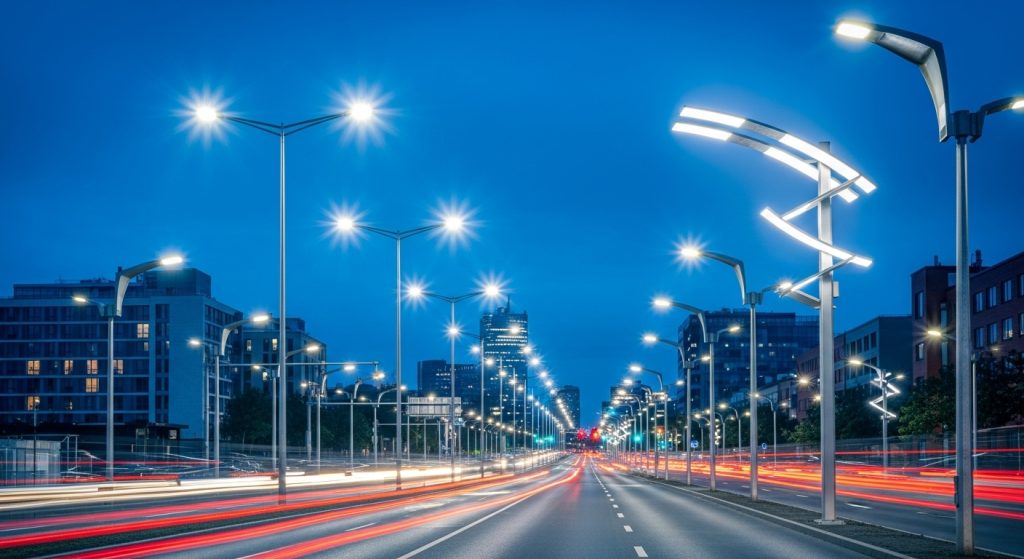
Why are municipalities replacing traditional street lights with LED road lighting
Traditional lamps like high-pressure sodium bulbs often waste too much power. They create a yellow glow that makes it hard to see clearly. You likely notice that these older systems require frequent and expensive bulb changes. Replacing them with LEDs allows you to fix these common infrastructure problems.
The move toward LEDs focuses on achieving better energy efficiency for the whole city. You can lower your monthly power bills by a significant margin immediately. These savings help you reduce overall operational costs year after year. Your city also gains an advantage in road safety due to better light quality. Modern LEDs last much longer than any conventional lighting option available today. You will find that your maintenance teams can focus on other important tasks. This change creates a brighter and more secure environment for your residents.
How do LED road and street lights improve efficiency and public safety
The way a light hits the pavement changes how safe your streets feel. LEDs offer a high level of illumination quality that older bulbs cannot match. You can see objects and people more clearly from a greater distance. Better visibility control allows you to aim light exactly where it belongs. This prevents light from shining into homes or up into the night sky.
Superior lighting performance means that colors appear natural and vivid at night. Pedestrians feel more comfortable walking in areas with crisp and even light. You also reduce the risk of glare that can blind oncoming drivers. These technical benefits lead to much better safety outcomes for your public roads. Each watt of power is used to create useful light on the ground. You are investing in a system that protects everyone who uses your infrastructure.
What types of LED road and street lighting systems are used in municipal projects
Your infrastructure planning must account for many different types of public spaces. Various lighting systems are designed to meet these specific municipal needs. Cobra head fixtures remain the standard choice for most major city streets. They provide the wide coverage needed for multi-lane roads and highways. You might choose decorative post-top lamps for historic districts or parks.
The application suitability depends on the height of your poles and the road width. Tunnel lighting requires specialized fixtures that can handle high humidity and soot. Parking lots and squares often need powerful floodlights for broad area coverage. You must choose a system that matches the intended use of the site. Using the right fixture type prevents wasted light and improves overall visibility. Careful selection ensures your project meets the unique demands of each location.
What design factors should municipalities evaluate before selecting LED road lights
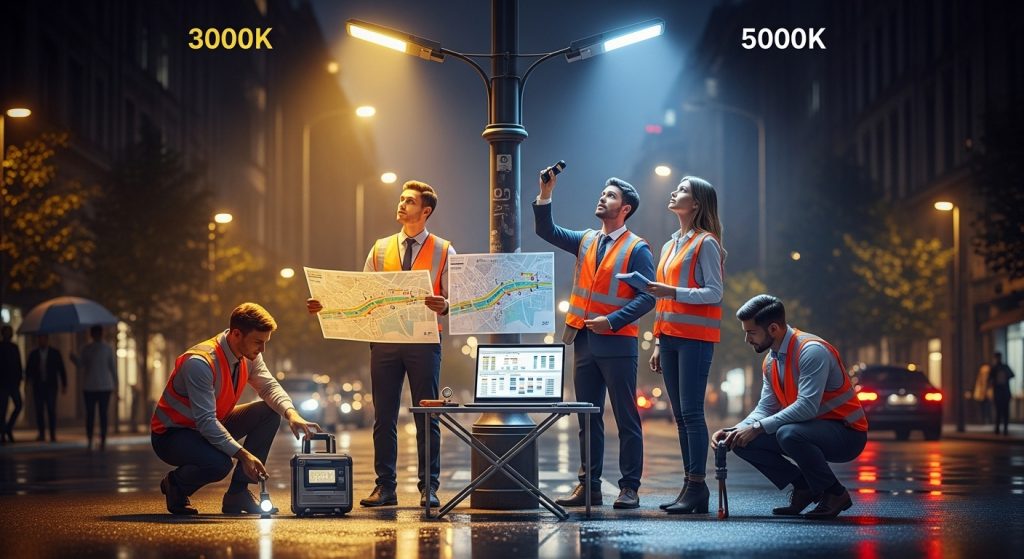
Good lighting design starts with a close look at technical specifications. You must evaluate the beam angle to ensure the light reaches the curb. A wide angle helps cover broad intersections without leaving dark spots. You also need to pick the right color temperature for each specific zone. Cool white light helps highway drivers stay alert and focused on the road.
Warm light is often better for parks and residential housing areas. Your team should check how the light spacing affects the uniformity of the glow. You want to avoid a “patchy” look where bright spots are followed by shadows. The height of your poles will dictate how much power you need per light. Testing these factors during the planning phase prevents expensive mistakes later. Proper design leads to a professional result that residents will truly appreciate.
How do smart controls and sensors affect municipal LED street lighting decisions
Modern street lighting can do much more than just shine at full power. You can install smart sensors that monitor traffic and weather in real time. These tools allow for adaptive lighting where lamps dim during quiet hours. This feature helps you reach even higher levels of power savings. You can schedule the lights to brighten only when a car is detected.
A central energy management system gives you total control over the entire city network. You will know exactly when a light fails without waiting for a report. This data allows you to plan your repairs more logically and quickly. You can also track how much electricity each neighborhood uses every month. These insights help you make better decisions for future infrastructure projects. Smart technology turns your lighting into a responsive and useful city asset.
How should municipalities evaluate cost and lifecycle value of LED road lighting
You must look at the lifecycle cost to understand the true value of LEDs. The initial purchase price is only one part of the financial picture. You will save a large amount of money on power bills over time. These lights also require much less maintenance planning than older lamp types. You will not need to buy new bulbs or hire bucket trucks as often.
Your capital planning should reflect the total savings over a fifteen-year period. Many LEDs come with long warranties that protect your investment from early failure. You might also find grants or rebates for installing energy-saving technology. A high-quality system pays for itself through lower bills and fewer repairs. You are choosing a path that keeps your city budget stable and predictable. Long-term value is found in fixtures that stay bright for many years.
What steps should municipalities follow when planning an LED road lighting project
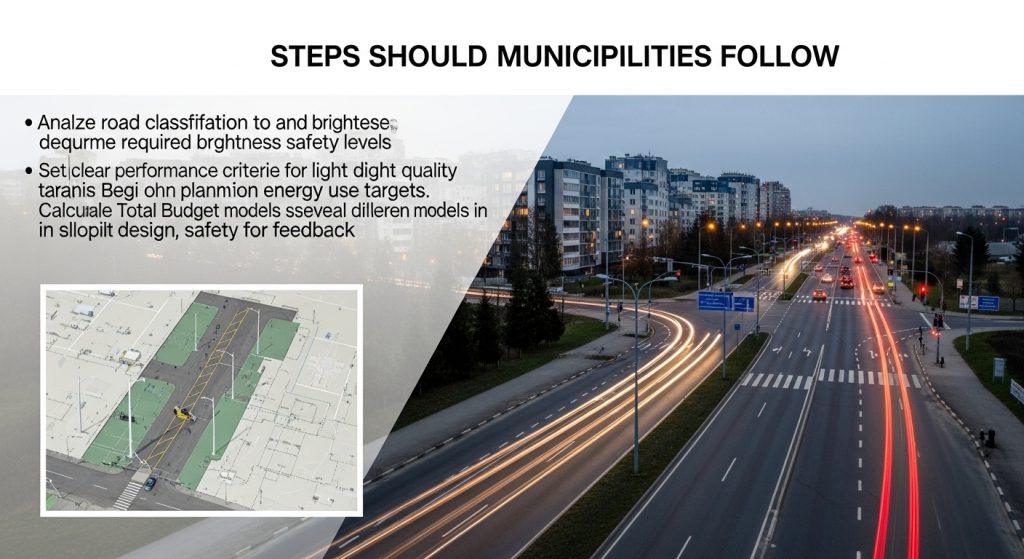
- Analyze the road classification to determine the required brightness and safety levels.
- Set clear performance criteria for light quality and energy use targets.
- Begin your project planning by mapping out the location of every pole.
- Calculate the total budget to include fixtures, labor, and any smart controls.
- Test several different lamp models in a small pilot area for feedback.
- Coordinate the installation to ensure minimal disruption to local traffic flow.
- Verify that all new lights meet the original design and safety goals.
What common mistakes do municipalities make when selecting LED road lights
Many project leaders make the error of system mismatch during the buying process. This happens when a light is too powerful for a short pole. You might also face planning errors if you forget to check the existing wiring. Some buyers only look at the wattage instead of the actual light output. This can leave your streets looking dim despite using plenty of power.
Another mistake is ignoring the importance of high-quality optics and lenses. Poor lenses can cause light to spill into windows and bother residents. You should also avoid buying fixtures that do not have surge protection. A single lightning strike could ruin an entire row of unprotected lights. Taking the time to check these details ensures your project is a success. Avoiding these pitfalls keeps your community happy and your streets safe.
What should municipal buyers check before approving LED street lighting systems
You need to verify several key points before you finalize your procurement. Focus on procurement planning to ensure you get the best equipment for your needs. Checking for system reliability now will save you from headaches in the future:
- Ensure the manufacturer has a solid track record with public projects.
- Confirm that the lights have passed all required safety and rain tests.
- Review the warranty terms to see what is covered and for how long.
- Check if the color of the light matches your city’s aesthetic rules.
- Verify that the fixtures can connect to future smart city networks.
- Ask for proof of the energy savings claimed by the vendor.
- Make sure the lights are easy for your staff to install and fix.
What are smart LED road lights with sensors
Smart LED road lights with sensors help you manage your city’s power use more effectively. These units use smart sensors to detect if cars or people are on the street. This allows the system to use adaptive lighting to save energy during late hours. You can set the lights to dim when no one is around to see them. This technology provides you with real-time data about your entire lighting network. You can fix problems faster because the system tells you exactly where they are.
What makes high-efficiency LED road lights suitable for municipal use
High-efficiency LED road lights are built to deliver the most light for the least power. You can achieve significant high efficiency by choosing these advanced municipal fixtures. This choice leads directly to major energy savings for your local government budget. These lights are tough enough to handle wind, rain, and extreme heat for years. They provide the steady and bright light needed for busy public intersections. You get a reliable system that keeps your city bright while cutting down on costs.
What are on-grid LED road lamps and where are they used
On-grid LED road lamps are designed to work with your existing city power lines. These on-grid systems are the most common choice for updating your street lighting. You get high power stability because the lights do not depend on batteries. They are easy to install on your current poles without needing to change the wiring. Use these lamps for main roads and downtown areas where power is always available. They offer a simple and effective way to upgrade your city’s infrastructure quickly.
What do outdoor LED road lighting projects reveal about municipal performance
Reviewing outdoor LED road lighting projects shows you what to expect from your own upgrade. These outdoor lighting projects offer proof of how well the lights work over time. You can see the performance results from other cities that have already made the switch. This helps you understand how different lights look in real neighborhoods and parks. You can use these examples to pick the best models for your specific needs. It is a great way to verify the quality of the lights before you buy.
How should municipalities use a street lighting lumens guide
A street lighting lumens guide helps you select the right brightness for every road. You must match the lumen output to the specific lighting standards for your project. This ensures that a highway is bright enough for fast cars to see safely. It also prevents you from making a small residential street feel too bright or harsh. The guide gives you a clear target to follow during your design phase. Using it helps you avoid wasting money on lights that are too powerful for the area.
How does road lighting color temperature affect visibility and comfort
The road lighting color temperature determines the hue of the light on your streets. Choosing a warmer tone can improve visual comfort for people living in the area. A cooler white light might be better for high-speed roads where visibility is the main goal. You should select a color temperature that matches the mood and use of each street. This balance helps residents feel safe and happy with the new lighting. The right color can make a downtown area feel much more inviting at night.
How should municipalities apply street light spacing guidelines
A street light spacing guide is vital for creating a smooth and even glow. You must calculate the best pole spacing to ensure there are no dark spots. Proper spacing is the only way to achieve consistent light uniformity on the pavement. This keeps drivers safe by removing shadows where hazards might be hiding. The guide helps you plan your pole locations based on the light’s height and power. Following these rules ensures your project meets all modern safety requirements for public roads.
Why does LED street light beam angle matter for road coverage
The LED street light beam angle tells you how the light will spread across the road. You need the right beam angle to ensure the light covers all the lanes of traffic. Good light distribution prevents light from being wasted on the sides of the road. This helps you focus every bit of power exactly where the drivers need it most. Choosing the wrong angle can lead to glare or poorly lit sidewalks and paths. Correct optics are the key to a professional and safe municipal lighting project.
How do LED and sodium street lights compare for municipal applications
Comparing LED vs sodium street lights shows you why modern technology is better. LEDs offer much higher energy efficiency than the old yellow sodium lamps. You also get better color recognition, which helps with city security and traffic safety. A technology comparison proves that LEDs last many years longer than any old bulb. This means you spend much less on maintenance and replacement parts over time. Switching to LEDs is a smart move for any city looking to save money and improve safety.
How should municipalities interpret an LED road light wattage guide
An LED road light wattage guide helps you find the right replacement for old lamps. You use this for wattage planning to ensure your new lights are bright enough. Because LEDs use much less power, you cannot just look at the old watt numbers. This guide helps you understand the energy demand for your new system before you install it. You can see exactly which LED model will replace a 400-watt metal halide lamp. It is a necessary tool for making sure your streets stay as bright as they were before.


- 10 Meters Lamp Post
- 10 Meters Pole
- 1000w Led Projector
- 100W LED Tunnel Light
- 12 Meters Lamp Post
- 12 Meters Pole
- 1200w Led Projector
- 15 Light Pole
- 1500w Led Projector
- 150W LED Tunnel Light
- 1800w Led Projector
- 2 In 1 Solar Flood Light
- 200w Led Tunnel Light
- 50w Led Tunnel Light
- 6 Meters Lamp Post
- 6 Meters Pole
- 8 Meters Lamp Post
- 8 Meters Pole
- 800w Led Projector
- 80w Led Tunnel Light
- Colourful Decorative Light
- Conical post
- Courtyard Lamp
- courtyard light
- courtyard lighting fixture
- Decorative Landscape Light
- Decorative road Light
- Flood Light For Courtyard
- Flood Light for Garden
- Flood Light For Outdoor
- Foot Led High Bay Lights
- high bay led lights 100w
- industrial lampshade
- industrial LED shed lights
- industrial magnifying glass with light
- Integrated Solar Flood Light
- led courtyard lamp
- led courtyard light
- led high bay light 100w
- LED Projector For Stadium
- Led UFO High Bay 150W 5000k
- Lighting Plants Mining Price
- Maintenance Free LED Street Light
- Pic Controlling Tunnel Light
- PLC controlling tunnel light
- Post Top Garden Light
- RGB Landscape Light
- Rgbw Decorative Light
- Smart Tunnel Light
- solar courtyard lamp
- solar courtyard light
- Solar LED Road Light
- Solar Street Light For 10 Meter Pole
- Solar Street Light For 12 Meter Pole
- Solar Street Light For 6 Meter Pole
- Solar Street Light For 8 Meter Pole
- Split Type Solar Flood Light
- Sporting Projector
- Stadium Led Projector
- Street Lighting Post
