
 Request A Quote


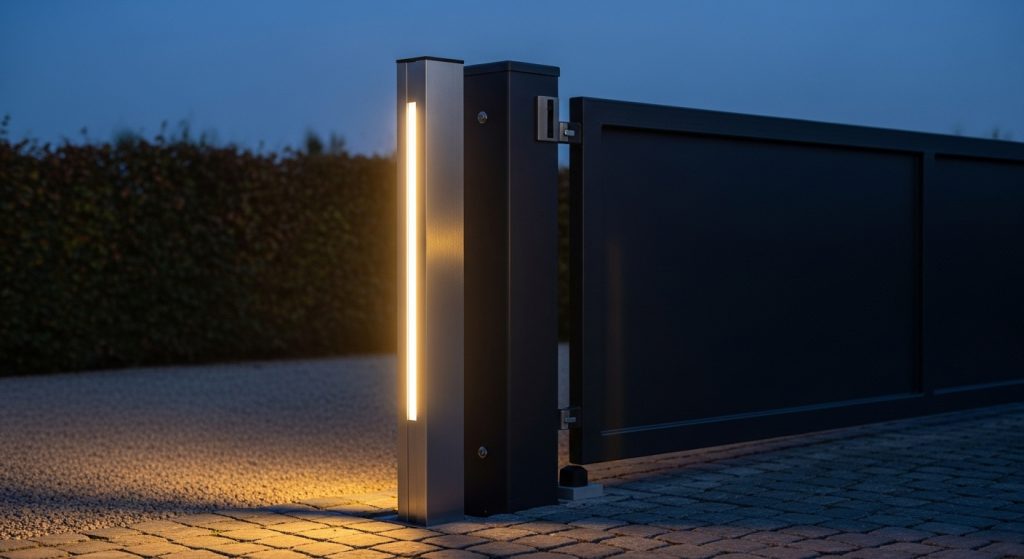
Metal LED Pillar Light for Gates and Entrances
 FACEBOOK
 TWITTER
 LINKEDIN
Metal LED pillar lights serve as the primary beacons of entrance lighting, providing essential boundary illumination for residential and commercial properties alike. These outdoor fixtures are specifically designed to sit atop gate posts, stone pillars, or perimeter walls to mark access lighting points with precision. By providing a steady, reliable glow at a property’s threshold, they transition visitors from the public road to a private sanctuary, ensuring that gates and entryways are easily identifiable from a distance. Their role is not merely decorative; they provide the structural clarity needed to navigate vehicle entries and pedestrian gates safely after dark.
The use of high-quality metal housing ensures these lights can withstand the physical rigors of exposed locations, while integrated LED technology offers controlled illumination that balances brightness with efficiency. Unlike traditional high-intensity floodlights that can blind drivers, LED pillar lights focus their output downward and outward to highlight the ground and the architectural form of the entrance. This intentional planning supports both security and architectural clarity, creating a clear sense of arrival while deterring unauthorized access. Ultimately, well-planned pillar lighting reinforces the visual and physical boundaries of a site, making the first point of contact with a property both secure and aesthetically compelling.
What role pillar lights play in gate and entrance lighting layouts
In a well-designed entrance layout, pillar lights act as the anchors for gate lighting. They are positioned at the most critical access points to ensure that drivers and pedestrians can clearly see the gate’s movement and any changes in the road surface. By marking the vertical limits of an entryway, they provide the necessary depth perception for safe vehicle maneuvering, preventing accidental collisions with posts or side walls.
Beyond safety, these fixtures establish the “first impression” of the property. They guide the flow of movement by providing a visual hierarchy that naturally draws the eye toward the entrance. Whether you are welcoming guests or securing a driveway, pillar lights ensure that the perimeter remains well-defined. This strategic placement allows for a seamless transition into the property, making the boundaries feel intentional rather than accidental.
Why metal housing is important for outdoor pillar lights
Choosing a fixture with a robust metal housing is a non-negotiable requirement for outdoor durability. Entrance pillars are often fully exposed to the elements, facing high-velocity winds, driving rain, and intense UV radiation. Metal construction—typically utilizing high-grade aluminum or stainless steel—provides the fixture strength necessary to resist physical impacts and maintain structural stability over decades of use.
Non-metal alternatives often become brittle, crack, or fade when subjected to constant sunlight and temperature swings. Metal, however, acts as an excellent heat sink for the internal LED components while protecting the seals from degradation. This material choice ensures that the light remains a permanent and reliable part of your property’s hardware, offering a level of longevity that supports the safety and value of your home’s exterior.
How LED pillar lights improve visibility without harsh brightness
Modern controlled illumination focuses on providing visual clarity without the negative side effects of glare. High-quality LED pillar lights utilize internal baffles or frosted diffusers to ensure the light is comfortable for the eyes of arriving drivers. This is vital for maintaining clear sightlines, as excessive brightness at an entrance can actually impair a person’s “night vision,” making it harder to spot obstacles outside the immediate beam of light.
By managing the light comfort, you ensure that the gate area is bright enough for security cameras and human eyes to function effectively without being aggressive. This soft yet powerful output creates a wash of light that highlights the ground and the immediate gate area. The goal is to provide a “safe glow” that makes the property look occupied and monitored while keeping the environment relaxing for residents and guests.
How pillar lights visually define entrances at night
Pillar lights are the masters of architectural lighting for a property’s perimeter. By placing matching fixtures on symmetrical gate posts, you create an entrance emphasis that highlights the scale and style of your home’s design. This symmetry creates a sense of order and prestige, turning a functional gateway into a stunning nighttime feature.
This visual definition also helps to “ground” the property, making it feel more established and secure. The light reveals the texture of the stone or brick pillars, adding a layer of depth that is lost in total darkness. By emphasizing the structural boundaries, you provide a clear signal of where the public world ends and your private space begins, creating a professional and welcoming sense of arrival for every visitor.
How mounting height affects gate and entrance pillar lighting
The mounting height of your pillar lights significantly dictates the illumination range and the overall mood of the entrance. A fixture placed on a tall, 2-meter gate post will naturally have a wider light throw, covering more of the driveway but potentially creating more glare. Conversely, a lower mount on a 1-meter garden wall provides a more intimate, localized light that is excellent for light placement near pedestrian paths.
Balancing visibility with comfort requires coordinating the fixture’s height with the size of the gate and pillars. If the mount is too high, the light may feel disconnected from the ground; if it is too low, it may not provide enough coverage for security. Proper height planning ensures that the light remains functional for safe navigation while maintaining a visually balanced relationship with the surrounding landscape features.
What environmental factors matter for pillar lights at entrances
Fixtures at access points face relentless weather exposure, including heavy rain, dust, and localized heat from pavement. To ensure long-term performance, these lights must feature a high-quality sealed construction—validated by an IP (Ingress Protection) rating—to prevent moisture and debris from entering the housing. This fixture protection is the only way to prevent internal corrosion and lens fogging.
In many outdoor conditions, fine dust or irrigation spray can settle on the lens, reducing light output over time. Choosing a design that is easy to clean and made from corrosion-resistant materials ensures that the light stays bright and the metal housing remains pristine. By accounting for these environmental stressors during the selection process, you guarantee that your entrance lighting remains a dependable safety tool year-round.
What mistakes reduce the effectiveness of entrance pillar lighting
One of the most frequent lighting errors is over-brightness, which can create a “commercial” look that clashes with a residential theme. This often leads to a visual imbalance where the gates are too bright, making the rest of the yard look unnervingly dark. Another common blunder is poor spacing; if pillars are too far apart, you leave dangerous “black holes” along your property line where intruders can hide.
Design inconsistency is also a major pitfall. If your pillar lights don’t match the style or color temperature of your home’s wall lights, the exterior can look messy and unplanned. To avoid these blunders, you should view your entrance lighting as part of a single, unified system. By ensuring that the brightness levels and styles are coordinated with the rest of your landscape, you create a harmonious and professional result.
What should be reviewed before selecting a metal LED pillar light
Before you commit to a purchase, a thorough design review ensures that your hardware choice matches the reality of your property. This selection checklist helps you catch potential issues before the lights are mounted, guaranteeing a successful and durable installation planning process.
- Entrance Scale: Does the fixture size match the width of the gate and the height of the pillars?
- Safety Needs: Does the controlled illumination provide enough light for visual clarity?
- Mounting Logic: Have you planned a mounting height that maximizes light spread on the driveway?
- IP Verification: Is the light rated for weather exposure and dust protection (e.g., IP65+)?
- Style Match: Does the metal housing coordinate with your home’s architectural hardware?
- Light Direction: Does the fixture push light downward to prevent glare and light pollution?
- Maintenance Access: Can you easily reach the fixture for occasional cleaning?
What outdoor wall and pillar residential lights are used around entrances
Outdoor wall pillar residential lights refer to the primary residential lighting systems used to secure home facades and boundaries. These entrance fixtures work together to create a multi-layered effect, ensuring that both the building itself and the property gateways are well-lit and inviting.
How landscape and tree lighting complements entrance pillar lights
Integrating an LED tree light landscape unit into your plan adds depth to your landscape lighting. These fixtures provide a beautiful backdrop for your pillar lights, ensuring that the outdoor coordination remains balanced. By lighting up the trees around your entrance, you expand the visual footprint of your property and create a more immersive and professional look.
What common uses pillar lights have in outdoor residential spaces
The Pillar light uses guide outlines the various pillar light uses for home design. Beyond gates, these fixtures are essential for outdoor access lighting along perimeter walls and garden divisions. They provide a reliable way to mark boundaries and ensure that every walkway on your property is safe and clearly defined.
How mounting height decisions affect entrance pillar light performance
Following an Outdoor wall light mounting height guide is essential for correct mounting height planning. The height of your pillar significantly dictates the final light distribution on the ground. By selecting the right mounting level, you maximize the efficiency of the LED while protecting the visual comfort of everyone entering your property.



- 10 Meters Lamp Post
- 10 Meters Pole
- 1000w Led Projector
- 100W LED Tunnel Light
- 12 Meters Lamp Post
- 12 Meters Pole
- 1200w Led Projector
- 15 Light Pole
- 1500w Led Projector
- 150W LED Tunnel Light
- 1800w Led Projector
- 2 In 1 Solar Flood Light
- 200w Led Tunnel Light
- 50w Led Tunnel Light
- 6 Meters Lamp Post
- 6 Meters Pole
- 8 Meters Lamp Post
- 8 Meters Pole
- 800w Led Projector
- 80w Led Tunnel Light
- Colourful Decorative Light
- Conical post
- Courtyard Lamp
- courtyard light
- courtyard lighting fixture
- Decorative Landscape Light
- Decorative road Light
- Flood Light For Courtyard
- Flood Light for Garden
- Flood Light For Outdoor
- Foot Led High Bay Lights
- high bay led lights 100w
- industrial lampshade
- industrial LED shed lights
- industrial magnifying glass with light
- Integrated Solar Flood Light
- led courtyard lamp
- led courtyard light
- led high bay light 100w
- LED Projector For Stadium
- Led UFO High Bay 150W 5000k
- Lighting Plants Mining Price
- Maintenance Free LED Street Light
- Pic Controlling Tunnel Light
- PLC controlling tunnel light
- Post Top Garden Light
- RGB Landscape Light
- Rgbw Decorative Light
- Smart Tunnel Light
- solar courtyard lamp
- solar courtyard light
- Solar LED Road Light
- Solar Street Light For 10 Meter Pole
- Solar Street Light For 12 Meter Pole
- Solar Street Light For 6 Meter Pole
- Solar Street Light For 8 Meter Pole
- Split Type Solar Flood Light
- Sporting Projector
- Stadium Led Projector
- Street Lighting Post
