
 Request A Quote


Outdoor Garden Light Posts Material and Style Options
 FACEBOOK
 TWITTER
 LINKEDIN
When you plan your outdoor lighting, garden light posts act as both the backbone of your nighttime safety and a central feature of your landscape aesthetics. These posts are not merely structural supports for lamps; they are architectural elements that define the boundaries of your outdoor living space.
Choosing the right material selection is a foundational decision that dictates how well your lighting stands up to the elements and how seamlessly it blends with your plants and stonework. A well-chosen post creates a sense of design harmony, bridging the gap between functional security and the natural beauty of your yard.
Understanding the relationship between outdoor durability and style is key to a successful project. If you prioritize looks over substance, you may find your beautiful fixtures succumbing to rust or fading within a few seasons.
Conversely, choosing purely for utility can leave your garden feeling cold or industrial. Planners must evaluate how different metals and finishes interact with local weather patterns while also considering the visual rhythm of the garden layout. By making informed choices about the physical makeup and artistic form of your light posts, you ensure a long-lasting, inviting environment that serves your family’s needs long after the sun goes down.
What materials are commonly used for outdoor garden light posts
The majority of high-quality metal posts in modern gardens are crafted from aluminum, steel, or cast iron. Aluminum is a favorite for many homeowners because it is lightweight and offers natural weather resistance, ensuring it won’t rust even in high-humidity areas. Steel is prized for its immense structural stability and strength, making it ideal for taller posts that must withstand higher wind loads. Cast iron provides a heavy, traditional feel that is almost indestructible, though it requires regular maintenance to prevent surface oxidation.
In addition to these metals, you may encounter polymer-based or composite materials. These are often used for shorter path lights where weight and cost are primary considerations. However, for main garden lighting, metal remains the standard due to its ability to maintain a straight vertical line over time. Your choice should be based on the local climate and the specific physical demands of the site. A sturdy metal post ensures that your investment stays secure and functional, providing a dependable platform for your outdoor illumination year after year.
How does material choice affect durability and maintenance
Your selection of material is the biggest factor in the service life of your lighting system. Outdoor fixtures are in a constant battle with rain, snow, and UV radiation. Aluminum excels here; it forms a natural protective layer that resists the deep pitting often seen in other metals. This significantly reduces your maintenance needs, as you won’t need to spend your weekends sanding away rust or repainting the base. For those living near the coast, aluminum’s corrosion resistance is a non-negotiable requirement to combat salty air.
Steel and iron, while stronger, require a higher level of care. To ensure long-term health, these posts must be hot-dip galvanized or treated with high-performance powder coatings to create a barrier against moisture. If the finish is scratched during installation, you must touch it up immediately to prevent the spread of rust. While these materials offer a sense of permanence and classic weight, you must be prepared for periodic inspections of the mounting bolts and the finish. Matching the material to your willingness to perform upkeep ensures your garden remains a source of pride rather than a list of chores.
What design styles are available for outdoor garden light posts
The design styles of garden light posts generally fall into three categories: traditional, modern, and minimalist. Traditional posts often feature ornate detailing, fluted columns, and lantern-style heads that evoke a sense of history and visual character. These are perfect for cottage-style yards or classic brick homes where you want the lighting to feel like a timeless part of the architecture. Modern styles, on the other hand, focus on sleek, geometric shapes and brushed metal finishes that complement contemporary garden themes.
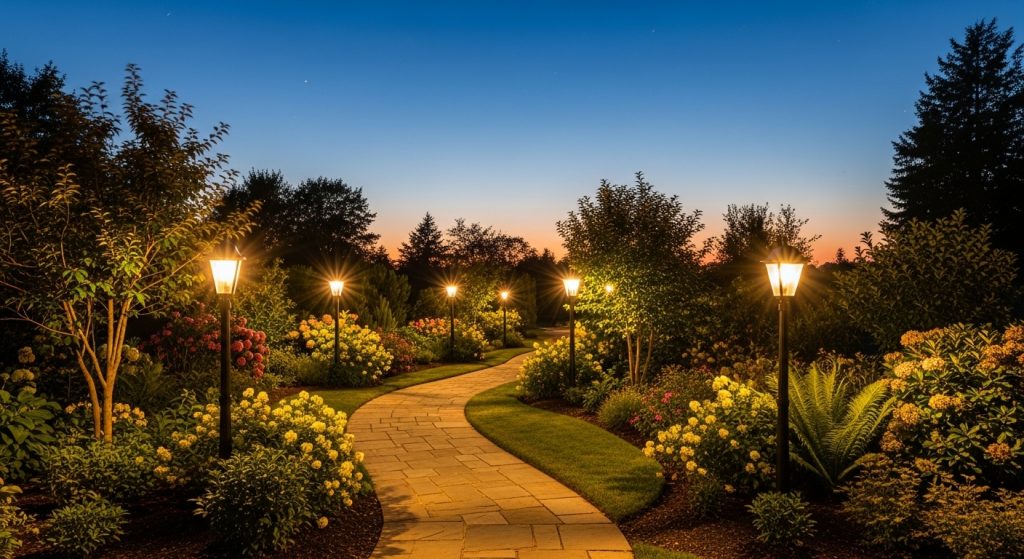
Minimalist designs are intended to disappear into the landscape during the day. These often feature simple, clean lines and dark finishes that let the light itself do the talking at night. When choosing a style, look at the existing lines of your home and hardscaping. A minimalist post might look out of place in a Victorian rose garden, just as a heavy, ornate iron post could overwhelm a modern desert landscape. Finding the right style is about creating a visual bridge between your home’s interior and the natural world outside.
How should garden size and layout influence style selection
The physical garden scale is a vital guide for your style decisions. In a compact courtyard or a narrow side yard, using large, ornate posts can make the space feel overcrowded and cluttered. Here, minimalist or low-profile designs work best to maintain a proper layout balance. You want the lighting to enhance the space, not take it over. In larger, open lawns or estates, you have the room to use more substantial posts with a stronger presence that can act as focal points in the distance.
Proper visual proportion ensures that the posts don’t look like an afterthought. If you have tall trees and wide-open views, small, thin poles will get lost in the scenery. Conversely, if your garden is filled with delicate flowers and small shrubs, a massive 12-foot pole will look industrial and cold. Think about the sightlines from your main seating areas; you want the posts to guide the eye along the paths without blocking the view of your favorite landscape features.
Why post height plays a role in material and style decisions
The post height you choose dictates the structural demand on the material. As a post gets taller, it acts as a longer lever against the wind, meaning you may need to move from lightweight aluminum to heavy-duty steel to ensure safety. This height also changes the visual impact of the style. A traditional lantern style often looks best on a 6-to-8-foot post, whereas modern “bollard” styles are usually much shorter to keep the light focused on the walkway.
You must also coordinate the height with the overall style of your home. A tall, modern column might look great lighting a driveway, but it could feel too aggressive in a small, private patio area. Higher posts provide a wider spread of light, which can reduce the total number of fixtures you need, but they also become a more prominent part of the skyline. Balancing the functional need for height with the aesthetic goal of the garden ensures that the posts remain a harmonious part of the environment, day and night.
How brightness and color tone interact with post design
The light tone of your bulbs can completely change how the post material appears. Warm light (around 2700K) tends to bring out the rich textures of bronze or black-painted iron, creating a cozy and inviting outdoor ambiance. Cooler, blue-toned light often highlights the crisp edges of stainless steel or silver aluminum, making it a better fit for modern, minimalist designs. This interaction is key to achieving visual comfort in your nighttime landscape.
The brightness level should also match the post’s purpose. If you have a highly decorative post, you might use a lower-intensity bulb to create a soft glow that highlights the post’s details without blinding anyone walking by. For pathway posts where safety is the priority, a higher brightness is necessary. However, avoid “over-lighting” your space, as this can create harsh contrasts that make the dark areas feel even more intimidating. By syncing the light output with the post design, you create a balanced, professional look.
What common mistakes reduce the effectiveness of material or style choices
A frequent design mistake is choosing a post based on a picture without considering the local environment. A “material mismatch”—such as using non-galvanized steel in a rainy climate—will lead to performance issues and early failure. Another common blunder is mixing too many different styles in one garden; using a modern post next to a traditional lantern can create a chaotic, unplanned look that ruins the garden’s harmony.
Planners also sometimes ignore the “utility” of the light. If you choose a beautiful post but place it where it creates a dangerous shadow on a set of stairs, the style doesn’t matter. You must always prioritize the lighting’s primary purpose—safety—before finalizing the decorative elements. Finally, avoid underestimating the power of the sun; cheap plastic or poorly painted posts can peel and fade under UV exposure, making your once-vibrant garden look neglected in just a few years.
What should be considered before finalizing garden light post material and style
Before you finalize your purchase, a thorough design planning review is necessary to ensure the hardware is a good fit for the long haul. This check ensures long-term usability and prevents the need for expensive replacements shortly after installation. By reviewing these factors, you can move forward with confidence.
Use this selection checklist to guide your final choice:
- Climate Check: Is the material rated for your local humidity and salt levels?
- Aesthetic Match: Does the post style complement your home’s architecture and garden theme?
- Height & Load: Is the post strong enough for the intended height and wind zone?
- Maintenance: Are you prepared for the upkeep requirements of steel or iron?
- Light Balance: Does the light tone and brightness match the post’s finish and location?
- Layout Check: Is the scale of the post appropriate for the size of your garden?
- Durability: Does the finish offer high UV resistance to prevent fading?
What are garden post top landscape lighting systems and design options
Garden post top landscape lighting refers to fixtures that sit on vertical supports to provide area-wide illumination. These post top design options are the most versatile for gardens, as they allow for 360-degree light distribution. They are often the best choice for entrances or centerpieces where you need a mix of functional safety and high-end landscape lighting.
How should garden lamp post height guide material and style selection
Following a Garden lamp post height guide helps you maintain design proportion. As the lamp post height increases, you generally want to move toward simpler, more structural styles to keep the look balanced. Taller poles often require the added strength of steel to maintain their vertical integrity against the wind.
How many lumens are suitable for different garden lighting styles
The Garden pathway lighting lumens guide suggests that light intensity should be purpose-driven. For a soft, decorative style, lower garden lumens (around 100-200) are perfect. If the post is meant for security or main path visibility, you may need a higher intensity to ensure every obstacle is clearly visible.
How does color temperature influence the look of garden light posts
Choosing the right Garden lights color temperature is essential for setting the outdoor ambiance. A warm color temperature makes traditional materials like wrought iron feel more welcoming, while cooler tones can make modern, metallic posts look sharp and high-tech.



- 10 Meters Lamp Post
- 10 Meters Pole
- 1000w Led Projector
- 100W LED Tunnel Light
- 12 Meters Lamp Post
- 12 Meters Pole
- 1200w Led Projector
- 15 Light Pole
- 1500w Led Projector
- 150W LED Tunnel Light
- 1800w Led Projector
- 2 In 1 Solar Flood Light
- 200w Led Tunnel Light
- 50w Led Tunnel Light
- 6 Meters Lamp Post
- 6 Meters Pole
- 8 Meters Lamp Post
- 8 Meters Pole
- 800w Led Projector
- 80w Led Tunnel Light
- Colourful Decorative Light
- Conical post
- Courtyard Lamp
- courtyard light
- courtyard lighting fixture
- Decorative Landscape Light
- Decorative road Light
- Flood Light For Courtyard
- Flood Light for Garden
- Flood Light For Outdoor
- Foot Led High Bay Lights
- high bay led lights 100w
- industrial lampshade
- industrial LED shed lights
- industrial magnifying glass with light
- Integrated Solar Flood Light
- led courtyard lamp
- led courtyard light
- led high bay light 100w
- LED Projector For Stadium
- Led UFO High Bay 150W 5000k
- Lighting Plants Mining Price
- Maintenance Free LED Street Light
- Pic Controlling Tunnel Light
- PLC controlling tunnel light
- Post Top Garden Light
- RGB Landscape Light
- Rgbw Decorative Light
- Smart Tunnel Light
- solar courtyard lamp
- solar courtyard light
- Solar LED Road Light
- Solar Street Light For 10 Meter Pole
- Solar Street Light For 12 Meter Pole
- Solar Street Light For 6 Meter Pole
- Solar Street Light For 8 Meter Pole
- Split Type Solar Flood Light
- Sporting Projector
- Stadium Led Projector
- Street Lighting Post
