
 Request A Quote


Outdoor Metal LED Wall Light Waterproof Designs
 FACEBOOK
 TWITTER
 LINKEDIN
Integrating waterproof metal LED wall lights into your residential exterior lighting plan is a fundamental step toward achieving long-term reliability and high-end aesthetics. These fixtures are designed to be the architectural workhorses of your home’s facade, providing essential illumination for entrances, porches, and perimeter walls. Unlike indoor lamps, which would quickly succumb to the elements, these outdoor units utilize a metal housing specifically engineered to act as a protective vault for the sensitive LED components. This robust construction ensures that the fixture maintains its outdoor durability, resisting the physical impacts of wind-blown debris and the structural stress of extreme temperature fluctuations.
The cornerstone of their performance is a specialized weather resistance that prevents moisture from entering the internal electronics. Without this protection, rain, snow, and even high humidity can lead to internal corrosion or electrical short-circuits. By choosing a waterproof design, you ensure that your investment remains bright and functional through every season, reducing the need for costly replacements. Furthermore, these lights serve a dual role: they enhance pedestrian safety by clearly defining the building’s boundaries and elevate the home’s nighttime character through sophisticated light-and-shadow effects. Informed selection of waterproof wall lights allows you to create a secure, inviting environment that reflects the architectural quality of your home while standing up to the harshest outdoor conditions.
What makes a metal LED wall light suitable for outdoor environments
The primary advantage of metal construction in outdoor fixtures is the combination of structural stability and thermal management. Metals like high-grade aluminum are excellent at dissipating the heat generated by LED chips, which is critical for extending the light’s lifespan. An indoor light placed in a garden would likely overheat or warp, but a dedicated outdoor metal fixture provides a rigid frame that keeps internal parts perfectly aligned.
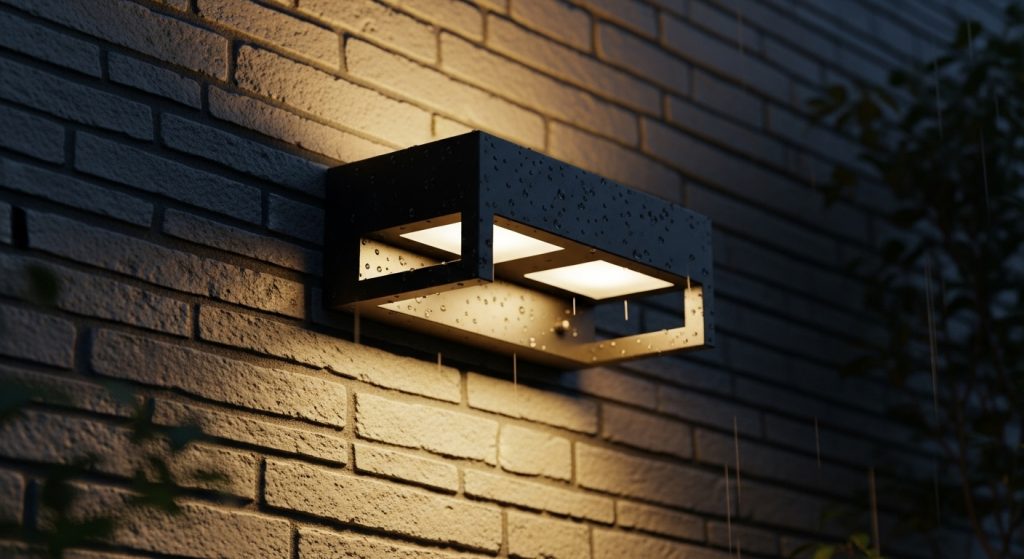
Furthermore, the outdoor exposure faced by residential lights involves more than just rain; it includes intense UV rays that can make plastic fixtures brittle and yellowed within months. Metal remains unaffected by sunlight, maintaining its physical integrity over decades. This structural brawn ensures that the fixture can handle accidental bumps or heavy winds without cracking, providing a “fit and forget” solution for homeowners who prioritize safety and professional-grade performance in their lighting layout.
How waterproof design protects wall lights from rain and moisture
A successful weatherproof design relies on a series of specialized waterproof sealing methods, such as silicone gaskets and precision-fit O-rings. These seals create an airtight environment inside the casing, ensuring that no matter how hard the rain hits, the internal “light engine” remains dry. This is particularly vital for preventing the “fogging” effect inside the lens, which can dim the light and ruin the visual appeal of your home’s facade.
Moisture protection is also essential for preventing the silent threat of internal corrosion. Even microscopic amounts of water can cause copper connections to oxidize, leading to flickering or total failure. By sealing every entry point—including the cable inlet and the glass cover—manufacturers create a vacuum-like seal that locks out humidity. This level of engineering ensures that your outdoor lighting remains a dependable safety tool, providing a consistent glow during a summer thunderstorm just as reliably as on a clear winter night.
How metal finishes influence longevity and appearance outdoors
While the internal metal provides the strength, the surface coating provides the defense against the environment. Most high-quality outdoor wall lights feature an architectural powder coating, which is baked onto the metal housing to create a tough, non-porous barrier. This coating is the primary factor in a fixture’s corrosion resistance, preventing salt-air or acidic rain from reaching the underlying metal and causing rust or pitting.
A durable finish also ensures that the fixture maintains its finish durability over time. Cheap paint will eventually peel or flake when exposed to the sun and rain, but a treated metal surface keeps its color and texture for years. Whether you choose a matte black, bronze, or silver finish, these coatings are formulated to be UV-stable, ensuring that your home’s lighting looks as sophisticated and well-maintained in five years as it did on the day of installation.
Where waterproof metal LED wall lights are commonly used in homes
In most residential exteriors, these fixtures act as the primary source of entry lighting. Placing them on either side of a front door or a garage bay provides the high-visibility light needed for safe navigation and security. They create a welcoming atmosphere for guests while ensuring that all primary access points are clearly illuminated to deter intruders.
Beyond entrances, these lights are essential for facade illumination, where they are used to highlight architectural textures like stone or brickwork. They are also frequently installed along courtyards and boundary walls to provide a sense of scale and safety for outdoor social areas. By placing waterproof lights in these exposed locations, you can expand your living space into the garden, creating a multi-dimensional environment that feels open and secure regardless of the weather.
How glare control improves comfort in outdoor wall lighting
High-performance wall lights often incorporate glare reduction features, such as internal baffles or perforated metal screens. These designs are intended to provide visual comfort by shielding the direct light source from the eyes of pedestrians. Instead of a blinding “hot spot,” you see a soft, indirect glow that illuminates the wall and ground effectively, making the outdoor space feel more relaxed and inviting.
This controlled light output is especially important near walkways and seating areas. By directing the light downward or through a patterned diffuser, you eliminate the “dazzle” effect that can make it difficult to navigate in the dark. Choosing fixtures that prioritize light quality over raw brightness ensures that your home’s exterior is not just well-lit, but is also a comfortable environment for your family and guests to enjoy.
How wall lights interact with other residential outdoor lighting
A professional lighting layout is never about a single fixture; it is about achieving a layout coordination between wall lights, garden spots, and pillar lighting. This layered lighting approach adds depth to your property, where the wall lights define the structure, and other fixtures define the landscape. This prevents the “flat” look of a yard that is over-lit by a single, powerful source.
To achieve a proper brightness balance, you should plan your wall lights as part of a unified scheme. For example, your entrance wall lights should be the brightest point, with lower-intensity garden lights providing soft accents in the distance. This hierarchy of light guides the eye naturally through the space and ensures that your property doesn’t look like a commercial parking lot. By coordinating the styles and intensities of your fixtures, you create a harmonious nighttime environment that feels both safe and professionally designed.
What common mistakes reduce the effectiveness of waterproof wall lights
One of the most frequent installation errors is mounting wall lights at the incorrect height. If they are placed too high, the light dissipates before it reaches the ground; if they are too low, they can blind people walking by. Another common blunder is ignoring the waterproof rating for specific locations; a light meant for a covered porch may not have the performance loss protection needed for an open, unshielded wall.
Homeowners also sometimes place lights too close to highly reflective surfaces like glass windows or glossy white siding, which can cause a lighting imbalance and distracting reflections. To avoid these blunders, you should always conduct a “night test” with a powerful flashlight to see where the shadows and reflections will fall. By anticipating how the light interacts with your home’s surfaces and height, you can ensure that your waterproof fixtures provide the maximum possible benefit for your safety and curb appeal.
What checklist should guide selection of outdoor metal LED wall lights
Before you finalize your order, a thorough outdoor planning review is necessary to ensure the hardware is a perfect match for your home. This selection checklist acts as your final fixture evaluation, helping you avoid expensive replacements and ensuring a professional result.
- IP Rating: Does the fixture have a verified waterproof rating (e.g., IP65) for its location?
- Material Quality: Is the metal housing made of a durable, heat-dissipating material like aluminum?
- Finish Type: Is the surface coating UV-stable and rated for corrosion resistance?
- Glare Control: Does the design include shielding or diffusers to protect visual comfort?
- Size & Scale: Is the fixture’s size in proportion with your door and home facade?
- Color Temperature: Does the light tone match your existing garden and indoor lighting?
- Mounting Logic: Have you planned the exact height to maximize light spread on the ground?
Are outdoor wall pillar residential lights part of exterior lighting systems?
Outdoor wall pillar residential lights refer to the primary wall lighting systems used in home design. These fixtures work together to provide residential exterior lights that cover both the building facade and the property boundaries. They ensure that every corner of the home is accounted for in a single, cohesive lighting plan.
How metal LED pillar lights complement wall-mounted lighting
Choosing a Metal LED pillar light adds a layer of boundary illumination to your yard. These pillar lighting units act as beacons that mark the edges of your driveway or garden, working in harmony with your wall lights to provide a multi-layered effect. Together, they expand the perceived size of your property and create a much safer and more inviting environment.
How LED tree lights add depth to residential outdoor lighting layouts
Integrating an LED tree light landscape fixture into your layout provides essential landscape layering. These tree lighting units complement your wall lights by adding vertical interest to the natural features of your garden. By lighting up your trees, you prevent the house from feeling isolated in a dark void, creating a more balanced and beautiful nighttime profile.
How residential garden lighting layouts support wall light placement
A professional Residential garden lighting layout focuses on fixture coordination. By planning your wall lights as part of a wider garden lighting layout, you can ensure that the brightness levels are balanced and that the styles do not clash. This holistic approach ensures that your entire outdoor space feels like a single, well-planned environment.
Why perforated light designs help control glare in outdoor wall lighting
The Perforated lights glare control guide explains how these fixtures achieve superior glare management. By shielding the direct light source, they improve visual comfort for everyone using the outdoor space. This makes perforated designs a smart choice for high-traffic residential areas where both safety and a relaxing ambiance are required.



- 10 Meters Lamp Post
- 10 Meters Pole
- 1000w Led Projector
- 100W LED Tunnel Light
- 12 Meters Lamp Post
- 12 Meters Pole
- 1200w Led Projector
- 15 Light Pole
- 1500w Led Projector
- 150W LED Tunnel Light
- 1800w Led Projector
- 2 In 1 Solar Flood Light
- 200w Led Tunnel Light
- 50w Led Tunnel Light
- 6 Meters Lamp Post
- 6 Meters Pole
- 8 Meters Lamp Post
- 8 Meters Pole
- 800w Led Projector
- 80w Led Tunnel Light
- Colourful Decorative Light
- Conical post
- Courtyard Lamp
- courtyard light
- courtyard lighting fixture
- Decorative Landscape Light
- Decorative road Light
- Flood Light For Courtyard
- Flood Light for Garden
- Flood Light For Outdoor
- Foot Led High Bay Lights
- high bay led lights 100w
- industrial lampshade
- industrial LED shed lights
- industrial magnifying glass with light
- Integrated Solar Flood Light
- led courtyard lamp
- led courtyard light
- led high bay light 100w
- LED Projector For Stadium
- Led UFO High Bay 150W 5000k
- Lighting Plants Mining Price
- Maintenance Free LED Street Light
- Pic Controlling Tunnel Light
- PLC controlling tunnel light
- Post Top Garden Light
- RGB Landscape Light
- Rgbw Decorative Light
- Smart Tunnel Light
- solar courtyard lamp
- solar courtyard light
- Solar LED Road Light
- Solar Street Light For 10 Meter Pole
- Solar Street Light For 12 Meter Pole
- Solar Street Light For 6 Meter Pole
- Solar Street Light For 8 Meter Pole
- Split Type Solar Flood Light
- Sporting Projector
- Stadium Led Projector
- Street Lighting Post
