
 Request A Quote


What Is a Pillar Light and Where Should You Use It
 FACEBOOK
 TWITTER
 LINKEDIN
An outdoor pillar light is a specialized pillar fixture designed to be mounted onto flat-topped vertical structures such as brick posts, stone columns, or boundary walls. Unlike a standard post light that stands on its own tall pole, a pillar light is typically shorter and sturdier, acting as a functional cap for existing architectural elements. Its primary role in outdoor lighting is to provide access illumination and spatial organization, clearly marking transition points like gates, driveways, and property thresholds. By sitting atop these structures, the fixture creates a “beacon” effect that guides pedestrians and vehicles while grounding the architectural boundaries of the site.

Beyond its structural form, a pillar light functions by casting a controlled glow—often downward or through a diffuser—to light the immediate surrounding ground and the vertical surface of the pillar itself. This supports property boundaries visibility without the aggressive light spill often associated with high-mounted floodlights. In residential design, these lights are indispensable for creating a sense of order; they tell the story of where the public road ends and the private sanctuary begins. By prioritizing visibility and structural definition over pure decoration, pillar lights ensure that the most critical junctions of your property remain navigable and secure throughout the night.
How a pillar light is different from wall and post lights
Understanding the functional separation between lighting fixtures is key to a successful layout. A pillar light is defined by its specific mounting style; it requires a pre-existing flat surface, such as the top of a stone column or gate post. In contrast, wall lights are attached to vertical facades, and post lights are integrated into their own tall, freestanding poles. This difference in height significantly changes the light direction. While post lights provide elevated, wide-area coverage, pillar lights offer localized illumination that is closer to the ground, focusing on the immediate area around the structure they sit upon.
This distinction allows for a more tailored approach to your yard. Wall lights handle the “task” lighting near entrances, while pillar lights manage the “wayfinding” at the edges of the property. Because pillar lights are mounted at a mid-level height, they are less likely to cause the long, distractive shadows that often occur with taller post lights. By choosing the right fixture for the right location, you ensure that every part of your property is lit efficiently, preventing over-lighting in some areas and dangerous dark zones in others.
What design features define a typical outdoor pillar light
The fixture design of a pillar light is built for stability and focus. Most models feature a broad, weighted base that allows for secure pillar mounting, ensuring the unit stays level even in high winds. The housing is typically constructed from durable metals like aluminum to provide structural lighting support for the internal LED components. A key defining feature is the optic system; many pillar lights are designed with baffles or frosted lenses to push light downward or outward in a 360-degree pattern, illuminating the column beneath them and the path ahead.
In modern designs, you may also find perforated or geometric cutouts that help manage light output while adding visual interest. The materials are chosen specifically for their ability to handle the “heat sink” requirements of LEDs, ensuring the electronics don’t overheat during long summer nights. Because these fixtures are highly visible during the day, their physical form often reflects a specific architectural theme—ranging from minimalist contemporary blocks to classic lanterns—allowing them to serve as permanent hardware that enhances the home’s exterior character.
Where pillar lights are commonly used around residential properties
Pillar lights are the gold standard for boundary definition in residential lighting. Their most common application is atop gate pillars at the start of a driveway or pedestrian entrance. In these locations, they provide the necessary contrast to reveal the opening in a fence or wall, making it easy for arriving guests to orient themselves. They also serve as a protective barrier, marking the vertical edges of the gate to prevent accidental vehicle collisions in the dark.
Beyond gates, these fixtures are frequently used along boundary walls to break up long stretches of masonry and provide pathway visibility. If you have a terraced garden with low retaining walls, placing pillar lights at the corners or near steps provides essential safety markers. They are also effective in entry zones, such as the pillars of a front porch or a backyard deck. By distributing these lights at regular intervals along the perimeter, you create a cohesive “frame” for your property that makes the entire yard feel more secure and professionally designed.
Why pillar lights are effective for guiding movement outdoors
Effective wayfinding is about more than just brightness; it is about providing the brain with “landmarks” for visual orientation. Pillar lights are exceptionally good at this because they sit at a natural height for human perception. When you see a row of glowing pillars, you instinctively understand the path’s direction and the property’s layout. This reduces the stress of navigating a dark yard and creates a much smoother experience for visitors who may be unfamiliar with your home’s geography.
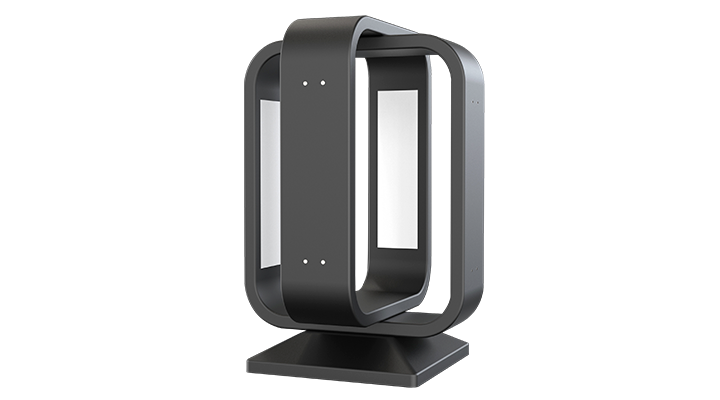
These fixtures also improve outdoor safety by reducing dark transition areas. By lighting the vertical columns as well as the ground, they eliminate the deep shadows where tripping hazards can hide. For vehicles, they provide a clear reference point for the width of the driveway, which is critical for safe maneuvering. By providing consistent visual guidance at eye-level and ground-level simultaneously, pillar lights ensure that every movement—whether on foot or behind the wheel—is predictable and secure.
How brightness and beam control affect pillar light performance
Since pillar lights are often mounted near eye level, beam control is essential for maintaining visual comfort. If a fixture is too bright or unshielded, it will cause aggressive glare that can blind arriving drivers or pedestrians. High-quality pillar lights use internal reflectors or “down-lighting” designs to ensure that the light is directed where it is needed—on the pillar and the floor—rather than into the eyes of users. This light balance is what separates a professional installation from a DIY effort.
The relationship between the illumination range and the mounting height is also a factor. A pillar light on a 2-meter tall gate post will cast light further than one on a 1-meter garden wall. You must choose a lumen output that matches the height; a taller mount requires a bit more power to reach the ground effectively, while a lower mount needs a softer glow to avoid “hot spots.” Proper beam management ensures that the light is functional for security without ruining the peaceful, nighttime ambiance of your neighborhood.
How environmental exposure influences pillar light selection
Fixtures mounted on property boundaries face the most intense outdoor exposure in the yard. Unlike wall lights that may be partially sheltered by a roof, pillar lights are often completely open to the sky, facing wind-driven rain, dust, and direct UV rays. This makes weather resistance and a high-quality sealed construction—validated by an IP rating—non-negotiable for long-term outdoor reliability.
[Image showing a waterproof seal and internal gaskets of an outdoor pillar light]
Fixture protection also involves the material choice; in coastal areas, salt-air can quickly corrode unprotected metals, while in dusty climates, fine particles can enter the lens and dim the light. Choosing a pillar light with a robust finish and proven waterproofing ensures that moisture never reaches the internal connections. This durability prevents the common problems of lens fogging and electrical failure, guaranteeing that your property’s “beacons” stay bright and reliable through every storm and season.
What common mistakes lead to poor pillar light placement
One of the most frequent installation errors is a lighting imbalance caused by poor spacing. If pillar lights are placed too far apart, you leave dangerous “black holes” along your property line. Conversely, if they are too close, the yard can look like a commercial parking lot. Another common blunder is putting excessively bright lights at an entrance, which can ruin the visual comfort of your home’s facade and cause a “glare wall” for arriving guests.
Poor placement also occurs when you ignore the other layers of light in your garden. If your pillar lights are the only source of illumination, the rest of the yard will look unnervingly dark by comparison. To avoid these blunders, you should think of your pillar lights as part of a larger system that includes wall and pathway lights. By coordinating the brightness levels and styles, you create a harmonious and professional result that enhances your home’s architecture rather than clashing with it.
What should be considered before deciding where to use pillar lights
Before you commit to an installation, a thorough usage planning review ensures that your fixtures are a perfect match for your property. This installation checklist helps you catch potential issues before the first hole is drilled, guaranteeing a professional and lasting lighting layout.
- Primary Purpose: Is the light for gate security, boundary marking, or walkway guidance?
- Structure Check: Are the pillars stable, level, and wide enough for the fixture’s base?
- Height & Spacing: Have you planned a distance that ensures uniform illumination?
- Glare Audit: Is the light direction pointed away from the eyes of drivers and neighbors?
- IP Verification: Does the fixture have the necessary weather resistance (e.g., IP65+)?
- Material Style: Does the fixture design coordinate with your home’s hardware and Outdoor wall pillar residential lights?
- Power Access: Have you planned for wiring or a high-sun location for solar options?
What outdoor wall and pillar lights are typically used in residential spaces
Outdoor wall pillar residential lights refer to the primary residential outdoor lighting systems used to secure home facades and boundaries. These pillar fixtures work together with wall lamps to create a multi-layered effect, ensuring that the entire property footprint is well-lit, inviting, and safe.
How metal construction improves pillar light durability outdoors
Choosing a Metal LED pillar light provides the superior metal housing needed for outdoor durability. Metal stands up to physical impacts and UV exposure much better than plastic, ensuring that your property beacons remain upright and functional for decades. This structural strength is the foundation of a high-end landscape design.
What waterproof ratings matter for pillar lights used outdoors
Reviewing a Waterproof wall lights IP guide is essential for fixtures at property boundaries. Because they face constant weather exposure, a high IP rating is a technical guarantee that rain and dust won’t enter the housing. This protection prevents internal corrosion and ensures that your lighting stays reliable through all seasons.
How pillar lights fit into residential garden lighting layouts
A professional Residential garden lighting layout focuses on how different fixtures interact. In a residential landscape, pillar lights provide the structural markers that define the space, while path and tree lights add depth. Coordinating these elements ensures a balanced, professional look for your home’s exterior.
How glare control features improve comfort around pillar lights
The Perforated lights glare control guide explains how glare control improves visual comfort. By using shielded designs to filter the light, these fixtures prevent the “blinding” effect that can occur at eye-level. This is a critical consideration for gate and entrance lighting where safety and comfort must go hand-in-hand.



- 10 Meters Lamp Post
- 10 Meters Pole
- 1000w Led Projector
- 100W LED Tunnel Light
- 12 Meters Lamp Post
- 12 Meters Pole
- 1200w Led Projector
- 15 Light Pole
- 1500w Led Projector
- 150W LED Tunnel Light
- 1800w Led Projector
- 2 In 1 Solar Flood Light
- 200w Led Tunnel Light
- 50w Led Tunnel Light
- 6 Meters Lamp Post
- 6 Meters Pole
- 8 Meters Lamp Post
- 8 Meters Pole
- 800w Led Projector
- 80w Led Tunnel Light
- Colourful Decorative Light
- Conical post
- Courtyard Lamp
- courtyard light
- courtyard lighting fixture
- Decorative Landscape Light
- Decorative road Light
- Flood Light For Courtyard
- Flood Light for Garden
- Flood Light For Outdoor
- Foot Led High Bay Lights
- high bay led lights 100w
- industrial lampshade
- industrial LED shed lights
- industrial magnifying glass with light
- Integrated Solar Flood Light
- led courtyard lamp
- led courtyard light
- led high bay light 100w
- LED Projector For Stadium
- Led UFO High Bay 150W 5000k
- Lighting Plants Mining Price
- Maintenance Free LED Street Light
- Pic Controlling Tunnel Light
- PLC controlling tunnel light
- Post Top Garden Light
- RGB Landscape Light
- Rgbw Decorative Light
- Smart Tunnel Light
- solar courtyard lamp
- solar courtyard light
- Solar LED Road Light
- Solar Street Light For 10 Meter Pole
- Solar Street Light For 12 Meter Pole
- Solar Street Light For 6 Meter Pole
- Solar Street Light For 8 Meter Pole
- Split Type Solar Flood Light
- Sporting Projector
- Stadium Led Projector
- Street Lighting Post
