
 Request A Quote


How to Plan Residential Garden Lighting Layout with Zones
 FACEBOOK
 TWITTER
 LINKEDIN
A professional garden lighting layout is built on the principle of zoning, which moves beyond the habit of scattered, random fixtures and toward a structured outdoor planning strategy. Zoning involves dividing your yard into specific segments based on their primary function—such as dining, movement, or decorative display. By categorizing these lighting zones, you can manage light intensity more effectively, ensuring that high-traffic paths are bright and safe while relaxation areas maintain a soft, inviting glow. This systematic approach prevents the “flat” look of over-illuminated spaces and the disorientation caused by unexpected dark gaps.
In a residential landscape, zoning is the primary tool for improving both usability and aesthetics. It allows you to create a visual hierarchy where your home’s architecture and favorite garden features take center stage, while functional lights handle the practicalities of navigation. Successful zoning requires an understanding of how light transitions from one area to another; a balanced layout ensures these transitions are gradual and comfortable for the eye. By planning your zones before installation, you avoid the visual clutter of mismatched fixtures and ensure every light serves a clear, intentional purpose within the wider outdoor environment.
Why a zone-based approach works better than scattered garden lighting
Without a clear lighting structure, outdoor spaces often fall into the trap of being either dangerously dark or aggressively over-lit. Scattered lighting lacks visual balance, creating a “spotty” effect that makes a garden feel fragmented and disorganized. A zone-based approach solves this by providing outdoor organization, grouping fixtures to serve specific activities. This ensures that the light is concentrated where it is truly needed, rather than being wasted on empty lawn space.
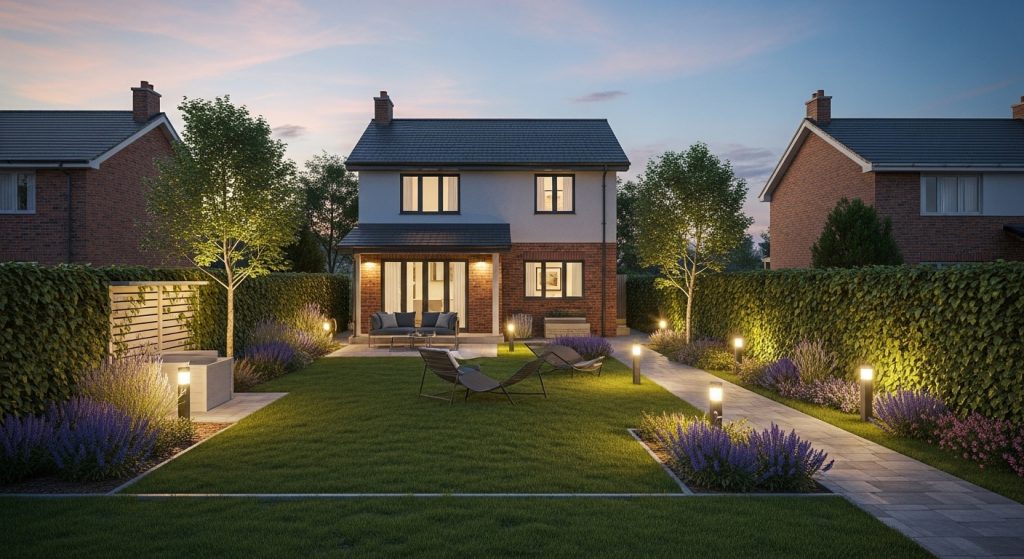
By treating the garden as a series of connected rooms, you can tailor the light to the mood of each area. Zoning allows you to define the boundaries of your living space, making the yard feel like a cohesive extension of your home. It also simplifies the technical side of the project, as you can plan your wiring or solar placement around these distinct clusters. Ultimately, zoning transforms a simple collection of lights into a professional-grade system that enhances the security and beauty of your entire property.
What defines a lighting zone in a residential garden
A lighting zone is defined by its functional areas and the specific activities that take place within them. Unlike a physical room with walls, a zone in a garden uses light to create space definition. For example, a “Dining Zone” may consist of warm, low-intensity light centered around a patio table, while a “Security Zone” focuses on high-visibility light at the garage entrance. The boundaries between these zones are often marked by changes in light color, brightness, or fixture style.
Identifying these lighting zones is the first step in creating a professional layout. You must consider how you intend to use the space at night. Is the goal to entertain guests, provide safe passage for children, or simply highlight architectural beauty? By matching the light to the task, you ensure that the yard remains functional and comfortable. This clarity of purpose prevents “light spill”—where a bright security light ruins the atmosphere of a quiet seating area—resulting in a much more harmonious outdoor experience.
How to identify key lighting zones in a typical home garden
Identifying your garden areas starts with a walkthrough of your property after dusk. The most common starting point is the “Access Zone,” which includes path lighting for driveways, entryways, and walkways. These areas require consistent, reliable light to ensure safety. Next, look for “Social Zones” like patios, decks, or fire pits, where the focus shifts toward ambient light that supports conversation and relaxation without causing glare.
Finally, consider your “Feature Zones,” which utilize feature lighting to highlight trees, statues, or water elements. These zones are purely decorative and add depth to the background of your landscape. By mapping these categories, you can decide which fixture types are best suited for each role. This identification process ensures that no part of the garden is neglected and that the most important areas of your home’s exterior are given the appropriate level of attention and light.
How different zones require different light intensity and spread
Achieving visual comfort requires you to vary the light intensity across different parts of the yard. For example, a pathway requires a broad, even “wash” of light that stays low to the ground to reveal obstacles. In contrast, a decorative feature zone might use a narrow, high-intensity beam to “spotlight” a specific plant. Managing this brightness control is what gives a garden its professional, multi-dimensional character.
It is also vital to plan for the transitions between zones. A sudden jump from a pitch-black corner to a bright floodlight can be jarring and uncomfortable for the eyes. By using “transition lighting”—softer, mid-level light—you can guide the eye gently from one zone to the next. This creates a much more relaxing environment and ensures that the overall layout feels like a single, well-thought-out system rather than a series of disconnected bright spots.
How pillar and wall lights help define garden zones
Vertical elements like pillar lighting and wall fixtures act as the architectural anchors for your zone separation. By placing matching pillar lights at the entrance to a social zone, you create a “gateway” effect that clearly marks the transition from a path to a seating area. These fixtures serve as visual anchors, grounding the light and providing a sense of scale and order to the landscape.
Wall lights on the facade of the house provide the high-level ambient light that defines the inner boundary of your garden zones. They anchor the social areas nearest to the home, while pillar lights further out in the yard define the property perimeters. Together, these vertical fixtures create a “frame” for your garden, ensuring that the spatial organization is clear even in total darkness. By using these structural lights strategically, you can guide movement and define the “walls” of your outdoor rooms.
How mounting height affects zone clarity and light overlap
The mounting height of your fixtures is a critical lever for light distribution. A wall light mounted high on a facade will cast a wide, broad beam that covers a large area, making it ideal for general security. However, if that same light is intended for a quiet dining zone, it may need to be mounted lower to keep the light focused and intimate, preventing it from spilling into adjacent zones where darkness is desired.
Effective installation planning involves coordinating the height with the specific purpose of the zone. Low-level path lights keep the light concentrated on the floor, preserving the “night sky” feel of the garden. High-mounted fixtures provide the necessary safety for larger areas. By carefully selecting the height for each fixture, you ensure that the zones remain distinct and that the light only goes where it is intended, resulting in a cleaner and more professional-looking layout.
How weather exposure influences zone-based lighting decisions
Fixtures face varying levels of outdoor exposure depending on which zone they occupy. A wall light in a “Social Zone” under a covered porch may only need moderate weather resistance, while a pillar light marking the “Boundary Zone” at the edge of the property is fully exposed to wind-driven rain and dust. Selecting the appropriate fixture protection for each location is essential for the long-term reliability of the system.
In zones near irrigation systems or low-lying areas where water pools, you must prioritize high IP ratings (such as IP66 or IP67). This ensures that the delicate LED components are protected from moisture and corrosion. By accounting for the environmental stressors of each specific zone during the planning phase, you reduce the need for future maintenance and prevent the frustration of failing lights after a heavy storm. A durable system is a direct result of matching the hardware to the exposure of its zone.
What planning mistakes weaken a zoned garden lighting layout
One of the most frequent planning errors is “flat lighting,” where every zone is treated with the same intensity. This results in a lighting imbalance that lacks depth and makes the garden look like a commercial parking lot. Another common blunder is overlighting decorative areas; if your feature trees are too bright, they will cast long, distracting shadows that ruin the visual comfort of the social zones.
Ignoring the transitions between zones is also a major pitfall. If a path suddenly ends in total darkness before reaching the patio, it creates a safety risk and a sense of disconnection in the layout issues. To avoid these blunders, you should always test your light levels at night with a powerful flashlight to see how the zones interact. By anticipating how the light flows, you can create a layout that feels intentional, balanced, and professionally curated.
What should be mapped before finalizing a zoned garden lighting plan
Before you start digging or mounting fixtures, a thorough installation review is necessary to ensure your layout mapping is accurate. This planning checklist helps you catch potential issues before they become permanent problems, ensuring a professional and beautiful result for your garden.
- Activity Zones: Have you identified where people will walk, eat, and relax?
- Boundary Markers: Are the edges of the zones clearly defined with structural light?
- Intensity Levels: Is there a clear hierarchy between safety, social, and feature light?
- Transition Paths: Is the light flow consistent between adjacent zones?
- Exposure Review: Do the fixtures match the weather resistance needs of their zone?
- Mounting Logic: Have you confirmed the best mounting height for each fixture?
- Sightlines: Do the zones look balanced from both inside the house and out in the yard?
What outdoor wall and pillar lights are commonly used in residential gardens
Outdoor wall pillar residential lights are the foundational garden fixtures used to anchor a zoned layout. These residential lighting units work together to define the structure of your home’s facade and its property boundaries. They provide the necessary vertical light that separates functional zones and ensures a safe, well-organized environment.
How metal LED pillar lights support zone boundaries and entrances
Choosing a Metal LED pillar light provides the sturdy, vertical illumination needed for zone definition. These pillar lighting units act as visual markers for gateways and garden borders. By providing a reliable glow at eye-level, they ensure that the transitions between your garden zones are clear, safe, and professionally framed.
What common uses pillar lights have in zoned garden layouts
The Pillar light uses guide outlines the various pillar light uses for your garden zones. Beyond marking entrances, these fixtures are essential for defining the perimeter of social areas and providing task lighting for driveways. Understanding their versatility allows you to use them effectively as structural anchors in your layout.
What IP ratings are appropriate for different garden lighting zones
Reviewing a IP65 IP66 IP67 rating guide is vital for matching IP rating protection to zone exposure. Depending on how exposed a zone is to rain or irrigation, you may need a higher level of sealing. Ensuring that each fixture has the right rating prevents internal corrosion and guarantees long-term performance for your outdoor project.
How mounting height planning improves zone separation in garden lighting
Following an Outdoor wall light mounting height guide is essential for achieving zone clarity. The mounting height significantly dictates the spread of light and how it interacts with adjacent areas. By placing your fixtures at the optimal level, you maximize the efficiency of each zone while maintaining a professional and attractive look.



- 10 Meters Lamp Post
- 10 Meters Pole
- 1000w Led Projector
- 100W LED Tunnel Light
- 12 Meters Lamp Post
- 12 Meters Pole
- 1200w Led Projector
- 15 Light Pole
- 1500w Led Projector
- 150W LED Tunnel Light
- 1800w Led Projector
- 2 In 1 Solar Flood Light
- 200w Led Tunnel Light
- 50w Led Tunnel Light
- 6 Meters Lamp Post
- 6 Meters Pole
- 8 Meters Lamp Post
- 8 Meters Pole
- 800w Led Projector
- 80w Led Tunnel Light
- Colourful Decorative Light
- Conical post
- Courtyard Lamp
- courtyard light
- courtyard lighting fixture
- Decorative Landscape Light
- Decorative road Light
- Flood Light For Courtyard
- Flood Light for Garden
- Flood Light For Outdoor
- Foot Led High Bay Lights
- high bay led lights 100w
- industrial lampshade
- industrial LED shed lights
- industrial magnifying glass with light
- Integrated Solar Flood Light
- led courtyard lamp
- led courtyard light
- led high bay light 100w
- LED Projector For Stadium
- Led UFO High Bay 150W 5000k
- Lighting Plants Mining Price
- Maintenance Free LED Street Light
- Pic Controlling Tunnel Light
- PLC controlling tunnel light
- Post Top Garden Light
- RGB Landscape Light
- Rgbw Decorative Light
- Smart Tunnel Light
- solar courtyard lamp
- solar courtyard light
- Solar LED Road Light
- Solar Street Light For 10 Meter Pole
- Solar Street Light For 12 Meter Pole
- Solar Street Light For 6 Meter Pole
- Solar Street Light For 8 Meter Pole
- Split Type Solar Flood Light
- Sporting Projector
- Stadium Led Projector
- Street Lighting Post
