
 Request A Quote


What Is the Best Color Temperature for Road Lighting 3000K vs 5000K
 FACEBOOK
 TWITTER
 LINKEDIN
Choosing between 3000K and 5000K color temperature for road lighting is a key decision for your street project. Color temperature describes the hue of the light emitted by the lamps. You measure this value on the Kelvin scale. Lower numbers like 3000K look warm and yellow. Higher numbers like 5000K appear cool and blue-white.
You compare these two because they represent different approaches to road visibility. Your choice changes how drivers see objects and road markings. 5000K light provides sharp contrast for high-speed travel. 3000K light offers better comfort in residential zones. You must consider the specific lighting environment of your town. No single color fits every street perfectly.
You need to balance safety with the needs of local residents. This involves looking at traffic speeds and pedestrian traffic. A good plan uses the right color for the right road type. Your decision impacts both safety and community satisfaction. You can create a safer city by picking the correct light hue. Your final choice should guide road users safely through the night. Your goal is a lighting plan that works for everyone.
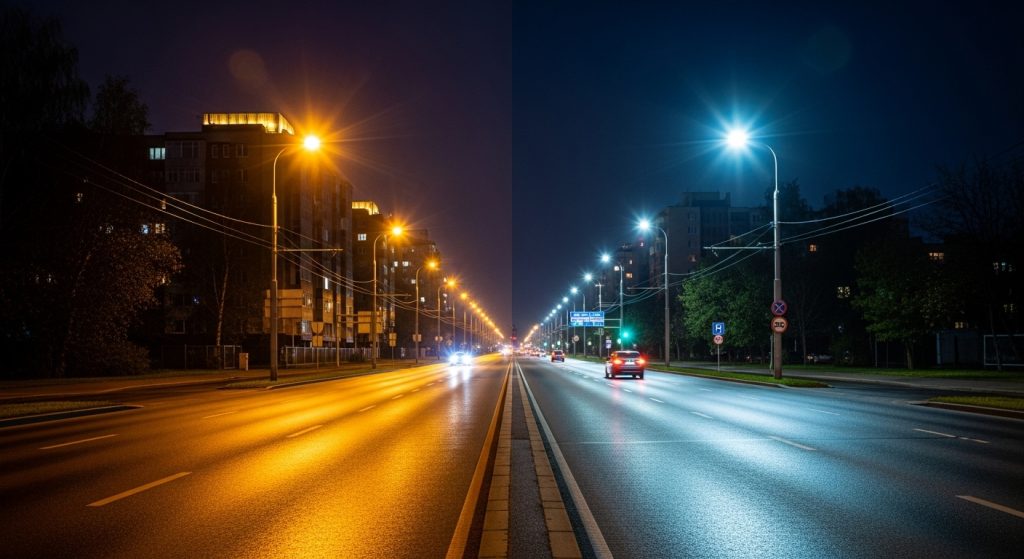
What does color temperature mean in road lighting
You measure the appearance of light using the Kelvin scale. This scale tells you if a light looks warm or cool to the human eye. Low Kelvin numbers mean the light has a yellow or orange light appearance. Higher Kelvin numbers mean the light looks white or blue.
This value is vital for visual clarity on your local streets. The color of the light changes how clearly you see colors and shapes at night. Warm light can feel more like old lamps. Cool light feels like modern daylight. You must pick the right color to help drivers stay focused. The wrong choice can make a road feel dim or even blinding. Understanding this scale is your first step in planning a better street network. It allows you to match the light to the actual needs of the area. You gain more control over the look and feel of your city roads.
How does 3000K lighting affect road visibility and comfort
When you choose warm white light, you prioritize the comfort of the people using the road. 3000K fixtures provide high visual comfort because they emit less blue light. This leads to significant glare reduction, which helps drivers see without being blinded. You find this color temperature very useful in residential neighborhoods.
It feels softer and more natural for areas where people live and sleep. You can light up a sidewalk without shining a harsh blue beam into bedroom windows. While it is warmer, it still provides enough light for slow-moving traffic. You will notice that residents often prefer this hue for their local streets. It creates a welcoming feel that encourages people to walk and use public spaces. You protect the community from light that feels too industrial or cold. This color choice supports a peaceful and safe home environment at night.
How does 5000K lighting change driver perception on roads
Selecting cool white light is a move toward high performance on your busiest roads. You get much better contrast perception when you use 5000K lamps. This crisp light helps a driver spot a hazard or a sign from a far distance. It is known to help with driver alertness during long trips through the night.
You should use this color temperature on highways and major arterial roads. The blue-white tone makes road markings stand out very clearly against the dark pavement. It mimics the light of the sun, which tells the human brain to stay awake. This is a powerful safety tool for fast-moving traffic zones. You want drivers to have the best possible view when every second counts. While it is bright, it ensures that your main transportation lines are as safe as they can be. You provide a clear and sharp view of the path ahead for every vehicle.
Why does road type influence the choice between 3000K and 5000K
Your road classification is the most important factor in your color decision. You must look at the traffic behavior and the speed of the cars in each zone. A highway has a different lighting intent than a quiet park path. On high-speed roads, you need the sharp focus that 5000K provides.
On a small street with many people walking, 3000K is often a better fit. You must think about how the light color changes the way people use the space. High traffic volume usually calls for a cooler and brighter light. Residential lanes benefit from the warm and cozy feel of lower Kelvin lights. You can even use different colors in the same project to mark different areas. This helps drivers know when they are moving from a main road to a local one. Your plan should reflect the unique purpose of every street you light.
How do environmental and community factors affect color temperature decisions
You have to think about the environmental impact of your lighting choices. Blue light from 5000K lamps can scatter more in the sky, causing more light pollution. This can affect the urban surroundings and local wildlife in your area. Many cities now look for ways to protect the nighttime environment while staying safe.
You should talk to the people who live near the project site. Residents might complain if a high-Kelvin light shines into their yards all night. Choosing 3000K can help you avoid these issues while still providing enough light. You also need to consider the trees and buildings along the road. Warm light can make historic brick buildings look much better at night. Cool light might be better for modern glass and steel industrial parks. Your choice shapes the look of your city for many years to come.
How does color temperature interact with brightness and wattage
You will notice a difference in perceived brightness even when the power use is the same. A 5000K light often feels brighter to the eye than a 3000K light at the same lumen level. This is important for your wattage planning and your energy budget. You might be able to use a lower wattage lamp if you pick a cooler color.
However, you should not base your lighting performance on color alone. You still need enough actual light output to cover the whole road. You must check how the color interacts with the lenses and optics of the fixture. Some lights are more effective at certain color temperatures than others. You want a system that gives you the best light for the lowest amount of power. Your goal is to reach your safety targets without wasting money on extra electricity. Balancing these factors helps you build a smarter and cheaper lighting network.
What common mistakes occur when choosing road lighting color temperature
A frequent selection mistake is picking a color based on what looks “modern” rather than what is safe. You might end up with misapplied lighting if you put 5000K in a quiet housing zone. This can lead to visual discomfort for the people who live there. Another error is thinking that a higher Kelvin number always means a better light.
You should not ignore the glare that comes with very cool white lights. Some planners also forget to check the local laws regarding light pollution. You must avoid picking a color that does not match the rest of your city’s grid. A sudden change in light color can be distracting for drivers moving between zones. You need a plan that feels consistent and well-thought-out. Avoiding these mistakes ensures that your community is happy with the final result.
What checks should planners complete before finalizing 3000K or 5000K lighting
You should conduct a thorough planning validation before you buy any equipment. Your performance alignment depends on matching the light to the road’s daily use. Use this decision checklist to verify your choice:
- Identify the speed limit and traffic volume of the road.
- Check if there are homes or businesses nearby that might be affected by glare.
- Review local rules about sky glow and light pollution.
- Verify that the light color supports the driver’s ability to see signs.
- Test a sample light in the actual environment to see the real effect.
- Confirm that the fixture can handle the power needs of your chosen color.
- Ensure the residents are comfortable with the hue you have selected.
What are LED road and street lights and how do they support color temperature choices
LED road and street lights are the modern foundation for your road lighting systems. This LED technology allows you to pick almost any color temperature you need for your city. You can find fixtures that offer either 3000K or 5000K within the same housing design. This flexibility makes it easy to keep a consistent look across different neighborhoods. These lights are built to last and keep their color steady for many years.
Why do high-efficiency LED road lights matter when selecting color temperature
High-efficiency LED road lights ensure you get the best lighting performance regardless of the color. You can achieve high power saving even when using warmer 3000K tones. These fixtures use advanced chips that stay bright and clear over their entire life. They are the best choice for any project that needs to be both safe and cheap to run. You get a reliable system that meets all your technical and environmental goals.
What can outdoor LED road lighting projects reveal about real-world color temperature use
Reviewing outdoor LED road lighting projects shows you how these colors perform in the field. You can see the project outcomes from other cities that have tried both 3000K and 5000K. This field performance data helps you avoid mistakes and pick the right hue for your own project. You can see how the light looks on different road types and materials. It is a practical way to learn before you spend your budget.
How should planners use a LED road light wattage guide alongside color temperature
A LED road light wattage guide is a vital wattage reference for your brightness planning. It helps you see how much power you need to reach your target light levels at different colors. You might find that 5000K allows you to use fewer watts to achieve the same feel of brightness. This guide ensures that you buy the right equipment for your specific road conditions. It takes the guesswork out of your design process and saves you money.


- 10 Meters Lamp Post
- 10 Meters Pole
- 1000w Led Projector
- 100W LED Tunnel Light
- 12 Meters Lamp Post
- 12 Meters Pole
- 1200w Led Projector
- 15 Light Pole
- 1500w Led Projector
- 150W LED Tunnel Light
- 1800w Led Projector
- 2 In 1 Solar Flood Light
- 200w Led Tunnel Light
- 50w Led Tunnel Light
- 6 Meters Lamp Post
- 6 Meters Pole
- 8 Meters Lamp Post
- 8 Meters Pole
- 800w Led Projector
- 80w Led Tunnel Light
- Colourful Decorative Light
- Conical post
- Courtyard Lamp
- courtyard light
- courtyard lighting fixture
- Decorative Landscape Light
- Decorative road Light
- Flood Light For Courtyard
- Flood Light for Garden
- Flood Light For Outdoor
- Foot Led High Bay Lights
- high bay led lights 100w
- industrial lampshade
- industrial LED shed lights
- industrial magnifying glass with light
- Integrated Solar Flood Light
- led courtyard lamp
- led courtyard light
- led high bay light 100w
- LED Projector For Stadium
- Led UFO High Bay 150W 5000k
- Lighting Plants Mining Price
- Maintenance Free LED Street Light
- Pic Controlling Tunnel Light
- PLC controlling tunnel light
- Post Top Garden Light
- RGB Landscape Light
- Rgbw Decorative Light
- Smart Tunnel Light
- solar courtyard lamp
- solar courtyard light
- Solar LED Road Light
- Solar Street Light For 10 Meter Pole
- Solar Street Light For 12 Meter Pole
- Solar Street Light For 6 Meter Pole
- Solar Street Light For 8 Meter Pole
- Split Type Solar Flood Light
- Sporting Projector
- Stadium Led Projector
- Street Lighting Post
