
 Request A Quote


Smart LED Road Lights with Sensors and Dimming
 FACEBOOK
 TWITTER
 LINKEDIN
Smart LED road lights with sensors and dimming represent a modern shift in how you manage public and commercial outdoor spaces. These systems use adaptive lighting to change brightness based on real-time environmental needs. You no longer have to rely on static schedules that waste power during empty hours. This technology provides a foundation for comprehensive energy management across your entire network. You can monitor every fixture through remote control interfaces from your office.
The primary benefit is visibility optimization for drivers and pedestrians in your city. Sensors detect when a car or person is nearby to increase the light level. This behavior ensures safety while keeping light pollution to a minimum when the streets are clear. You will find that these systems offer much more flexibility than standard LED solutions. Many city planners choose these lights to meet strict sustainability goals for their communities. Engineers appreciate the high level of control over each individual light point. These fixtures integrate easily into current smart city frameworks and infrastructure projects. You are investing in a system that responds to your city’s pulse automatically. This results in a safer environment and significant long-term savings for your budget. You get a reliable system that works hard when needed and saves power when it is not.
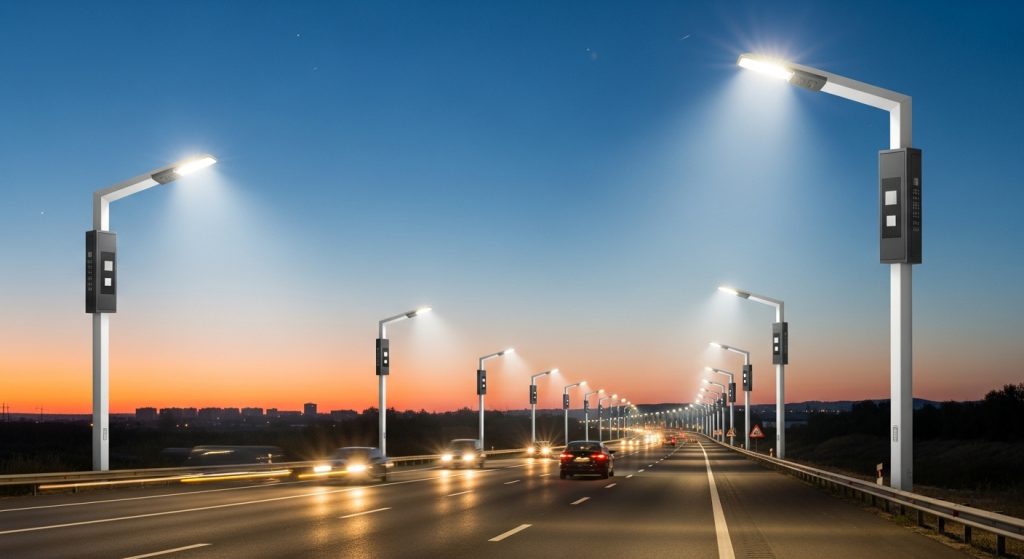
How do sensors and dimming in LED road lights work
Smart lighting systems use several components to adjust their output throughout the night. You will find that daylight sensing is the most common trigger for basic operation. These sensors tell the light to turn on exactly when the sun goes down. A motion response feature can then step up the brightness when it detects traffic.
The light uses adaptive behavior to dim or brighten without sudden, distracting flashes. This transition happens smoothly through the internal LED driver. These parts talk to a central hub via wireless or wired communication lines. You can set specific dimming profiles to match the traffic patterns of each street. This ensures you only use the power you truly need at any given moment. The system saves energy while keeping the hardware from running too hot. This logic helps your lighting network last much longer than traditional setups.
Why adaptive lighting matters for road efficiency and safety
Using adaptive lighting helps you balance your budget with your safety responsibilities. This approach improves energy efficiency by reducing power when the roads are empty. You can cut down on light waste without creating dark or dangerous areas. Lowering the output during off-peak hours helps you reach your city’s green energy targets.
Precise illumination control also leads to better driver visibility on your local roads. The lights can automatically brighten during heavy fog or rain to keep sightlines clear. This real-time response helps prevent accidents during the most difficult driving conditions. You also provide a more comfortable environment by reducing unnecessary glare for residents. Pedestrians feel safer when they see the lights respond to their movement. You are creating a street environment that is both welcoming and highly functional. High-quality light helps every user see colors and hazards more accurately.
What types of LED road and street light systems support smart controls
Modern LED road street lights are designed to handle advanced control modules. You can find many options that offer full system integration for your projects. High-efficiency LED road lights are often the best candidates for sensor upgrades. Their built-in control readiness makes them easy to manage through a central dashboard.
You can also find on-grid LED road lamps that include NEMA sockets for plug-and-play sensors. This product suitability allows you to upgrade your lighting without complex rewiring. Some systems are built for highways, while others fit perfectly in decorative downtown areas. You must ensure that your choice supports standard dimming protocols for full functionality. Choosing the right base system ensures your smart features work reliably for years. You will get a flexible solution that grows with your city’s needs.
How to balance color temperature with sensor-based dimming for road performance
The road lighting color temperature you pick changes how residents perceive the light quality. Color temperature affects the contrast and clarity of objects on the pavement. Cooler tones often feel much brighter, which is helpful for fast-moving traffic zones. You can use these tones to improve visual comfort on busy highways.
Warmer tones are usually better for housing areas and local parks to avoid disruption. You must ensure the light quality remains high even when the lamps are dimmed. Sensors can be set to adjust output differently based on the color of the LEDs. This helps you maintain safety while meeting the aesthetic needs of the neighborhood. A smart system allows you to fine-tune these settings for every street. You can provide the best possible visibility for drivers without bothering the neighbors. Understanding this balance is key to a successful project rollout.
How smart LED road lights affect energy use and maintenance planning
Smart controls are a vital part of any modern energy management plan. You can achieve high cost efficiency by using dimming during the quietest parts of the night. This reduces your power bills by an additional percentage on top of standard LED savings. Your lifecycle planning also improves because the components face less heat and wear.
The system provides you with constant data about the health of every light. You will get an alert the moment a sensor or driver needs attention. This allows you to plan your maintenance trips more logically and efficiently. You no longer need to pay crews to drive around looking for failed lamps. Every repair visit is targeted and necessary, which saves you significant labor funds. Decision makers should think about these long-term gains when reviewing the initial project costs. You are building a more resilient network that requires less manual oversight.
What mistakes should buyers avoid when choosing sensor-enabled LED road lights
One common issue is making selection mistakes regarding sensor range and sensitivity. Sensors that are too sensitive might be triggered by swaying trees or small animals. You must also verify the system compatibility between the lights and your control software. Not all smart nodes work with every type of city management platform.
Buyers often have unrealistic performance expectations for wireless signal strength in dense areas. Buildings and thick foliage can sometimes block the communication between poles. You should also avoid overlooking the need for proper installation and testing. Some systems require careful calibration to work correctly in varied weather. Make sure your wiring can support the constant power required for the sensors to stay live. Talking with your vendor early helps you avoid these technical problems later. A well-planned network prevents costly adjustments after the lights are in the ground.
How can outdoor project examples guide smart LED road light decisions
Looking at outdoor LED road lighting projects gives you a clear view of real-world results. You can see how other towns managed their transition to smart technology. These project outcomes show which dimming schedules were most successful for residents. You might find a specific layout that works perfectly for your own downtown district.
Reviewing these performance results helps you build a strong case for your budget. You can use these case insights to show the energy savings and safety gains to your council. Many projects show that the community feels more secure with responsive lighting. You can also learn from the challenges that other teams faced during their rollout. This history helps you plan a smoother and more effective project for your city. Seeing these results in action is the best way to choose the right gear.
What factors should decision makers check before final approval
You should perform a full lifecycle review of the system before you finalize the purchase. Use a clear procurement checklist to make sure the equipment meets all your goals. Your performance criteria should be the main focus of your final evaluation. Consider these factors during your review:
- Confirm the sensors can handle the local temperature and weather patterns.
- Verify the control software is easy for your city staff to use.
- Check the data security of the wireless network used for the lights.
- Ensure the dimming range matches your expected power saving goals.
- Review the warranty to see if it covers sensors and control nodes.
- Test the system’s ability to be controlled manually during emergencies.
- Confirm the fixtures are compatible with your current mounting poles.
What are LED road and street lights used in smart lighting applications
LED road and street lights are the core hardware for any smart city network. This LED technology allows for instant dimming and brightness changes without any delay. You can use these fixtures for many urban lighting tasks, from main roads to paths. They provide a stable light source that makes it easier for sensors to see movement. Choosing a high-quality base fixture ensures that your smart network lasts a long time.
What makes high-efficiency LED road lights important for smart networks
High-efficiency LED road lights give you the best return on your smart system investment. You will see the best energy performance when you combine efficient chips with sensors. This setup improves the operational efficiency of your whole city lighting grid. These lights are built to stay bright while using the least amount of power possible. They are a reliable choice for any municipal project that needs high performance.
How do on-grid LED road lamps support sensor-based systems
On-grid LED road lamps provide the power reliability that sensors need to stay active. You can achieve easy system integration by using your current electrical power lines. These lamps stay connected to the grid so the control network never turns off. This is the most common way to build a responsive lighting grid in a city. You get a steady platform for all your sensor-based management needs.
What do outdoor LED road lighting projects show about real results
Looking at outdoor LED road lighting projects provides you with real field results. These projects offer performance evidence that smart dimming works well in the real world. You can see exactly how much energy other cities saved after their upgrade. This data helps you pick the right settings for your own street lights. It is a great way to verify the quality of the tech before you buy it.
How should planners use a LED road light wattage guide with smart controls
A LED road light wattage guide is a vital tool for your initial wattage planning. You need to know the base power of the fixture to set your output control rules. This helps you calculate how bright the lights will be at full power and when dimmed. The guide shows you how to replace old lamps with the right LED version. It ensures your streets have enough light to stay safe when sensors are triggered.


- 10 Meters Lamp Post
- 10 Meters Pole
- 1000w Led Projector
- 100W LED Tunnel Light
- 12 Meters Lamp Post
- 12 Meters Pole
- 1200w Led Projector
- 15 Light Pole
- 1500w Led Projector
- 150W LED Tunnel Light
- 1800w Led Projector
- 2 In 1 Solar Flood Light
- 200w Led Tunnel Light
- 50w Led Tunnel Light
- 6 Meters Lamp Post
- 6 Meters Pole
- 8 Meters Lamp Post
- 8 Meters Pole
- 800w Led Projector
- 80w Led Tunnel Light
- Colourful Decorative Light
- Conical post
- Courtyard Lamp
- courtyard light
- courtyard lighting fixture
- Decorative Landscape Light
- Decorative road Light
- Flood Light For Courtyard
- Flood Light for Garden
- Flood Light For Outdoor
- Foot Led High Bay Lights
- high bay led lights 100w
- industrial lampshade
- industrial LED shed lights
- industrial magnifying glass with light
- Integrated Solar Flood Light
- led courtyard lamp
- led courtyard light
- led high bay light 100w
- LED Projector For Stadium
- Led UFO High Bay 150W 5000k
- Lighting Plants Mining Price
- Maintenance Free LED Street Light
- Pic Controlling Tunnel Light
- PLC controlling tunnel light
- Post Top Garden Light
- RGB Landscape Light
- Rgbw Decorative Light
- Smart Tunnel Light
- solar courtyard lamp
- solar courtyard light
- Solar LED Road Light
- Solar Street Light For 10 Meter Pole
- Solar Street Light For 12 Meter Pole
- Solar Street Light For 6 Meter Pole
- Solar Street Light For 8 Meter Pole
- Split Type Solar Flood Light
- Sporting Projector
- Stadium Led Projector
- Street Lighting Post
