
 Request A Quote


How to calculate solar panel size for street lighting projects
 FACEBOOK
 TWITTER
 LINKEDIN
How to calculate solar panel size for street lighting projects is the first step in building a reliable system. You must start by determining the daily energy demand of your light. This involves knowing the wattage and the hours the light stays on. Once you have this number, you must look at local sun data to find peak sun hours.
A large battery capacity is needed to store power for rainy days. You must also account for system losses to ensure performance reliability. Proper sizing directly impacts the installation cost per pole. If the panel is too small, the light will fail in winter. If it is too large, you might waste your budget.
This guide takes you through the math and the factors that influence your choice. You will learn how to balance panel size with battery life and local weather. Following these steps helps you specify the right parts for your road.
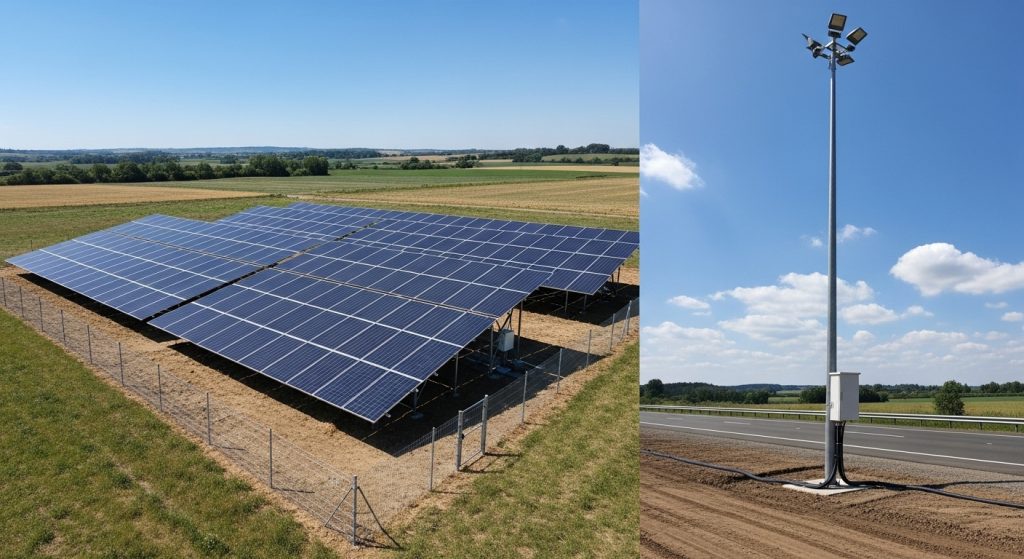
What inputs you need before calculating panel size
Before you start any math, you must gather data about your specific site. You cannot guess these numbers because small errors lead to dark streets. You need to know exactly how much power your lamp pulls every hour. You also need to check the average sun hours for the darkest month of the year. This ensures your system works during the shortest days of winter.
You will need to have these specific inputs ready:
- Load calculation: The total watts your LED lamp uses while turned on.
- Energy demand: The number of hours the light runs each night.
- Autonomy requirement: How many days the light must run without any sun.
- System losses: Power lost through wires, controllers, and battery heat.
Step-by-step process to calculate solar panel size
Calculating the right size is a logical process that follows the flow of energy. You must work from the light back to the panel to get an accurate result.
- Calculate daily energy needs: Multiply the lamp wattage by the nightly run hours. This gives you the watt-hours needed per day.
- Adjust for system efficiency: Divide your daily energy needs by 0.8 to account for system losses. Wires and controllers always lose some power.
- Check peak sun hours: Find the average peak sun hours for your location in December or January.
- Determine required photovoltaic output: Divide the adjusted energy needs by the peak sun hours. This tells you the minimum panel wattage.
- Apply a safety margin: Multiply your final number by 1.2. This oversizing helps the system handle cloudy weather or dirty panels.
How battery capacity affects panel sizing
Your battery capacity and your panel size must work together as a team. A larger battery requires a panel that can fill it up quickly when the sun is out. If you have a high autonomy requirement, you need more days of storage. This means your panel must be strong enough to charge the battery while also running the light. You also need to consider the depth of discharge for your battery type. Lithium batteries can be drained more than lead-acid types. If you plan to use more of the battery each night, your panel must be sized to replace that energy. A well-matched system prevents the battery from staying empty for too long. This balance is key to keeping your project running through the winter.
How weather and performance variability influence panel size
Weather is the biggest risk to your solar lighting project. You must plan for cloudy weather where the sun might be hidden for days. During these times, solar output drops significantly. If your panel is only sized for sunny days, your lights will fail during a storm. Performance reliability comes from using “worst-case” sun data rather than yearly averages. Seasonal sun variation means you get much less power in the winter than in the summer. You should size your panel based on the month with the least amount of sun. This ensures that if the system works in December, it will work all year long. Taking these variables into account protects your investment from unexpected blackouts.
How panel sizing ties to system cost
Panel sizing is one of the main cost drivers for your project. A larger panel requires a stronger pole and a bigger mounting bracket. This increases your capital investment for every pole on the road. However, an undersized panel will lead to early battery failure. Replacing batteries every two years is much more expensive than buying a larger panel at the start. You should look at the lifecycle value rather than just the initial price. Balancing the cost of a larger panel against the cost of a bigger battery is a smart way to save. Sometimes a slightly larger panel is cheaper than adding an extra day of battery storage. Proper planning helps you find the “sweet spot” where the system is both reliable and affordable.
How panel size choices align with road width and lighting load
The width of your road dictates the wattage of the light you need to stay safe. A wider road requires more illumination levels, which means a higher power lamp. Higher lamp wattage directly increases your daily energy demand. You must scale your panel size to match this higher load requirements.
- Narrow paths: These usually need low wattage, allowing for smaller, cheaper panels.
- Standard streets: These require medium wattage and panels sized for 10-12 hours of run time.
- Major highways: These need high wattage and very large panels to maintain road safety.
- Height factors: Taller poles spread light further but often need more power to reach the ground.
Common mistakes to avoid when sizing solar panels
Many planners make an estimation error by using the wrong sun data. If you use the yearly average sun hours, your lights will likely fail in the winter. Another common issue is ignoring system inefficiency. Power is always lost as it moves from the panel to the battery. You should never assume 100% of the panel’s rating reaches your lamp. There is also a planning risk in underestimating the battery needs. If the battery is too small, it will drain too fast, regardless of the panel size. Avoiding these mistakes keeps your project from becoming a maintenance headache. Always use conservative numbers to ensure your lights stay on when people need them most.
How to verify your panel size calculation
Once you have your numbers, you should perform a performance validation. You can cross-check your math with real-world data from similar projects in your area. Many suppliers offer software to simulate how the light will run throughout the year. Monitoring results after the first few poles are installed is also a good idea. You can check the battery voltage each morning to see if the panel is doing its job. if the battery is consistently low, you may need to increase the panel size for the rest of the project. Verification ensures that your theoretical math works in the actual environment of your site. It gives you and your buyers peace of mind that the system is built to last.
What are solar street lighting systems
A solar street lighting systems setup provides outdoor illumination using clean sun power. These units use LED street lights to save energy and provide bright, clear light. They are a popular choice for areas that want to avoid the cost of trenching for wires. Each pole works on its own, making the system very easy to grow as your project expands.
How solar street light batteries last over time
The solar street light battery lifespan is heavily affected by how well you size your panels. If the panel is too small, the battery suffers from constant energy storage degradation. This lowers the lifecycle expectancy of the whole system. A well-sized panel keeps the battery charged and healthy, which saves you money on replacements over many years.
How do solar street lights perform in cloudy weather
You must understand how solar street lights cloudy weather performance works. Even on gray days, a good panel will produce some solar output. However, the system relies on the battery during long storms. Performance reliability is only possible if you size the panel and battery to handle several days without direct sunlight.
What affects solar street light cost per pole
Several solar street light cost per pole factors depend on your sizing choices. The panel, battery, and pole strength are the main cost drivers. While a bigger system sizing costs more now, it reduces your long-term maintenance bills. You should weigh the initial price against the reliability you need for your specific site.
How to match solar street light wattage to road width
Finding the right solar street light wattage road width is the first part of your energy calculation. Wider roads need more road coverage and higher illumination standards. This increases the load on your system, requiring you to scale up your panel and battery. Matching these parts correctly ensures the road is safe and the system stays powered.


- 10 Meters Lamp Post
- 10 Meters Pole
- 1000w Led Projector
- 100W LED Tunnel Light
- 12 Meters Lamp Post
- 12 Meters Pole
- 1200w Led Projector
- 15 Light Pole
- 1500w Led Projector
- 150W LED Tunnel Light
- 1800w Led Projector
- 2 In 1 Solar Flood Light
- 200w Led Tunnel Light
- 50w Led Tunnel Light
- 6 Meters Lamp Post
- 6 Meters Pole
- 8 Meters Lamp Post
- 8 Meters Pole
- 800w Led Projector
- 80w Led Tunnel Light
- Colourful Decorative Light
- Conical post
- Courtyard Lamp
- courtyard light
- courtyard lighting fixture
- Decorative Landscape Light
- Decorative road Light
- Flood Light For Courtyard
- Flood Light for Garden
- Flood Light For Outdoor
- Foot Led High Bay Lights
- high bay led lights 100w
- industrial lampshade
- industrial LED shed lights
- industrial magnifying glass with light
- Integrated Solar Flood Light
- led courtyard lamp
- led courtyard light
- led high bay light 100w
- LED Projector For Stadium
- Led UFO High Bay 150W 5000k
- Lighting Plants Mining Price
- Maintenance Free LED Street Light
- Pic Controlling Tunnel Light
- PLC controlling tunnel light
- Post Top Garden Light
- RGB Landscape Light
- Rgbw Decorative Light
- Smart Tunnel Light
- solar courtyard lamp
- solar courtyard light
- Solar LED Road Light
- Solar Street Light For 10 Meter Pole
- Solar Street Light For 12 Meter Pole
- Solar Street Light For 6 Meter Pole
- Solar Street Light For 8 Meter Pole
- Split Type Solar Flood Light
- Sporting Projector
- Stadium Led Projector
- Street Lighting Post
