
 Request A Quote


How Smart MPPT Boosts Energy Yield? 2026 Solar Powered LED Street Lights
 FACEBOOK
 TWITTER
 LINKEDIN
In 2026, many cities are moving to Solar Powered LED Street Lights not just to cut grid dependence, but to make streets safer and operations more predictable. The shift is no longer about novelty panels on poles; it is about intelligent power management that delivers consistent light after sunset. At the center of that story is smart MPPT, or Maximum Power Point Tracking, which keeps solar systems extracting the most useful energy throughout the day, then converting it into steady night-time performance.
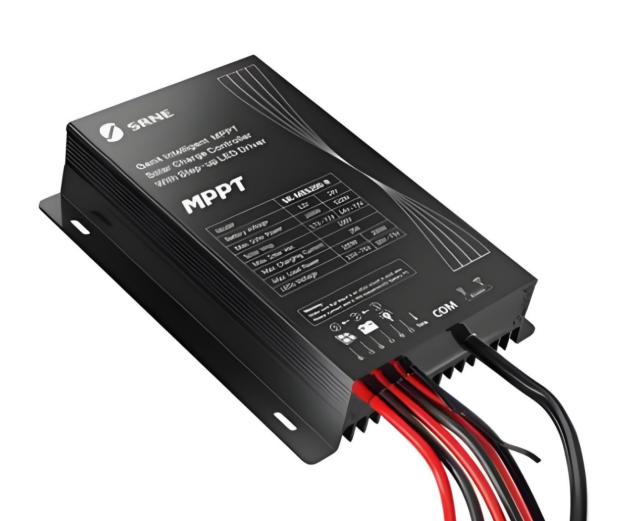
Dawn Lighting has spent the last several years refining how MPPT, battery management, and optical design work together. The promise is simple: more usable energy harvested under changing weather, smoother power delivery after dusk, and a lighting package that withstands real-world conditions. In practice, that means Solar Powered LED Street Lights that run longer on short winter days, shrug off passing clouds, and deliver clear, even illumination when people need it most.
The Case for Smart MPPT in Public Lighting
Solar energy is variable by nature. A cloud passes; panel temperature rises; the sun drops toward the horizon. The power point that gives the best output shifts minute by minute. Smart MPPT follows those shifts in real time, adjusting the panel’s operating voltage and current to stay near the sweet spot. Compared with simpler, fixed-voltage or PWM approaches, an MPPT controller can increase daily energy yield and shorten the time needed to reach a full charge.
That edge matters in conditions that often defeat legacy designs: late afternoons in winter, mornings with haze, or urban sites with intermittent shading. With a high-efficiency monocrystalline panel and a controller optimized for rapid tracking, Dawn Lighting systems have achieved up to roughly 23.95% charging efficiency under favorable conditions, helping the battery reach a healthier state of charge before dusk. More stored energy translates directly into longer run-time, fewer deep discharges, and a longer useful life for the entire lighting system.
What MPPT Actually Does
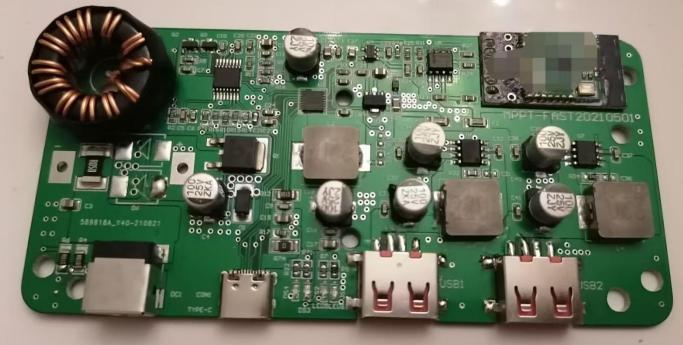
MPPT is a control algorithm inside the solar charge controller. It measures panel voltage and current, computes instantaneous power, and nudges the operating point toward maximum power several times per second. When the sun dips or panel temperatures change, the controller doesn’t miss a beat – it recalibrates to keep power right where it should be: at its peak.
For public-space managers, that means:
•More usable energy day to day, even with unpredictable weather
•Faster charging in brief sun breaks
•Smoother, steadier power after dark
•Happier batteries thanks to smarter charge/discharge management
You get more out of every watt, and every amp-hour goes farther. That means Solar Powered LED Street Lights can meet lighting targets without inflating panel area or battery size, keeping poles slimmer and installations simpler.
Lighting Quality That Builds Safer Streets
Energy efficiency is only half the story. Streets, paths, and campuses need light that is clear, comfortable, and uniform. Dawn Lighting uses premium LED sources with luminous efficacy above 190 lm/W, turning electrical input into high-quality light with minimal waste heat. In typical public lighting layouts, that efficiency supports bright, even coverage while controlling glare and reducing dark spots.
•A correlated color temperature range from 3000K to 6500K lets you tailor tone to the site. Warm light welcomes in residential zones; cool light clarifies on busy roads and shared paths.
•CRI >70 brings true-to-life color for signage and hazard recognition.
•Around 5,400 lumens achieves clean, readable light without over-saturating the space.
The payoff is a safer, more inviting cityscape. With consistent illuminance and color from Solar Powered LED Street Lights, wayfinding feels effortless, drivers see the road sooner, and parks stay welcoming after dusk.
Integrated Design You Can Trust
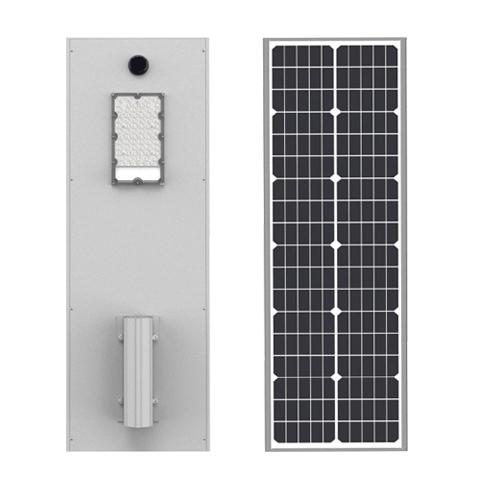
reliability through simplicity. Dawn Lighting unifies the solar panel, battery, MPPT controller, and LED luminaire in one compact, die-cast aluminum enclosure. The ~1081 × 458 mm profile moderates wind loads and makes mounting straightforward.
A bank of 75 high-quality LEDs is optimized by intelligent power distribution to maximize light output and longevity. Eco-smart dimming trims output during off-peak times, preserving battery energy while maintaining safe illumination levels. Built for about 87,600 hours of service, the system reduces maintenance impact and supports sustainable budget planning. When combined with smart MPPT, this design keeps Solar Powered LED Street Lights running through tough seasons with fewer truck rolls and fewer surprises.
Practical Gains for Project Owners
City engineers and facility managers often judge technologies by total cost of ownership and operational friction. Smart, integrated solar lighting helps on both fronts:
•Faster installation due to fewer separate components and reduced wiring
•Lower maintenance with sealed, integrated assemblies and intelligent thermal control
•Stable performance across temperature swings and patchy weather
•Longer service life, supporting better lifecycle value and predictable budgets
Because the system squeezes more energy from each day’s sun, it can hit target run-times with a leaner energy budget, rather than oversizing panels and batteries as a hedge against bad weather.
Planning Your Project With Dawn Lighting
Every site is different. Shade from a single tree, a pole that is a few degrees off tilt, or a corridor that runs east – west instead of north – south can change how much energy you harvest. Dawn Lighting helps you design Solar Powered LED Street Lights around real-world conditions.
•Site Assessment: Map shading through the seasons, and set tilt and azimuth for the best annual yield. MPPT will mitigate variability, but good placement pays dividends every day.
•Energy budget: Size PV and storage to your overnight duty cycle. A ~60 W peak system using MPPT and right-sized battery capacity covers most path/park scenarios when tuned, balancing cost and performance.
•Optical plan: Select 3000 – 6500K CCT; configure mounting heights, pole spacing, and optics to achieve uniform illuminance while reducing glare and backlight – less waste, better user experience.
•Operations Plan: Use adaptive dimming to save energy during low-traffic hours and preserve battery health without compromising safety benchmarks.
•Quality Assurance: Specify die-cast aluminum construction and robust sealing to handle heat, dust, rain, and coastal air, maintaining thermal performance over time.
This approach keeps capital costs contained, reduces risk in commissioning, and leads to dependable performance season after season.
Pilot, Measure, and Scale
The best way to validate a solar lighting upgrade is to trial it where it counts. Dawn Lighting encourages municipalities, campus teams, and developers to pilot a set of smart MPPT Solar Powered LED Street Lights along a representative stretch of roadway or park path. Over several months, capture data on night-time uniformity, run-time across weather patterns, and maintenance effort. Compare those results to legacy grid-tied or older solar units.
With a standardized, integrated design, scaling is simple – reducing redesign time and material waste on each pole.
As you plan for 2026, our Solar Powered LED Street Lights with smart MPPT offer resilient, low-impact illumination. Dawn Lighting is ready with technical consultation, a tailored photometric layout, and a proposal that matches your budget and sustainability targets. Tell us about your site, performance needs, and timeline. We’ll turn sunlight into reliable light night after night – supporting safer streets, streamlined operations, and consistent lifecycle costs.



- 10 Meters Lamp Post
- 10 Meters Pole
- 1000w Led Projector
- 100W LED Tunnel Light
- 12 Meters Lamp Post
- 12 Meters Pole
- 1200w Led Projector
- 15 Light Pole
- 1500w Led Projector
- 150W LED Tunnel Light
- 1800w Led Projector
- 2 In 1 Solar Flood Light
- 200w Led Tunnel Light
- 50w Led Tunnel Light
- 6 Meters Lamp Post
- 6 Meters Pole
- 8 Meters Lamp Post
- 8 Meters Pole
- 800w Led Projector
- 80w Led Tunnel Light
- Colourful Decorative Light
- Conical post
- Courtyard Lamp
- courtyard light
- courtyard lighting fixture
- Decorative Landscape Light
- Decorative road Light
- Flood Light For Courtyard
- Flood Light for Garden
- Flood Light For Outdoor
- Foot Led High Bay Lights
- high bay led lights 100w
- industrial lampshade
- industrial LED shed lights
- industrial magnifying glass with light
- Integrated Solar Flood Light
- led courtyard lamp
- led courtyard light
- led high bay light 100w
- LED Projector For Stadium
- Led UFO High Bay 150W 5000k
- Lighting Plants Mining Price
- Maintenance Free LED Street Light
- Pic Controlling Tunnel Light
- PLC controlling tunnel light
- Post Top Garden Light
- RGB Landscape Light
- Rgbw Decorative Light
- Smart Tunnel Light
- solar courtyard lamp
- solar courtyard light
- Solar LED Road Light
- Solar Street Light For 10 Meter Pole
- Solar Street Light For 12 Meter Pole
- Solar Street Light For 6 Meter Pole
- Solar Street Light For 8 Meter Pole
- Split Type Solar Flood Light
- Sporting Projector
- Stadium Led Projector
- Street Lighting Post
