
 Request A Quote


Solar Post Top Lights vs Wired Post Lights Which Is Better
 FACEBOOK
 TWITTER
 LINKEDIN
Choosing the right way to light your property involves a clear power source comparison between independent sun-powered units and traditional grid-connected fixtures. You might prioritize the ease of a quick setup or the steady glow of a constant electrical feed. Both options serve the goal of brightening your paths and gathering spots, yet they produce different results based on your yard’s specific layout. Planners and homeowners often weigh these choices by looking at the amount of sunlight available versus the cost of running new wires underground. Your final selection determines how your garden feels after dark and how much work you need to put into the setup phase.
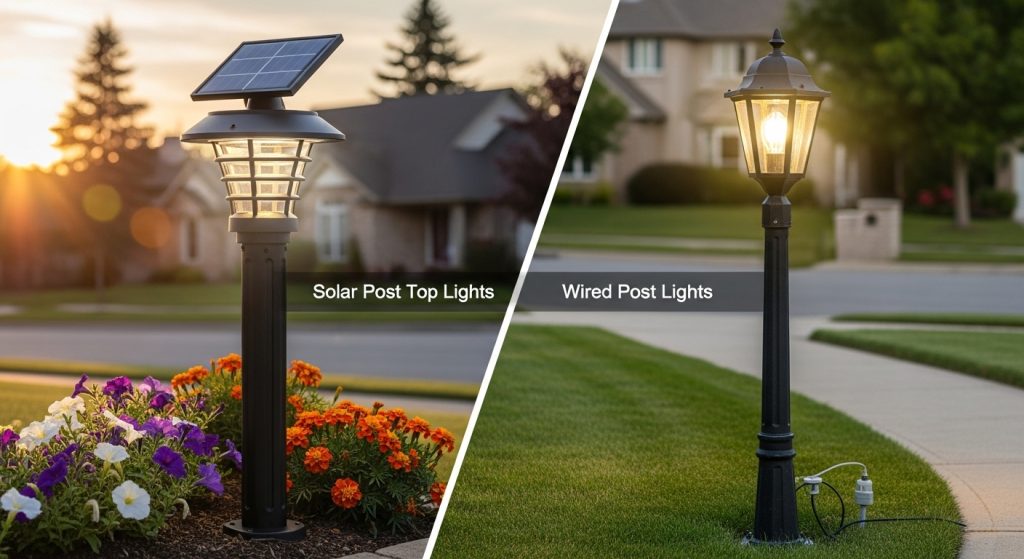
The installation logistics of your project play a huge role in which path you take. While one choice frees you from digging trenches, the other ensures that your lights never dim because of a cloudy afternoon. You should look at your long-term performance goals to see if you prefer a system with no monthly bill or one that offers absolute lighting reliability every night of the year. Shady spots or high-traffic areas often demand different solutions to keep your space safe. By evaluating your site conditions and your budget, you can pick a system that supports your outdoor design and keeps your walkways clear and welcoming for years to come.
What are solar post top lights and how do they work
Solar post top lights function as standalone units that harvest energy directly from the sky. Each fixture contains solar panels that capture sunlight during the day and turn it into electricity. This energy sits in battery storage until the sun goes down and the built-in sensor triggers the LED to glow. This independent operation means you do not need any wires connecting the light to your home’s power box. Since they rely on renewable power, your lights run on the energy they gathered while you were at work.
The effectiveness of these lights depends almost entirely on how much sun hits the panels. If your yard sits under thick tree cover, the batteries might not reach a full charge, which leads to a shorter run time at night. These systems are popular for those who want to add light to far-off corners without the mess of construction. You simply mount them on a post and let nature do the rest. They provide a cord-free way to boost visibility in your garden without adding a cent to your monthly utility bill.
What are wired post lights and how do they differ from solar systems
Wired post lights rely on a direct connection to your home’s grid power. This setup involves running electrical cables through protective pipes buried in the ground to each post. Because they have a permanent link to your electrical infrastructure, they do not care if it rained all day or if the sun stayed behind the clouds. This provides a consistent operation that solar units sometimes struggle to match during the darker months of the year. You control them with a standard switch, a timer, or a smart home app.
The main difference lies in the permanence and strength of the light output. Wired systems typically offer a brighter, more powerful beam because they are not trying to save a limited battery charge. This makes them a top pick for main entrances or high-traffic areas where you need the brightest possible glow. While the setup takes more effort and often requires help from a professional, the result is a dependable light source that stays at full strength from dusk until dawn. You trade a bit of initial work for a lifetime of unwavering brightness.
Comparing the core traits of solar and wired systems
When you look at installation trade-offs, solar lights win on speed and simplicity. You avoid the cost of digging and the fee for an electrician. Wired lights require a bigger investment upfront because of the materials and labor needed to hide cables under your lawn. However, your long-term cost for wired lights includes a small monthly increase in your electric bill. Solar units have a “free” power source, though you will eventually need to pay for a new battery every few years to keep them running.
If performance consistency is your main goal, the grid-powered option is usually the better choice. It offers the same brightness regardless of the season. Solar performance varies based on the weather and the time of year, as shorter winter days provide less charging time. Many people choose solar for decorative garden spots where a dim light is fine, but they stick to wired posts for security and main walkways. You must decide if you value the “set it and forget it” nature of solar or the heavy-duty reliability that only a hardwired connection can provide for your property.
Why solar post top lights are ideal for certain outdoor spaces
You might find that solar fixtures are the perfect answer for areas where you want independent lighting without the hassle of a construction project. Because they offer total placement flexibility, you can put a light at the very edge of your property or in the middle of a dense garden where running a wire would be impossible. This installation convenience makes them a great choice for renters or for those who want to improve their yard’s look on a weekend without calling in a contractor.
These lights work best in open spaces that see plenty of direct sun. You can use them to mark the edges of a garden path or to add a soft glow to a backyard seating area. They give you the freedom to move your lights whenever you change your garden layout. If you have a shed or a remote gate that needs a bit of light, a solar post top provides a safe and easy solution. They allow you to add brightness exactly where you want it without worrying about where your nearest power outlet is located.
Why wired post lights work better in heavy-use or long-duration spaces
For areas that demand a high usage demand, wired posts are the superior choice. If you have a large driveway or a plaza that needs to stay bright for safety all night, the consistent performance of grid power ensures no one is left in the dark. These systems do not fade as the night goes on, providing the same high-intensity light at 4:00 AM as they did at 8:00 PM. This makes them the safer bet for commercial areas or busy family homes.
Wired systems also have a high integration potential for modern home tech. You can easily connect them to motion sensors that trigger a bright floodlight when someone approaches, or link them to a dimming system that adjusts based on the hour. This level of control is much harder to find in basic solar units. If your outdoor design includes multiple posts that all need to turn on at the exact same time with the same brightness, a wired setup is the only way to achieve that uniform look. You get a professional result that handles the heaviest lighting needs without failing.
What planning mistakes people make when choosing between solar and wired lights
A common selection error is assuming that solar lights will work perfectly in every corner of your yard. If you ignore environment constraints like the shadow of your house or a large oak tree, you will end up with a fixture that barely glows. Many people also face a design mismatch when they buy cheap solar lights for a high-security area, only to find they aren’t bright enough to see faces or clear obstacles. It is vital to match the tool to the job.
Another mistake is forgetting to calculate the total cost of a wired project. You might look at the price of the post but ignore the fee for the trenching and the copper wire. On the flip side, some homeowners overlook the aesthetics of solar panels, which can be bulky or look out of place in a classic garden design. To avoid these blunders, you should test the sun levels in your yard and get a quote for electrical work before you commit to one style. A little bit of research prevents the frustration of a dark walkway or a half-finished project.
What simple checks should be done before deciding on solar or wired lighting
You should start with a thorough site evaluation to see what your land allows. Walking your property at different times of the day helps you see which areas get enough sun for solar and where you might have to dig to run a cable. This usage pattern check ensures you aren’t putting a weak light where you need a strong one. Taking these steps now saves you from making an expensive mistake later.
- Check for direct sun exposure for at least six hours in your desired light locations.
- Estimate how many hours you need the lights to stay at full brightness each night.
- Look for underground obstacles like pipes or roots that might block a wiring trench.
- Compare the upfront price of solar units against the labor cost of an electrician.
- Decide if you want your lights to connect to a smart home system or a central timer.
- Verify your lighting reliability needs for areas involving stairs or uneven ground.
- Assess your maintenance capacity for changing batteries versus checking electrical seals.
What are garden post top landscape lighting systems that use post lights
Garden post top landscape lighting units are elevated post top fixtures that cast light in a wide circle. These are the main tools for providing general outdoor lighting for large yards or entryways. They sit high enough to push light over small bushes and furniture, ensuring your entire outdoor space feels open and easy to navigate when the sun goes down.
What benefits do solar landscape lamp posts offer for flexible outdoor lighting
A Solar landscape lamp post provides the ultimate installation ease because it is a self-contained power plant. You gain massive solar flexibility to place light in the center of a lawn or a remote woods trail without any wires. These are perfect for creating a focal point in your garden that doesn’t require a permanent construction project to stay bright.
How do aluminum 3M and 4M garden posts fit into solar and wired light planning
When you pick a Aluminum 3m 4m garden light, your material choice determines how long the post stands against the wind and rain. Choosing the right post height (3 meters or 4 meters) ensures your light spreads far enough to cover your driveway. Whether you go solar or wired, a sturdy aluminum post keeps your fixture level and looking sharp for years.
How should post height guide overall lighting effect for pedestrian areas
Your Garden lamp post height guide helps you identify how high to mount your lights to avoid blinding your guests. Proper lamp post height is vital for coverage planning in areas where people walk. If the post is too short, the light won’t spread far; if it is too tall, it might feel like a street light rather than a cozy garden feature.
Why a landscape lighting layout plan improves lighting outcomes regardless of power type
A solid Landscape lighting layout plan acts as your design planning roadmap. It helps you see where shadows will fall and where you need more brightness. Using a layout strategy ensures you don’t buy too many lights or leave dangerous dark gaps, making your property safer and more beautiful no matter which power source you choose.


- 10 Meters Lamp Post
- 10 Meters Pole
- 1000w Led Projector
- 100W LED Tunnel Light
- 12 Meters Lamp Post
- 12 Meters Pole
- 1200w Led Projector
- 15 Light Pole
- 1500w Led Projector
- 150W LED Tunnel Light
- 1800w Led Projector
- 2 In 1 Solar Flood Light
- 200w Led Tunnel Light
- 50w Led Tunnel Light
- 6 Meters Lamp Post
- 6 Meters Pole
- 8 Meters Lamp Post
- 8 Meters Pole
- 800w Led Projector
- 80w Led Tunnel Light
- Colourful Decorative Light
- Conical post
- Courtyard Lamp
- courtyard light
- courtyard lighting fixture
- Decorative Landscape Light
- Decorative road Light
- Flood Light For Courtyard
- Flood Light for Garden
- Flood Light For Outdoor
- Foot Led High Bay Lights
- high bay led lights 100w
- industrial lampshade
- industrial LED shed lights
- industrial magnifying glass with light
- Integrated Solar Flood Light
- led courtyard lamp
- led courtyard light
- led high bay light 100w
- LED Projector For Stadium
- Led UFO High Bay 150W 5000k
- Lighting Plants Mining Price
- Maintenance Free LED Street Light
- Pic Controlling Tunnel Light
- PLC controlling tunnel light
- Post Top Garden Light
- RGB Landscape Light
- Rgbw Decorative Light
- Smart Tunnel Light
- solar courtyard lamp
- solar courtyard light
- Solar LED Road Light
- Solar Street Light For 10 Meter Pole
- Solar Street Light For 12 Meter Pole
- Solar Street Light For 6 Meter Pole
- Solar Street Light For 8 Meter Pole
- Split Type Solar Flood Light
- Sporting Projector
- Stadium Led Projector
- Street Lighting Post
