
 Request A Quote


How to choose and design sports light poles for stadiums and athletic fields
 FACEBOOK
 TWITTER
 LINKEDIN
A sports light pole is a specialized structural component engineered to provide the elevation and stability required for high-intensity stadium illumination. These are not standard utility poles; they are high-performance masts designed to support significant weight and wind loads while maintaining precise fixture alignment. In athletic field lighting, the pole acts as the foundational vertical axis that determines the reach and angle of the light. Choosing the right pole is essential because it dictates the entire geometry of the light throw. Proper pole height planning ensures that powerful flood lights can project their beams across vast surfaces, creating a safe and professional environment for both competitive play and spectator viewing.
The interaction between pole selection and lighting performance is absolute. Height influences the light uniformity across the field, while the pole’s strength ensures that high-output fixtures remain steady during inclement weather. To achieve a successful design, you must balance lumen requirements with beam control—taller poles allow for wider spreads and reduced glare, whereas shorter poles may require more fixtures to avoid dark spots. Whether you are lighting a local community pitch or a professional stadium, the choice of pole material and height serves as the “anchor” for your project’s success, ensuring every corner of the athletic surface is lit with consistent clarity and comfort.
What sports light poles are and why they matter in athletic lighting
Sports light poles are heavy-duty pole structures designed to elevate luminaires to heights ranging from 30 to over 100 feet. Their primary role is to provide the vertical clearance necessary for field illumination without obstructing the sightlines of players or fans. Unlike standard street lights, sports poles must accommodate “crossarms” that hold multiple high-wattage fixtures, requiring a higher degree of structural integrity to resist swaying, which can cause disorienting flickering on the field.
In modern sports venues, these poles are critical for safety and performance. By lifting the light source high above the field of play, they allow for a steep downward angle that minimizes the “blinding” effect on athletes looking up at a ball or a puck. A well-placed pole system ensures the light feels natural and consistent, supporting the fast-paced reactions required in competitive athletics. Without these specialized supports, achieving the high lux levels necessary for safe play would be physically impossible.
How pole height influences light distribution on athletic fields
The pole height is the most significant lever in achieving professional uniformity. As a rule of thumb, taller poles allow for a broader beam coverage, which helps blend the light from multiple sources into a seamless wash. For large fields, such as soccer or football, increased height is necessary to ensure the light reaches the center of the pitch with the same intensity as the sidelines. If poles are too short, the angle of the light becomes too shallow, creating long, distracting shadows and increasing the risk of glare.
However, height must be balanced with the environment. Taller poles provide better coverage but increase “light spill” into the surrounding neighborhood if not managed with precise optics. Effective design involves calculating the “cutoff” angle—ensuring the light stays on the field and away from the sky or nearby windows. By coordinating the height of the mast with the beam’s spread, planners can create a “cloud” of light that is bright and consistent across the entire playing surface while remaining respectful of the surrounding community.
Why lumens and output matter in stadium and field lighting
A comprehensive lumens guide is essential for matching the raw power of your fixtures to the specific needs of the sport. Higher lumen counts are required for field visibility in fast-moving games like baseball or tennis, where tracking a small object at high speed is critical. Output planning ensures the “lux” (the light that actually reaches the ground) meets the standards set by governing athletic bodies, providing a fair and safe environment for all participants.
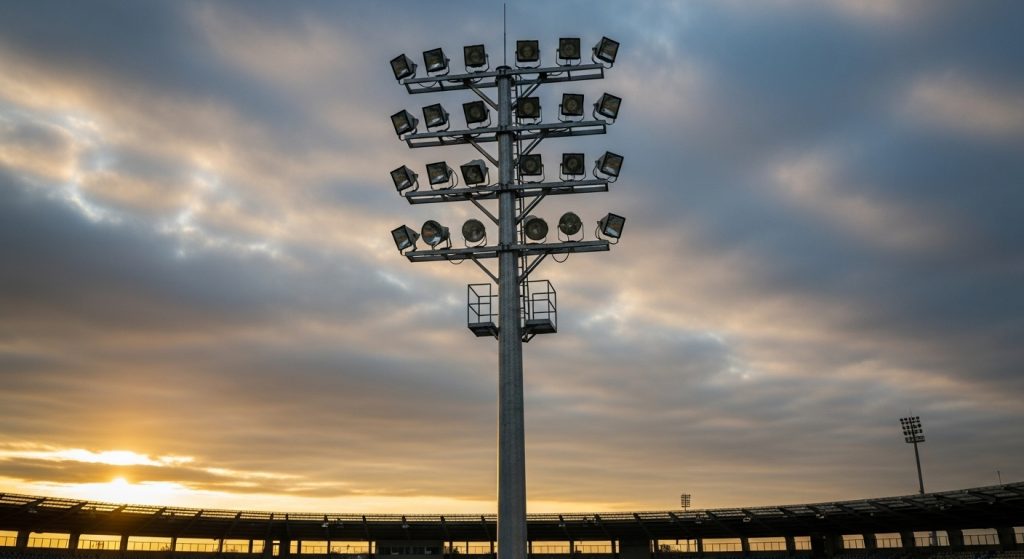
Consistency is key to performance. If the lumen output is insufficient for the pole height and field size, players will experience “dim zones” that impair their ability to judge distances and movements. Conversely, over-lighting a small field can lead to excessive glare and high energy costs. By sizing the lumen output based on the field’s dimensions and the level of play—ranging from recreational to broadcast professional—you ensure the lighting system provides a stable, high-performance backdrop for every game.
How flood and high bay solutions work with pole-mounted fixtures
Pole-mounted flood lights are the primary “engine” of sports lighting. These high-performance fixtures are designed to take the concentrated energy of a COB output and project it over long distances. While high bay lights are typically used for indoor facilities with ceilings, the principles of high-performance placement are similar: both require a durable housing and advanced thermal management to ensure the LEDs don’t overheat while operating at maximum intensity for long periods.
Integrating these systems requires a focus on structural compatibility. The crossarms on sports poles are designed to handle the “wind sail” area of large modular flood lights. By combining the strength of the pole with the precision of modern LED technology, you create a system that can pierce through atmospheric haze and rain. This synergy between the support structure and the light source is what allows stadiums to maintain high visibility in even the harshest outdoor conditions.
How beam angle planning affects athletic field coverage
Successful coverage planning depends on choosing the correct beam angle for the specific distance between the pole and the target. Narrow beams (15°–30°) are used on very tall poles or for lighting the center of a wide field, as they project light over a longer distance without it dissipating. Wide beams (60°–120°) are better for poles located closer to the playing surface or for providing a general wash of light near the sidelines.
Achieving field uniformity means layering these different beams. By overlapping a narrow beam from one pole with a wider beam from another, you can eliminate the dark spots and harsh shadows that confuse players. This “cross-lighting” strategy ensures a player is illuminated from multiple sides, making their movements and the ball’s trajectory clearly visible from any point on the field. Careful beam geometry is the secret to a professional-grade athletic environment that prioritizes player safety and spectator comfort.
Where sports light poles are best placed around fields
Pole placement is determined by the specific field zones and the type of sport being played. For a standard rectangular field, a “four-pole” system at the corners is common for recreational use, while an “eight-pole” sideline system is often used for higher-intensity competition to ensure better light penetration. Placing poles at the centerline is generally avoided in sports like soccer to prevent glare for goalkeepers and players moving vertically along the pitch.
You must also coordinate placement with spectator areas and broadcast requirements. Poles should be positioned so they don’t block the view from the stands while still being close enough to the visibility focus areas to provide the necessary lux levels. In multi-sport complexes, poles may need to be positioned to accommodate overlapping field boundaries. Strategic mapping ensures the lighting is efficient, minimizing the number of poles needed while maximizing the performance for every person in the stadium.
Which mistakes can reduce field pole lighting effectiveness?
One of the most frequent installation errors is mounting fixtures too low for the field’s size. This creates a shallow light angle that produces aggressive glare and long shadows, leading to a significant lighting imbalance. Another common blunder is misjudging the beam spread; using only wide-angle fixtures on tall poles results in “hazy” light that fails to provide the high-contrast visibility needed for competitive action.
Performance issues also arise from improper spacing between poles. If the distance is too great, you will have “dark valleys” in the center of the field where the light pools do not overlap. To avoid these blunders, a professional photometric study should always be conducted during the design phase. By visualizing the light distribution on a 3D model, you can identify and correct coverage gaps before a single pole is ever put in the ground, ensuring a consistent and safe result.
How to choose the right pole system for your field lighting needs
Before finalizing your field planning, a thorough site audit is necessary to ensure your performance criteria are met. Use this selection checklist as a final safeguard to ensure your athletic facility is bright, safe, and professional.
- Field Dimensions: Does the pole height allow for uniform illumination across the entire surface?
- Lux Level Goals: Have you matched the lumen output to the required competition level?
- Pole Material: Are you using galvanized steel or aluminum for long-term weather resistance?
- Fixture Count: Does the pole strength and crossarm size accommodate your output planning?
- Glare Audit: Is the beam angle steep enough to protect player and fan comfort?
- Site Geography: Are the poles placed to avoid sightline obstructions in the stands?
- Neighborhood Impact: Have you selected fixtures with shielding to prevent light spill?
How flood lights, high bay, and sports lighting systems fit wide-area illumination
Flood lights, high bay and sports lighting represent the three pillars of sports illumination. In wide-area lighting, these systems must be coordinated to ensure a balanced environment. While the high-mast poles handle the main field, flood and high bay solutions often manage the surrounding bleachers, parking lots, and indoor training facilities.
How tower high bay lights relate to sports lighting infrastructure
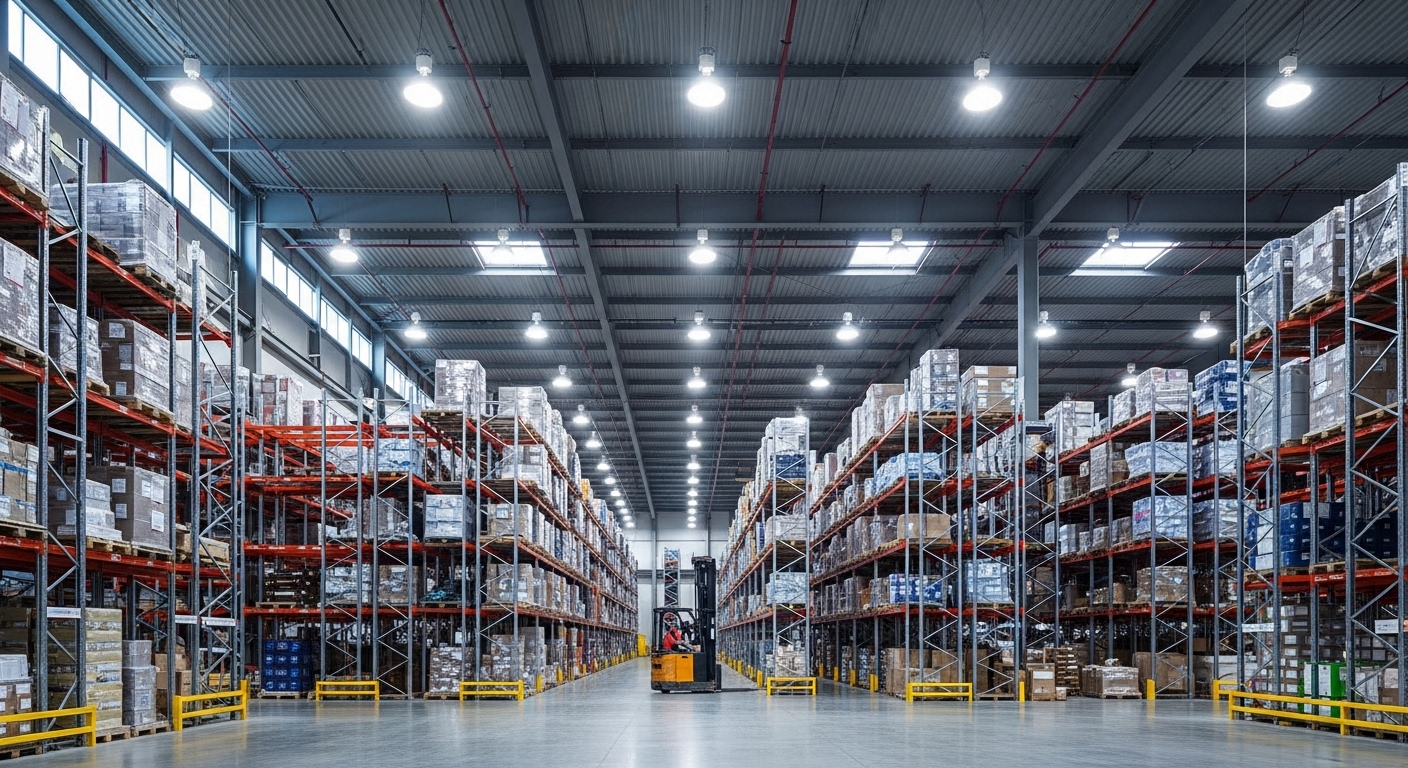
A Tower high bay light warehouse unit shares the same high bay structure principles as stadium lighting. Both require tall light support and high-output LEDs to reach the ground from significant elevations. Understanding this parallel helps in selecting fixtures that offer the durability and “punch” needed for high-performance athletic environments.
When to use COB flood lights for high-output field illumination
Choosing an LED COB flood light is ideal for high lumen field use. COB flood lighting provides a powerful, concentrated point source that is easier to focus over long distances from a tall pole. This technology is a top choice for stadiums requiring intense, high-quality light that mimics natural daylight for players and cameras.
How lumen requirements guide athletic lighting performance
A Flood lighting lumens guide is your roadmap for lumens planning. Understanding how many lumens are needed for specific field visibility standards is the only way to guarantee a safe and compliant installation. Accurate lumen calculations ensure you don’t over-invest in hardware while still meeting all athletic regulations.
What beam angles deliver the best coverage for sports fields
Reviewing Sports field lighting beam angle data is essential for achieving coverage uniformity. The correct sports field beam angle depends on the pole’s height and its distance from the field’s center. By mastering beam geometry, you can eliminate shadows and ensure a professional-grade playing surface for every athlete.


- 10 Meters Lamp Post
- 10 Meters Pole
- 1000w Led Projector
- 100W LED Tunnel Light
- 12 Meters Lamp Post
- 12 Meters Pole
- 1200w Led Projector
- 15 Light Pole
- 1500w Led Projector
- 150W LED Tunnel Light
- 1800w Led Projector
- 2 In 1 Solar Flood Light
- 200w Led Tunnel Light
- 50w Led Tunnel Light
- 6 Meters Lamp Post
- 6 Meters Pole
- 8 Meters Lamp Post
- 8 Meters Pole
- 800w Led Projector
- 80w Led Tunnel Light
- Colourful Decorative Light
- Conical post
- Courtyard Lamp
- courtyard light
- courtyard lighting fixture
- Decorative Landscape Light
- Decorative road Light
- Flood Light For Courtyard
- Flood Light for Garden
- Flood Light For Outdoor
- Foot Led High Bay Lights
- high bay led lights 100w
- industrial lampshade
- industrial LED shed lights
- industrial magnifying glass with light
- Integrated Solar Flood Light
- led courtyard lamp
- led courtyard light
- led high bay light 100w
- LED Projector For Stadium
- Led UFO High Bay 150W 5000k
- Lighting Plants Mining Price
- Maintenance Free LED Street Light
- Pic Controlling Tunnel Light
- PLC controlling tunnel light
- Post Top Garden Light
- RGB Landscape Light
- Rgbw Decorative Light
- Smart Tunnel Light
- solar courtyard lamp
- solar courtyard light
- Solar LED Road Light
- Solar Street Light For 10 Meter Pole
- Solar Street Light For 12 Meter Pole
- Solar Street Light For 6 Meter Pole
- Solar Street Light For 8 Meter Pole
- Split Type Solar Flood Light
- Sporting Projector
- Stadium Led Projector
- Street Lighting Post
