
 Request A Quote


What Foundation Depth Is Needed for Street Light Poles
 FACEBOOK
 TWITTER
 LINKEDIN
In the world of infrastructure, the foundation depth is the hidden anchor that ensures every street light remains upright and safe. This term refers to the vertical distance a pole’s support structure extends into the earth to provide a rock-solid base. Selecting the correct depth is not a matter of guesswork; it is a critical engineering decision that directly impacts the structural stability of the entire lighting system. If a foundation is too shallow, the pole risks leaning or collapsing under the stress of its own weight or external forces. Conversely, over-designing the depth leads to unnecessary material costs and longer installation timelines.
To determine the precise depth required, engineers must evaluate a complex set of environmental loads and site-specific variables. The primary factors include the total height of the pole, the weight of the luminaires, and the maximum wind speeds the area might experience.
Additionally, the soil capacity of the ground plays a vital role, as loose sand or soft clay requires a much deeper anchor than dense, rocky soil. By integrating these physical forces into a cohesive calculation, planners ensure that the lighting project can withstand the test of time and weather. This systematic approach transforms the foundation from a simple concrete pour into a sophisticated structural component that guarantees public safety and long-term performance.
What does foundation depth mean for street light pole installations
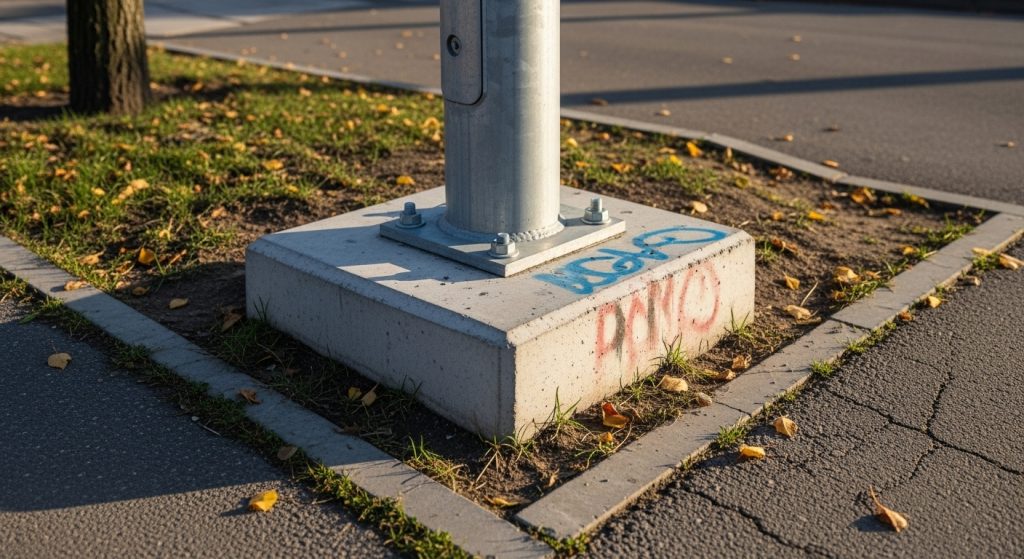
For any lighting project, the foundation depth represents the submerged portion of the foundation base that counteracts the leverage of the pole above. This depth is the core of the pole anchoring system, serving as the interface between the engineered metal structure and the natural earth. It provides the necessary friction and lateral resistance to keep the pole perfectly vertical. Without a properly calculated depth, the pole would be susceptible to the “pendulum effect,” where minor movements at the top translate into significant stress at the ground level.
The foundation acts as a total ground support system. It typically involves a reinforced concrete cylinder or a direct-burial sleeve that must reach deep enough to tap into stable soil layers. This depth ensures that the center of gravity and the center of pressure remain balanced. When you look at a street light, you are seeing only part of the story; the depth beneath the surface is what allows the visible portion to stand tall against the elements, making it an inseparable part of the overall structural system.
Why foundation depth must correspond to pole height and load
The physics of a street light pole are essentially those of a giant lever. As the pole height increases, the leverage it exerts on the base grows exponentially. This creates what engineers call moment forces, which are the rotational pressures attempting to tip the pole over. To counteract this, the foundation must be deep enough to provide a high level of resistance. A taller pole requires a deeper anchor to distribute this structural load effectively across a larger area of soil, ensuring that the ground doesn’t give way under the pressure.
Beyond height, the weight of the fixtures, arms, and brackets adds to the total downward and lateral stress. Modern LED luminaires may be efficient, but they still represent a significant mass that the base must support. Engineers follow strict structural codes to ensure that the depth provides a substantial safety margin. By matching the foundation’s dimensions to the specific height and weight of the hardware, you prevent the pole from developing a permanent lean, which could eventually lead to catastrophic structural failure and endanger the public.
How wind forces influence foundation depth decisions
Wind is perhaps the most unpredictable variable in foundation planning. When wind hits the surface of a pole and its fixtures, it creates a significant wind load that is transferred directly to the base. In areas with high environmental exposure, such as open highways or coastal regions, the wind pressure can be immense. To prevent the pole from being pried out of the earth, the foundation depth must be increased to provide greater “overturning resistance.” The deeper the foundation, the more soil mass it engages to hold the structure steady.
Planners utilize a specific safety factor when calculating depth for wind-prone zones. This means the foundation is often designed to withstand wind speeds much higher than the local average, accounting for 50- or 100-year storm events. If you underestimate the wind’s power, even a foundation that seems sturdy in calm weather can fail during a gale. By prioritizing depth in high-wind locations, you ensure that your lighting infrastructure remains a reliable and permanent part of the landscape, regardless of the weather conditions.
How soil type and ground conditions affect foundation design
The effectiveness of a foundation is entirely dependent on the soil capacity of the installation site. Not all earth is created equal; firm, well-compacted soil provides much better ground support than loose fill or marshy land. In areas with weak soil, engineers must increase the foundation depth significantly to reach more stable strata or to create enough surface area for friction to take hold. This variability is why a “one-size-fits-all” approach to foundation depth often leads to ground conditions that compromise the pole’s safety.
Before any major installation, geotechnical planning is often required. This involves soil testing to determine the bearing pressure and the presence of groundwater, which can lubricate the soil and reduce its holding power. If the survey reveals poor soil quality, the foundation may need to be reinforced with extra depth or wider diameters. By matching the design to the specific geology of the site, you eliminate the risk of the pole sinking or tilting as the ground settles over time, ensuring a stable and secure installation.
What role do arms and fixture loads play in calculating foundation depth
While the pole is the main vertical element, the arm load from outreach brackets creates an “eccentric” force. This means the weight is not pushing straight down but is pulling the pole to one side. This creates an unbalanced load distribution that the foundation must counteract. The further the arm extends from the pole, the more leverage it creates, necessitating a more robust foundation depth to keep the system balanced.
The total fixture weight must be factored into the overturning moment calculation. Even a lightweight bracket increases the surface area that catches the wind, adding to the lateral pressure at the base. Planners must look at the combined effect of the arm length and the fixture mass to determine if the standard depth is sufficient. By accounting for these offset loads, you ensure that the foundation provides enough resistance to prevent the pole from twisting or leaning toward the side with the heaviest equipment.
How safety codes and standards influence foundation depth planning
Foundation design is heavily governed by design codes and municipal standard requirements that ensure a baseline level of safety. These regulations often dictate minimum depths based on pole height and local wind zones. Following these rules is essential for regulatory compliance and is often required for the project to receive official certification. These standards are based on decades of engineering data and are designed to protect the public from the risks of structural failure.
In many regions, local codes may be even stricter than national standards due to specific environmental threats, such as seismic activity or hurricane risks. Planners must ensure that every foundation pour meets or exceeds these criteria. Compliance isn’t just a legal hurdle; it is a guarantee that the engineering has been validated against known risks. By adhering to these established depths, you can be confident that your lighting project meets the highest bars for safety and durability.
What mistakes can lead to wrong foundation depth for street lights
One of the most frequent design errors is the use of “default” depths without considering the actual soil or wind conditions of a specific site. This can lead to a dangerous foundation mismatch where a pole is essentially top-heavy for its anchor. Another common blunder is ignoring the impact of added equipment, such as heavy banners or security cameras, which increase the wind sail area and the structural load beyond what the original foundation was designed to handle.
Failing to account for the structural risk of groundwater or uncompacted fill can also lead to failure. If the foundation is poured in soil that hasn’t been properly tested, the pole may begin to lean within just a few months as the earth shifts. To avoid these blunders, you must treat every foundation as a unique engineering task. Relying on assumptions instead of data can result in expensive repairs or, worse, a collapsed pole that endangers everyone in the vicinity.
What checks should be done before finalizing foundation depth
Before the concrete is mixed, a thorough design review is necessary to validate the planned depth against the reality of the site. This final check ensures that all variables have been accounted for and that the structural planning is sound. By verifying the site-specific data one last time, you can prevent costly mistakes and ensure a smooth installation process.
Use this validation checklist to confirm your foundation depth:
- Soil Test: Has the soil capacity been verified by a geotechnical report or on-site inspection?
- Wind Check: Does the depth account for the peak wind gusts in the specific local wind zone?
- Load Review: Does the calculation include the weight and EPA of all fixtures, arms, and future attachments?
- Height Verification: Is the depth proportional to the final pole height?
- Code Compliance: Does the design meet or exceed all local and national design codes?
- Ground Conditions: Have you checked for underground utilities or high water tables that could affect the pour?
- Material Check: Is the concrete strength specified to handle the moment forces of the pole?
What specifications should street light poles and brackets meet when designing foundations
For a successful base, you must prioritize spec standards to ensure bracket compatibility and structural integrity. The foundation must be designed to accommodate the specific bolt circle and base plate of the pole. If the hardware doesn’t line up perfectly with the embedded anchor bolts, the connection will be compromised. For more on these requirements, see Street light poles brackets.
Why polygon light poles require careful foundation consideration in highways
For highway installations, the massive heavy-duty poles used for high-mast lighting exert incredible pressure. Polygon poles are often much taller and carry larger banks of lights, requiring much deeper and wider foundations to manage the overturning moments. The stability of these large structures is entirely dependent on the ground’s ability to hold the leverage. Learn more in Polygon light pole highways.
How do foldable light pole mechanisms change foundation design needs
A foldable design introduces dynamic loads during the maintenance process. The foundation must provide enough foundation support to handle the shifting center of gravity as the pole is lowered and raised. While the upright wind load is usually the governing factor, the base must be sturdy enough to remain perfectly level during repeated servicing cycles. Explore these benefits in Foldable light pole benefits.
How do lighting pole arms and brackets change foundation requirements
The Lighting pole arm bracket is the source of the arm load that pulls the pole off-center. As the reach of the arm increases, so does the demand for ground support to prevent the foundation from shifting. Planners must calculate the total torque created by the arm and fixture to ensure the concrete base is deep enough to resist that specific twisting force.
How does street light pole height affect foundation depth decisions
According to the Street light pole height guide, every extra foot of pole height significantly increases the demand on the base. Foundation planning must follow the height of the pole strictly; as the lever gets longer, the anchor must get deeper. This relationship is the most fundamental rule in ensuring that the pole stays vertical for its entire service life.
Why wind load calculation is essential for foundation design of street light poles
A rigorous wind load analysis is the only way to ensure structural stability. Because wind is the primary force attempting to tip the pole, the foundation size is a direct response to the wind’s power. The Light pole wind load calculation provides the data needed to determine the minimum safe depth, protecting the project from environmental failure.
Final Thought
Determining the correct foundation depth is a balance between understanding the physics of leverage and the reality of the ground beneath our feet. By prioritizing soil capacity, wind load, and pole height, you create a foundation that is as safe as it is efficient. When the engineering is right, the foundation remains a silent, dependable partner that keeps our streets well-lit and secure for decades.


- 10 Meters Lamp Post
- 10 Meters Pole
- 1000w Led Projector
- 100W LED Tunnel Light
- 12 Meters Lamp Post
- 12 Meters Pole
- 1200w Led Projector
- 15 Light Pole
- 1500w Led Projector
- 150W LED Tunnel Light
- 1800w Led Projector
- 2 In 1 Solar Flood Light
- 200w Led Tunnel Light
- 50w Led Tunnel Light
- 6 Meters Lamp Post
- 6 Meters Pole
- 8 Meters Lamp Post
- 8 Meters Pole
- 800w Led Projector
- 80w Led Tunnel Light
- Colourful Decorative Light
- Conical post
- Courtyard Lamp
- courtyard light
- courtyard lighting fixture
- Decorative Landscape Light
- Decorative road Light
- Flood Light For Courtyard
- Flood Light for Garden
- Flood Light For Outdoor
- Foot Led High Bay Lights
- high bay led lights 100w
- industrial lampshade
- industrial LED shed lights
- industrial magnifying glass with light
- Integrated Solar Flood Light
- led courtyard lamp
- led courtyard light
- led high bay light 100w
- LED Projector For Stadium
- Led UFO High Bay 150W 5000k
- Lighting Plants Mining Price
- Maintenance Free LED Street Light
- Pic Controlling Tunnel Light
- PLC controlling tunnel light
- Post Top Garden Light
- RGB Landscape Light
- Rgbw Decorative Light
- Smart Tunnel Light
- solar courtyard lamp
- solar courtyard light
- Solar LED Road Light
- Solar Street Light For 10 Meter Pole
- Solar Street Light For 12 Meter Pole
- Solar Street Light For 6 Meter Pole
- Solar Street Light For 8 Meter Pole
- Split Type Solar Flood Light
- Sporting Projector
- Stadium Led Projector
- Street Lighting Post
