
 Request A Quote


How to Choose the Right Street Light Pole Height for Your Project
 FACEBOOK
 TWITTER
 LINKEDIN
In the planning stages of a lighting installation, selecting the correct mounting height is perhaps the most foundational design decision you will make. It is not merely a structural choice; it is the primary variable that dictates the effectiveness of your lighting coverage. If you rely on standard assumptions rather than site-specific data, you risk creating a system that is either dangerously dim or wastefully bright. The height of your pole determines exactly how the light is distributed across the pavement, influencing everything from the number of fixtures you need to buy to the overall road visibility for drivers and pedestrians.
Planners must approach height selection through the lens of design efficiency. A pole that is too short will result in intense “hot spots” and deep shadows, which are confusing and hazardous for motorists. Conversely, a pole that is excessively tall may dissipate too much light before it reaches the surface, requiring higher-wattage lamps and increasing energy costs.
By matching the height to the road width, traffic speed, and local environment, you ensure that the system provides uniform illumination and long-term performance. This systematic approach transforms pole height from a simple specification into a strategic tool that enhances safety, manages costs, and ensures the durability of your entire infrastructure.
What does street light pole height control in lighting performance
The height of a street light pole is the primary factor controlling the light spread across the target area. When you increase the height, the cone of light expands, allowing a single fixture to illuminate a larger portion of the ground. This expansion is critical for achieving uniform illumination, which is the goal of any high-quality lighting plan. Without a steady, even glow, drivers struggle with “zebra effect” shadows that make it difficult to perceive depth or spot obstacles. Proper height ensures that the transitions between light and dark are smooth and predictable.
Beyond coverage, height directly impacts visual clarity and glare control. A fixture placed at the correct elevation keeps the most intense part of the beam out of the driver’s direct line of sight. If the pole is too low, the light hits the eyes at a sharper angle, causing temporary blindness or discomfort. By managing the elevation, you ensure that the light serves its purpose—brightening the path—without becoming a distraction. This balance is what makes a lighting system feel comfortable and secure for everyone using the road at night.
Why pole height must match the type of road or area being lit
Every road classification has a unique set of demands that dictate the necessary pole height. For example, a quiet residential street usually requires shorter poles, often between 15 and 20 feet, to maintain a human scale and prevent light from spilling into bedroom windows. In these areas, the focus is on pedestrian safety and a sense of neighborhood security. However, as you move toward traffic behavior that involves higher speeds, such as on major collectors or arterial roads, the poles must stand taller to provide the wider, more consistent coverage that fast-moving drivers need to navigate safely.
On highways, poles often reach heights of 30 to 50 feet or more. This elevation is necessary to bridge the gap across multi-lane spans and to accommodate the wide area usage found at interchanges and on-ramps. If you were to use residential-height poles on a highway, the sheer number of poles required would be a physical hazard and a maintenance nightmare. Planners must also consider environmental factors, such as nearby foliage or architectural features, which might block light at certain heights. Matching the height to the specific road type ensures that the lighting plan respects both the physics of the environment and the needs of the people traveling through it.
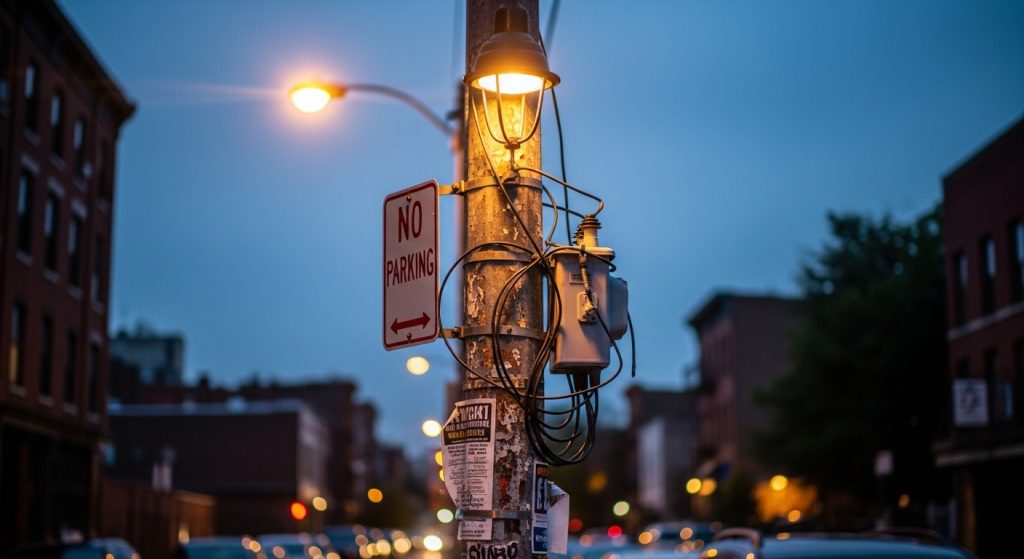
How pole height influences spacing and fixture layout
The relationship between height and pole spacing is the core of any efficient layout planning strategy. Generally, as you increase the mounting height, you can space the poles further apart while still maintaining the required light levels. This is a vital calculation because it determines the total number of fixtures, poles, and foundations needed for the project. By optimizing the height, you can achieve a better coverage balance with fewer units, which significantly lowers the initial capital investment and the long-term energy footprint of the system.
However, this is always a trade-off. While taller poles allow for wider spacing, they also require more powerful luminaires to push the light down to the road. Designers must find the “sweet spot” where the number of poles is minimized without sacrificing the quality of the light or increasing the wind load to dangerous levels. If you space shorter poles too far apart, you end up with dark gaps that compromise safety. By coordinating height and spacing as a single integrated calculation, you create a layout that is both cost-effective and functionally superior.
How arms and mounting configuration affect effective pole height
While the pole itself has a set physical length, the mounting geometry of the arms and brackets can change the effective height of the light source. The length and angle of the arm, often referred to as the arm reach, can raise or lower the fixture by several inches or even feet. For instance, an upsweep arm adds height, while a straight arm keeps the fixture closer to the pole’s top. This distinction is critical because the light’s performance is based on the height of the lamp itself, not necessarily the top of the steel pole.
Furthermore, fixture positioning relative to the roadway is dictated by how the arm extends over the curb. If you use a long arm to push a light further out over a wide road, the leverage can slightly affect the structural height under load, and the angle of the bracket will determine how that height translates into ground coverage. Planners must account for the specific arm and bracket configuration during the design phase to ensure that the final “light point” height matches the engineering requirements. Understanding this interaction prevents surprises during the installation phase and ensures the light hits its intended target.
Why structural stability and safety depend on correct pole height
As you increase the height of a pole, the structural stability requirements become significantly more complex. A taller pole acts as a larger lever, magnifying the forces of gravity and wind. The wind exposure at 40 feet is much higher than it is at 15 feet, meaning the pole must have thicker walls and a stronger base to resist bending or snapping. Every foot added to the height requires a corresponding increase in the strength of the material and the depth of the foundation to maintain an adequate safety margin.
Safety is also a factor during potential vehicle impacts. Taller, heavier poles pose a greater risk if they are struck by a car, which is why many high-speed road projects specify “breakaway” bases for taller installations. You must also consider the “swing” or vibration of a tall pole; if a pole sways too much in the wind, it can damage the sensitive electronics in modern LED fixtures. By prioritizing structural integrity alongside lighting performance, you ensure that the poles remain a safe, permanent part of the infrastructure regardless of the weather or the height of the installation.
How maintenance and lifecycle costs are influenced by pole height
The height of your poles has a direct impact on maintenance access and the associated service planning costs. Shorter poles can often be serviced with standard ladders or small lifts, but as you move toward taller highway-style poles, you require specialized bucket trucks and certified high-access technicians. This increases the cost of every bulb change or sensor repair. Over the 20- to 30-year lifecycle cost of a project, these increased service fees can add up to a significant amount of money.
Taller poles also face more intense environmental wear. The higher wind speeds at the top of a tall pole can lead to faster degradation of brackets and seals, potentially requiring more frequent inspections. Planners should consider these long-term operational expenses when choosing between a few very tall poles and a larger number of shorter ones. While the taller poles might save money during the initial purchase, the specialized equipment needed to maintain them might make them more expensive over time. Balancing initial savings with long-term accessibility is key to a sustainable lighting budget.
What common mistakes lead to incorrect street light pole height selection
One of the most frequent planning mistakes is a design mismatch caused by “copy-pasting” the height from a previous project without considering the current site’s unique dimensions. Just because a 20-foot pole worked for a residential street in one town doesn’t mean it will provide adequate coverage for a wider boulevard in another. Another error is ignoring how the arm length affects the final light point; failing to account for a three-foot upsweep arm can lead to the light being too high and dissipating before it hits the road, resulting in performance issues.
Planners also sometimes under-design for the environment. For example, choosing a tall, thin pole in a high-wind coastal area without increasing the wall thickness can lead to visible leaning or structural failure. Finally, some projects over-design for safety, choosing poles that are much taller than necessary “just in case.” This leads to wasted energy and excessive light pollution. Avoiding these blunders requires a thorough site analysis and a commitment to using the specific physics of the project area to guide every height decision.
What should be reviewed before finalizing street light pole height
Before you move to the procurement phase, a thorough height validation is necessary to ensure the plan matches the reality of the site. This final check is your best defense against installation errors and ensures that the project is truly ready for implementation. By reviewing the physical constraints and lighting goals one last time, you can catch minor errors before they become expensive field modifications.
Use this design checklist to confirm your height selection:
- Verify the road classification and speed limit to ensure the height meets safety standards.
- Confirm that the pole height provides the required light spread for the specific road width.
- Double-check the arm and bracket configuration to calculate the final mounting height.
- Review the wind load and environmental data to ensure structural stability.
- Validate the foundation design against the soil report for that specific height.
- Check for nearby obstacles like trees or buildings that could block light at the chosen height.
- Assess the availability of maintenance equipment for the planned height.
- Ensure project readiness by confirming all parts are compatible with local municipal codes.
What specifications should street light poles and brackets meet for proper height selection
For any height, you must prioritize pole standards and bracket support to ensure the fixture stays secure. The hardware must be rated for the specific wind zone and height of the installation to prevent vibrations that can damage the internal components of the lamp. A mismatch between the bracket and the pole’s height can lead to structural failure during a storm. For more on these requirements, see Street light poles brackets.
Why are polygon light poles often chosen for taller highway installations
When projects require extreme heights, polygon poles are often specified because their faceted geometry provides superior strength against bending. For highway lighting, these poles offer the rigidity needed to hold heavy fixtures steady at 40 or 50 feet. Their multi-sided design allows for a higher weight-to-strength ratio than traditional round poles. Learn more about their application in Polygon light pole highways.
How do foldable light poles influence height planning and maintenance
The use of a foldable design can change how you think about height. These poles allow for easier maintenance access because the fixture can be lowered to the ground, regardless of how tall the pole is. This can make taller installations more feasible in areas where bucket trucks cannot travel, such as narrow park paths. Discover the benefits of this flexible approach in Foldable light pole benefits.
How do lighting pole arms and brackets affect pole height effectiveness
The Lighting pole arm bracket is the component that translates the pole’s height into actual fixture reach. By adjusting the angle and length of the arm, you can fine-tune the light placement without changing the pole itself. This flexibility is what allows planners to overcome site obstacles while maintaining the necessary mounting height for uniform coverage.
Why is foundation design critical when increasing street light pole height
A taller pole exerts a much larger load transfer onto the ground, making the foundation design the most critical part of the structural plan. As you increase the height, the concrete base must be deeper and wider to resist the overturning forces caused by wind. Without a correctly engineered foundation, even the strongest pole in the world will begin to lean or fail. For details on anchoring tall poles, see Street light pole foundation.
Final Thought
Choosing the right street light pole height is a balance between the physics of light and the reality of structural engineering. When you prioritize site-specific conditions over standard assumptions, you create a lighting system that is safer, more efficient, and easier to maintain. By following a logical selection process, you ensure that your community stays well-lit and secure for decades to come.


- 10 Meters Lamp Post
- 10 Meters Pole
- 1000w Led Projector
- 100W LED Tunnel Light
- 12 Meters Lamp Post
- 12 Meters Pole
- 1200w Led Projector
- 15 Light Pole
- 1500w Led Projector
- 150W LED Tunnel Light
- 1800w Led Projector
- 2 In 1 Solar Flood Light
- 200w Led Tunnel Light
- 50w Led Tunnel Light
- 6 Meters Lamp Post
- 6 Meters Pole
- 8 Meters Lamp Post
- 8 Meters Pole
- 800w Led Projector
- 80w Led Tunnel Light
- Colourful Decorative Light
- Conical post
- Courtyard Lamp
- courtyard light
- courtyard lighting fixture
- Decorative Landscape Light
- Decorative road Light
- Flood Light For Courtyard
- Flood Light for Garden
- Flood Light For Outdoor
- Foot Led High Bay Lights
- high bay led lights 100w
- industrial lampshade
- industrial LED shed lights
- industrial magnifying glass with light
- Integrated Solar Flood Light
- led courtyard lamp
- led courtyard light
- led high bay light 100w
- LED Projector For Stadium
- Led UFO High Bay 150W 5000k
- Lighting Plants Mining Price
- Maintenance Free LED Street Light
- Pic Controlling Tunnel Light
- PLC controlling tunnel light
- Post Top Garden Light
- RGB Landscape Light
- Rgbw Decorative Light
- Smart Tunnel Light
- solar courtyard lamp
- solar courtyard light
- Solar LED Road Light
- Solar Street Light For 10 Meter Pole
- Solar Street Light For 12 Meter Pole
- Solar Street Light For 6 Meter Pole
- Solar Street Light For 8 Meter Pole
- Split Type Solar Flood Light
- Sporting Projector
- Stadium Led Projector
- Street Lighting Post
