
 Request A Quote


How Many Lumens Do I Need for Street Lighting Different Road Types
 FACEBOOK
 TWITTER
 LINKEDIN
Determining the right number of lumens is the most vital part of your street lighting project. Lumens measure the total amount of light your fixtures send out in every direction. You must match this output to your specific road classification to keep the area safe. A quiet neighborhood street needs much less light than a busy six-lane highway. Getting the illumination level right helps drivers see hazards from a distance.
You should follow established visibility standards to ensure pedestrians feel secure at night. Proper planning helps you avoid the high costs of over-lighting your streets. It also prevents the dangers of under-lighting, which can lead to more accidents. Your lighting performance depends on picking the correct power for each pole. You want a system that provides clear sightlines without wasting power.
Planners and buyers look at how the light spreads across the pavement. You need to think about the height of your poles and the width of the lanes. By matching the lumens to the road use, you create a better environment for everyone. This careful balance keeps your city bright and your energy bills low. Your final decision should focus on the specific safety needs of each unique road type.
What do lumens actually measure in street lighting
You should think of lumens as the actual light output of your fixture. In the past, people looked at wattage to guess how bright a light was. Wattage only tells you how much power the lamp uses from the grid. A brightness measurement in lumens gives you the real truth about the light you get.
Higher lumens mean a brighter light, which leads to better visual clarity for drivers. You need to know this value to plan your lighting layout correctly. If you only look at wattage, you might buy lights that are too dim or use too much power. Modern LEDs provide more lumens per watt than any older technology. This allows you to get the brightness you need while keeping your power use low. Knowing your lumen counts helps you build a system that meets all your technical goals.
Why do different road types require different lumen levels
Your lighting needs change based on the speed and volume of traffic. A high-speed road requires more light so drivers can react to obstacles quickly. The road classification dictates the safety rules you must follow for each project. Areas with high traffic density need a strong and steady glow to prevent collisions.
You must also consider pedestrian safety in areas like downtown hubs or schools. People walking near the road need enough light to see the path and be seen by cars. A wide road with four lanes will naturally need more lumens than a narrow alleyway. The complexity of the road, such as intersections or sharp turns, also raises the lumen requirement. You are building a safety net of light that must fit the specific shape of the street. Each road type has a different purpose, so each needs a different amount of light.
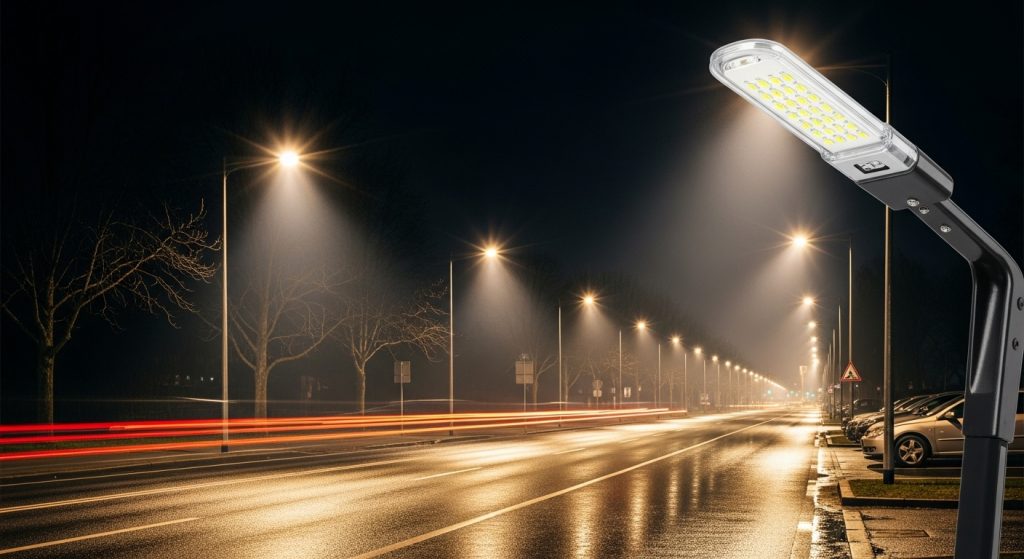
How do residential streets differ from main roads in lumen needs
For residential streets, your main goal is to provide safety without causing a nuisance. You want enough light for neighborhood safety so people can walk their dogs or park cars. However, you must prioritize visual comfort for the residents living in those homes. Light that is too bright can shine into bedroom windows and bother the community.
Typical goals for these areas include lower lumen levels and warmer light colors. You do not have the same high-speed traffic as a main arterial road. This means you can use fixtures with lower output and still keep everyone safe. You want to avoid glare that can blind drivers turning into their driveways. Balancing these needs helps you create a peaceful and secure neighborhood. It is about providing the right amount of light for local life.
What lumen levels are typically needed for urban and arterial roads
You need a higher level of uniform illumination for your busy urban and arterial roads. These streets handle a large amount of traffic visibility and constant movement throughout the night. Your fixtures must cover a wider area and provide more brightness than a side street. You want to make sure there are no dark spots where a car or person could be hidden.
Typical lumen ranges for these arterial roads often fall into these categories:
- Minor arterial roads: 8,000 to 12,000 lumens.
- Major urban streets: 12,000 to 18,000 lumens.
- Heavy traffic intersections: 18,000 to 24,000 lumens.
- Commercial district boulevards: 15,000 to 20,000 lumens.
Choosing the right range ensures that you meet the safety needs of your busiest city zones. You get the brightness required for heavy use without wasting power on empty spaces.
How do highways and major roads change lumen planning priorities
On a highway, your focus moves toward long-range visibility for high-speed travel. Proper highway lighting allows a driver to see hundreds of feet ahead at any moment. This clarity is vital for driver perception when moving at 100 km/h or more. You need high lumen levels because the poles are often taller and spaced further apart.
The light must be consistent so that the eye does not have to adjust to bright and dark spots. This uniformity helps prevent driver fatigue on long journeys. You also need to consider the contrast between the road markings and the dark pavement. High-output LEDs are perfect for these roads because they stay bright over long distances. Your priority is to create a predictable and safe path for every vehicle. Highway planning is about giving drivers the time they need to make safe decisions.
How do spacing and beam control affect required lumen output
The way you place your poles has a massive spacing impact on your lumen needs. If your poles are far apart, you need more lumens per fixture to fill the gap. You also need precise beam control to push the light where it is needed most. Without good lenses, your light might scatter into the sky or nearby fields.
Proper light distribution allows you to use fewer lumens to get the same brightness on the ground. A narrow beam angle works well for thin roads, while a wide beam is better for intersections. If your design is poor, you will find yourself over-lighting areas just to cover up dark spots. This waste raises your bills and can cause glare for drivers. Using the right optics helps you hit your targets with the lowest possible power. You want a system that puts every bit of light exactly on the pavement.
What mistakes cause incorrect lumen selection for street lighting
One of the most frequent planning mistakes is using the same lumen value for every street. This leads to over-lighting residential areas and causing complaints from the public. On the other hand, you might face under-lighting on main roads if you try to save too much money. This creates dangerous dark zones that can lead to crashes.
You must also account for the mounting height of your fixtures. A light that looks bright at ten feet might be too dim at thirty feet. Another error is confusing raw brightness with actual visibility. Glare can make it harder to see, even if the light is very powerful. You should always look at how the light performs in the real world before you finish your plan. Avoiding these errors keeps your project on track and within budget.
What should planners confirm before finalizing lumen requirements
You should perform a full design validation before you order your lighting equipment. This ensures your performance planning meets all the safety needs of your city. Your lighting criteria should be based on the actual use of the road. Use this checklist to verify your requirements:
- Confirm the road type and the speed of the traffic.
- Check the distance between your existing poles.
- Measure the width of the road including any sidewalks or bike lanes.
- Verify that your lumen choice meets local safety laws.
- Ensure the light color is right for the neighborhood.
- Check that the fixtures have the right lenses for the light spread you need.
What are LED road and street lights and how are they used in street lighting
LED road and street lights are the standard tools for modern street lighting systems. This LED technology allows you to get more brightness for less power than ever before. You can find these lights in every part of a city, from the smallest path to the largest highway. They are built to last for years and require very little maintenance from your crews. These fixtures are the best way to keep your community safe while lowering your energy use.
How does street light spacing influence lumen requirements
A Street light spacing guide helps you understand the link between pole spacing and brightness. You need to achieve illumination uniformity so there are no dark gaps on the road. If your poles are close together, you can use fixtures with fewer lumens. If they are far apart, you will need a more powerful light to reach the center of the gap. This guide ensures that your street looks bright and safe from end to end.
Why does beam angle matter when calculating street lighting lumens
The LED street light beam angle determines the light spread of your fixture. You need the right beam angle to make sure the light stays on the road and not on the trees. This allows you to use your lumens more effectively without wasting any power. A good angle helps you cover the whole street with a clean and even glow. It is a vital part of planning a professional and helpful lighting system.
How do LED and sodium street lights differ in lumen performance
Comparing LED vs sodium street lights shows you why modern tech is better. LEDs have much higher lumen efficiency, meaning they turn more power into usable light. In a technology comparison, sodium lights often look yellow and dim over time. LEDs provide a crisp white light that helps people see colors and faces more clearly. This switch is the best way to improve safety and save money on your city’s utility bills.


- 10 Meters Lamp Post
- 10 Meters Pole
- 1000w Led Projector
- 100W LED Tunnel Light
- 12 Meters Lamp Post
- 12 Meters Pole
- 1200w Led Projector
- 15 Light Pole
- 1500w Led Projector
- 150W LED Tunnel Light
- 1800w Led Projector
- 2 In 1 Solar Flood Light
- 200w Led Tunnel Light
- 50w Led Tunnel Light
- 6 Meters Lamp Post
- 6 Meters Pole
- 8 Meters Lamp Post
- 8 Meters Pole
- 800w Led Projector
- 80w Led Tunnel Light
- Colourful Decorative Light
- Conical post
- Courtyard Lamp
- courtyard light
- courtyard lighting fixture
- Decorative Landscape Light
- Decorative road Light
- Flood Light For Courtyard
- Flood Light for Garden
- Flood Light For Outdoor
- Foot Led High Bay Lights
- high bay led lights 100w
- industrial lampshade
- industrial LED shed lights
- industrial magnifying glass with light
- Integrated Solar Flood Light
- led courtyard lamp
- led courtyard light
- led high bay light 100w
- LED Projector For Stadium
- Led UFO High Bay 150W 5000k
- Lighting Plants Mining Price
- Maintenance Free LED Street Light
- Pic Controlling Tunnel Light
- PLC controlling tunnel light
- Post Top Garden Light
- RGB Landscape Light
- Rgbw Decorative Light
- Smart Tunnel Light
- solar courtyard lamp
- solar courtyard light
- Solar LED Road Light
- Solar Street Light For 10 Meter Pole
- Solar Street Light For 12 Meter Pole
- Solar Street Light For 6 Meter Pole
- Solar Street Light For 8 Meter Pole
- Split Type Solar Flood Light
- Sporting Projector
- Stadium Led Projector
- Street Lighting Post
