
 Request A Quote


How to Choose Waterproof Outdoor Wall Lights IP Rating Guide
 FACEBOOK
 TWITTER
 LINKEDIN
Selecting waterproof lighting for your home’s exterior is a decision that balances engineering with environmental reality. An IP (Ingress Protection) rating is not merely a marketing label; it is a technical validation of a fixture’s ability to withstand the rigors of outdoor exposure. For wall-mounted lights, this rating is the primary indicator of how well the internal electronics are shielded from moisture, dust, and corrosive pollutants. Without the correct level of weather resistance, a beautiful fixture can quickly become a safety hazard, prone to short circuits or internal corrosion that dramatically shortens the fixture protection period.
The logic of IP selection depends entirely on where the light will live. A fixture tucked under a deep porch eaves faces different outdoor conditions than one mounted on a completely exposed garden wall. By understanding what the two digits of an IP code signify—solid particle protection and liquid ingress resistance—you can match your hardware to the specific risks of your site. Proper selection ensures that your residential exterior lighting remains a reliable asset through heavy rain, high humidity, and seasonal temperature swings. Taking a systematic approach to evaluating IP ratings allows you to invest with confidence, ensuring your home stays bright, safe, and attractive for years to come.
Why outdoor wall lights need different levels of waterproof protection
Every vertical surface on your property experiences environmental exposure differently. A wall light installed in an open courtyard is subjected to direct, wind-driven rain and intense outdoor conditions, requiring a robust seal to prevent water from entering the light engine. Conversely, a fixture mounted in a semi-sheltered area like a covered walkway might only face high humidity and occasional splashes. Using a low-rated light in an exposed spot is a recipe for performance issues, as moisture eventually bypasses weak gaskets.
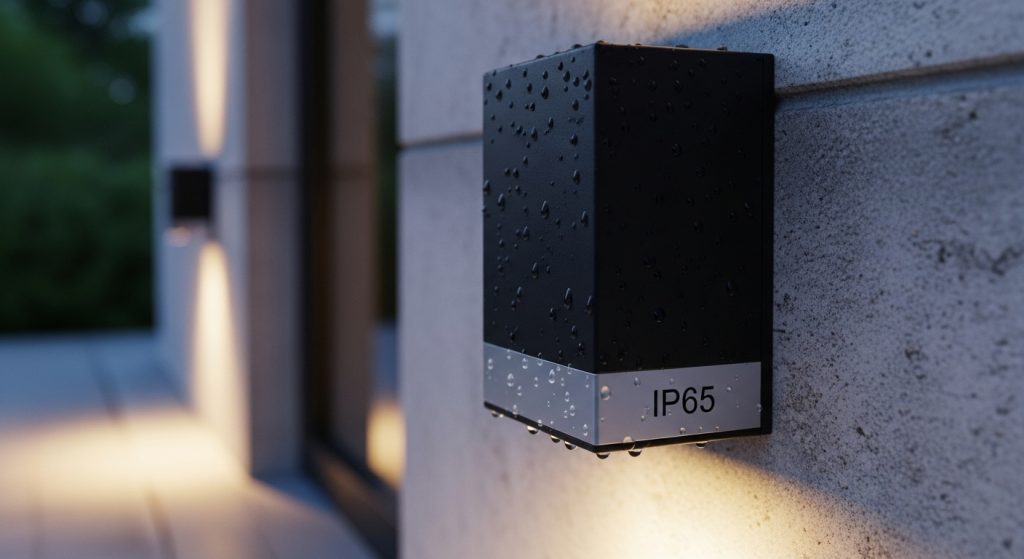
Insufficient protection leads to more than just a dead bulb. It can cause “fogging” inside the lens, which dims the light and ruins the aesthetic. Over time, trapped moisture corrodes the LED drivers, leading to flickering or total failure. By identifying the specific moisture and dust risks of each wall before you buy, you can choose a fixture that offers the appropriate level of defense. This tailored approach extends the fixture lifespan and ensures your outdoor spaces are always ready for use, regardless of the weather.
What an IP rating actually measures in outdoor lighting
An IP rating is a global standard used to define the effectiveness of electrical enclosures. It consists of two digits: the first (0–6) measures ingress protection against solid particles like dust or sand, and the second (0–8) measures water resistance. In outdoor wall lighting, a “6” for solids is generally preferred to ensure the unit is dust-tight, preventing garden debris from entering the housing and causing overheating or mechanical wear.
The second digit is often the point of most scrutiny for homeowners. While a “4” indicates protection against splashing water, a “5” or “6” is required for fixtures that will face direct rain or high-pressure cleaning. It is important to note that higher numbers aren’t always better for every situation; over-specifying a light for a fully sheltered area adds unnecessary cost without providing a functional benefit. Understanding these digits allows you to find the “sweet spot” of protection that ensures safety without overpaying for excessive engineering.
How wall location influences the IP rating you should choose
The installation location is the most significant factor in determining your required IP level. For lights placed under a deep roof overhang or a covered porch, an IP44 rating is often sufficient, as the wall exposure to vertical rain is minimal. These sheltered spots primarily need protection from ambient moisture and dust. However, as you move toward the corners of the building or onto unshielded facades, the risk of wind-driven rain increases significantly.
For a completely exposed mounting surface, you should look for a minimum of IP65. This ensures the fixture is sealed against water jets, making it capable of surviving a heavy monsoon or a direct hit from a garden hose. Furthermore, consider the vertical path of water; if your wall lights are positioned under a gutter or a roof valley, they may face higher “runoff” stress than those on a flat, clear wall. By mapping the water flow of your home’s exterior, you can select an IP rating that offers professional-grade resilience for each specific fixture.
How decorative outdoor wall lights affect waterproofing needs
Modern decorative fixtures often use complex housing design features, such as perforated metal or open-air vents, to create unique light effects. While these designs are visually stunning, they complicate the water sealing process. Every cutout or pattern in the housing represents a potential entry point for rain and dust. Therefore, a perforated light intended for an open wall must have a higher internal IP rating for its LED module than a standard solid-wall lantern.
Balancing airflow and sealing is a technical challenge. High-quality decorative lights often utilize an internal “sleeve” or a fully encapsulated LED engine to maintain a high IP rating while allowing the outer shell to be as intricate as possible. When choosing a decorative piece, you shouldn’t assume the outer design reflects the internal protection. Always verify the rated IP level to ensure the beauty of the patterned glow is supported by a robust, moisture-proof interior that can handle your yard’s specific climate.
How glare control and waterproofing work together in wall lights
Achieving high-quality visual comfort in wet conditions requires a focus on glare control. When rain hits a light fixture, the water droplets on the lens can act as tiny prisms, scattering light in unintended directions and causing uncomfortable “dazzle.” To mitigate this, professional-grade wall lights often use light shielding or internal baffles to direct the beam downward, ensuring the light remains focused on the path even during a downpour.
These shielding elements must be integrated into the waterproof design without creating “traps” where water can pool. A well-engineered fixture ensures that moisture drains away from the diffusers and cutouts, preventing the buildup of algae or mineral deposits that can cloud the light over time. By choosing an IP-rated light with built-in glare management, you ensure your home’s exterior stays clear and inviting during storms, providing a safe and comfortable environment for family and guests.
How mounting height affects water exposure on wall fixtures
The mounting height of a fixture can change the type of moisture stress it faces. Lights placed lower on the wall—around 1 meter—are often in the “splash zone,” where they are hit by mud and water rebounding from the ground or a nearby patio. These fixtures require a high dust and water rating to prevent the lens from being perpetually coated in garden debris. In contrast, lights mounted higher up (2 meters or more) are more likely to face direct, wind-blown rain.
Effective installation planning involves coordinating the height with the IP rating. A taller mount may have more mounting height stress from high winds, requiring a more rigid housing to maintain the seal integrity. Conversely, if you are installing lights near a pool or a low-lying area prone to flooding, you may need a second digit of “7” or “8” to handle temporary submersion. By thinking about how water moves at different levels of your facade, you can select the most durable hardware for every height on your property.
What problems occur when the IP rating is too low or unnecessary high
A rating mismatch is a common pitfall in residential lighting. If the IP rating is too low for the environment, you face inevitable performance issues, ranging from flickering LEDs to tripped circuit breakers. The cost of replacing failed fixtures and the labor of troubleshooting electrical faults far outweighs the initial savings of a cheaper, under-rated light. Corrosion is a silent killer; by the time you see rust on the outside, the internal connections are often already destroyed.
On the other hand, specifying an excessively high rating, such as IP68 (designed for underwater use), for a sheltered porch wall is an example of poor cost efficiency. These fixtures are often heavier, more expensive, and may have more complex mounting requirements than necessary. The goal of a professional environment assessment is to find the right balance—protecting your home’s safety with a robust seal while keeping the project within budget. By choosing based on site reality rather than “over-engineering,” you achieve a system that is both reliable and sustainable.
What to review before selecting an IP-rated outdoor wall light
Before you perform an installation review, it is vital to have a clear understanding of your site’s geography. This selection checklist acts as a final safeguard to ensure your chosen hardware is a perfect match for your home. By conducting a thorough environment assessment, you can move forward with absolute confidence in your new lighting scheme.
- Exposure Level: Is the wall sheltered (IP44+) or fully exposed (IP65+)?
- Water Sources: Are there nearby sprinklers or roof runoff zones?
- Wind Patterns: Does the wall face the direction of frequent stormy winds?
- Design Openings: Does the fixture have perforated fixtures or open vents?
- Mounting Surface: Is the wall material flat enough to ensure a tight gasket seal?
- Maintenance Access: Can you easily reach the fixture for occasional cleaning?
- Warranty Terms: Does the manufacturer stand behind the IP rating for outdoor use?
What types of outdoor wall and pillar lights require IP protection
Outdoor wall pillar residential lights refer to the primary fixtures used on facades and boundaries. Because these wall fixtures and pillar lighting units are the most exposed parts of a home’s exterior, a verified IP rating is non-negotiable for their long-term performance. They ensure your home’s architecture remains bright and secure regardless of the weather.
How metal outdoor LED wall lights handle moisture exposure
Choosing an Outdoor metal LED wall light provides a superior metal housing that supports high-level waterproofing. These materials offer the outdoor durability needed to maintain a tight seal over years of temperature changes. The rigidity of metal ensures that gaskets stay compressed, keeping moisture out and the internal LEDs in pristine condition.
How perforated outdoor wall lamps change IP rating requirements
Perforated wall lamp outdoor units require specialized IP engineering because of their housing openings. Since the outer shell is intentionally “open,” the internal LED engine must meet its own perforated fixtures protection standards. This ensures the decorative patterns don’t compromise the safety or longevity of the lighting system.
What IP65, IP66, and IP67 ratings mean for outdoor wall lights
Reviewing an IP65 IP66 IP67 rating guide is essential for matching hardware to the environment. While IP65 is standard for rain, IP66 and IP67 offer higher levels of protection for more extreme conditions. Understanding these differences allows you to choose the most resilient fixture for your specific local climate and site challenges.
How perforated lighting designs help manage glare in wet environments
The Perforated lights glare control guide explains how glare management improves comfort during storms. By using decorative lighting patterns to shield the bulb, these fixtures prevent water droplets from creating harsh reflections. This ensures your walkways remain clear and safe to navigate even in the heaviest rainfall.
How mounting height planning supports IP-rated wall light performance
Following an Outdoor wall light mounting height guide is critical for outdoor installation. The mounting height significantly dictates the type of water and splash exposure the fixture will face. By planning your height and IP rating together, you maximize the efficiency of the LED while ensuring the longest possible lifespan for your home’s exterior lighting.


- 10 Meters Lamp Post
- 10 Meters Pole
- 1000w Led Projector
- 100W LED Tunnel Light
- 12 Meters Lamp Post
- 12 Meters Pole
- 1200w Led Projector
- 15 Light Pole
- 1500w Led Projector
- 150W LED Tunnel Light
- 1800w Led Projector
- 2 In 1 Solar Flood Light
- 200w Led Tunnel Light
- 50w Led Tunnel Light
- 6 Meters Lamp Post
- 6 Meters Pole
- 8 Meters Lamp Post
- 8 Meters Pole
- 800w Led Projector
- 80w Led Tunnel Light
- Colourful Decorative Light
- Conical post
- Courtyard Lamp
- courtyard light
- courtyard lighting fixture
- Decorative Landscape Light
- Decorative road Light
- Flood Light For Courtyard
- Flood Light for Garden
- Flood Light For Outdoor
- Foot Led High Bay Lights
- high bay led lights 100w
- industrial lampshade
- industrial LED shed lights
- industrial magnifying glass with light
- Integrated Solar Flood Light
- led courtyard lamp
- led courtyard light
- led high bay light 100w
- LED Projector For Stadium
- Led UFO High Bay 150W 5000k
- Lighting Plants Mining Price
- Maintenance Free LED Street Light
- Pic Controlling Tunnel Light
- PLC controlling tunnel light
- Post Top Garden Light
- RGB Landscape Light
- Rgbw Decorative Light
- Smart Tunnel Light
- solar courtyard lamp
- solar courtyard light
- Solar LED Road Light
- Solar Street Light For 10 Meter Pole
- Solar Street Light For 12 Meter Pole
- Solar Street Light For 6 Meter Pole
- Solar Street Light For 8 Meter Pole
- Split Type Solar Flood Light
- Sporting Projector
- Stadium Led Projector
- Street Lighting Post
