
 Request A Quote

Indoor Basketball Court Lighting: How Precision Optics Improve Court Performance
 FACEBOOK
 TWITTER
 LINKEDIN
Indoor Basketball Court Lighting is no longer judged by brightness alone. For overseas buyers, contractors, and venue operators, the bigger issue is whether a lighting system can keep the court visually clear, reduce glare around the basket area, control operating cost, and support modern venue expectations at the same time. That shift is visible in current sports-lighting guidance: IES notes that lighting levels depend on the level of play, while basketball-specific guidance from FIBA places strong emphasis on uniformity, glare control, flicker performance, and stable color quality.
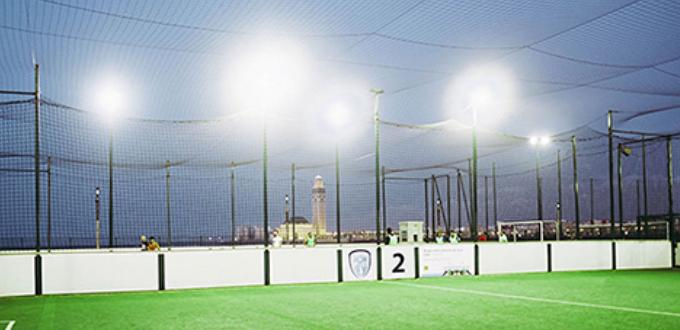
For many indoor courts, the pain point is not a lack of raw output. It is poor light control.
A venue may install high-power fixtures and still end up with:
• Bright zones and dark patches across the playing surface
• Glare that affects players when tracking the ball near the rim
• Reflections that reduce visual comfort for spectators and cameras
• Higher wattage use than necessary because the optics are inefficient
FIBA’s current equipment rules are explicit on several of these issues. They state that glare must not affect players’ view, that reflected light from the main camera position should be avoided, and that lighting quality should support both visibility and broadcast needs. The same guidance also sets targets including flicker factor of ≤1%, CRI of ≥ Ra 80, and color temperature in the 4000–6000 K range for high-level basketball environments.
That is exactly why precision optics have become a stronger selling point than “more lumens” alone.
Why Optical Control Has Become a Real Procurement Issue
Indoor sports halls are under pressure from two directions. On one side, venue owners want better playing conditions, more professional presentation, and lower maintenance disruption. On the other, they are being pushed toward more energy-efficient building systems. The U.S. Department of Energy continues to position solid-state lighting as a major efficiency platform, while the IEA notes that LED lighting is now significantly more efficient than fluorescent and especially well suited to advanced lighting controls.
This matters for basketball facilities because the traditional specification mindset often misses the real operational problem. A court does not benefit when light is generated efficiently at the source but wasted through poor aiming, overspill, or uneven distribution on the floor. In practice, buyers increasingly want lighting that helps them achieve three outcomes together:
• Better player visibility
• More even court illuminance
• Lower energy per usable lux on the playing area
That makes beam control and aiming flexibility much more valuable than a simple wattage comparison.
The Key Feature: Precision Optics With Flexible Aiming
For this reason, the strongest theme for Dawn Lighting’s solution is not just high efficacy. It is the combination of symmetrical and asymmetrical optics with a 270° adjustable bracket.
The 180 lm/W LED Stadium Light is equipped with multiple beam options, including symmetrical distributions such as 30° / 45° / 60° / 90° and asymmetrical profiles such as 140×80° and 120×40×60°. The mounting bracket uses a racked-angle structure with secure 10° step adjustment across a wide 270° range.
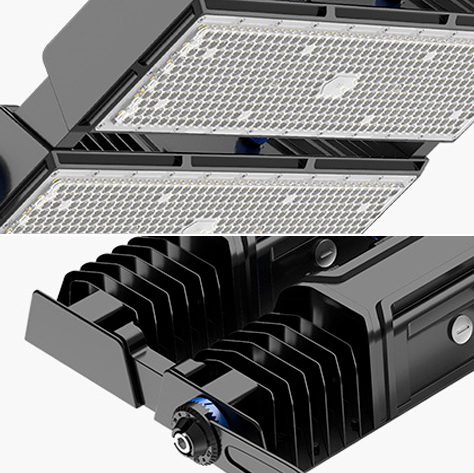
For indoor basketball court lighting, that combination offers practical value:
• It helps direct light onto the court instead of wasting output in roof volume or spectator edges
• It improves uniformity, especially on full-size courts and multi-use halls
• It supports more controlled aiming near baskets and end zones, where glare complaints often appear
• It gives installers more flexibility when working around trusses, catwalks, or existing mounting positions
FIBA’s venue guidance also reinforces why this matters. It recommends at least 300 lux average horizontal illuminance for community-focused recreational facilities and at least 750 lux for competition venues without broadcasting requirements, while stressing that lighting location is critical so players’ visibility is not compromised.
In other words, good indoor basketball court lighting is a geometry problem as much as a power problem.
How Dawn Lighting Supports Better Court Results
Dawn Lighting addresses this challenge through a fixture platform originally built for demanding large-area projects, which is why it brings useful engineering advantages into indoor sports applications as well.
First, the fixture reaches up to 180 lm/W through high-brightness 3030 and 5050 LED chip options. That is important because efficient source output gives specifiers more room to pursue target illuminance without oversizing the system. As the IEA points out, the next phase of LED adoption is increasingly focused on higher performance and smarter systems rather than basic conversion alone.
Second, the IK08-rated polycarbonate lens system supports precise distribution choices. This is critical for basketball courts, where the goal is not simply to flood the space, but to create stable visual conditions across the main playing area.
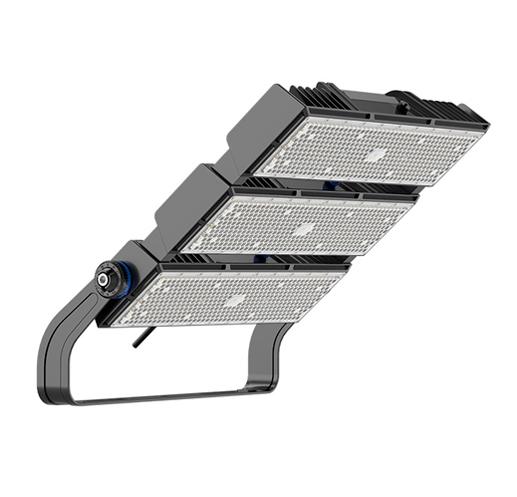
Third, the 270° bracket with stepped locking positions improves aiming accuracy and installation security. On large indoor courts, that matters because the final result depends heavily on fixture orientation. Even a strong luminaire can underperform if the aiming strategy creates hot spots, poor cross-lighting, or direct view into the source.
Fourth, the fixture uses an embedded cable raceway, which helps protect wiring and improve layout discipline. For venue buyers handling large projects, cleaner installation details help protect long-term reliability while also improving overall presentation.
Why This Aligns With Market Direction in 2026
The market is moving toward lighting systems that do more than meet a lux number on paper. Operators want lighting that supports player experience, camera readiness, lower running cost, and easier facility management. That broader direction is consistent with DOE and IEA messaging around LED adoption, where efficiency, controllability, and better system integration are becoming more important across commercial buildings.
For overseas distributors and project buyers, that changes how indoor basketball court lighting should be evaluated. The better question is no longer, “How much power does the fixture have?” It is, “How much usable, well-controlled light can it deliver where the game actually happens?”
That is where Dawn Lighting’s approach becomes commercially relevant.
A More Practical Way to Specify Indoor Basketball Court Lighting
When buyers compare solutions for indoor basketball court lighting, they should look beyond headline wattage and focus on the following:
• Optical distribution options for different hall geometries
• Aiming flexibility for basket zones and sideline coverage
• High efficacy to reduce lifecycle operating cost
• Flicker, CRI, and color quality that align with modern sports expectations
• Installation details that support long-term reliability
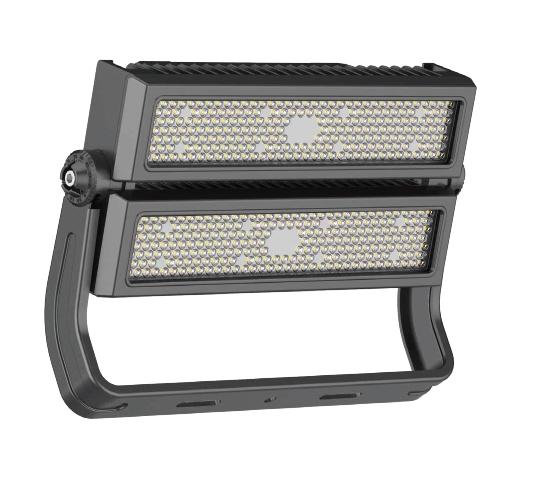
Dawn Lighting’s high-efficacy LED platform answers those needs by combining strong output with more precise optical control. For basketball venues, that means a clearer court, fewer visual distractions, and better energy use per square meter of effective play space.
That is a stronger value proposition than brightness alone.
- 10 Meters Lamp Post
- 10 Meters Pole
- 1000w Led Projector
- 100W LED Tunnel Light
- 12 Meters Lamp Post
- 12 Meters Pole
- 1200w Led Projector
- 15 Light Pole
- 1500w Led Projector
- 150W LED Tunnel Light
- 1800w Led Projector
- 2 In 1 Solar Flood Light
- 200w Led Tunnel Light
- 50w Led Tunnel Light
- 6 Meters Lamp Post
- 6 Meters Pole
- 8 Meters Lamp Post
- 8 Meters Pole
- 800w Led Projector
- 80w Led Tunnel Light
- Colourful Decorative Light
- Conical post
- Courtyard Lamp
- courtyard light
- courtyard lighting fixture
- Decorative Landscape Light
- Decorative road Light
- Flood Light For Courtyard
- Flood Light for Garden
- Flood Light For Outdoor
- Foot Led High Bay Lights
- high bay led lights 100w
- industrial lampshade
- industrial LED shed lights
- industrial magnifying glass with light
- Integrated Solar Flood Light
- led courtyard lamp
- led courtyard light
- led high bay light 100w
- LED Projector For Stadium
- Led UFO High Bay 150W 5000k
- Lighting Plants Mining Price
- Maintenance Free LED Street Light
- Pic Controlling Tunnel Light
- PLC controlling tunnel light
- Post Top Garden Light
- RGB Landscape Light
- Rgbw Decorative Light
- Smart Tunnel Light
- solar courtyard lamp
- solar courtyard light
- Solar LED Road Light
- Solar Street Light For 10 Meter Pole
- Solar Street Light For 12 Meter Pole
- Solar Street Light For 6 Meter Pole
- Solar Street Light For 8 Meter Pole
- Split Type Solar Flood Light
- Sporting Projector
- Stadium Led Projector
- Street Lighting Post
