
 Request A Quote

landscape lighting design
 FACEBOOK
 TWITTER
 LINKEDIN
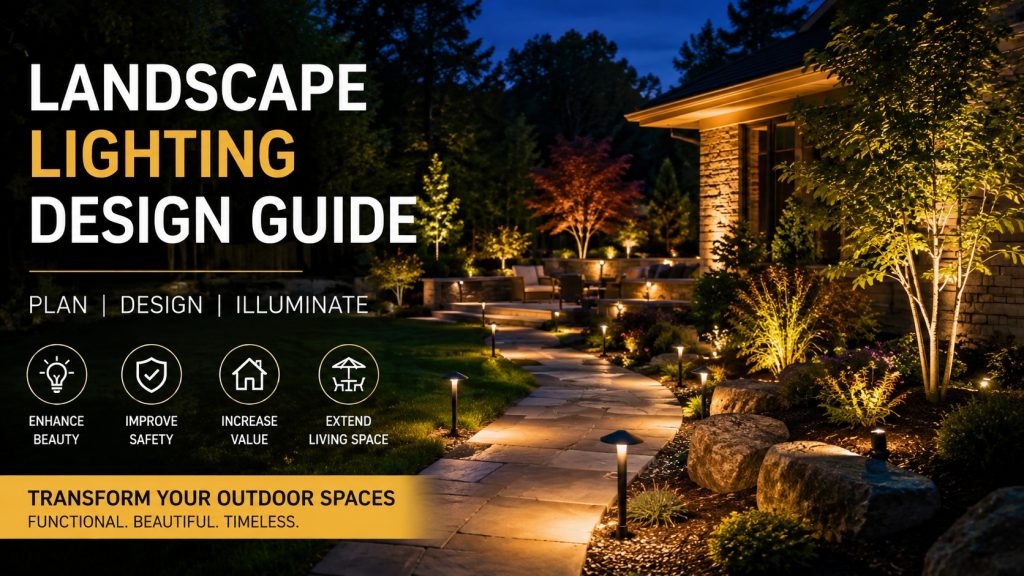
Landscape lighting design isn’t just about putting a handful of outside lights in a yard. It is a tactical process which integrates aesthetics, security, usefulness, and ambience to usher in a totally new visual and/or sensory image of an outdoor space at night. A good system helps to highlight architectural elements, provide added security and extends the value of gardens, patios and walkways well after dark.
What Is Landscape Lighting Design?
Landscape lighting design is the art and science of arranging outdoor lighting to improve a garden, yard or architectural setting. It is used for both residential and commercial properties for various purposes, such as enhancing visibility, highlighting features and creating mood.
There are usually two main purposes for the lighting design:
- Aesthetic enhancement – showcasing trees, plants, architecture, and water features
- Safety and security – improving visibility along walkways, entrances, and driveways
Today’s contemporary design focuses on light that is subtle, layered and can lead the eye and add depth to the landscape rather than filling up a whole yard.
Why Landscape Lighting Matters
A professionally designed lighting system delivers several important benefits:
1. Enhanced curb appeal
Outdoor lighting dramatically improves the nighttime appearance of a property, making homes look more elegant and visually balanced.
2. Improved safety and navigation
Pathways, stairs, and driveways become easier and safer to use when properly illuminated.
3. Increased property value
Studies and industry insights consistently show that well-designed exterior lighting can increase perceived home value and buyer interest.
4. Extended outdoor living space
Patios, gardens, and entertainment areas become usable after sunset, effectively expanding living space.
5. Security enhancement
Well-lit exteriors deter intruders and reduce dark hiding areas around the property.
Core Principles of Professional Lighting Design
A successful landscape lighting system follows a few essential design principles used by professionals.
1. Layered lighting approach
Good designs combine multiple lighting layers:
- Ambient lighting (general illumination)
- Task lighting (functional use like paths and stairs)
- Accent lighting (highlighting focal points)
This layered structure ensures balance instead of harsh brightness.
2. Light only what matters
Instead of lighting everything evenly, designers focus on key areas:
- Entryways
- Trees and plants with strong character
- Architectural features
- Water or sculptural elements
Negative space (areas left darker) is equally important for contrast and depth.
3. Avoid over-lighting
One of the most common mistakes is excessive brightness. Over-lighting can:
- Reduce visual comfort
- Flatten the landscape
- Create glare and harsh shadows
Subtle lighting is more visually appealing and professional.
4. Control glare and direction
Fixtures should be positioned so the light is visible on surfaces—not directly in the eyes. Proper shielding and angling improves comfort and visual quality.
Main Types of Landscape Lighting
Understanding fixture types is key to building an effective lighting plan.
1. Path lighting
Used for lighting walkways, driveways, garden paths. It enhances navigation and makes for a pleasant environment.
2. Uplighting
Facing upwards at ground level to emphasize trees, walls and architecture. This is a technique that can be used to create drama and depth.
3. Downlighting
Downlighting is mounted on an elevated position (like in a tree or structure) and produces soft and realistic light, like moonlight.
4. Accent or spotlighting
Employed to emphasize specific areas such as sculptures, fountains, and plants with unusual forms.
5. Wall washing and grazing
These techniques use light to highlight the surfaces, materials and architecture of buildings.
How to Plan a Landscape Lighting Layout
A strong lighting layout starts with structure and intention—not random placement.
Step 1: Identify focal points
Choose 1–3 key features per area, such as a tree, doorway, or garden sculpture.
Step 2: Define circulation paths
Mark all walkways, steps, and transitions between spaces for safety lighting.
Step 3: Create lighting zones
Divide the landscape into functional areas:
- Front yard (curb appeal)
- Backyard (entertainment)
- Side paths (navigation)
Step 4: Balance light and shadow
Avoid uniform brightness. Darker areas help highlight illuminated features and create depth.
Common Landscape Lighting Mistakes to Avoid
Even well-intentioned designs often fail due to a few common errors:
- Overusing bright floodlights
- Poor fixture spacing or randomness
- Ignoring glare control
- Lighting too many elements at once
- Using incorrect color temperature (too cool or harsh white light)
Professional designs prioritize warmth, balance, and restraint.
Best Practices for Modern Outdoor Lighting
Modern landscape lighting follows a “less is more” philosophy:
- Use warm color temperatures (around soft white tones)
- Prioritize energy-efficient LED fixtures
- Hide light sources where possible
- Focus on texture and depth, not brightness
- Automate lighting with timers or sensors for efficiency
These practices create a natural, high-end nighttime environment.
Conclusion
Landscape lighting design is an amazing way to enhance any outdoor area. With the right design, it can be practical, artistic, and enhance both safety and architectural appeal while also adding to your night-time enjoyment of your home.
The secret of good design isn’t the amount of light used, it’s where you put it. With a bit of innovative lighting, attention to detail and the ability to control glare, any outdoor space can be made a visually appealing and extremely functional nighttime area.
- 10 Meters Lamp Post
- 10 Meters Pole
- 1000w Led Projector
- 100W LED Tunnel Light
- 12 Meters Lamp Post
- 12 Meters Pole
- 1200w Led Projector
- 15 Light Pole
- 1500w Led Projector
- 150W LED Tunnel Light
- 1800w Led Projector
- 2 In 1 Solar Flood Light
- 200w Led Tunnel Light
- 50w Led Tunnel Light
- 6 Meters Lamp Post
- 6 Meters Pole
- 8 Meters Lamp Post
- 8 Meters Pole
- 800w Led Projector
- 80w Led Tunnel Light
- Colourful Decorative Light
- Conical post
- Courtyard Lamp
- courtyard light
- courtyard lighting fixture
- Decorative Landscape Light
- Decorative road Light
- Flood Light For Courtyard
- Flood Light for Garden
- Flood Light For Outdoor
- Foot Led High Bay Lights
- high bay led lights 100w
- industrial lampshade
- industrial LED shed lights
- industrial magnifying glass with light
- Integrated Solar Flood Light
- led courtyard lamp
- led courtyard light
- led high bay light 100w
- LED Projector For Stadium
- Led UFO High Bay 150W 5000k
- Lighting Plants Mining Price
- Maintenance Free LED Street Light
- Pic Controlling Tunnel Light
- PLC controlling tunnel light
- Post Top Garden Light
- RGB Landscape Light
- Rgbw Decorative Light
- Smart Tunnel Light
- solar courtyard lamp
- solar courtyard light
- Solar LED Road Light
- Solar Street Light For 10 Meter Pole
- Solar Street Light For 12 Meter Pole
- Solar Street Light For 6 Meter Pole
- Solar Street Light For 8 Meter Pole
- Split Type Solar Flood Light
- Sporting Projector
- Stadium Led Projector
- Street Lighting Post
