
 Request A Quote

Lumens vs Kelvin: What Outdoor Lighting Buyers Need to Know (Dawn Lighting Guide)
 FACEBOOK
 TWITTER
 LINKEDIN
When choosing outdoor lighting, two numbers matter more than most: lumens and kelvin. These fundamentals determine how bright your lights are and what kind of visual experience they create. Yet many buyers still confuse the two. At Dawn Lighting, we believe an informed choice helps you design safer, more inviting outdoor spaces — from city streets to residential walkways, parks, campuses, and commercial lots.
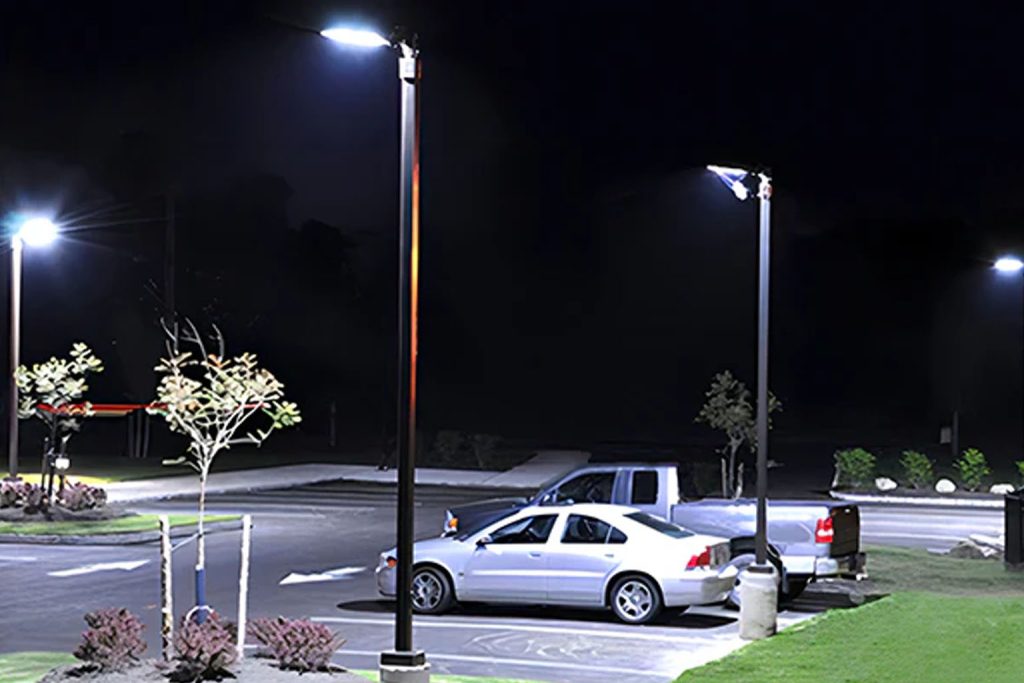
In this guide, we explain lumens vs kelvin clearly, why they matter for outdoor lighting, and how to pick the right lighting for each application. Understanding these technical but essential terms helps you plan smarter lighting systems with better performance and fewer surprises.
What Are Lumens?
Lumens Defined
Lumens (lm) measure visible light output — how much usable light a bulb produces. Think of lumens as the “brightness number.” The higher the lumens, the more light you see.
Traditional bulbs were once sold by wattage (60W, 100W) — a measure of energy use. LEDs use far less power to produce the same light output, so wattage no longer indicates brightness. Instead, lumens tell you how much light a fixture emits.
Why Lumens Matter in Outdoor Lighting
Outdoor lighting is performance driven. Whether lighting a roadway, parking area, sidewalk, or park, the goal is effective illumination — not just energy use. That’s where lumens matter:
- Safety: Enough light prevents hazards like tripping or blind spots.
- Security: Proper brightness enhances surveillance and deters crime.
- Functionality: Tasks like driving, walking, loading, or outdoor seating require accurate illumination levels.
For example, a dark parking lot with low lumen output feels unsafe and unwelcoming. By contrast, lighting with the right lumen level makes the area functional even after sunset.
How Many Lumens Do You Need?
There’s no one-size-fits-all number, but general guidance exists:
- Sidewalks/Residential Paths: 800–2,000 lm
- Parking Lots/Commercial Spaces: 4,000–12,000+ lm
- Major Roads/Highways: 10,000–25,000+ lm
These values vary by layout, spacing, fixture design, and expected use.
What Is Kelvin?
Kelvin Defined
While lumens measure brightness, kelvin (K) measures color temperature — the visual tone of light. Kelvin numbers define whether light looks warm and yellowish or cool and bluish.
- Warm Light: ~2700K–3000K — cozy and inviting
- Neutral White: ~3500K–4000K — balanced and versatile
- Cool White: ~5000K+ — crisp and alert
You’ll see these Kelvin values on LED lighting specifications. Low numbers are warm; high numbers are cool.
Why Color Temperature Matters Outdoors
Outdoor spaces have different lighting needs:
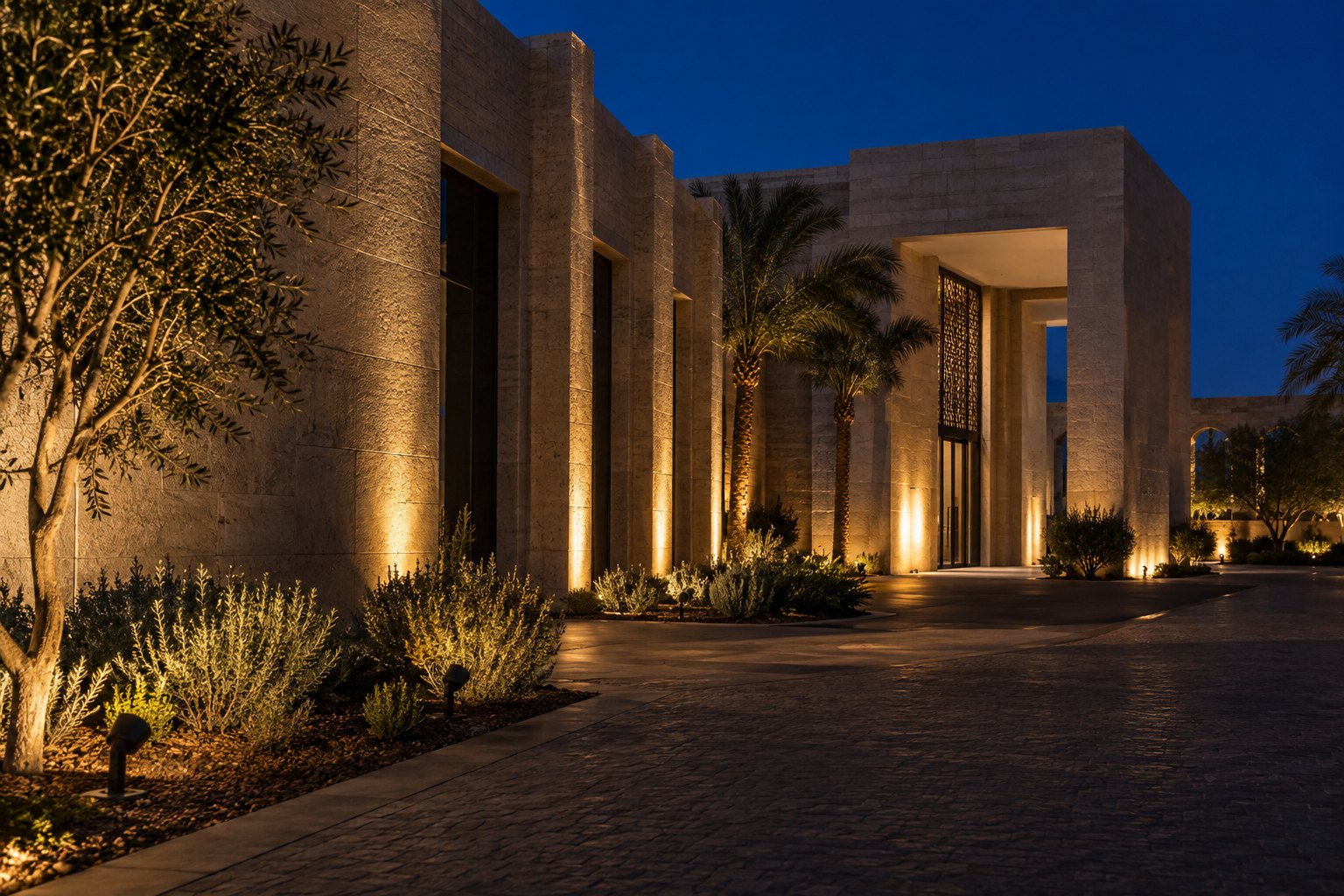
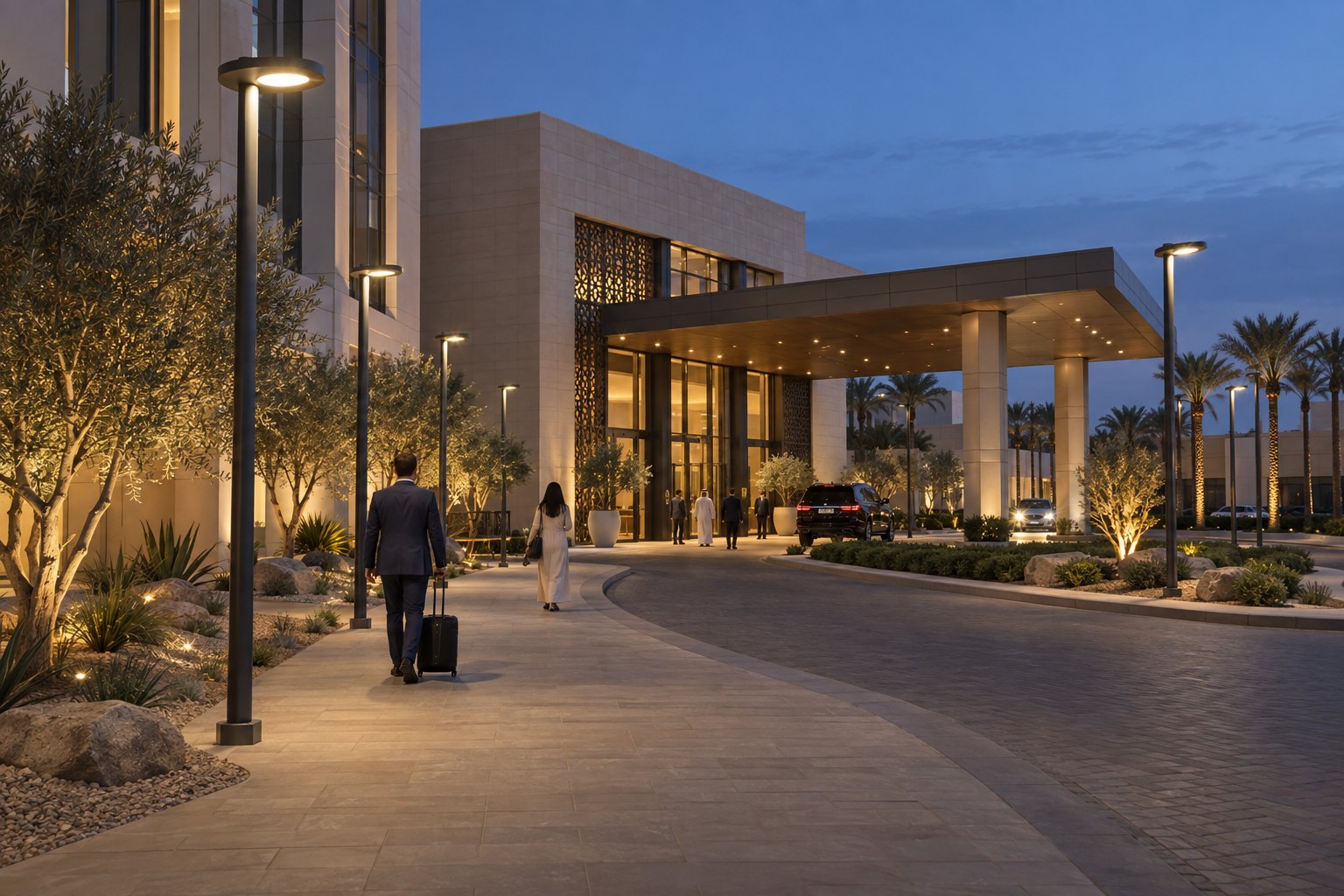
- Warm lighting (2700K–3000K):
Ideal for parks, residential settings, landscapes, and hospitality areas where comfort and ambience matter. Warmer light creates a welcoming feel. - Neutral lighting (3500K–4000K):
Works well in areas that need clarity without harsh tones — plazas, mixed-use pathways, commercial campuses. - Cool lighting (5000K+):
Best for large open spaces, industrial areas, and locations where maximum visual acuity is needed, such as logistics yards or highway intersections.
But it’s not only about comfort. Kelvin also influences visual contrast and alertness. Cooler light can help drivers see edge lines and pedestrian crossings more clearly at night.
Considerations for Human and Environmental Health
Some studies show that excessive blue-rich light (very high kelvin) may impact sleep patterns and disrupt ecosystems when used inappropriately. That’s why many outdoor lighting standards recommend warmer color temperatures near residential or natural areas.
With this in mind, Dawn Lighting offers a full range of color temperatures to balance performance with comfort and environmental harmony.
Lumens vs Kelvin: Head-to-Head
| Feature | Lumens | Kelvin |
|---|---|---|
| What it measures | Light output/brightness | Color temperature/visual tone |
| Unit | lm | K |
| Affects | Visibility, safety, functional light level | Mood, perception, visual comfort |
| Important for | Parking lots, streets, task lighting | Public spaces, pedestrian areas, ambiance |
Understanding both values lets you design lighting that performs well and feels right.
How to Choose the Right Combination
1. Know the Application
Start by identifying the primary function of the space:
- Safety first? Favor moderate-to-high lumens with a neutral color.
- Welcoming and aesthetic? Use warm kelvin with appropriate lumen levels.
- High-activity area? Higher lumens with neutral or cool kelvin improves visibility.
Different spaces on the same site may need varied lighting strategies — and that’s okay. Smart lighting design blends selections based on both lumens and kelvin.
2. Balance Brightness With Comfort
Bright is not always better. Too many lumens at a harsh color temperature causes glare and visual discomfort. Always consider:
- Fixture placement
- Shielding and optics
- Surrounding surfaces (reflectivity)
- Ambient lighting conditions
A well-designed lighting system gives enough illumination without overlighting.
3. Think About Long-Term Cost and Performance
LED lighting shines well beyond traditional technologies because of efficiency and long lifespan. But choosing the right lumens and kelvin ensures you aren’t wasting energy on unnecessary brightness or uncomfortable lighting conditions.
Dawn Lighting’s Outdoor LED Expertise
At Dawn Lighting, we build outdoor LED solutions with both performance and experience in mind. Our products are engineered with:
• Clear Lumen Ratings
Accurate lumen specifications help designers and planners choose exactly how much light you need — no guesswork.
• Kelvin Options for Every Setting
From warm 2700K for pedestrian plazas to 5000K for roadways, our lighting adapts to each environment.
• Advanced Optics
Better optics deliver uniform light distribution, reduce glare, and improve visual comfort.
• Robust Thermal Management
Good heat dissipation means consistent lumen output throughout the life of the fixture.
• Outdoor Durability
High IP ratings and rugged construction ensure performance in rain, dust, and extreme temperatures.
Real-World Applications
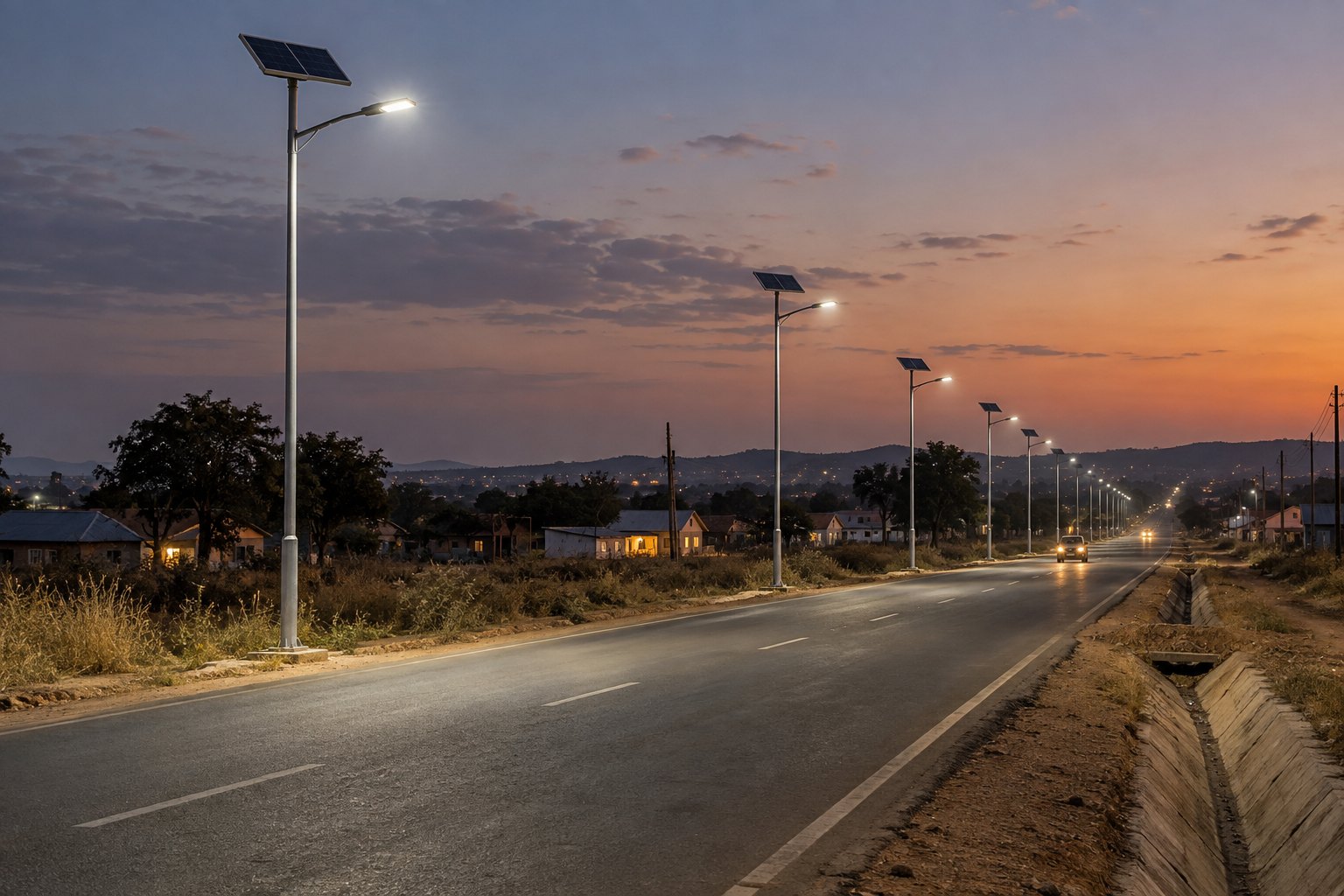
City Streets and Highways
- High lumen output for visibility
- Neutral to cool color temperatures to support driver alertness
- Even distribution for consistent sight lines
Public Parks and Walkways
- Medium lumen levels for safe navigation
- Warm color temperatures for comfort and ambiance
- Shielded optics to avoid light trespass into homes
Commercial Campuses and Parking Lots
- High reliability with energy efficiency
- Lumens tuned to area size and spacing
- Kelvin selected for both safety and branding impact
Each scenario benefits from choosing both lumens and kelvin intentionally — not arbitrarily.
Common Mistakes to Avoid
Mistake 1: Choosing Lights by Wattage Alone
Wattage no longer tells you brightness — lumens do. Focus on lumen output instead.
Mistake 2: Picking Kelvin Without Context
A 5000K fixture might look crisp in a warehouse, but too harsh in a residential park. Consider purpose and surroundings.
Mistake 3: Overlighting
More light doesn’t equal better lighting. Too many lumens can create glare, waste energy, and disrupt neighbors or wildlife.
Final Takeaways
Choosing outdoor lighting means balancing two critical numbers:
- Lumens — How bright the light is
- Kelvin — What color the light looks like
Together, they shape visual comfort, safety, functionality, and atmosphere.
At Dawn Lighting, we help you decode these numbers so your outdoor lighting system delivers performance, longevity, and visual harmony — tailored to your environment, project type, and budget.
- 10 Meters Lamp Post
- 10 Meters Pole
- 1000w Led Projector
- 100W LED Tunnel Light
- 12 Meters Lamp Post
- 12 Meters Pole
- 1200w Led Projector
- 15 Light Pole
- 1500w Led Projector
- 150W LED Tunnel Light
- 1800w Led Projector
- 2 In 1 Solar Flood Light
- 200w Led Tunnel Light
- 50w Led Tunnel Light
- 6 Meters Lamp Post
- 6 Meters Pole
- 8 Meters Lamp Post
- 8 Meters Pole
- 800w Led Projector
- 80w Led Tunnel Light
- Colourful Decorative Light
- Conical post
- Courtyard Lamp
- courtyard light
- courtyard lighting fixture
- Decorative Landscape Light
- Decorative road Light
- Flood Light For Courtyard
- Flood Light for Garden
- Flood Light For Outdoor
- Foot Led High Bay Lights
- high bay led lights 100w
- industrial lampshade
- industrial LED shed lights
- industrial magnifying glass with light
- Integrated Solar Flood Light
- led courtyard lamp
- led courtyard light
- led high bay light 100w
- LED Projector For Stadium
- Led UFO High Bay 150W 5000k
- Lighting Plants Mining Price
- Maintenance Free LED Street Light
- Pic Controlling Tunnel Light
- PLC controlling tunnel light
- Post Top Garden Light
- RGB Landscape Light
- Rgbw Decorative Light
- Smart Tunnel Light
- solar courtyard lamp
- solar courtyard light
- Solar LED Road Light
- Solar Street Light For 10 Meter Pole
- Solar Street Light For 12 Meter Pole
- Solar Street Light For 6 Meter Pole
- Solar Street Light For 8 Meter Pole
- Split Type Solar Flood Light
- Sporting Projector
- Stadium Led Projector
- Street Lighting Post
