
 Request A Quote

5 Common Myths About street light with led
 FACEBOOK
 TWITTER
 LINKEDIN
With the adoption of LED street lights in cities across the globe, the technology has been touted as a game-changer in terms of energy efficiency and sustainability. Nevertheless, with its widespread use, a number of myths have been raised- resulting to bad light choices, light pollution and other harmful effects on the environment.
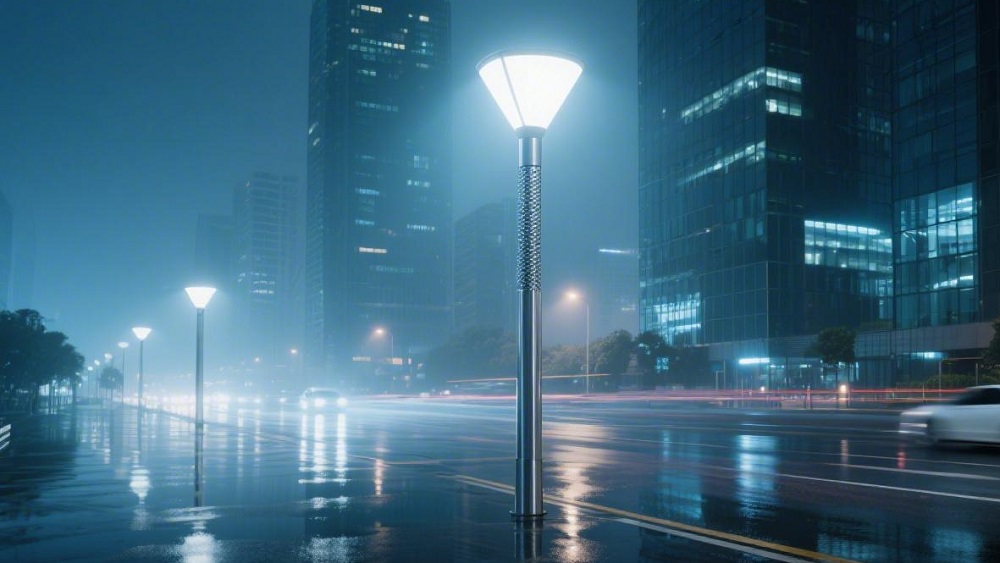
In this article, we bust five common LED streetlight myths and discuss what is wrong or right that municipalities, urban planners and communities should give before switching to LEDs.
Myth 1: LED Streetlights will automatically decrease Light Pollution.
On the surface, this makes sense, since less energy is consumed when using LEDs, therefore they must have a smaller environmental footprint, right?
Not necessarily.
Though LED lights use less energy, they may in fact magnitude overall light pollution because of a phenomenon called the Jevons Paradox. Cities will tend to install more or make lights brighter rather than cut down on lighting usage when the price of lighting reduces and they find it less costly to turn the lights on.
This means:
- A greater amount of light is emitted.
- Night skies become brighter
- Part of the energy saving is counteracted.
The truth is, artificial lighting is in high demand worldwide particularly in cities, which has led to over lighting instead of energy savings.
Myth 2: LEDs Light Directly Better, and therefore, have no impact on the sky.
The other common misconception is that LED fixtures are very directional and thus do not spill light to the sky.
Although LEDs can be structured to project light downward, that is not the case.
White LEDs produce a lot of blue light, which is scattered more readily in the atmosphere than warmer colors. This scattering gives rise to skyglow, lighting up the night sky more brightly- even with lights sufficiently shielded.
Also, much glare is generated by most LED installations, and this can:
- Make drivers less visible.
- Make it awkward on the sidewalk.
- Increase eye strain
Myth #3: Traffic safety is enhanced by LED Streetlights.
The most usual selling point of LED lighting is enhanced road safety. Whiter, brighter, is thought to enable drivers to see better in the dark.
But recent studies lack direct demonstrations that LED streetlights enhance traffic safety.
Some challenges include:
- Symptomatic of glare that removes visual acuity.
- Excessively bright surfaces with contrast problems.
- Absence of definite researches that LED lighting reduces accidents.
Although visibility is a factor of concern, the increased brightness does not necessarily result in safer roads.
Myth #4: Lighting is brighter with LED, and as a result, crime is lower.
The other common argument is that increased lighting will deter crime and improve citizen safety.
The truth? It’s still unclear.
Studies have not conclusively established that LED lighting can decrease crime. Sometimes the over lighting of an area will produce deep shadows and high contrast spots and it will be more difficult to notice movement or any suspicious activity.
Moreover:
- There is a false security that overlighting can give.
- Inadequate lighting design can actually decrease visibility.
- Lights may be disruptive to neighbors.
Note: Lighting design and quality are much more important than brightness.
Myth 5: LED Energy Saving will invariably save carbon.
LEDs are actively marketed as an environmentally conscious alternative due to their use of less electricity. On a case by case basis, it may be said to be true but looking at the bigger picture, it is a different story.
The saving of energy and carbon will only be achieved provided total light use is held constant. Regrettably, a common reaction of many cities to reduced costs is to add additional lights or raise brightness.
Other environmental issues are:
- Influences of manufacturing and disposal.
- Availability of possibly dangerous substances.
- Artificial light on biodiversity and species.
Light can interfere with: Artificial light, particularly light that is blue-rich.
- Animal migration patterns
- Plant growth cycles
- Circadian rhythms Human sleep.
The Real Problem: It is not the Technology, It is the way we use it.
What is not the problem is LED technology itself. As a matter of fact, it can go a long way in enhancing energy efficiency and lowering the environmental impact.
The actual issue is the way lighting is planned, implemented and controlled.
Street lighting that is designed poorly can result in:
- Light spill over (light entering where it is not intended)
- Increased skyglow
- Wasted energy
- Adverse health and environmental impacts.
Responsible LED Street Lighting Best Practices.
Cities must adhere to the following principles to achieve the greatest benefits and the minimum harm:
- Use Light Only Where Needed
Limit needless lighting in un-busy places.
- Control Brightness Levels
It is not necessarily that the more light we have, the more we can see.
- Select Warmer Color Temperatures.
Reduced blue lights light emissions lessen skyglow and glare.
- Install Proper Shielding
Light directed downwards and avoid spillover.
- Use Smart Lighting Systems.
Take advantage of adaptive controls (dimming and motion sensors).
The Importance of This to the Cities of Today.
Increased urban areas mean an increase in urban populations, with the growth of the smart city programs lighting choices become critical.
For regions like:
- Southeast Asia
- Europe
- North America
The conversion of streetlights to LED is gaining pace. These projects may have an unwanted effect on light pollution and the environment without adequate planning.
Conclusion
It is common to find LED streetlights being promoted as an easy to use, one-stop, energy-saving, safety and environmental-protective solution. The situation is much more complex, in fact.
The 5 largest myths on light pollution, directionality, safety, security, and sustainability reveal a very important fact:
👉 Technology is not the solution to problems. Smart implementation does.
LED lighting can help make our cities safer and more sustainable when consumed in a responsible manner. However, unless it is carefully designed and controlled, it will only lead to an even worse problem.
- 10 Meters Lamp Post
- 10 Meters Pole
- 1000w Led Projector
- 100W LED Tunnel Light
- 12 Meters Lamp Post
- 12 Meters Pole
- 1200w Led Projector
- 15 Light Pole
- 1500w Led Projector
- 150W LED Tunnel Light
- 1800w Led Projector
- 2 In 1 Solar Flood Light
- 200w Led Tunnel Light
- 50w Led Tunnel Light
- 6 Meters Lamp Post
- 6 Meters Pole
- 8 Meters Lamp Post
- 8 Meters Pole
- 800w Led Projector
- 80w Led Tunnel Light
- Colourful Decorative Light
- Conical post
- Courtyard Lamp
- courtyard light
- courtyard lighting fixture
- Decorative Landscape Light
- Decorative road Light
- Flood Light For Courtyard
- Flood Light for Garden
- Flood Light For Outdoor
- Foot Led High Bay Lights
- high bay led lights 100w
- industrial lampshade
- industrial LED shed lights
- industrial magnifying glass with light
- Integrated Solar Flood Light
- led courtyard lamp
- led courtyard light
- led high bay light 100w
- LED Projector For Stadium
- Led UFO High Bay 150W 5000k
- Lighting Plants Mining Price
- Maintenance Free LED Street Light
- Pic Controlling Tunnel Light
- PLC controlling tunnel light
- Post Top Garden Light
- RGB Landscape Light
- Rgbw Decorative Light
- Smart Tunnel Light
- solar courtyard lamp
- solar courtyard light
- Solar LED Road Light
- Solar Street Light For 10 Meter Pole
- Solar Street Light For 12 Meter Pole
- Solar Street Light For 6 Meter Pole
- Solar Street Light For 8 Meter Pole
- Split Type Solar Flood Light
- Sporting Projector
- Stadium Led Projector
- Street Lighting Post
