
 Request A Quote

how many watts for landscape lighting
 FACEBOOK
 TWITTER
 LINKEDIN
Landscape lighting can enhance the mood, improve safety and illuminate garden features, creating a beautiful nighttime environment. Low-voltage landscape lighting, which usually uses 12 volts, is a safe, efficient and easy-to-install option. However, many homeowners and designers often wonder: how many watts do low-voltage landscape lights need?
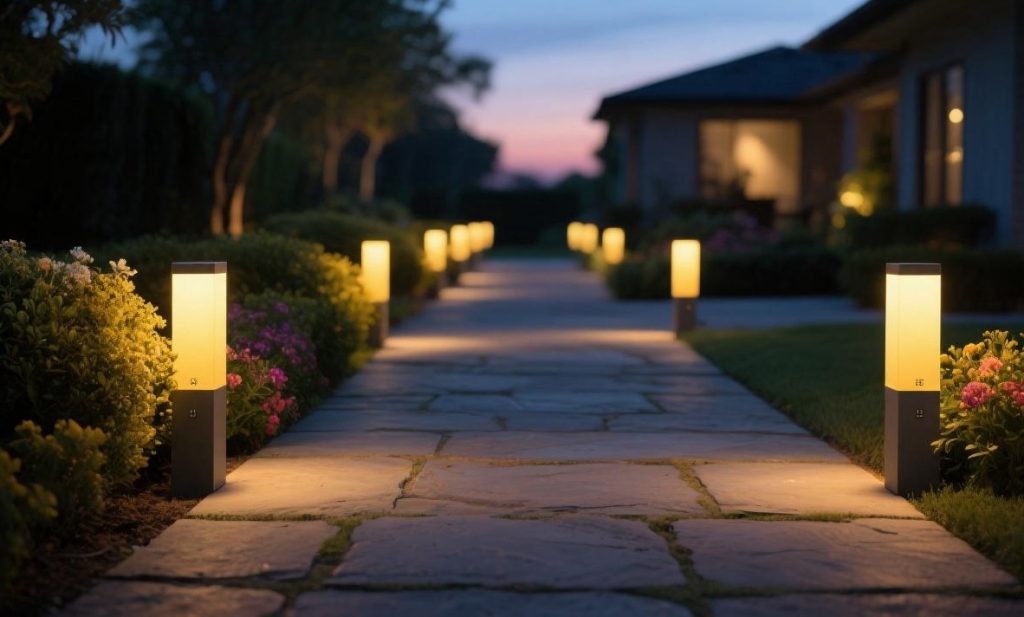
What Is Low-Voltage Landscape Lighting?
Low-voltage lighting systems transform the typical home electricity (120 volts) to safer lower voltage (12 volts). This enables the lights to function safely and effectively. These lights are great for home gardens, walkways, and small commercial properties.
There are several types of low-voltage lights, such as spotlights, path lights, floodlights and accent lights. These can be used to light path, to accentuate trees, sculptures or fountains.
How Wattage Affects Low-Voltage Lighting
Wattage is the measure of electrical power. For low-voltage systems, lighting fixtures generally range from 3 watts to 50 watts, depending on the type of bulb and use. Selecting an appropriate wattage is important for achieving the desired luminosity, while keeping energy consumption low and preventing strain on the transformer.
For instance, path lighting typically uses 3-10 watts to provide adequate illumination without being too bright. Spotlights to highlight trees or buildings may need 10-20 watts, and floodlights can go up to 50 watts.
Calculating Total Wattage for Your Landscape
To determine the total wattage for your system, consider:
- Number of fixtures: Multiply the wattage of a single light by the total number of lights.
- Transformer capacity: Always choose a transformer rated 25–30% higher than your total wattage to prevent overloading.
- Distance from transformer: Longer cable runs may reduce voltage, requiring slightly higher wattage to achieve the same brightness at the fixture.
For instance, if you have ten 10-watt path lights, the total is 100 watts. Your transformer should handle at least 125 watts, ideally 130 watts, to allow for expansion and ensure consistent brightness.
LED vs. Halogen Low-Voltage Lights
Low-voltage lighting uses either halogen or LED bulbs. While halogen bulbs have been traditional, LEDs are becoming the standard due to their efficiency, long life, and lower heat output.
- LED low-voltage lights use significantly fewer watts for the same brightness, often around 1–5 watts per fixture. This allows you to install more lights without overloading your transformer.
- Halogen lights typically consume 10–50 watts per fixture, which may limit the number of lights on a single transformer.
Switching to LED can reduce energy consumption by up to 80%, making it an eco-friendly choice for residential and commercial landscapes.
Placement Tips for Optimal Lighting
To maximize the impact of your low-voltage lights while minimizing power use:
- Pathways: Use low-wattage lights spaced evenly to avoid dark spots.
- Accent lighting: Position spotlights to highlight trees, shrubs, or architectural features, using higher wattage if necessary.
- Water features: Reflective surfaces like ponds or fountains may need fewer watts due to natural light reflection.
- Layering: Combine different types of fixtures to create depth and interest while distributing wattage efficiently.
Maintenance and Safety Considerations
Low-voltage systems are generally safe and easy to maintain. Tips include:
- Check connections periodically to prevent corrosion.
- Replace burned-out bulbs promptly to maintain consistent lighting.
- Avoid exceeding transformer capacity, which can cause dimming or damage.
- Consider weatherproof fixtures and cabling for outdoor durability.
Energy Efficiency and Cost Savings
By selecting the right watts and installing LED fixtures, you can save money while enhancing your landscape. A typical low-voltage LED system will cost 50-75% less than halogen. The long-term energy and bulb replacement costs make LED low-voltage lighting a wise choice for beauty and energy efficiency, as well as cost savings.
Conclusion
Knowing the wattage needs of low-voltage landscape lights will help you create a beautiful and energy-efficient outdoor living environment. From path lighting to gardens and architectural accents, choosing the right fixtures, wattage, and transformer size is crucial.
Planning, installation and maintenance of low-voltage landscape lighting will add beauty, safety and utility to your landscape design while saving energy and money.

- 10 Meters Lamp Post
- 10 Meters Pole
- 1000w Led Projector
- 100W LED Tunnel Light
- 12 Meters Lamp Post
- 12 Meters Pole
- 1200w Led Projector
- 15 Light Pole
- 1500w Led Projector
- 150W LED Tunnel Light
- 1800w Led Projector
- 2 In 1 Solar Flood Light
- 200w Led Tunnel Light
- 50w Led Tunnel Light
- 6 Meters Lamp Post
- 6 Meters Pole
- 8 Meters Lamp Post
- 8 Meters Pole
- 800w Led Projector
- 80w Led Tunnel Light
- Colourful Decorative Light
- Conical post
- Courtyard Lamp
- courtyard light
- courtyard lighting fixture
- Decorative Landscape Light
- Decorative road Light
- Flood Light For Courtyard
- Flood Light for Garden
- Flood Light For Outdoor
- Foot Led High Bay Lights
- high bay led lights 100w
- industrial lampshade
- industrial LED shed lights
- industrial magnifying glass with light
- Integrated Solar Flood Light
- led courtyard lamp
- led courtyard light
- led high bay light 100w
- LED Projector For Stadium
- Led UFO High Bay 150W 5000k
- Lighting Plants Mining Price
- Maintenance Free LED Street Light
- Pic Controlling Tunnel Light
- PLC controlling tunnel light
- Post Top Garden Light
- RGB Landscape Light
- Rgbw Decorative Light
- Smart Tunnel Light
- solar courtyard lamp
- solar courtyard light
- Solar LED Road Light
- Solar Street Light For 10 Meter Pole
- Solar Street Light For 12 Meter Pole
- Solar Street Light For 6 Meter Pole
- Solar Street Light For 8 Meter Pole
- Split Type Solar Flood Light
- Sporting Projector
- Stadium Led Projector
- Street Lighting Post
