
 Request A Quote

what gauge landscape lighting wire
 FACEBOOK
 TWITTER
 LINKEDIN
Choosing the right wire gauge is an important yet often overlooked aspect of landscape lighting installation. Choosing the correct gauge is crucial for efficient, safe, and durable lighting, whereas an incorrect gauge may result in dimming, energy waste, or even safety risks. Whether you are lighting up your home garden, commercial building, or public space, it is important to know how to select the right wire gauge.
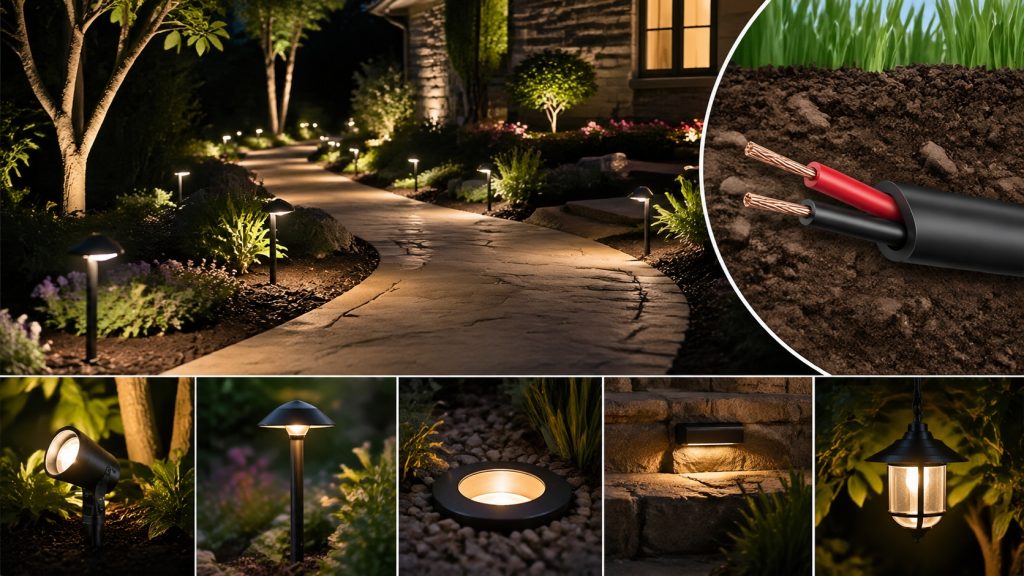
Understanding Wire Gauge
Wire gauge is a measurement of the diameter of the wire, usually expressed in the American Wire Gauge (AWG) standard. A lower number indicates a thicker wire. Heavier wires can handle more current at longer distances with minimal voltage drop. Voltage drop is critical in landscape lighting because low-voltage systems (12V or 24V) are typically used. Too much voltage drop can result in flickering or dim lights.
Factors Affecting Wire Gauge Selection
Several factors influence which wire gauge is best for your landscape lighting system:
- Total Wattage of the Lights
Calculate the total wattage of all the lights you plan to connect to the circuit. Higher wattage requires thicker wire to prevent overheating and maintain brightness. - Distance from Transformer to Lights
The longer the wire run, the more significant the voltage drop. For longer distances, a lower gauge (thicker) wire is recommended to maintain proper voltage. - Number of Light Fixtures
More fixtures on a single circuit increase the total amperage. This requires a thicker wire to handle the load safely. - Type of Landscape Lighting System
Low-voltage systems typically use 12V, while some newer systems may operate at 24V. The voltage level affects which wire gauge is suitable. - Environmental Considerations
Outdoor wiring must withstand moisture, temperature changes, and physical wear. Choosing durable, weather-resistant wire is crucial.
Common Wire Gauges for Landscape Lighting
Here’s a simple guide based on distance and wattage for 12V systems:
- 16-gauge wire: Best for short runs under 50 feet with total wattage below 150W. Ideal for small residential gardens.
- 14-gauge wire: Suitable for runs up to 100 feet or total wattage between 150-300W. Perfect for medium-sized landscapes.
- 12-gauge wire: Handles runs up to 150 feet and wattage up to 500W. Recommended for larger residential or small commercial projects.
- 10-gauge wire: For long runs exceeding 150 feet or high-wattage setups above 500W. Often used in large estates or commercial lighting.
These guidelines help minimize voltage drop and ensure that each fixture receives adequate power.
Tips for Reducing Voltage Drop
- Use a thicker wire than the minimum requirement: This reduces resistance and maintains brightness.
- Limit the length of each wire run: Shorter runs help maintain consistent voltage.
- Split the circuit: Instead of one long run, create multiple shorter runs from the transformer.
- Upgrade your transformer: Ensure it has sufficient wattage for all connected lights.
Safety Considerations
When installing landscape lighting:
- Always turn off power before working on the system.
- Use outdoor-rated wire designed for buried or exposed applications.
- Follow local electrical codes to prevent hazards and ensure insurance coverage.
- Secure connections properly with waterproof connectors or wire nuts.
Geo-Specific Tips
If you’re a homeowner or business owner in [Your Location/Region], you may need to consider the weather. For example:
- In areas with high humidity or heavy rainfall, waterproof and UV-resistant wires are essential.
- In regions with extreme cold, choose wire rated for low temperatures to avoid brittleness.
- For sandy or rocky soil, consider protective conduit to prevent wire damage.
These steps prolong the lifespan of landscape lighting and save on maintenance.
Conclusion
Choosing the appropriate gauge wire for landscape lighting is an important choice that affects the efficiency, safety and durability of your outdoor lighting. Taking into account the wattage, distance, number of fixtures, and local environmental factors will help your landscape lighting perform well.
Taking the time to choose the right wire will prevent headaches, wasted energy and costs. Whether it’s for your home garden or a commercial project, these tips will ensure your landscape lighting is beautiful, safe and efficient.

- 10 Meters Lamp Post
- 10 Meters Pole
- 1000w Led Projector
- 100W LED Tunnel Light
- 12 Meters Lamp Post
- 12 Meters Pole
- 1200w Led Projector
- 15 Light Pole
- 1500w Led Projector
- 150W LED Tunnel Light
- 1800w Led Projector
- 2 In 1 Solar Flood Light
- 200w Led Tunnel Light
- 50w Led Tunnel Light
- 6 Meters Lamp Post
- 6 Meters Pole
- 8 Meters Lamp Post
- 8 Meters Pole
- 800w Led Projector
- 80w Led Tunnel Light
- Colourful Decorative Light
- Conical post
- Courtyard Lamp
- courtyard light
- courtyard lighting fixture
- Decorative Landscape Light
- Decorative road Light
- Flood Light For Courtyard
- Flood Light for Garden
- Flood Light For Outdoor
- Foot Led High Bay Lights
- high bay led lights 100w
- industrial lampshade
- industrial LED shed lights
- industrial magnifying glass with light
- Integrated Solar Flood Light
- led courtyard lamp
- led courtyard light
- led high bay light 100w
- LED Projector For Stadium
- Led UFO High Bay 150W 5000k
- Lighting Plants Mining Price
- Maintenance Free LED Street Light
- Pic Controlling Tunnel Light
- PLC controlling tunnel light
- Post Top Garden Light
- RGB Landscape Light
- Rgbw Decorative Light
- Smart Tunnel Light
- solar courtyard lamp
- solar courtyard light
- Solar LED Road Light
- Solar Street Light For 10 Meter Pole
- Solar Street Light For 12 Meter Pole
- Solar Street Light For 6 Meter Pole
- Solar Street Light For 8 Meter Pole
- Split Type Solar Flood Light
- Sporting Projector
- Stadium Led Projector
- Street Lighting Post
