
 Request A Quote


Integrated vs Split Solar Street Light: How to Choose the Right System for Your Project
 FACEBOOK
 TWITTER
 LINKEDIN
The use of solar street lighting is becoming a popular solution to provide outdoor lighting and to make the lighting system more energy efficient by reducing reliance on conventional power supply structures. But in the design of a solar lighting project, one of the key points is to decide among the integrated solar street light and split solar street light.
The aspects that are different are their designs and installation approaches, but both utilize solar energy, LED lighting technology, batteries and intelligent controllers. The selection is based on the project’s conditions, lighting needs, installation setting, and maintenance goals.
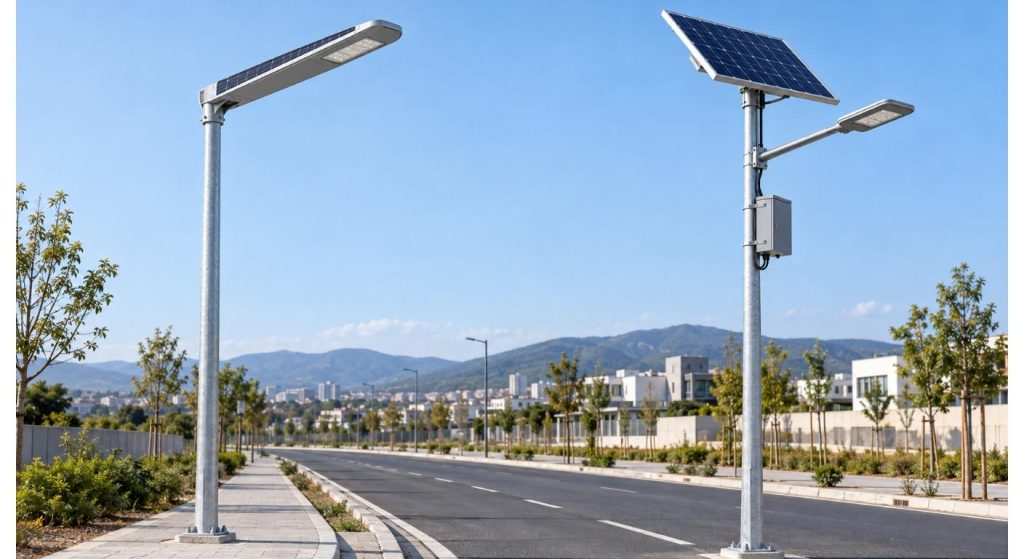
Knowing the pros and cons of integrated solar street light versus split solar street light enables the municipality, road contractors, solar lighting distributors and infrastructure developers to build better, more reliable and cost-effective lighting solutions.
A professional solar lighting supplier will be able to assist in assessing the project requirements and offer appropriate configurations, depending on the location, the amount of sunlight, the level of installation complexity and the desired level of performance.
To know the difference between Integrated and Split Solar Street Light.
The difference between integrated and split solar street light is the arrangement of the components.
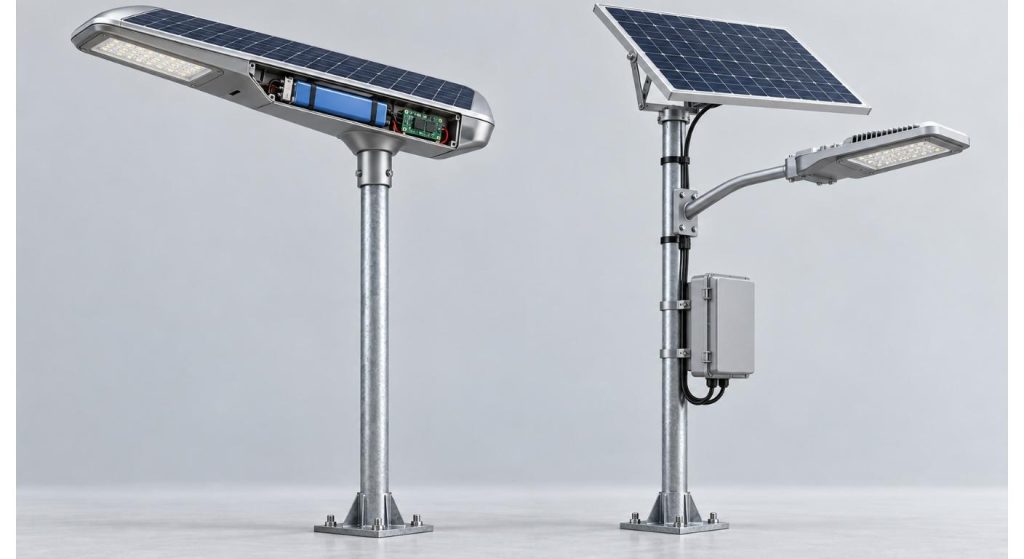
Integrated solar street light, where the solar panel, LED light, battery and control unit are all contained in a single smaller unit. The advantage of this design is that it requires less connection of separate elements to install. Typical applications include residential roads, paths, parking lots and small or medium-sized outdoor lighting installations.
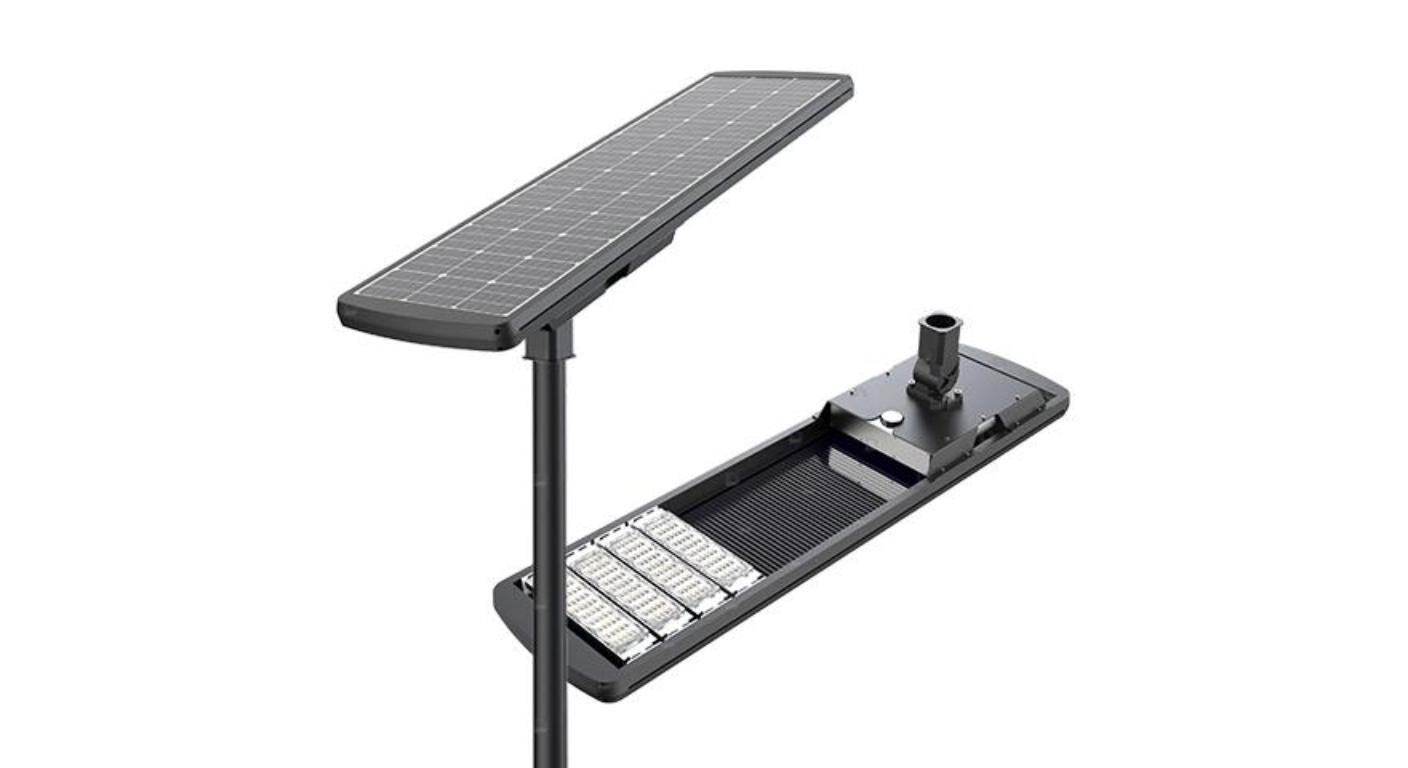
The solar panel, battery and LED light are separated by a split solar street light. Solar panel is separated, which can provide more flexibility to the positioning of the solar panel and the configuration of the system. It is a design that is commonly used in larger projects where there is a higher power output or longer lighting duration, or for installations where specific requirements for lights must be met.
Solar street lighting systems serve as benchmarks for various outdoor lighting applications to customers considering a variety of solar light solutions.
| Comparison Factor | Integrated Solar Street Light | Split Solar Street Light |
| Structure | All components combined | Components installed separately |
| Installation | Faster and simpler | Requires more planning |
| Flexibility | Limited customization | Higher customization capability |
| Application | Small and medium projects | Large-scale projects |
Assess Installation Requirements & Project Conditions
Integrated vs split solar street light installation requirements is one of the greatest disparities.
Integrated systems will typically be easier to install since they are a combination of all major components in one fixture. This simplifies wiring and can help to decrease installation time, ideal for projects where building efficiency is a factor.
Split systems are more complex to install as they have to be installed in different locations such as solar panels, batteries, lighting. This separation, however, offers greater flexibility, particularly in applications where different sun exposure conditions are required, and/or when more energy is needed.
Solar street lights with split panels can be more flexible in their adaptability for large public infrastructure, remote areas and highways since solar panels can be situated on areas that have greater exposure to sunlight.
Selection of a choice should be made for actual site conditions, and not solely based on the initial product cost.
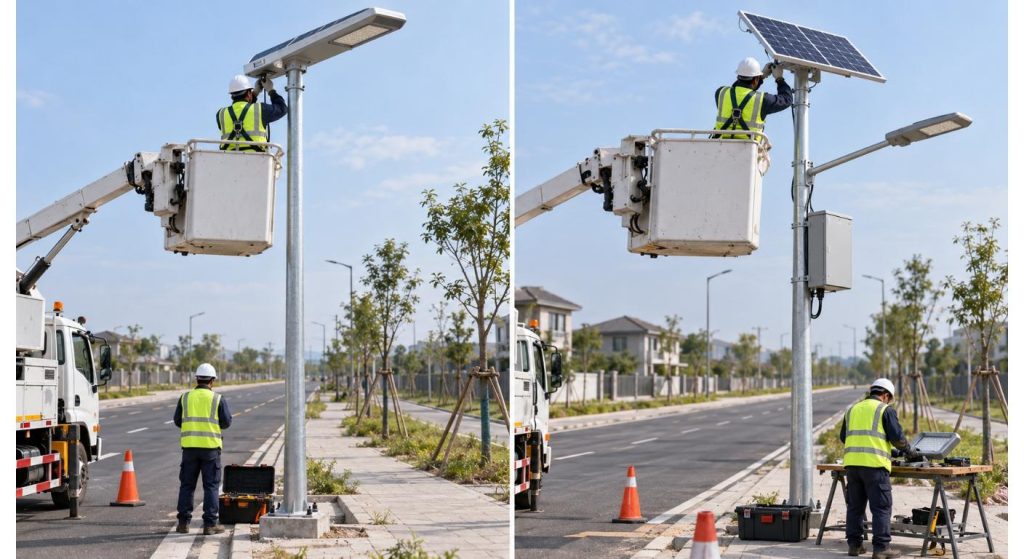
Compare EE and light performance
When comparing integrated solar street lights vs split solar street lights, another important factor to consider is the energy performance.
Integrated solar street lights are designed to be efficient and compact. They are small enough to be used in situations where a medium amount of light output is needed, and they are easy to install.
But, when using split solar street lights, they can offer greater flexibility in system sizing. They can be used in isolation, so that a larger solar panel, and higher capacity batteries can be utilized, to provide more powerful lighting and longer durations of operation.
In regions where the weather is unpredictable or the lighting demand is higher, split systems can also be beneficial as the solar collection and energy storage can be tailored to the project’s requirements.
For professional lighting design, all these factors are taken into account: solar capacity, battery storage, LED efficiency and operating schedules, for stable performance.
Take Maintenance and Long-Term Operation into account
The solar street lighting system maintenance requirement should be taken into account before choosing the system.
Integrated solar street light has less external connections, and can reduce potential wiring problems, and make it convenient to install. They are also small enough to be used in lots of common applications.
Solar Streetlights have a solar cell, battery and LED light assembly, all of which are separated, allowing for easier access to the individual components. When one part of the system needs to be replaced or upgraded, maintenance personnel can focus on that particular part of the system and not the whole system.
This flexibility can lower the maintenance expenses and enhance the effectiveness of managing the system over the long term, especially in large-scale projects.
A good solar lighting company will be able to offer technical advice to install, inspect and plan future replacement of the lights.
Opt for Integrated Solar Street Lights for Compact Applications
Integrated Solar Street Lights are best suited for projects where simplicity, quick installation and small dimension are desired.
Typical uses are pedestrian roads, parks, residential communities, small parking lots and commercial outside spaces. The convenience of their all-in-one design means a relatively simple installation process and clean design.
These systems are particularly well suited for projects with limited electrical infrastructure, or where construction work is of concern.
Nowadays, integrated solar street light is also with smart features like automatic switching, movement detection, energy management system etc., which not only enhances the efficiency of the system but also saves unnecessary power consumption.
All in one solar street lights are a convenient choice for many outdoor settings for customers who require solar lighting from a small, compact system.
For large and customized projects, opt for Split Solar Street Lights.
Solar street lights split into two halves are often chosen for projects that need high performance and a more flexible design.
It can be used in highway and large road applications, industrial areas, airports and public infrastructure projects. The illumination levels may need to be higher, the solar power may have to be more extensive, and the operating time may be longer.
The separation of the solar panel and battery system allows the engineers to make the two the most efficient components for local conditions.
Split systems also allow greater flexibility in upgrading in the future. This makes them ideal for projects with a particular need for long-term operation and scalability.
In the field of outdoor lighting, smart solar street lights offer more possibilities for intelligent management and efficient operation for large-scale lighting projects.
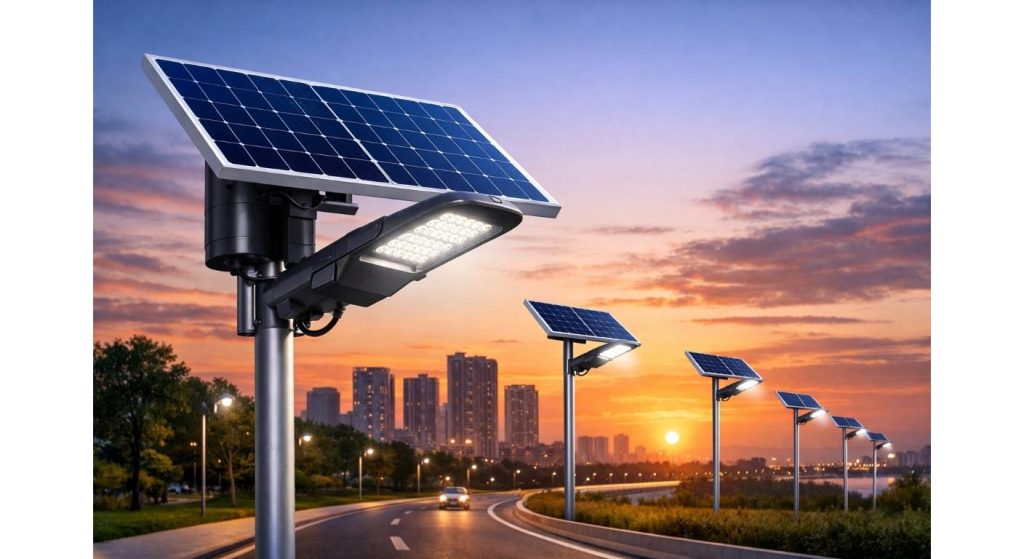
Here are some tips to help choose the correct solar street light system.
When it comes to picking between integrated and split solar street lights there is no universal answer. It depends on project requirements, as to what is the best solution.
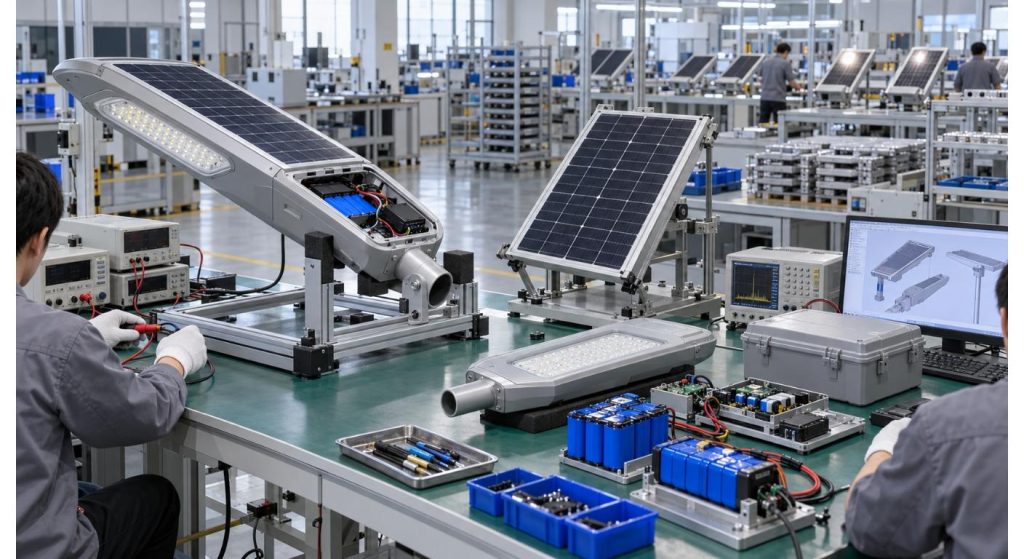
Integrated systems tend to be more suitable for projects where simplicity of installation, size and moderate lighting requirements are paramount. Split systems are better for use in applications that need high capacity, flexibility of installation and long term scalability.
Buyers should consider a number of factors such as location, how much sunlight there is, lighting needs, installation status, budget and maintenance plans before making a decision.
By partnering with a solar lighting supplier with experience, project teams can ensure that they are selecting systems that offer long-term reliability and performance, not just immediate purchase price.
| Project Requirement | Recommended System |
| Simple installation | Integrated Solar Street Light |
| Limited construction work | Integrated Solar Street Light |
| Large lighting area | Split Solar Street Light |
| Future upgrades | Split Solar Street Light |
Conclusion
Integrated solar street light and split solar street light are the two types of street light solar panels that depend on the requirements of the project.
Integrated systems are simpler, easier to install and smaller in size; split systems are more flexible, have higher customisation potential and higher performance for demanding applications.
Project owners can choose the optimal solar street lighting solution for long-term value by assessing the site, energy needs, maintenance plans, and future expansion goals.
FAQs
Q1. What are the differences between an integrated solar led street light and split solar street lights?
Either the solar street light can be integrated or split, which means the solar panel, battery and lighting are contained within a single unit.
Q2. What is the easier solar street light to install?
Integrated solar street light is generally easier to install as it only needs less independent connection.
Q3. Which system is better on the highways?
Because they are more flexible and have a higher power capacity, split solar street lights are more suitable for use on highways.
Q4. Can integrated solar street lighting be applied to large projects?
These can be utilized for certain ventures and greater uses might require the customization benefits of split systems.
Q5. What are the differences between integrated solar street lights and split solar street lights?
This is based on the size of the project, lighting needs, installation and long-term maintenance.
- 10 Meters Lamp Post
- 10 Meters Pole
- 1000w Led Projector
- 100W LED Tunnel Light
- 12 Meters Lamp Post
- 12 Meters Pole
- 1200w Led Projector
- 15 Light Pole
- 1500w Led Projector
- 150W LED Tunnel Light
- 1800w Led Projector
- 2 In 1 Solar Flood Light
- 200w Led Tunnel Light
- 50w Led Tunnel Light
- 6 Meters Lamp Post
- 6 Meters Pole
- 8 Meters Lamp Post
- 8 Meters Pole
- 800w Led Projector
- 80w Led Tunnel Light
- Colourful Decorative Light
- Conical post
- Courtyard Lamp
- courtyard light
- courtyard lighting fixture
- Decorative Landscape Light
- Decorative road Light
- Flood Light For Courtyard
- Flood Light for Garden
- Flood Light For Outdoor
- Foot Led High Bay Lights
- high bay led lights 100w
- industrial lampshade
- industrial LED shed lights
- industrial magnifying glass with light
- Integrated Solar Flood Light
- led courtyard lamp
- led courtyard light
- led high bay light 100w
- LED Projector For Stadium
- Led UFO High Bay 150W 5000k
- Lighting Plants Mining Price
- Maintenance Free LED Street Light
- Pic Controlling Tunnel Light
- PLC controlling tunnel light
- Post Top Garden Light
- RGB Landscape Light
- Rgbw Decorative Light
- Smart Tunnel Light
- solar courtyard lamp
- solar courtyard light
- Solar LED Road Light
- Solar Street Light For 10 Meter Pole
- Solar Street Light For 12 Meter Pole
- Solar Street Light For 6 Meter Pole
- Solar Street Light For 8 Meter Pole
- Split Type Solar Flood Light
- Sporting Projector
- Stadium Led Projector
- Street Lighting Post
