
 Request A Quote


How Solar Street Lights Work: Understanding the Technology Behind Smart Outdoor Illumination
 FACEBOOK
 TWITTER
 LINKEDIN
Solar street lights represent a crucial innovation in the field of outdoor lighting, leveraging renewable energy sources, efficient LED technology, and advanced control systems.
Solar Street Lights generate and store the power with the help of photovoltaic technology which eliminates the need for underground power cables and electricity from the grid. This makes them ideal for roads and highways, residential areas, parks and remote areas where electrical infrastructure might be sparse.
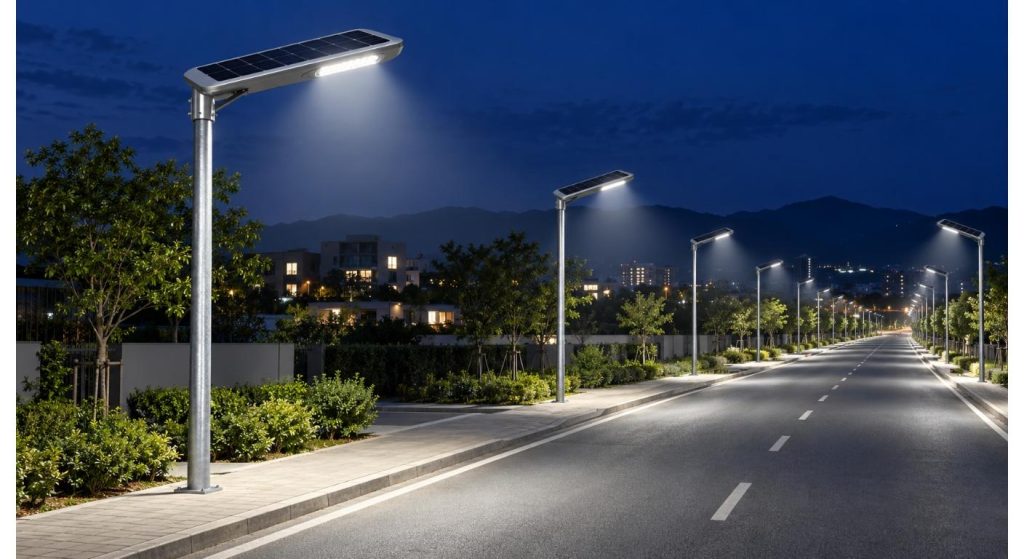
Knowing the working principle of solar street light helps project owners, contractors, and distributors determine how well a system works, how good its quality is, and whether it’s suitable for an application before they choose a lighting solution.
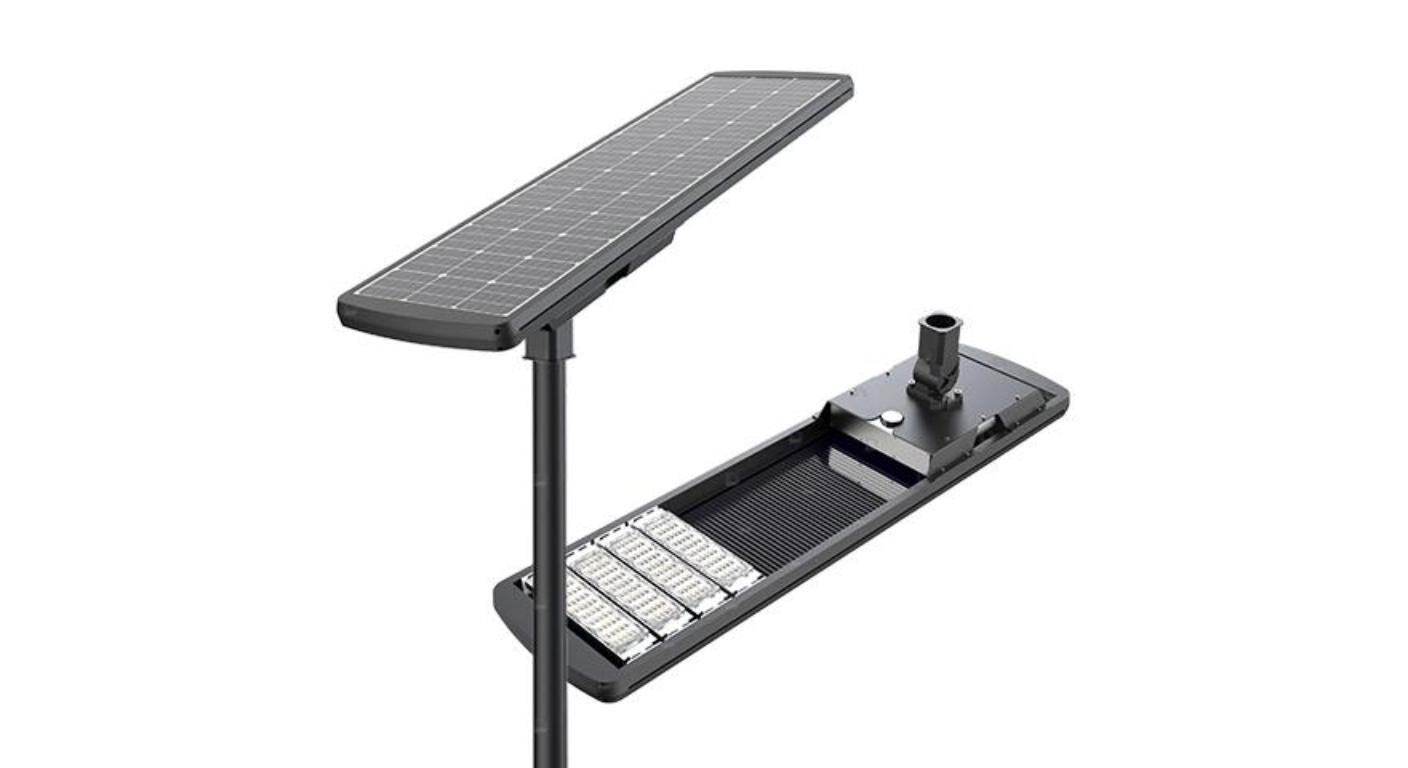
A complete solar street light system does not just consist of a lamp and a solar panel. A solar power system made with solar panels, batteries, a controller, LED modules and supporting structure. All the components are essential in making sunlight’s energy usable as a steady source of light at night.
Have an understanding of the key elements of a solar street lighting system.
However, a solar street light will rely on various vital components to work.
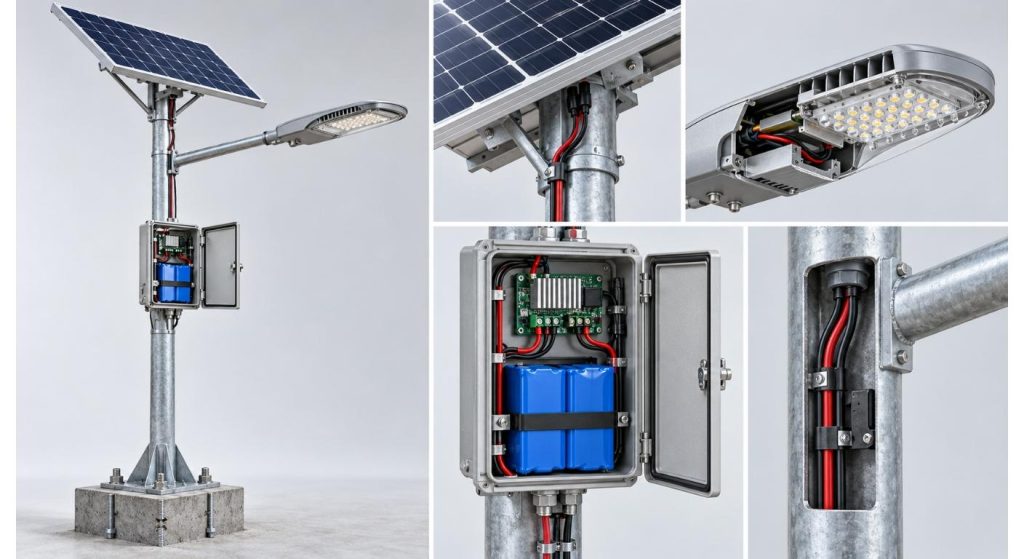
The solar panel is the one used to catch the light of the sun and harness the solar energy and transform it into electric energy using photovoltaic cells. The panel is able to produce electricity during the day, which can be stored for use later.
Battery is an energy storage container. Electricity is created only during the day, since the solar panels are only powered then, whereas at night and during days that don’t get as much sun as needed, the battery supplies electricity.
The entire charging process and lighting is controlled by the controller. It controls energy transfer between the solar panel, battery and LED module and guards against issues like overcharging or excessive discharging of the battery.
The light source is LED which converts electrical energy stored in it to light. LED technology enables a solar street light to be very efficient and to last for a long time so that it can function with a reduced amount of stored energy.
Solar street lighting systems offer references for a variety of outdoor situations to customers considering a full solar lighting system.
| Component | Main Function |
| Solar Panel | Converts sunlight into electrical energy |
| Battery | Stores energy for nighttime operation |
| Controller | Manages charging and lighting process |
| LED Module | Provides efficient illumination |
Solar Panels during the day make what energy?
The solar street light working principle starts with the first phase which is in the daylight.
The solar panels absorb sunlight and generate electrical power through the process of photovoltaics. Several factors influence the energy production, such as the intensity of the sun, the efficiency of the panels, the angle of installation and the weather.
The solar panel generates sufficient electricity during intense sunlight hours to run the charging process and charge the battery by enough electricity to store extra. Solar system designs should account for more solar array or battery storage in regions where there is less daylight or frequently cloudy conditions.
Location of the solar panel is also crucial. If the installation is done correctly, the charging efficiency is enhanced and it gets the most exposure to the sun’s rays.
For outdoor light applications involving large arrays, a proper consideration of the solar panel size is most critical as insufficient generation during the night will impact the night performance of the lighting system.
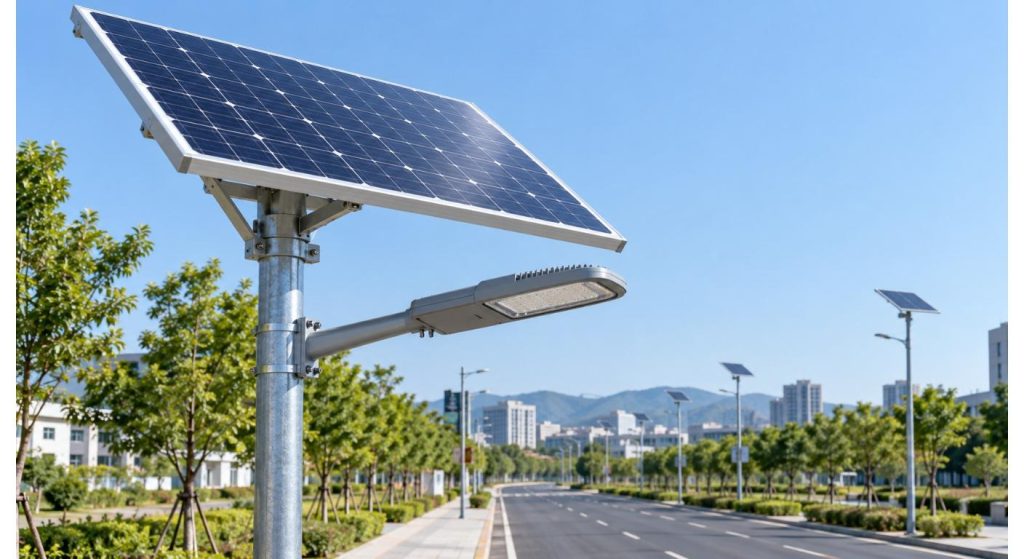
Batteries store and supply energy at night in a number of ways.
The battery storage component is a crucial component of a solar street light system due to its role in storing the energy generated by the solar panels for later use.
The battery stores electricity from the solar panel that is used at night. The controller can automatically convert the system from charging mode to lighting mode when the light is not available.
Lithium batteries are the most commonly used batteries in modern solar street light applications, as they have significantly longer service life, higher energy density and more efficient charging than traditional battery technologies.
The capacity of the batteries should be in accordance with the illumination needs of the project. Other considerations like LED power, burn hours, climate and the number of days the backup is expected affect the battery specification.
When a solar street light system is well designed, solar lights will be able to illuminate streets on cloudy or rainy days.
All in one solar street lights combine all the elements of lighting, battery, and solar in a simplified structure, making it an ideal choice for projects that demand space-saving and efficient solutions.
In the automatic lighting system, the controller plays a role.
The controller, as the smart management node of a solar street lighting system, has a wide variety of tasks to perform.There are various tasks for the controller, which is the intelligent management center of a solar street lighting system.
It regulates the charging process and safely stores the energy in the battery during the day time. It automatically turns on the LED light as per its programmed settings or sensor signals at night.
Some of the functions that might be included in advanced controllers are: brightness adjust, motion detect, energy management, remote monitoring, etc.
A solar street light could, for instance, dim its light during hours when there is no traffic on the road and brighten up when traffic is sensed. This helps to keep energy costs effective and helps to keep safety.
The controller also safeguards the system components to make sure that overcharging and deep discharge of the battery are avoided, so the overall service life of the lighting system can be extended.
The solar street lights can use smart control technology to optimize their use and adapt to different outdoor environments.
LED lights are a great way to illuminate an area at night.
Once controller triggers the lighting system, the light is generated by the energy stored in the batteries, which is then transferred to the LED module.
The high brightness level and relatively low energy consumption of LED technology make it widely used for solar street lights. This makes it possible for the effective performance of lighting through solar systems and using smaller energy storage systems.
Optical design of LED fixture also affects the lighting quality. Light distribution depends on the type of lens and the distribution of the beam along the road, pathway or public space.
Various applications have various lighting needs. Highways might need a wider and more uniform lighting and pedestrian areas comfort and safety.
When designing an outdoor lighting solution with solar power, the efficiency of the LED fixture, brightness and light distribution are all taken into account to maximize performance.
Smart solar street light solutions offer more possibilities for intelligent control and energy management in the field of outdoor lighting applications.
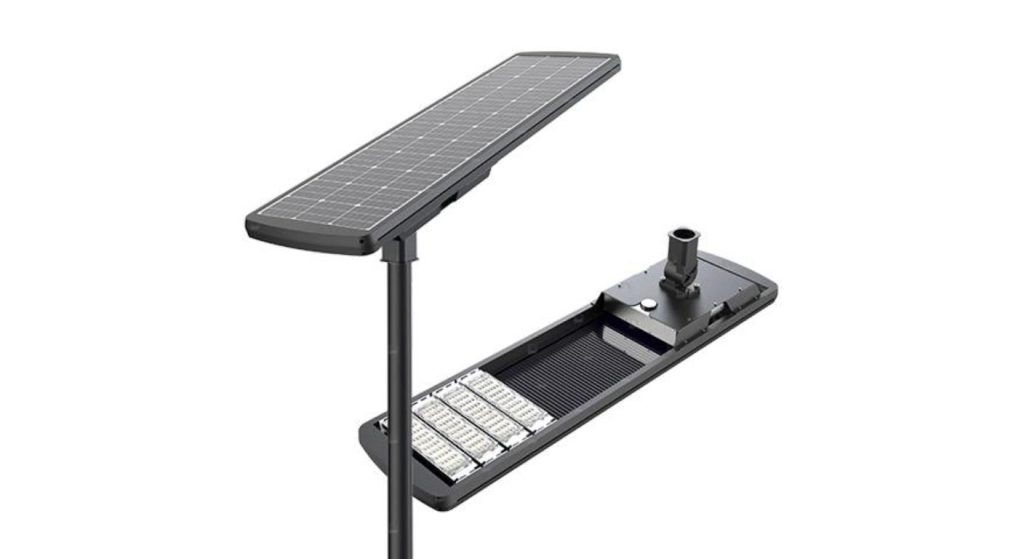
Switch automatically between day mode and night mode.
Solar street lights also come with many benefits, one of the more prominent being that they are automatic.
The system can detect the brightness level of the ambient light through light sensors and intelligent controllers, automatically change the light charging state of the light source, and the light source can automatically switch to the charging mode or the lighting mode.
When the sun is up, the controller will shut down the LEDs and start charging the battery via the solar panel.
The system can switch on the LED module at night when the ambient light is low, to illuminate outdoor areas.
This automatic operation minimizes manual operation needs and guarantees lighting performance on a daily basis.
Several factors can impact the performance of solar street lights.
While solar street lights are based on a simple principle, actual performance is dependent on the correct system design.
The final outcome is dependent on the availability of sunlight, solar panel efficiency, battery capacity, LED efficiency, controller efficiency, and installation conditions.
The wrong component combination can result in a lack of charging or reduced lighting duration or performance.
Professional suppliers assess the local conditions, the project requirements and recommend the system configuration. This way, each component will function properly and together.
Whereas for outdoor lighting applications in conjunction with other uses, outdoor LED lighting solutions can assist customers to compare alternative lighting options.
| Performance Factor | Impact |
| Sunlight Availability | Affects charging efficiency |
| Battery Capacity | Determines operating duration |
| LED Efficiency | Influences energy consumption |
| Controller Quality | Improves system stability |
Select a Solar Street Light supplier that can provide you with dependable products.
Comprehending the working principle is just the starting point. Choosing a trusted manufacturer is also crucial in order to meet solar lighting project goals.
Support should be available by a professional supplier in the form of system design, quality components, test procedures and technical support.
The buyer needs to consider the product specifications, production capacity, application experience and after-sales service before buying.
A good solar lighting partner can help customers avoid performance issues due to inappropriate configurations, and offer solutions that are comparable to the actual project situation.
Conclusion
The working principle of solar street light is: the sunlight is transformed into electricity by the PV and the electricity is stored in the batteries, the intelligent control regulates the light source power on and off, and the LED lights provide illumination.
All components serve a specific purpose and the overall performance of the system depends on the design and integration of the components.
Project Owners and buyers can make informed decisions about the most efficient, reliable and sustainable outdoor lighting by understanding the workings of solar street lights.
FAQs
Q1. What happens to a solar street light when it is during the day?
The solar panels generate electricity from sunlight during the day which is stored in batteries by the controller.
Q2. How does the solar street light automatically light up at night?
Low brightness levels are automatically detected by light sensors and controllers and the LED lighting system is automatically activated.
Q3.What are the main components of a solar street light?
These consist of solar panels, batteries, controllers, LED modules, and structures.
Q4. Will solar street lights function on cloudy days?
Yes. With an appropriate battery storage capacity, systems can operate when sun is limited.
Q5. Why is the controller important in solar street lights?
The controller controls the charging, lighting operation and battery protection, which enhances the system reliability.
- 10 Meters Lamp Post
- 10 Meters Pole
- 1000w Led Projector
- 100W LED Tunnel Light
- 12 Meters Lamp Post
- 12 Meters Pole
- 1200w Led Projector
- 15 Light Pole
- 1500w Led Projector
- 150W LED Tunnel Light
- 1800w Led Projector
- 2 In 1 Solar Flood Light
- 200w Led Tunnel Light
- 50w Led Tunnel Light
- 6 Meters Lamp Post
- 6 Meters Pole
- 8 Meters Lamp Post
- 8 Meters Pole
- 800w Led Projector
- 80w Led Tunnel Light
- Colourful Decorative Light
- Conical post
- Courtyard Lamp
- courtyard light
- courtyard lighting fixture
- Decorative Landscape Light
- Decorative road Light
- Flood Light For Courtyard
- Flood Light for Garden
- Flood Light For Outdoor
- Foot Led High Bay Lights
- high bay led lights 100w
- industrial lampshade
- industrial LED shed lights
- industrial magnifying glass with light
- Integrated Solar Flood Light
- led courtyard lamp
- led courtyard light
- led high bay light 100w
- LED Projector For Stadium
- Led UFO High Bay 150W 5000k
- Lighting Plants Mining Price
- Maintenance Free LED Street Light
- Pic Controlling Tunnel Light
- PLC controlling tunnel light
- Post Top Garden Light
- RGB Landscape Light
- Rgbw Decorative Light
- Smart Tunnel Light
- solar courtyard lamp
- solar courtyard light
- Solar LED Road Light
- Solar Street Light For 10 Meter Pole
- Solar Street Light For 12 Meter Pole
- Solar Street Light For 6 Meter Pole
- Solar Street Light For 8 Meter Pole
- Split Type Solar Flood Light
- Sporting Projector
- Stadium Led Projector
- Street Lighting Post
