
 Request A Quote

A Light Solar Street: The Future of Sustainable Urban Lighting
 FACEBOOK
 TWITTER
 LINKEDIN
The nature of urban infrastructure is changing fast with cities across the world seeking sustainable and cost-effective solutions. A light solar street system is one of the most influential inventions in the field of street lighting. The solar street lighting is a renewable energy technology that has been integrated with the modern LED efficiency to form a reliable lighting system that saves on energy, carbon emission, and enhances safety.
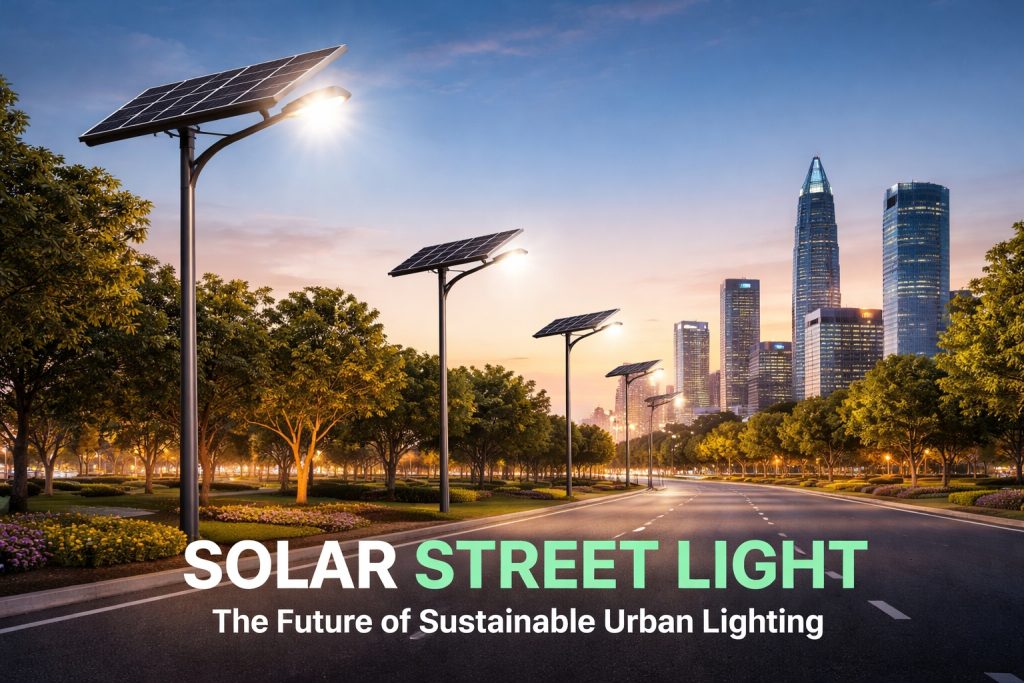
Solar street lighting is becoming a part of smart and sustainable cities, whether it is set up in urban areas, on the countryside roads, car parks, or in the industrial parks.
What is a light solar street system?
A light solar street is a street lighting that uses all solar energy to power the lights. These lights do not require the use of electricity generated by the normal power supply system since they use solar panels to capture the sunlight during the day and store it in batteries to be used during the night.
A common solar street lighting system consists of some of the following components:
- Solar Panel– The sunlight transforms to electrical energy.
- LED Lamp– Delivers high-end lighting which is cost-effective.
- Rechargeable battery– accumulates energy as the day goes by.
- Controller– controls charging, lighting schedules, and power consumption.
- Light Pole and mounting Structure– This is used to hold the system and place it in an optimal position to have maximum sunlight.
These systems do not need the electric grid and therefore are commonly known as off-grid solar lighting systems.
The reasons behind the use of solar street lighting in the cities.
The use of solar street lighting by municipal governments and private developers are increasingly taking this practice due to a number of reasons.
- Energy Cost Savings
The conventional street lights use a lot of electricity thus leading to the high cost of energy bills to the municipalities. Light solar street system can do away with these constant electricity bills since it operates using a free source of solar energy.
In the long run, the initial cost of installation is compensated by electricity expenses that do not exist.
- Environmental Sustainability
Solar street lighting lowers carbon emission by a considerable margin as it uses electricity produced by fossil fuels. Cities are able to add to climate objectives and mitigate their environmental effects by relying on renewable energy.
This is why solar street lights are an important consideration when planning the green infrastructure.
- Easy Installation
Solar lights also do not need underground wiring and sophisticated electrical infrastructure unlike the traditional street lighting. Installation is normally quicker and cheaper.
Solar lighting is therefore suitable in:
- Remote roads
- Rural communities
- Construction sites
- Parking areas
- Parks and pathways
- Effective Lighting in case of power interruption.
The solar street lights do not rely on the electrical grid, and therefore, they keep on working even when there is a blackout. This guarantees constant lighting and better security among people.
Most notable Characteristics of the Solar Street Lights of today.
In recent years, there has been an improvement in the technology behind the solar street lighting. The new systems are more efficient and reliable due to the sophistication of the new features.
LED Lighting with High Efficiency.
The technology of LED is much less power consuming than the traditional lamp and it gives light which is brighter. This makes the lighting periods to be longer with maximum battery life.
Smart Motion Sensors
Most of the street lights powered by sunlight also have motion sensors that can regulate the intensity of light when somebody passes by. This allows saving on energy and at the same time, sufficient lighting is available where necessary.
Programmable Charge Controllers.
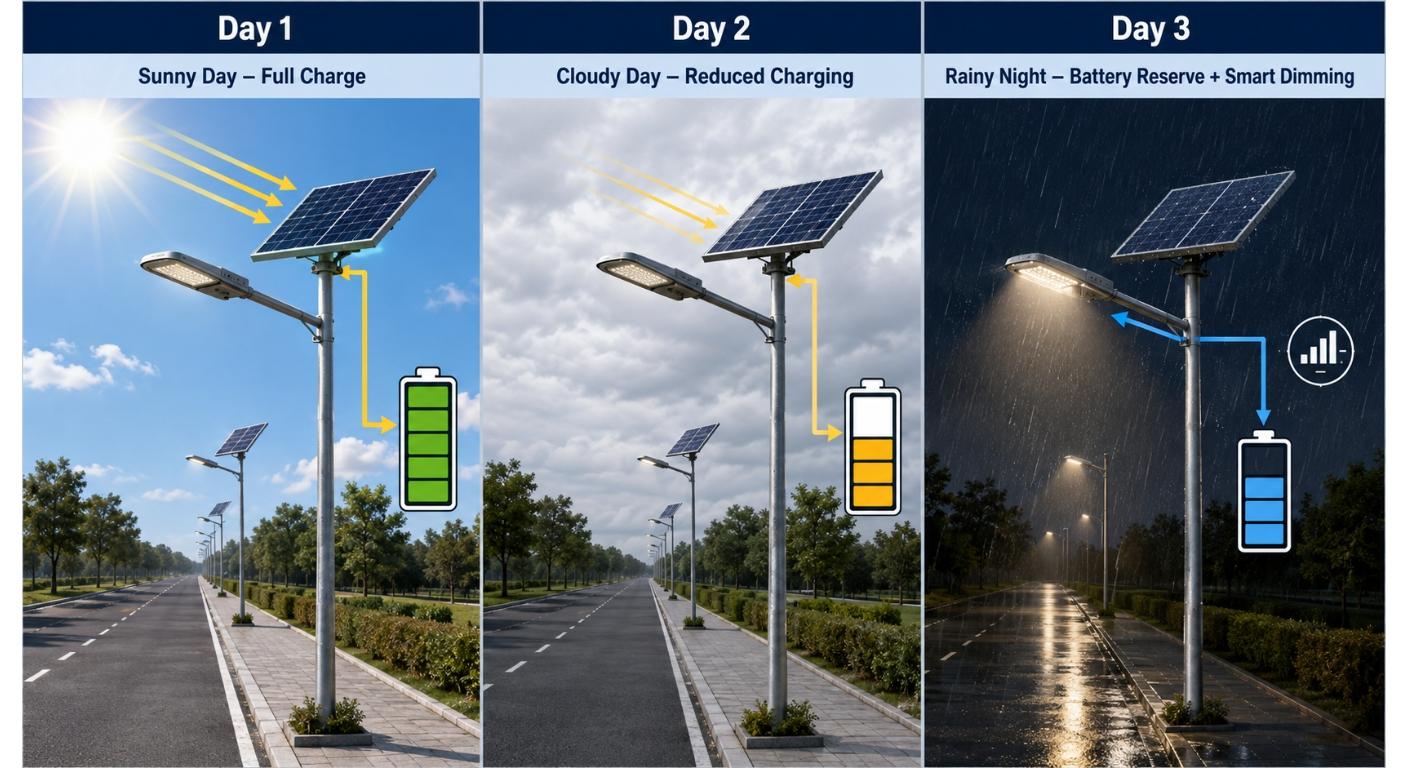
Smart controllers will maximize battery charging and guard against overcharging, deep discharge or temperature changes.
Long-Life Lithium Batteries
Solar street lights have a high technology of lithium battery that enables lights to work through several nights even when it is cloudy.
Top Areas to install Solar Street Lights.
Light solar street can be fitted in a very wide range of environments. Applications: Some of the most frequent applications are:
Urban Streets
Cities deploy the use of solar lights as a way of saving on electricity expenditure and still ensuring safe illumination on the roads.
Rural Roads and Villages
Solar street lights will be a viable option in far off places where power infrastructure is scarce or high cost.
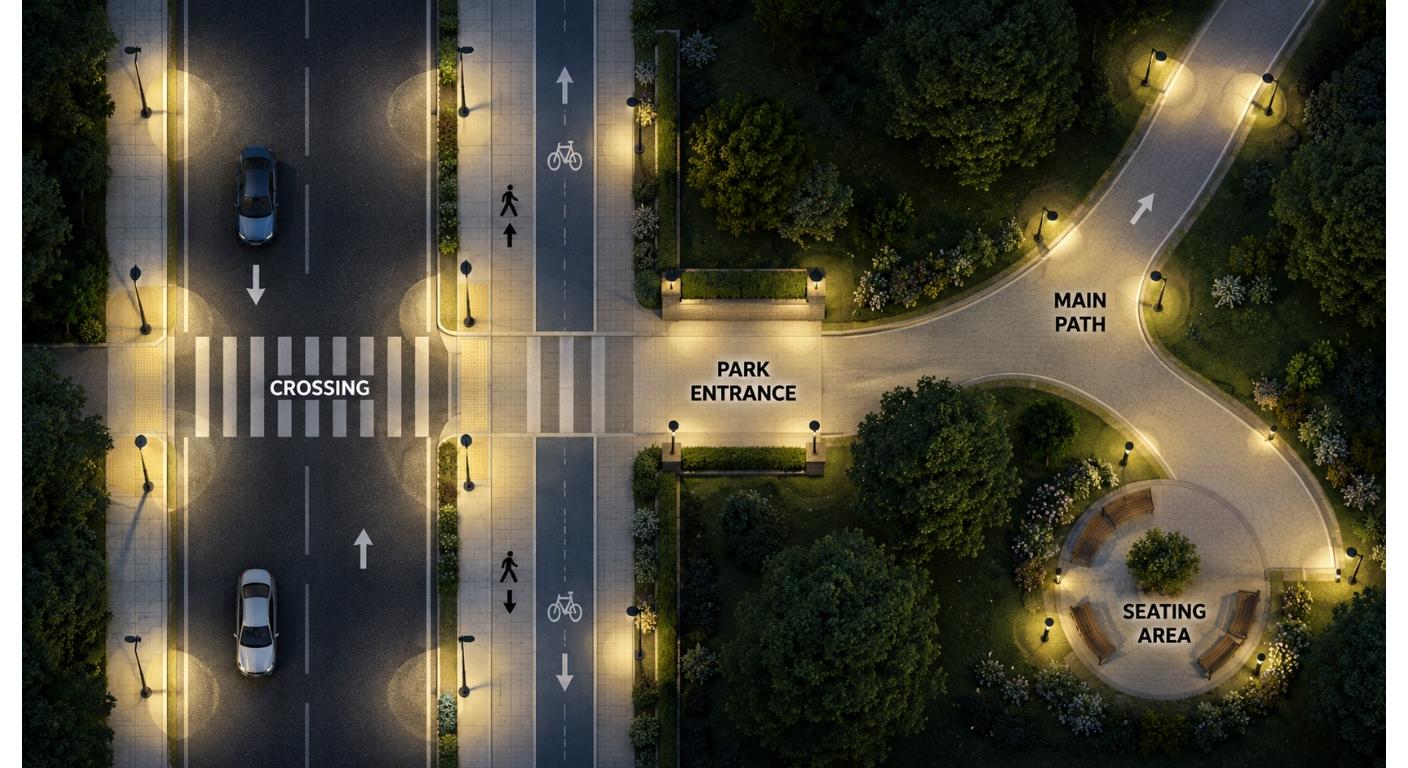
Parks and Public Spaces
The solar lights improve the visibility and safety in recreational facilities, and they do not need a large amount of electricity infrastructure.
Parking areas and commercial areas.
Companies are also installing solar lighting in order to save on electricity and enhance security.
Issues to bear in mind when selecting Solar Street Lights.
It is crucial to choose an appropriate solar street lighting system in order to perform within a long period of time.
Brightness and Power of Lighting.
The intensity of the LED lamp is what will determine the intensity of light. Pathways or parks require low wattage than roads and highways.
Solar Panel Efficiency
The high-efficiency panels become fast charging and reliable in cloudy weather.
Battery Capacity
Increased battery capacity will enable lights to work longer in the dark and during the days of low sun rays.
Weather Resistance
The solar street lights should be sturdy to withstand the extreme weather conditions such as rain, wind and even extreme weather conditions.
The Solar Lighting in Smart Cities.
With the adoption of digital infrastructure in cities, solar street lights have become a major component of smart cities.
The current day solar lighting systems are capable of being integrated with the following smart technologies:
- Remote monitoring systems
- Internet of Things lighting management systems.
- Brightness control adaptation.
- Environmental sensors
Such characteristics enable the city administrators to maximize energy consumption, minimize maintenance expenses, and enhance the urban security.
International Expansion Solar Street Lighting.
The solar street lighting market in the world is expanding at a high rate due to the investments by governments in renewable energy facilities.
Areas that are rich in sunlight (Southeast Asia, Africa, Middle East, and Latin America) have been found to be very favourable to the use of solar lighting.
As the costs of solar panels go down and the technology of batteries gets better, solar street lighting would become the optimal option of outdoor lighting in the next few decades.
Conclusion
Light solar street system is a strong step in terms of sustainable and energy efficient urban infrastructure. These lighting systems are able to cut down the electricity costs, reduce the environmental impact and increase the safety of the people by utilizing renewable solar energy.
Solar street lighting is a versatile and dependable answer to current lighting because it can be used in urban areas and in the isolated villagers. Due to the ongoing development of technology, solar lighting will become a more significant part of the need to create smarter and more eco-friendly cities all over the globe.
- 10 Meters Lamp Post
- 10 Meters Pole
- 1000w Led Projector
- 100W LED Tunnel Light
- 12 Meters Lamp Post
- 12 Meters Pole
- 1200w Led Projector
- 15 Light Pole
- 1500w Led Projector
- 150W LED Tunnel Light
- 1800w Led Projector
- 2 In 1 Solar Flood Light
- 200w Led Tunnel Light
- 50w Led Tunnel Light
- 6 Meters Lamp Post
- 6 Meters Pole
- 8 Meters Lamp Post
- 8 Meters Pole
- 800w Led Projector
- 80w Led Tunnel Light
- Colourful Decorative Light
- Conical post
- Courtyard Lamp
- courtyard light
- courtyard lighting fixture
- Decorative Landscape Light
- Decorative road Light
- Flood Light For Courtyard
- Flood Light for Garden
- Flood Light For Outdoor
- Foot Led High Bay Lights
- high bay led lights 100w
- industrial lampshade
- industrial LED shed lights
- industrial magnifying glass with light
- Integrated Solar Flood Light
- led courtyard lamp
- led courtyard light
- led high bay light 100w
- LED Projector For Stadium
- Led UFO High Bay 150W 5000k
- Lighting Plants Mining Price
- Maintenance Free LED Street Light
- Pic Controlling Tunnel Light
- PLC controlling tunnel light
- Post Top Garden Light
- RGB Landscape Light
- Rgbw Decorative Light
- Smart Tunnel Light
- solar courtyard lamp
- solar courtyard light
- Solar LED Road Light
- Solar Street Light For 10 Meter Pole
- Solar Street Light For 12 Meter Pole
- Solar Street Light For 6 Meter Pole
- Solar Street Light For 8 Meter Pole
- Split Type Solar Flood Light
- Sporting Projector
- Stadium Led Projector
- Street Lighting Post
