
 Request A Quote

Frequently Asked Questions About are street lights solar powered
 FACEBOOK
 TWITTER
 LINKEDIN
As the world cities and the rural areas transform to the new sustainable infrastructure, solar street lights have come out as one of the best outdoor lighting systems. These systems will reduce the electricity expenses, improve the energy independence, and promote environmental goals using renewable energy.
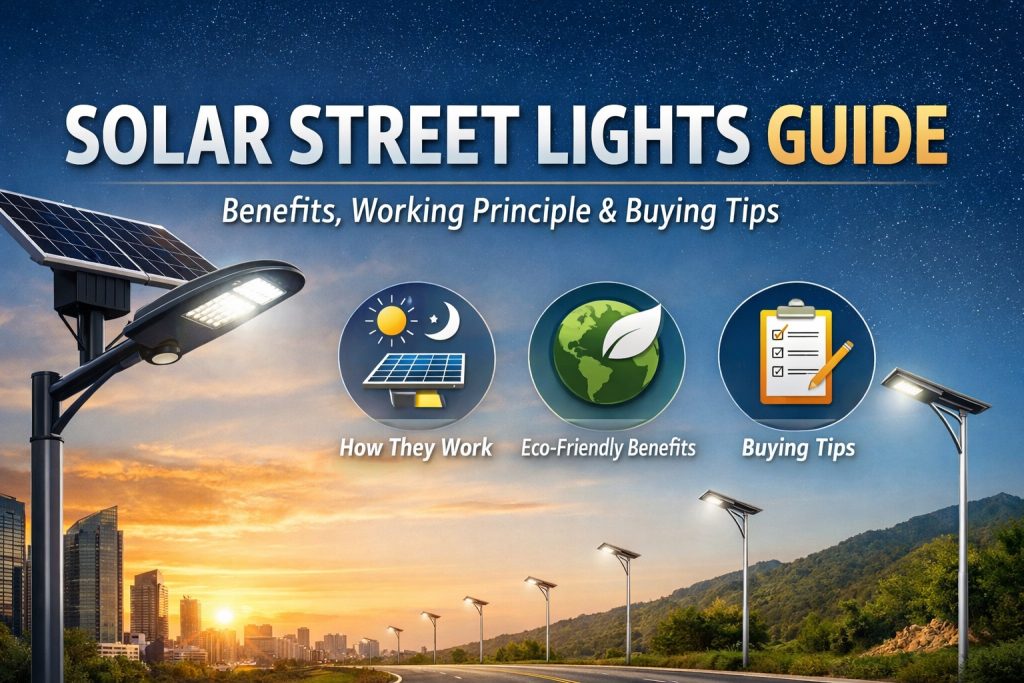
This guide is the solution to the most frequently asked questions about solar street lighting systems in order to make informed decisions about the projects in the city, suburbs, or in the country.
What is Solar Street Light and why it is popular?
Solar street lights are outdoor systems of lights that use sunlight. They have photovoltaic (PV) panels that transform solar energy into electricity that is stored in batteries and utilized to light LEDs at night.
The increasing popularity is due to a number of major advantages:
- Energy efficiency -None of the grid electricity.
- Savings on costs – No electricity bill per month.
- Friendliness of operation to the environment -Reduced carbon emission.
- Off-grid capability- Ideal in remote areas or rural areas.
The solar street lights are cheaper in terms of operation and are durable compared to the traditional lights.
What is the Solar Street Lights?
The principle of working of the solar street lights is not very complicated but very effective. Such systems include a number of fundamental elements:
- Solar panels – Gather the sun rays and convert them into electricity.
- Battery storage – Stores energy to be used at night.
- LED light bulb- This is a bright and energy saving bulb.
- Controller- Controls charging and lighting functions.
- Sensors (optional) – Smart sensors like motion detectors can be turned on.
The solar panels generate energy and charge the battery during the day. The ambient light is used to automatically switch on LED lights at night using the stored energy.
Modern systems that improve efficiency and performance can also include smart controls such as dimming and remote monitoring.
Solar Street Lights: Can it Be a Sustainable Solution?
Yes, the solar street lights are considered highly sustainable. They do not have to depend on the fossil fuels, as they are fully dependent on renewable solar energy.
The advantages of sustainability are:
- Less carbon footprint – No green house emissions at work.
- Less environmental effects- No trenching/wiring required.
- Engaging in energy conservation- LED technology means that there will be less energy wastage.
- Long term savings- reduction in maintenance and operations costs.
Solar street lights can also be applied in areas where there is minimal infrastructure as it does not consume electricity.
How long does a Solar Street Light have a Life?
A high quality solar street lighting system will last between 10 to 20 years depending on the quality of the components as well as the maintenance.
Mean life of prime constituents:
- Solar panels: 25–30 years
- LED lights: up to 50,000–100,000 hours
- Batteries: 3-10 years (depending on the type)
Repairs such as washing panel and monitoring battery performance are also done periodically and can significantly increase the life of the system.
Which between Solar Street Lights and Traditional Street Lights is the better one?
Compared with the traditional lighting on the streets, solar solutions have the following benefits:
Solar Street Lights
- No electricity costs
- Simple to install (no wiring is needed)
- Dependable when there is power failure.
- Environmentally friendly
Traditional Street Lights
- Lower initial cost
- Excellent working in both cold and rainy seasons.
The solar street lights are less expensive and more sustainable in the long run, though the use of the traditional lights might be more effective in the areas where the sun is limited.
What are the Factors to be considered in the selection of Solar Street Lights?
Selection of the solar street lighting system is an issue that should be seriously considered. The most significant ones are as follows:
- Lighting Requirements
Divide the area and the brightness (lumens) required. Different lighting requirements are needed on roads, parking lots and pathways.
- Battery Capacity
The larger battery will also offer a stable lighting system even during rainy days or cloudy days.
- Solar Panel Efficiency
More effective panels (e.g. monocrystalline) can generate more energy, especially when in low-light conditions.
- Strength and Inclement Protection.
Choose the appropriate systems that can withstand heat, rain and dust outdoors.
- Smart Features
Search for such characteristics as:
- Motion sensors
- Dimming functions
- Remote monitoring systems
Such attributes improve energy management and control.
Do Solar Street Lights work in the rain or in cloudy weather?
Yes, solar street lights are also able to operate even on cloudy or rainy days. Both are reflective and concentrate direct and indirect sunlight, and charge efficiency may be wasted.
Quality systems are fitted with battery backup so as to have a few nights of operation even during low-sun conditions.
What Is the Best Height of Solar Street Lights?
The height of installation varies according to its use:
- Streets of houses and foot pavement: 3.5-4.5 meters.
- Commercial roads & highways: 6 meters and above.
Proper height will allow optimum distribution of light and safety as well as visibility.
Top 10 Solar Street Light Purchase mistakes.
Some of the traps that can be avoided during the investment in solar street lighting include the following:
- Choosing low-quality batteries
- Ignoring weather resistance
- Concentrating on brightness rather than system balance.
- Overlooking after-sales support
A system that has a balanced combination of elements (panel + battery + controller) is better than one that has high specifications.
Conclusion: Solar Street Lights: Worth It?
Smart infrastructure should include solar street lights. They offer:
- Long-term cost savings
- Environmental benefits
- Reliable off-grid performance
- scalability, and easy installation.
With the ever increasing adoption of renewable energy in the world, solar street lights will be useful in the development of sustainable and energy efficient communities.
By combining performance, efficiency, and sustainability, solar street lights provide a future-proof solution to a municipal project, parking lot upgrade, or street lighting a rural road.
- 10 Meters Lamp Post
- 10 Meters Pole
- 1000w Led Projector
- 100W LED Tunnel Light
- 12 Meters Lamp Post
- 12 Meters Pole
- 1200w Led Projector
- 15 Light Pole
- 1500w Led Projector
- 150W LED Tunnel Light
- 1800w Led Projector
- 2 In 1 Solar Flood Light
- 200w Led Tunnel Light
- 50w Led Tunnel Light
- 6 Meters Lamp Post
- 6 Meters Pole
- 8 Meters Lamp Post
- 8 Meters Pole
- 800w Led Projector
- 80w Led Tunnel Light
- Colourful Decorative Light
- Conical post
- Courtyard Lamp
- courtyard light
- courtyard lighting fixture
- Decorative Landscape Light
- Decorative road Light
- Flood Light For Courtyard
- Flood Light for Garden
- Flood Light For Outdoor
- Foot Led High Bay Lights
- high bay led lights 100w
- industrial lampshade
- industrial LED shed lights
- industrial magnifying glass with light
- Integrated Solar Flood Light
- led courtyard lamp
- led courtyard light
- led high bay light 100w
- LED Projector For Stadium
- Led UFO High Bay 150W 5000k
- Lighting Plants Mining Price
- Maintenance Free LED Street Light
- Pic Controlling Tunnel Light
- PLC controlling tunnel light
- Post Top Garden Light
- RGB Landscape Light
- Rgbw Decorative Light
- Smart Tunnel Light
- solar courtyard lamp
- solar courtyard light
- Solar LED Road Light
- Solar Street Light For 10 Meter Pole
- Solar Street Light For 12 Meter Pole
- Solar Street Light For 6 Meter Pole
- Solar Street Light For 8 Meter Pole
- Split Type Solar Flood Light
- Sporting Projector
- Stadium Led Projector
- Street Lighting Post
