
 Request A Quote

High Bay LED Lights: Direct vs Indirect Light To Reduce Glare
 FACEBOOK
 TWITTER
 LINKEDIN
High Bay LED Lights are usually purchased for one clear reason: you need strong illumination from a high ceiling, and you need it to feel comfortable for the people working below. Yet many first-time buyers discover a problem only after installation. The space is bright, but it is not pleasant. Workers report “white-hot” spots, shiny reflections, and eye fatigue during long shifts. In most cases, the solution is not to reduce brightness. The solution is to choose the right light distribution—direct, indirect, or a balanced combination—so the light lands where it is useful and stays out of the line of sight.
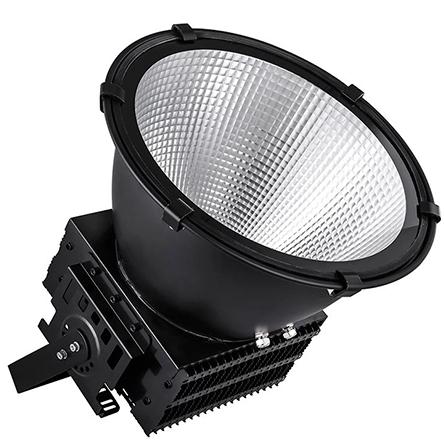
At Dawn Lighting, we design industrial high bay fixtures for real work environments, not showroom ceilings. Below is a practical, beginner-friendly guide to help you understand how direct and indirect light affect glare, and how to select High Bay LED Lights that support both visibility and comfort.
Why Glare Happens in High-Ceiling Spaces
Glare is often described as “too bright,” but the real issue is where the brightness sits in your field of view. In high-ceiling facilities, a fixture can create excellent measured light levels on the floor while still feeling harsh to the human eye. This happens when intense light enters the eye at an uncomfortable angle, or when the space has reflective surfaces that bounce brightness upward.
In warehouses, factories, and gyms, glare tends to appear in predictable ways. Polished concrete and epoxy floors act like mirrors. Metal equipment produces hotspots. Glossy packaging reflects bright points. And open aisles encourage people to look up to locate signage, crane lines, or rack labels. High mounting height increases the need for optics and distribution control. If beam control is not well matched to the site, the room can feel aggressively bright even when the layout looks “normal” on paper.
✅ Common glare triggers new buyers often miss:
✓ Reflective floors that bounce light into the eye
✓ Bright fixtures positioned near common viewing angles
✓ High-contrast zones—very bright racks and darker corners
✓ Tasks that require frequent upward glances (labels, cranes, scoreboards)
When you understand these triggers, choosing High Bay LED Lights becomes less about chasing maximum output and more about shaping light intelligently.
Direct Light Explained: Focused Brightness Where Work Happens
Direct lighting means most of the output is aimed downward onto the work plane. This is the classic approach for high bay applications because it is efficient. You place light where tasks occur—on aisles, benches, conveyors, and floor markings. If your facility is aisle-heavy, direct distribution often delivers strong “targeting,” especially when you need clear visibility for material handling equipment.
Direct light can also improve lux-per-dollar because less light is sent to the ceiling. In practical terms, you may be able to reach your target brightness with fewer fixtures, or with lower wattage, depending on spacing and mounting height. This is why direct distribution remains popular for large warehouses.
Dawn Lighting uses high-output configurations as a practical reference for demanding spaces. For example, a 500W high bay fixture delivering 75,000 lumens can be appropriate when ceilings are high and spacing is wide. In direct mode, this output supports clear visibility on the ground and improves the readability of floor lines, pallets, and moving equipment.
However, direct light has a known trade-off. When a fixture concentrates brightness downward without enough diffusion or fill, it can create hot spots and strong reflections. That is where glare complaints often begin.
✅ Direct light is often the better fit when:
✓ Racking aisles need strong floor brightness and clear targeting
✓ Most tasks are performed on the ground or at bench level
✓ You want maximum efficiency and simple, predictable layouts
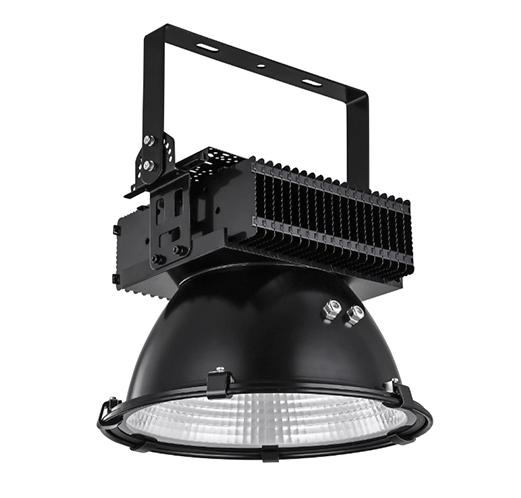
Indirect Light Explained: Softer Visual Comfort and Better Balance
Indirect lighting sends part of the light upward, allowing it to reflect off the ceiling and upper walls before returning to the space. This does not mean the site becomes dim. It means the brightness is distributed across larger surfaces, which helps the eye stay relaxed. Many facilities feel more “even” with indirect components because the ceiling is no longer dark while the floor is extremely bright.
Indirect light is especially useful when people spend long periods in the space or look upward frequently. Gymnasiums and sports halls are a clear example, but many industrial sites have the same behavior. Workers scan rack labels, check overhead cranes, or monitor suspended lines. In those moments, a purely direct fixture can appear like a bright disk. Indirect output reduces that harsh perception because the room has more ambient brightness.
This matters for comfort, but also for performance. When the eye is not constantly adjusting between bright and dark zones, contrast perception improves. That can support safer movement and clearer awareness of obstacles.
✅ Indirect light becomes a smart upgrade when:
✓ Floors and equipment are reflective and create hotspots
✓ People look upward often (cranes, tall labels, sports use)
✓ You want a more uniform “whole-room” lighting feel
How Direct + Indirect Designs Reduce Glare in Real Projects
Most real facilities are not “direct only” or “indirect only.” They have aisles, open packing zones, maintenance areas, and occasional inspection points. That is why many projects benefit from a combined approach. A direct + indirect design delivers strong downlight to support tasks, while adding upward fill that reduces contrast and softens glare.
A helpful way to think about it is balance. Direct light provides the working power. Indirect light improves the visual environment. When you add indirect fill, the space stops feeling like bright islands surrounded by darker zones. Workers experience fewer harsh transitions as they move through the facility. Reflections become less aggressive because the ceiling and upper walls share some of the brightness.
Dawn Lighting builds High Bay LED Lights with direct and indirect lighting options because it reduces risk for new buyers. If your first installation is too harsh, you pay twice: once for the fixtures, and again for labor, redesign, and downtime. A distribution option that supports glare control from the start often prevents these avoidable costs.
For planning, we recommend using DIALux lighting analysis. It helps you predict spacing, uniformity, and glare risk before you purchase. In many projects, the layout—not the LED—is the reason performance disappoints. A basic simulation can prevent over-lighting, under-lighting, and glare-heavy placement.
CTA: If you are preparing a retrofit or new facility build, share your layout and ceiling height with Dawn Lighting. We can provide a practical DIALux-based recommendation to help you choose High Bay LED Lights with the right direct vs indirect balance.
Product Details That Translate Into Real-World Reliability
Glare control improves comfort, but reliability keeps your project stable. Industrial lighting failures are expensive because access is difficult, and replacement disrupts operations. That is why Dawn Lighting focuses on features that reduce early failures and support long-term performance.
Designed for AC100–265V, these lights make procurement easier in diverse or mixed‑voltage settings. Choose 100–500W so each space gets the right power for its height and budget, without excess. For color temperature, we provide 3000–6000K, and many industrial buyers select around 5000K because it supports crisp visibility for labels, edges, and movement.
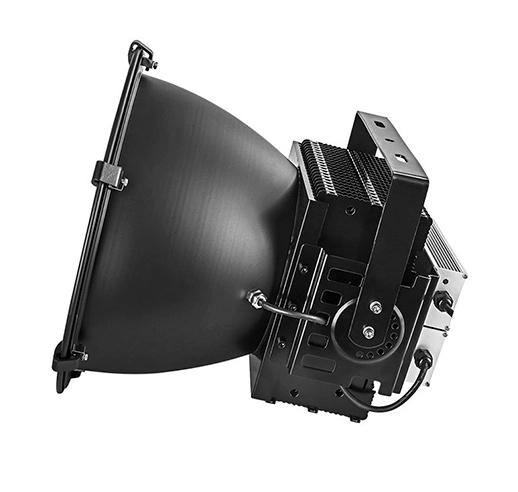
Thermal management also matters more than many buyers expect. High output creates heat, and heat is a long-term stress factor for LEDs. We engineered copper‑tube cooling to improve heat control. Enhanced thermal performance keeps light output consistent and extends LED life, reducing maintenance interruptions.
For harsh indoor conditions, IP65 protection resists dust and water—right for spaces with airborne particles, humidity, or near washdown zones. Reliability‑oriented testing includes an 8‑hour aging cycle before shipment and a 500‑hour salt spray validation of the lamp body treatment, cutting early defects and increasing batch consistency.
For operations, that delivers:
✓ Fewer failures and fewer service calls
✓ More stable output under heavy workloads
✓ Better protection in dusty/humid areas
✓ Easier planning for international/mixed‑voltage projects
A Practical 2026 Buying Checklist
If you’re purchasing high bay LED lights for the first time, a short checklist will help you avoid most errors. Start with how the space will feel for workers, then confirm performance and durability that match your environment.
Ask these questions before you finalize a purchase:
✓ Do workers look upward often (cranes, tall racks, sports use)? Choose indirect or direct + indirect.
✓ Are floors glossy or surfaces reflective? Indirect fill can reduce hotspot glare.
✓ Is the space aisle-heavy with clear task zones? Direct distribution may deliver better targeting.
✓ Are conditions dusty, humid, or tough to access? IP65 and strong heat control matter more.
✓ Do you want to reduce layout risk? Use DIALux to confirm spacing and uniformity.
✓ Are you choosing output based on ceiling height and spacing, not only wattage? Use lumens as your anchor.
High Bay LED Lights should deliver more than brightness. They should support comfort, safe visibility, and predictable performance year after year.
CTA: Tell Dawn Lighting your ceiling height, facility type, and share a quick sketch. We’ll advise on distribution (direct/indirect/combined), propose wattage within 100–500W, and select CCT based on how the space operates—so you get bright, glare‑controlled lighting and a smoother install.
- 10 Meters Lamp Post
- 10 Meters Pole
- 1000w Led Projector
- 100W LED Tunnel Light
- 12 Meters Lamp Post
- 12 Meters Pole
- 1200w Led Projector
- 15 Light Pole
- 1500w Led Projector
- 150W LED Tunnel Light
- 1800w Led Projector
- 2 In 1 Solar Flood Light
- 200w Led Tunnel Light
- 50w Led Tunnel Light
- 6 Meters Lamp Post
- 6 Meters Pole
- 8 Meters Lamp Post
- 8 Meters Pole
- 800w Led Projector
- 80w Led Tunnel Light
- Colourful Decorative Light
- Conical post
- Courtyard Lamp
- courtyard light
- courtyard lighting fixture
- Decorative Landscape Light
- Decorative road Light
- Flood Light For Courtyard
- Flood Light for Garden
- Flood Light For Outdoor
- Foot Led High Bay Lights
- high bay led lights 100w
- industrial lampshade
- industrial LED shed lights
- industrial magnifying glass with light
- Integrated Solar Flood Light
- led courtyard lamp
- led courtyard light
- led high bay light 100w
- LED Projector For Stadium
- Led UFO High Bay 150W 5000k
- Lighting Plants Mining Price
- Maintenance Free LED Street Light
- Pic Controlling Tunnel Light
- PLC controlling tunnel light
- Post Top Garden Light
- RGB Landscape Light
- Rgbw Decorative Light
- Smart Tunnel Light
- solar courtyard lamp
- solar courtyard light
- Solar LED Road Light
- Solar Street Light For 10 Meter Pole
- Solar Street Light For 12 Meter Pole
- Solar Street Light For 6 Meter Pole
- Solar Street Light For 8 Meter Pole
- Split Type Solar Flood Light
- Sporting Projector
- Stadium Led Projector
- Street Lighting Post
