
 Request A Quote

What Makes Self-Cleaning Solar Street Light “Smart”? Self-Cleaning PV Guide
 FACEBOOK
 TWITTER
 LINKEDIN
Self-Cleaning Solar Street Light are only “smart” when they keep delivering light after weeks of dust, rain, and real outdoor use—not just on day one. At Dawn Lighting, we design solar lighting for buyers who want predictable dusk-to-dawn performance with less maintenance and fewer site visits. In this self-cleaning PV guide, we explain what “smart” actually means, what to check before you buy, and how a few engineering choices can protect your brightness and your budget.
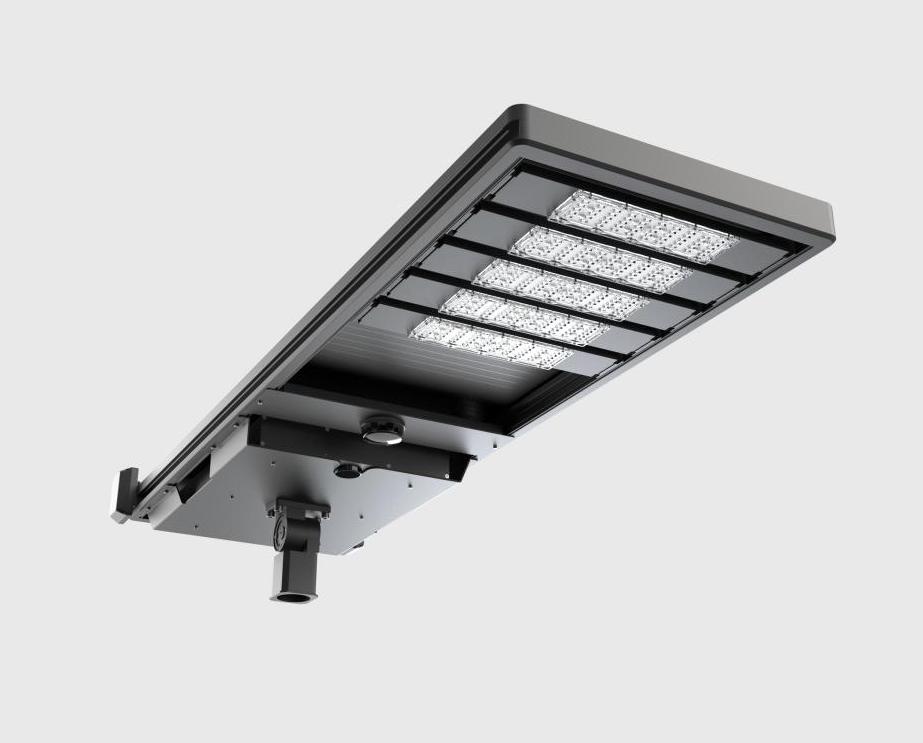
1) Define “Smart“ in Outdoor Solar Lighting
New buyers often assume “smart” means an app, a remote, or a motion sensor. Those can be helpful, but they are not the core problem in parking areas. The real pain point is performance drop over time. Solar panels lose charging efficiency when dust and debris block sunlight. That means shorter runtime at night, uneven brightness, and complaints from users.
A smarter approach is to design Self-Cleaning Solar Street Light to defend their own energy input and reduce upkeep. If a fixture can maintain charging efficiency and brightness without frequent cleaning, it becomes smarter in the way facility teams care about most: fewer interventions, more reliable lighting, and better total cost of ownership.
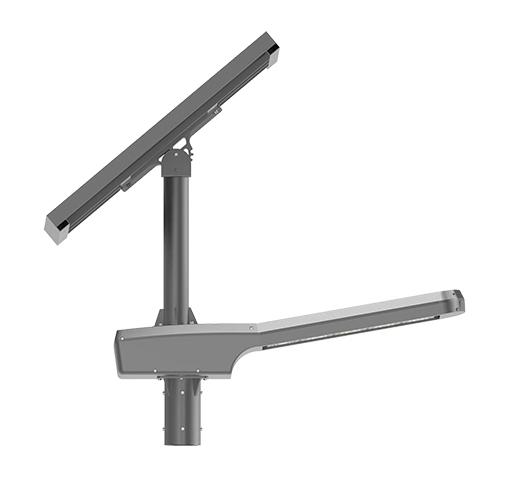
2) Why Self-Cleaning PV Matters More Than Most Buyers Think
Solar fixtures live outdoors, so panel contamination is not an “if,” it is a “when.” Dust, pollen, roadside pollution, and bird droppings form a layer that slowly lowers charging. Over time, the light may still turn on, but it stops staying bright for the full night.
That is why our smart cleaning concept focuses on daily prevention, not occasional rescue. A built-in self-PV sweeper cleans the panel surface automatically every day. The practical benefit is simple: you keep the panel closer to its best charging condition with less labor.
For Self-Cleaning Solar Street Light installed across multiple zones—entrances, walkways, perimeter roads—manual cleaning becomes a hidden cost. A self-cleaning panel is not a “nice feature.” It is a way to reduce repeated site visits, ladder work, and scheduled maintenance windows.
✓ Maintains charging performance by reducing dust build-up
✓ Protects dusk-to-dawn runtime stability over long outdoor cycles
✓ Reduces labor time for facility teams managing multiple poles
3) Dual Solar Panels: Faster Charging When Weather Is Not Perfect
Solar lighting is only as strong as its charging window. In real projects, that window is often limited by partial shade, shorter winter days, or cloudy weeks. A bilateral (dual) solar panel design helps collect more energy during the day, and in our design it can improve charging efficiency by up to 20%. For buyers, this is not just a number. It translates into a higher chance of reaching full battery capacity before sunset.
This matters because many failures blamed on “battery quality” are actually charging shortages. When the panel cannot recover enough energy, the system protects itself by dimming earlier or shortening runtime. Self-Cleaning Solar Street Light that charge more efficiently can hold steadier performance, especially in challenging conditions where sunlight is inconsistent.
If you are comparing products, do not only ask “How bright is it?” Ask “How does it stay bright in week three, month three, and winter?” Dual-panel charging is one of the most direct answers to that question.
4) Brightness That Makes Sense: Lumens, Watts, and Real Efficiency
Brightness is where many buyers get misled. They see high wattage and assume it guarantees good lighting. In solar systems, wattage is only part of the story because energy is limited. What you want is useful light output with efficient power use.
Our Solar Parking Lot Lights Dusk To Dawn option delivers 5400 lm at 30W, supported by high-lumen brand LEDs and a luminous efficacy exceeding 190 lm/W. The buyer takeaway is practical: strong brightness without wasting power. That improves the odds of maintaining dusk-to-dawn lighting, because you are not burning battery energy on inefficient conversion.
Color temperature range also matters for real sites. With 3000K–6500K options, Self-Cleaning Solar Street Light can be matched to the environment: warmer tones for pedestrian comfort, or cooler tones for clearer visibility in active public areas. This is a simple planning decision that improves user experience without changing infrastructure.
✓ 5400 lm output supports practical area illumination
✓ 30W power level helps balance brightness and runtime
✓ >190 lm/W efficiency supports longer, steadier operation
5) “Weatherproof“ Should Include Maintenance Logic, Not Only Sealing
Many products claim waterproofing, but outdoor reliability is not only about sealing the housing. Performance issues often come from the system getting dirty and staying dirty. That is where a rain sensor becomes a surprisingly useful part of “smart.”
In our design, the cleaner can activate during rainfall, using the weather event as a maintenance opportunity. The result is fewer manual cleanings and more consistent panel exposure to sunlight. For sites that cannot schedule frequent maintenance—remote lots, distributed properties, or facilities with lean staffing—this is one of the most practical forms of automation.
Long service expectations also influence purchasing decisions. With a rated service life of 87,600 hours, buyers can plan for long operating cycles and reduce replacement frequency. In project terms, that supports fewer disruptions and more predictable lifecycle budgeting.
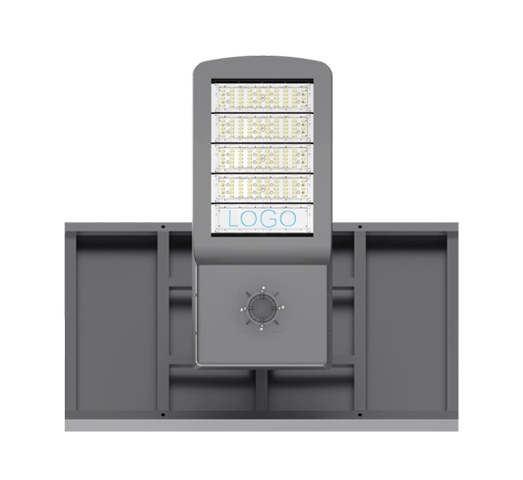
6) A Simple Buyer Checklist and a Clear Next Step
If you are new to solar area lighting, a smart purchase is less about chasing the biggest spec sheet and more about removing the most common failure points. Before you approve a model, use this short checklist to keep your decision grounded.
✓ Does the system protect charging performance with self-cleaning PV?
✓ Is there a design advantage (like dual panels) to improve charging in real weather?
✓ Can you match CCT (3000K–6500K) to the site’s safety and comfort goals?
✓ Is brightness stated clearly (e.g., 5400 lm) and paired with efficient power use (30W)?
✓ Does the product reduce maintenance visits, not increase them?
At Dawn Lighting, we build Self-Cleaning Solar Street Light to stay reliable after dust, rain, and long outdoor seasons—because that is what “smart” should mean for property owners and contractors. If you are planning a project and want help choosing pole layout, brightness targets, or CCT selection, contact our team for a quick recommendation list based on your site type.
CTA: Reply or message Dawn Lighting with your installation scenario (parking lot size, pole height, and any shading concerns). We will suggest a practical configuration and help you avoid the most common “dusk-to-dawn” disappointments.
- 10 Meters Lamp Post
- 10 Meters Pole
- 1000w Led Projector
- 100W LED Tunnel Light
- 12 Meters Lamp Post
- 12 Meters Pole
- 1200w Led Projector
- 15 Light Pole
- 1500w Led Projector
- 150W LED Tunnel Light
- 1800w Led Projector
- 2 In 1 Solar Flood Light
- 200w Led Tunnel Light
- 50w Led Tunnel Light
- 6 Meters Lamp Post
- 6 Meters Pole
- 8 Meters Lamp Post
- 8 Meters Pole
- 800w Led Projector
- 80w Led Tunnel Light
- Colourful Decorative Light
- Conical post
- Courtyard Lamp
- courtyard light
- courtyard lighting fixture
- Decorative Landscape Light
- Decorative road Light
- Flood Light For Courtyard
- Flood Light for Garden
- Flood Light For Outdoor
- Foot Led High Bay Lights
- high bay led lights 100w
- industrial lampshade
- industrial LED shed lights
- industrial magnifying glass with light
- Integrated Solar Flood Light
- led courtyard lamp
- led courtyard light
- led high bay light 100w
- LED Projector For Stadium
- Led UFO High Bay 150W 5000k
- Lighting Plants Mining Price
- Maintenance Free LED Street Light
- Pic Controlling Tunnel Light
- PLC controlling tunnel light
- Post Top Garden Light
- RGB Landscape Light
- Rgbw Decorative Light
- Smart Tunnel Light
- solar courtyard lamp
- solar courtyard light
- Solar LED Road Light
- Solar Street Light For 10 Meter Pole
- Solar Street Light For 12 Meter Pole
- Solar Street Light For 6 Meter Pole
- Solar Street Light For 8 Meter Pole
- Split Type Solar Flood Light
- Sporting Projector
- Stadium Led Projector
- Street Lighting Post
