
 Request A Quote

how to clean solar garden lights
 FACEBOOK
 TWITTER
 LINKEDIN
Solar garden lights are a great solution for outdoor lighting in pathways, patios, flower beds and outdoor living areas without adding to the electric bill. The lights use sunlight to charge the batteries during the day and light at night, all while being environment-friendly. The sun is able to gradually build up dirt, dust, pollen, bird droppings and other debris on the solar panels, which diminishes the effectiveness of the panels and impacts the brightness and operation of the lights.
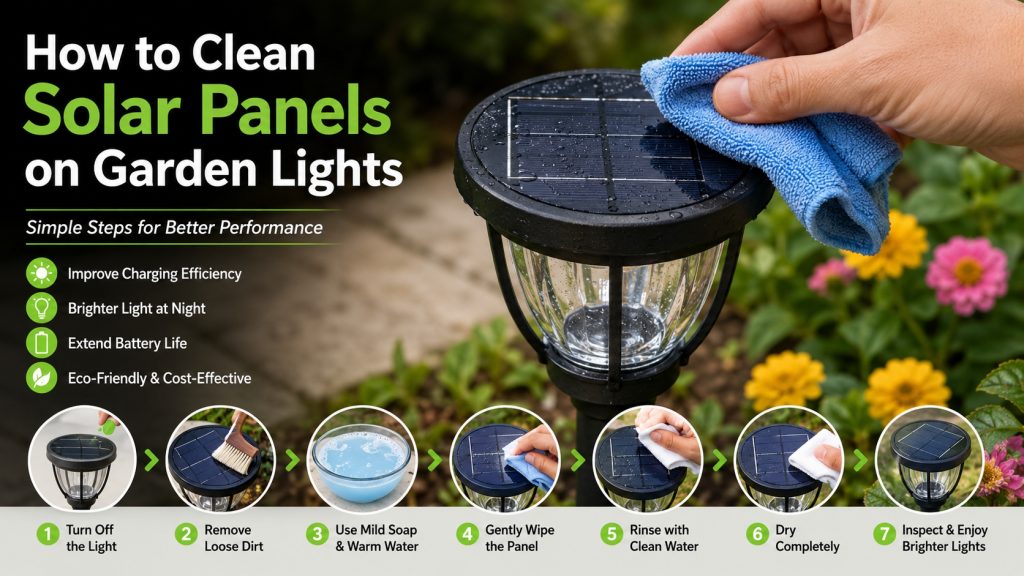
One of the simplest and best ways to maintain your solar garden lights and get the most out of them is to clean them regularly. Here, you will know the need for cleaning solar panels, how frequently to clean them, and which are the safest ways to clean your solar-powered garden lights to keep them working at their best.
Why Cleaning Solar Panels on Garden Lights Matters
The single most crucial part of a solar garden light is the solar panel. Converts sunlight into electricity that is stored in rechargeable batteries. As dirt accumulates on the panel, or debris, less sunlight is absorbed by the PV cells.
A thin layer of dust can make a huge difference to the absorption of solar energy. As a result, your garden lights may:
- Produce dimmer illumination
- Stay lit for fewer hours at night
- Charge more slowly during the day
- Experience reduced battery life
- Stop functioning properly altogether
The regular maintenance provides optimum sunlight exposure and prolongs the life of the solar panels and rechargeable batteries.
How Often Should You Clean Solar Garden Lights?
Cleaning should be performed as often as necessary, based on local environment and weather conditions.
Solar garden lights are usually cleaned once every one or three months. But if there are certain conditions like, some may need more frequent maintenance:
Areas with Heavy Dust
In dry and dusty areas, particles can easily settle on the solar panels.
High-Pollen Seasons
Pollen is known to build up on solar panels during the spring and can cause loss of efficiency.
Near Trees
Trees can trap leaves, sap, bird droppings or other organic material which can be a problem with garden lights under the tree.
Coastal Locations
Solars can get contaminated over time by the salt deposits of ocean air.
After Storms
Dirt and residue can be left on solar surfaces by heavy rain, windstorms, or wildfires, and should be removed as soon as possible.
Visual inspections may be needed on a regular basis to establish if cleaning is needed.
Tools and Materials You’ll Need
No special equipment is needed to clean solar garden lights. The job can be done by most homeowners with familiar household materials.
Recommended supplies include:
- Soft microfiber cloth
- Non-abrasive sponge
- Mild dish soap
- Warm water
- Small soft-bristle brush
- Spray bottle
- Clean towel
Don’t use any harsh chemicals, pressure washers, steel wool or abrasive cleaners, as they can harm the surface of the solar panel.
Step-by-Step Guide to Cleaning Solar Panels on Garden Lights
Step 1: Turn Off the Lights
If the solar lights come with an on/off button, turn them off before cleaning. This will avoid accidental firing and damage to the internal parts during the maintenance process.
Step 2: Remove Loose Dirt
Gently wipe the panel surface with a dry cloth made of microfiber or soft brush to remove dust, leaves, cobwebs and other loose debris.
It is a preliminary step to avoid a phenomenon of scratching while washing.
Step 3: Prepare a Gentle Cleaning Solution
In a bowl or spray bottle, combine a small amount of mild dish soap and warm water.
The solution should be able to dissolve the grime without damaging the protective coating on the solar panel.
Step 4: Clean the Solar Panel Surface
Take a soft cloth or a sponge, moisten it with the cleaning solution and gently clean the solar panel.
Use circular motions to get rid of stubborn dirt and stains. Avoid applying excessive pressure.
If they are difficult to remove like bird droppings or tree sap, let the damp cloth sit for about a few minutes before you wipe it off.
Step 5: Rinse Thoroughly
Once cleaned, cover with a clean water-moistened cloth and wipe to remove soap residue.
With soap residues, there is the possibility of forming a film which will obstruct sunlight transmission.
Step 6: Dry Completely
Dry off the panel well with a clean microfiber towel.
If water spots are allowed to dry, they can leave mineral deposits which can impact the operation of the panels.
Step 7: Inspect the Entire Fixture
While cleaning, inspect other components of the solar garden light, including:
- Battery compartment
- Lens cover
- Light sensor
- Housing seals
- Mounting hardware
Look for signs of corrosion, moisture intrusion, cracks, or loose connections.
Cleaning the Light Lens for Maximum Brightness
Many homeowners focus only on the solar panel and forget the light lens.
A dirty or cloudy lens can significantly reduce visible brightness even when the solar panel is functioning properly.
To clean the lens:
- Wipe away dirt using a damp microfiber cloth.
- Use mild soap if necessary.
- Dry completely before reinstalling any removable parts.
For plastic lenses that have become cloudy from UV exposure, specialized plastic polishing products may help restore clarity.
Maintaining Solar Garden Light Batteries
Battery performance is closely tied to solar panel efficiency.
While cleaning your solar lights, take a few moments to inspect the batteries.
Signs that batteries may need replacement include:
- Short illumination time
- Dim lighting
- Failure to charge fully
- Lights that stop working despite clean panels
Most solar garden lights use rechargeable AA or AAA NiMH batteries. Replacing aging batteries every one to three years can significantly improve performance.
Common Mistakes to Avoid
Using Abrasive Materials
Scrubbing pads, wire brushes, or rough cloths can scratch the solar panel surface and permanently reduce efficiency.
Applying Harsh Chemicals
Strong solvents, bleach, or industrial cleaners may damage panel coatings and plastic components.
Cleaning During Peak Sunlight
Cleaning hot solar panels under direct midday sun can cause rapid evaporation and leave streaks or water spots.
Early morning or late afternoon is typically the best time for maintenance.
Ignoring Shade Issues
Sometimes poor performance is caused by shading rather than dirty panels.
Check whether growing trees, shrubs, fences, or new structures are blocking sunlight.
Neglecting Regular Maintenance
Waiting until lights stop working often leads to more extensive cleaning or battery replacement needs.
Preventive maintenance is always more effective.
Additional Tips to Improve Solar Garden Light Performance
Beyond regular cleaning, several strategies can help maximize efficiency.
Position Lights for Maximum Sun Exposure
Install lights in areas that receive at least six to eight hours of direct sunlight daily.
Trim Nearby Vegetation
Keep plants, bushes, and tree branches from casting shadows on solar panels.
Clean After Seasonal Changes
Spring pollen, autumn leaves, and winter debris can all affect charging performance.
Replace Damaged Components Promptly
Cracked panels, corroded battery terminals, and damaged housings should be repaired or replaced quickly.
Store Seasonal Lights Properly
If you use decorative solar lights seasonally, clean them thoroughly before storage and keep them in a dry location.
Environmental Benefits of Maintaining Solar Garden Lights
Properly maintained solar lighting systems help to promote outdoor living.
With maximum solar energy collection homeowners can:
- Reduce electricity consumption
- Lower carbon emissions
- Extend product lifespan
- Minimize battery waste
- Reduce replacement costs
A few minutes of routine cleaning can make a huge difference to achieving energy efficiency and promoting a responsible attitude to landscaping.
Conclusion
The quality of solar panel cleanliness for garden light is of enormous value, and it’s a simple maintenance. A buildup of dust, pollen, bird droppings and other matter can lessen the efficiency of solar charging, which can result in not as bright lights and less operating time.
To ensure solar garden lighting systems operate at their peak efficiency and have a long life, ensure that the solar panels are cleaned regularly (every 1-3 months) using gentle cleaning materials, and make sure batteries and fixtures are inspected regularly.
With consistent maintenance, solar lights will provide brighter lighting, longer operating time and improved overall reliability throughout the year, whether for pathways, gardens, patios or as ornamental landscape features.


- 10 Meters Lamp Post
- 10 Meters Pole
- 1000w Led Projector
- 100W LED Tunnel Light
- 12 Meters Lamp Post
- 12 Meters Pole
- 1200w Led Projector
- 15 Light Pole
- 1500w Led Projector
- 150W LED Tunnel Light
- 1800w Led Projector
- 2 In 1 Solar Flood Light
- 200w Led Tunnel Light
- 50w Led Tunnel Light
- 6 Meters Lamp Post
- 6 Meters Pole
- 8 Meters Lamp Post
- 8 Meters Pole
- 800w Led Projector
- 80w Led Tunnel Light
- Colourful Decorative Light
- Conical post
- Courtyard Lamp
- courtyard light
- courtyard lighting fixture
- Decorative Landscape Light
- Decorative road Light
- Flood Light For Courtyard
- Flood Light for Garden
- Flood Light For Outdoor
- Foot Led High Bay Lights
- high bay led lights 100w
- industrial lampshade
- industrial LED shed lights
- industrial magnifying glass with light
- Integrated Solar Flood Light
- led courtyard lamp
- led courtyard light
- led high bay light 100w
- LED Projector For Stadium
- Led UFO High Bay 150W 5000k
- Lighting Plants Mining Price
- Maintenance Free LED Street Light
- Pic Controlling Tunnel Light
- PLC controlling tunnel light
- Post Top Garden Light
- RGB Landscape Light
- Rgbw Decorative Light
- Smart Tunnel Light
- solar courtyard lamp
- solar courtyard light
- Solar LED Road Light
- Solar Street Light For 10 Meter Pole
- Solar Street Light For 12 Meter Pole
- Solar Street Light For 6 Meter Pole
- Solar Street Light For 8 Meter Pole
- Split Type Solar Flood Light
- Sporting Projector
- Stadium Led Projector
- Street Lighting Post
