
 Request A Quote

how to place landscape lighting?
 FACEBOOK
 TWITTER
 LINKEDIN
Landscape lighting is the best alternative of adding beauty, safety, and functionality to the area surrounding your house. Lights that are appropriately installed can be used to attract attention to architectural elements, to illuminate the paths and to make evenings pleasant. As a homeowner who wants to enhance your garden or a professional landscaper that has clients in particular areas, it is essential to know the techniques and principles of landscape lighting. This guide discusses the methods of positioning landscape lighting, the fixtures that are available in the market, and geographical factors in placing lights.
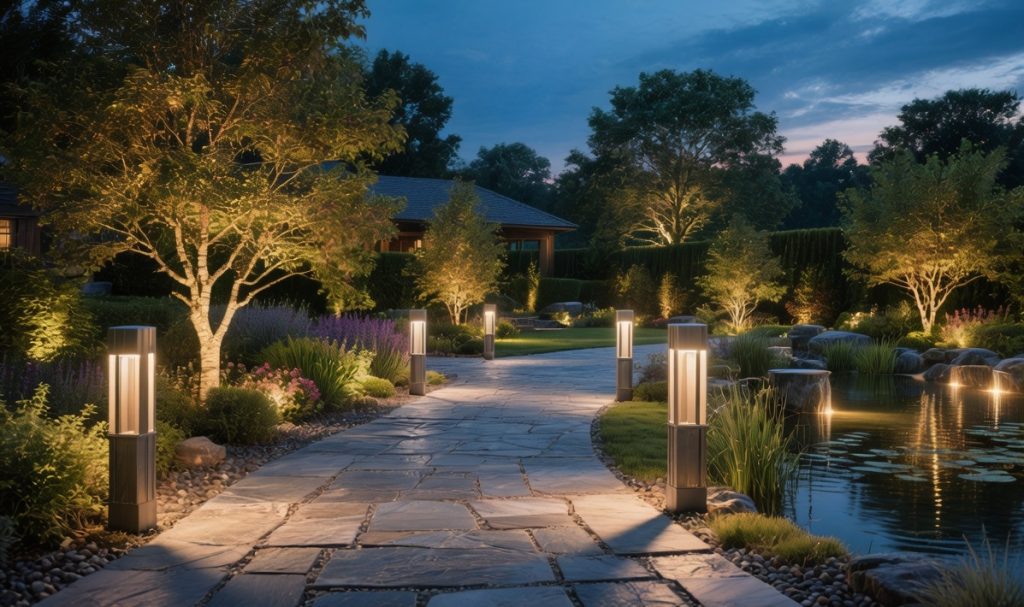
Why Landscape Lighting Matters
Landscape lighting goes beyond aesthetics. It serves multiple practical purposes:
- Safety and Security: Well-lit pathways, driveways, and entrances prevent accidents and deter intruders.
- Visual Appeal: Lighting highlights trees, shrubs, water features, and architectural elements, transforming your yard into a nighttime showpiece.
- Extended Outdoor Use: Proper illumination allows you to enjoy patios, decks, and gardens even after dark.
- Property Value: Professionally designed lighting enhances curb appeal, potentially increasing property value.
Types of Landscape Lighting Fixtures
Selecting the right lighting fixtures is essential for achieving the desired effect. Common types include:
- Path Lights: Ideal for walkways, driveways, and garden paths. They provide safety and a soft glow that guides visitors.
- Spotlights: Focused beams highlight trees, sculptures, or architectural features. Adjustable heads allow flexible targeting.
- Floodlights: Broad coverage lighting suitable for larger areas or security purposes. Often used near entrances or open gardens.
- Well Lights: Recessed into the ground to create uplighting effects, emphasizing tree trunks or statues.
- String and Accent Lights: Used for patios, decks, and pergolas to create cozy atmospheres.
- Step Lights: Small fixtures integrated into stairs for safety and subtle illumination.
Steps to Place Landscape Lighting
1. Plan Your Layout
Start by walking through your yard after dark to identify areas that need illumination. Consider:
- Pathways, steps, and driveways for safety
- Trees, plants, and water features for visual impact
- Entrances and patios for usability
Sketch a layout and mark the positions where lights will be most effective.
2. Choose the Right Fixtures
Choose fixtures according to the use and design of each space. As an example, walkway soft-path lighting, tree lighting (Spotlights), and garden-art accent lighting. Take into account durability, weather resistance, and energy efficiency.
3. Determine Light Height and Angle
The height and angle of the fixture dramatically affect the lighting effect:
- Uplighting a tree requires the light to be placed at the base, angled upward
- Downlighting from tree branches creates a natural moonlight effect
- Avoid glare by angling lights away from direct sightlines
4. Use Layered Lighting
Layered lighting is a combination of various types of fixtures to achieve depth and dimension. To illustrate, use pair path lights and spotlights and accent lights to create a balanced appearance.
5. Ensure Electrical Safety
When wired lighting is used, make sure that it is low voltage with waterproof connections. Solar lights are less demanding to install and they rely on availability of sunlight.
6. Consider Automation and Control
Smart home, timers, and motion sensors make life easier and efficient. A lot of homeowners like applications to manage brightness and color temperature and scheduling.
Regional Considerations for Landscape Lighting
Landscape lighting installation may vary depending on local climate, regulations, and customer preferences:
- North America: Low-voltage lighting with timers and smart controls is popular. Snow-resistant fixtures are necessary in colder regions.
- Europe: Energy-efficient LED lights and eco-friendly solar options are trending. EU regulations often require waterproof and durable outdoor fixtures.
- Asia-Pacific: Decorative and colorful lighting for patios, gardens, and commercial properties is in demand. Solar-powered options are growing in suburban areas.
Tips for Effective Landscape Lighting
- Highlight Features, Not Everything: Avoid over-lighting; focus on the most attractive elements.
- Mind Shadowing: Proper placement reduces unwanted shadows while enhancing textures.
- Use Warm Colors: Warm white light (2700K–3000K) creates a welcoming ambiance.
- Maintain Fixtures: Regular cleaning and bulb replacement ensure consistent performance.
- Test at Night: Observe lighting effects in darkness before finalizing positions.
Benefits of Hiring a Professional
Although it can be installed by DIY, it has skills related to design, safety, and compliance, which are offered by professionals. Benefits include:
- Correct fixture selection for your terrain and climate
- Low-voltage wiring installation to avoid hazards
- Optimized placement for aesthetics and security
- Knowledge of local regulations and codes
High-end landscape lighting guarantees that your yard appears to be awesome, works effectively, and meets the requirements and standards of safety.
Conclusion
The effective installation of landscape lighting can convert outdoors areas into functional, safe, and aesthetically pleasing spaces. Whether it is to illuminate paths, emphasize trees, or to make pleasant patios, careful planning and choice of fixtures are important.
Homeowners and landscapers can make beautiful nighttime landscapes by taking into account the regional climate, safety requirements, and aesthetics. Good lighting does not only make things beautiful and more useful but also adds value to the properties and makes them enjoy the lighting over the coming years.

- 10 Meters Lamp Post
- 10 Meters Pole
- 1000w Led Projector
- 100W LED Tunnel Light
- 12 Meters Lamp Post
- 12 Meters Pole
- 1200w Led Projector
- 15 Light Pole
- 1500w Led Projector
- 150W LED Tunnel Light
- 1800w Led Projector
- 2 In 1 Solar Flood Light
- 200w Led Tunnel Light
- 50w Led Tunnel Light
- 6 Meters Lamp Post
- 6 Meters Pole
- 8 Meters Lamp Post
- 8 Meters Pole
- 800w Led Projector
- 80w Led Tunnel Light
- Colourful Decorative Light
- Conical post
- Courtyard Lamp
- courtyard light
- courtyard lighting fixture
- Decorative Landscape Light
- Decorative road Light
- Flood Light For Courtyard
- Flood Light for Garden
- Flood Light For Outdoor
- Foot Led High Bay Lights
- high bay led lights 100w
- industrial lampshade
- industrial LED shed lights
- industrial magnifying glass with light
- Integrated Solar Flood Light
- led courtyard lamp
- led courtyard light
- led high bay light 100w
- LED Projector For Stadium
- Led UFO High Bay 150W 5000k
- Lighting Plants Mining Price
- Maintenance Free LED Street Light
- Pic Controlling Tunnel Light
- PLC controlling tunnel light
- Post Top Garden Light
- RGB Landscape Light
- Rgbw Decorative Light
- Smart Tunnel Light
- solar courtyard lamp
- solar courtyard light
- Solar LED Road Light
- Solar Street Light For 10 Meter Pole
- Solar Street Light For 12 Meter Pole
- Solar Street Light For 6 Meter Pole
- Solar Street Light For 8 Meter Pole
- Split Type Solar Flood Light
- Sporting Projector
- Stadium Led Projector
- Street Lighting Post
