
 Request A Quote

2026 Solar LED Street Lamp: How Bilateral Panels Charge 20% Faster
 FACEBOOK
 TWITTER
 LINKEDIN
In 2026, the conversation is no longer only about panel size or battery size on the Solar LED Street Lamp. It is about how fast the system can recover energy day after day, and how consistently it keeps delivering stable lighting for streets and parks. Solar LED Street Lamp projects often fail for one simple reason: buyers plan for “sunny-day charging,” then reality adds dust, shade, and long nights. At Dawn Lighting, we design integrated solar street lights for real outdoor conditions, not showroom conditions.
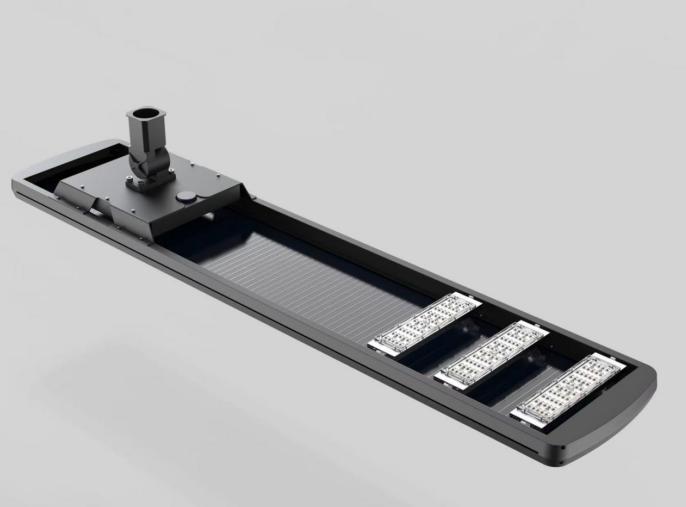
1) Why Charging Speed Is the New KPI in 2026
If you are a new buyer, it is tempting to judge a Solar LED Street Lamp by nominal wattage alone. But outdoor lighting is a weekly system, not a one-night system. The true question is: after a cloudy day, can your lamp “catch up” fast enough to protect nighttime brightness and runtime?
Charging speed matters because it reduces the risk of lighting drop-offs, dimming, or early shutoff during consecutive low-sun days. It also helps you use smaller hardware more efficiently, which can simplify installation and reduce total cost. In practical terms, a faster-charging design gives you more buffer. That buffer becomes your real reliability in the field.
For municipal roads, pathways, parks, and public campuses, reliability is not a marketing term. It is fewer complaints, fewer emergency callouts, and fewer replacements. So when we talk about charging “20% faster,” we are talking about a measurable improvement in recovery and stability—not just a lab number.
2) How Bilateral Panels Help a Solar LED Street Lamp Charge 20% Faster
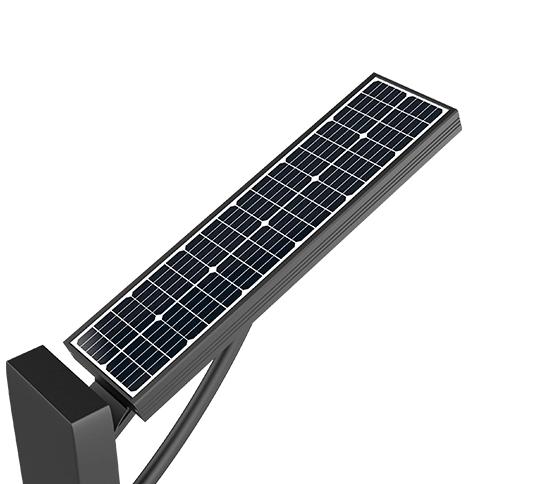
Bilateral solar panels are designed to capture light from more than one side. In real outdoor environments, light reaches a panel in different ways: direct sunlight, reflected light from pavement, and scattered light in hazy weather. A conventional layout may miss part of that usable energy. A bilateral approach aims to convert more of what is already available.
In our integrated Solar LED Street Lamp design, bilateral panels are used specifically to boost charging efficiency by up to 20%. That extra energy does not only mean “more charge.” It means the lamp can reach a healthy battery level earlier in the day, which improves system confidence before evening arrives. It also means faster recovery after low-sun conditions.
For new buyers, here is the practical takeaway: bilateral panels can be a smarter path to stability than simply oversizing the battery. Oversizing can increase cost and weight. Smarter harvesting improves daily performance without forcing the whole system to become larger and harder to mount.
3) The Hidden Enemy: Dirt, Dust, and Why Self-Cleaning Beats “Maintenance Plans“
Even the best panel cannot charge well when it is dirty. Many solar lighting projects lose performance slowly, and nobody notices until lighting becomes inconsistent. Dust accumulation, bird droppings, and roadside grime can reduce the energy reaching the cell surface. You can schedule maintenance, but maintenance schedules often lose to real life. Teams get busy. Budgets get tight. Sites become remote.
This is why Dawn Lighting integrates self-maintenance features into our Solar LED Street Lamp systems. The Auto PV Sweeper helps clean the panel surface regularly, aiming to keep charging performance closer to what you expected at purchase, not what you get after months of exposure. The rain sensor adds another layer of realism: when rainfall is detected, cleaning can be triggered to prevent residue and streaking from becoming “permanent dirt.”
For readers planning a rollout, consider what this means operationally:
✓ Less performance drift caused by dirty panels
✓ Lower reliance on frequent manual cleaning
✓ More predictable charging across seasons and dusty roads
If you manage multiple sites, self-cleaning is not a luxury. It is a way to reduce maintenance uncertainty and protect your lighting SLA.
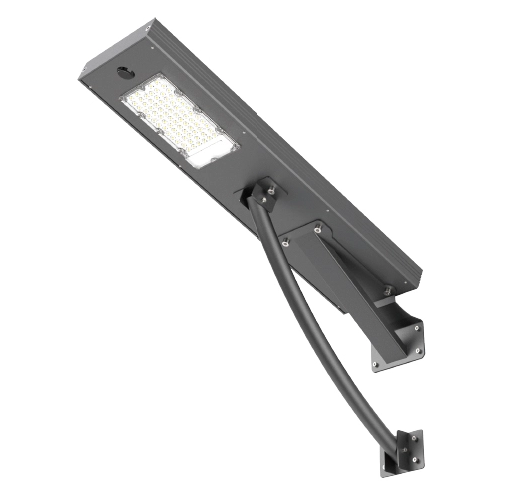
4) Bright Light Without Waste: What 190 lm/W Really Delivers
Once energy is stored, the next job is to turn it into usable light efficiently. The Dawn Lighting Solar LED Street Lamp platform uses high-lumen LEDs with efficacy exceeding 190 lm/W. For beginners, efficacy is the “light per energy” number. Higher efficacy means you get more illumination from the same stored power.
In outdoor lighting, this translates into two customer benefits. First, you can achieve bright, uniform lighting for streets and parks without draining the battery as fast. Second, efficient LEDs reduce heat stress, which supports longer component life and more stable output over time.
A common buying mistake is to focus on peak brightness only. But peak brightness is not the same as practical visibility. Practical visibility is uniform distribution, comfortable color quality, and consistent output through the night. Efficient LEDs help you hold brightness longer. Combined with faster charging, they help your system behave more like a reliable utility and less like a “nice idea that sometimes works.”
5) Battery and Light Quality: The Few Numbers That Actually Matter
Buyers often ask for every spec. In real projects, you only need a handful of numbers to make good decisions quickly. One key reference is battery capacity. Our integrated Solar LED Street Lamp uses a 384Wh battery configuration in this series, which provides a solid energy foundation for daily cycling in common roadway and park applications.
Instead of chasing the largest battery, match battery capacity to your operating goal: lighting hours, desired brightness level, and local solar availability. Faster charging reduces how “large” the battery must be to feel safe. Self-cleaning protects the charging you paid for. Efficient LEDs stretch every stored watt-hour.
Light quality matters too, especially for areas with pedestrians and security needs. For example, a CRI above 70 supports clearer object recognition compared to very low-CRI lighting. Meanwhile, a CCT range of 3000K–6500K gives planners flexibility: warmer tones for parks and residential streets, cooler tones for higher-alert roadways or industrial perimeters. The goal is not to choose a trendy color temperature. The goal is to match visibility and comfort to the scene.
6) A Simple Buyer Checklist and a Clear Next Step
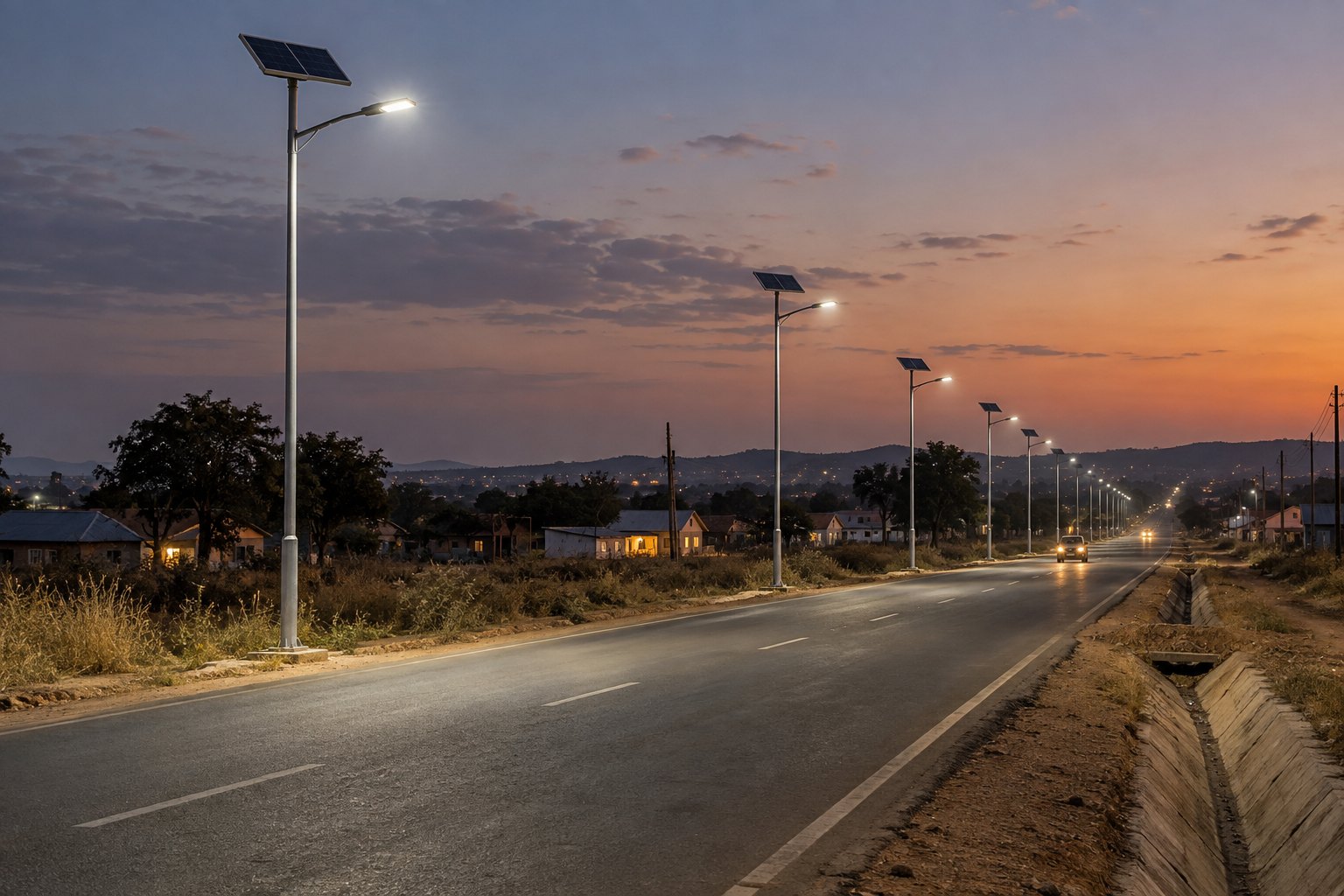
If you are sourcing in 2026, treat a Solar LED Street Lamp as a system with three performance locks: energy capture, energy protection, and energy use. When all three are designed for reality, the project becomes easier to deploy and easier to keep stable.
Here is a practical checklist you can reuse:
✓ Ask how the lamp improves charging in weak-sun or reflective-light conditions (bilateral panels help)
✓ Ask how the design prevents charging loss over time (self-PV sweeper + rain sensor reduce dirt impact)
✓ Ask for LED efficacy, not only lumen claims (190 lm/W class efficiency supports runtime stability)
✓ Confirm battery capacity aligns with your night-length and brightness plan (384Wh class reference)
✓ Choose CCT with the site in mind (3000K–6500K is useful flexibility)
At Dawn Lighting, we build integrated solutions because buyers want fewer parts, fewer installation steps, and fewer long-term surprises. If you are planning a new municipal road, park pathway, campus, or community lighting upgrade, we can help you match wattage options (such as 30W and 60W classes) to pole height, spacing, and expected lighting goals—then recommend a configuration that protects charging performance year-round.
CTA: Tell us your project scene (road, park, campus), pole height, and your target lighting hours. Dawn Lighting will recommend a Solar LED Street Lamp setup designed around faster charging, lower maintenance, and consistent brightness—so your 2026 rollout performs like a dependable infrastructure upgrade, not an experiment.

- 10 Meters Lamp Post
- 10 Meters Pole
- 1000w Led Projector
- 100W LED Tunnel Light
- 12 Meters Lamp Post
- 12 Meters Pole
- 1200w Led Projector
- 15 Light Pole
- 1500w Led Projector
- 150W LED Tunnel Light
- 1800w Led Projector
- 2 In 1 Solar Flood Light
- 200w Led Tunnel Light
- 50w Led Tunnel Light
- 6 Meters Lamp Post
- 6 Meters Pole
- 8 Meters Lamp Post
- 8 Meters Pole
- 800w Led Projector
- 80w Led Tunnel Light
- Colourful Decorative Light
- Conical post
- Courtyard Lamp
- courtyard light
- courtyard lighting fixture
- Decorative Landscape Light
- Decorative road Light
- Flood Light For Courtyard
- Flood Light for Garden
- Flood Light For Outdoor
- Foot Led High Bay Lights
- high bay led lights 100w
- industrial lampshade
- industrial LED shed lights
- industrial magnifying glass with light
- Integrated Solar Flood Light
- led courtyard lamp
- led courtyard light
- led high bay light 100w
- LED Projector For Stadium
- Led UFO High Bay 150W 5000k
- Lighting Plants Mining Price
- Maintenance Free LED Street Light
- Pic Controlling Tunnel Light
- PLC controlling tunnel light
- Post Top Garden Light
- RGB Landscape Light
- Rgbw Decorative Light
- Smart Tunnel Light
- solar courtyard lamp
- solar courtyard light
- Solar LED Road Light
- Solar Street Light For 10 Meter Pole
- Solar Street Light For 12 Meter Pole
- Solar Street Light For 6 Meter Pole
- Solar Street Light For 8 Meter Pole
- Split Type Solar Flood Light
- Sporting Projector
- Stadium Led Projector
- Street Lighting Post
