
 Request A Quote

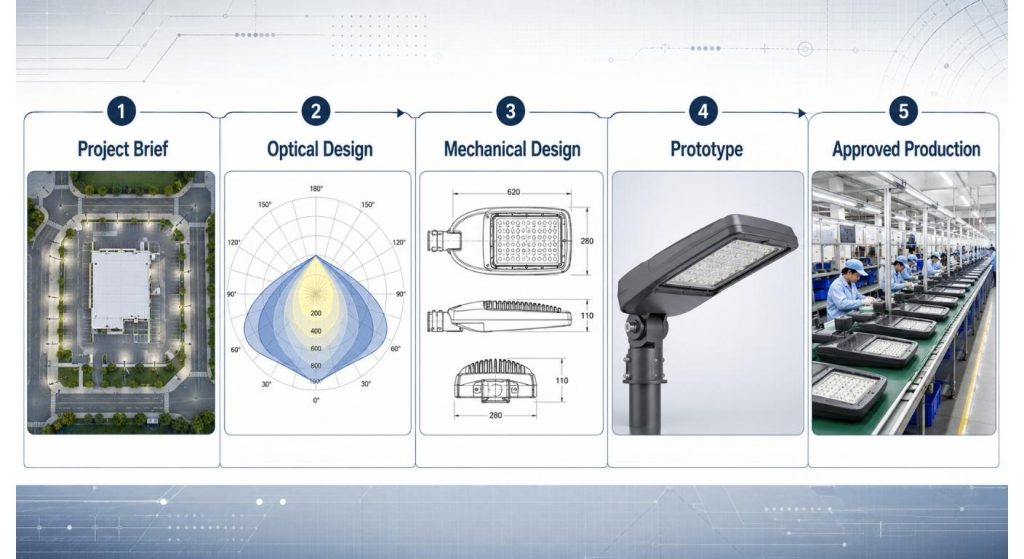
Custom Lighting Manufacturer: From Project Brief to Reliable Production
 FACEBOOK
 TWITTER
 LINKEDIN
The term “custom lighting” may refer to a change in the colour of a housing to creating a whole fixture around a project requirement.
That difference is important to the lighting brands, distributors, contractors and municipal buyers. A supplier might be able to slightly change a product on their catalogue, but not have the engineering, testing, tooling or production control to create a truly project specific solution.
A good Custom Lighting Manufacturer must not start by inquiring just about quantity and wattage. The steps of the process should begin with the application, the required lighting result, the installation environment, the compliance market and commercial expectations.
Determine the meaning of “Custom” for the Project
Not all orders must be for a new product.
Minor customization is the application of logo, packing, length of cable, colour temperature, finish, brand of driver and mounting accessories, or labelling. New optics, dimensions in the housing, thermal design, solar capacity, pole structures, control functions or tooling may be required for more advanced projects.
The buyer needs to distinguish the needs into three categories:
- Mandatory technical requirements
- Design or branding of preference
- Open to manufacturer’s recommendations
This separation will avoid any unnecessary development and allow the manufacturer to determine if an existing platform can be adapted or not.
The outdoor lighting product portfolio from Dawn Lighting includes road lighting, solar lighting, landscape lighting, sports lighting, residential lighting, pole lighting and floodlighting that can be used as a base on which to customize a project.
| Customization Level | Typical Changes | Buyer Should Confirm |
| Branding | Logo, label, carton, manual | Artwork and packaging approval |
| Configuration | CCT, driver, cable, controls | Component compatibility |
| Optical | Lens, beam angle, output | IES file and simulation |
| Mechanical | Housing, bracket, dimensions | Drawings and structural review |
| Full development | New design and tooling | Ownership, cost, timeline, validation |
In this step, a Strong manufacturer weds the needs of the user to specifications.
The buyer’s initial vision is often a goal rather than a completed design, such as lighting a 6 metre road, a given lux level, or to last through multiple nights of poor weather and cloud cover, or to match a building aesthetic, or to be suitable for a coastal location.
The manufacturer needs to translate these expectations into specifications or measurable requirements. Some examples of this are optical distribution, lumen output, mounting height, CCT, CRI, driver configuration, battery capacity, ingress protection, pole strength, and corrosion protection.
It is the engineering value that bleeds through this translation stage. If a supplier can quote from a product image, then they may not take into consideration installation, electrical or environmental factors.
Outdoor work shows how Dawn Lighting’s landscape lighting solutions can be modified to suit the needs of any project in terms of power, optics, colour temperature, control systems, housing, mounting and finishes.
The evidence presented should be optical in nature and should support the proposal.
Whatever fixture is being used for a particular application should be capable of delivering the desired illumination at the appropriate location.
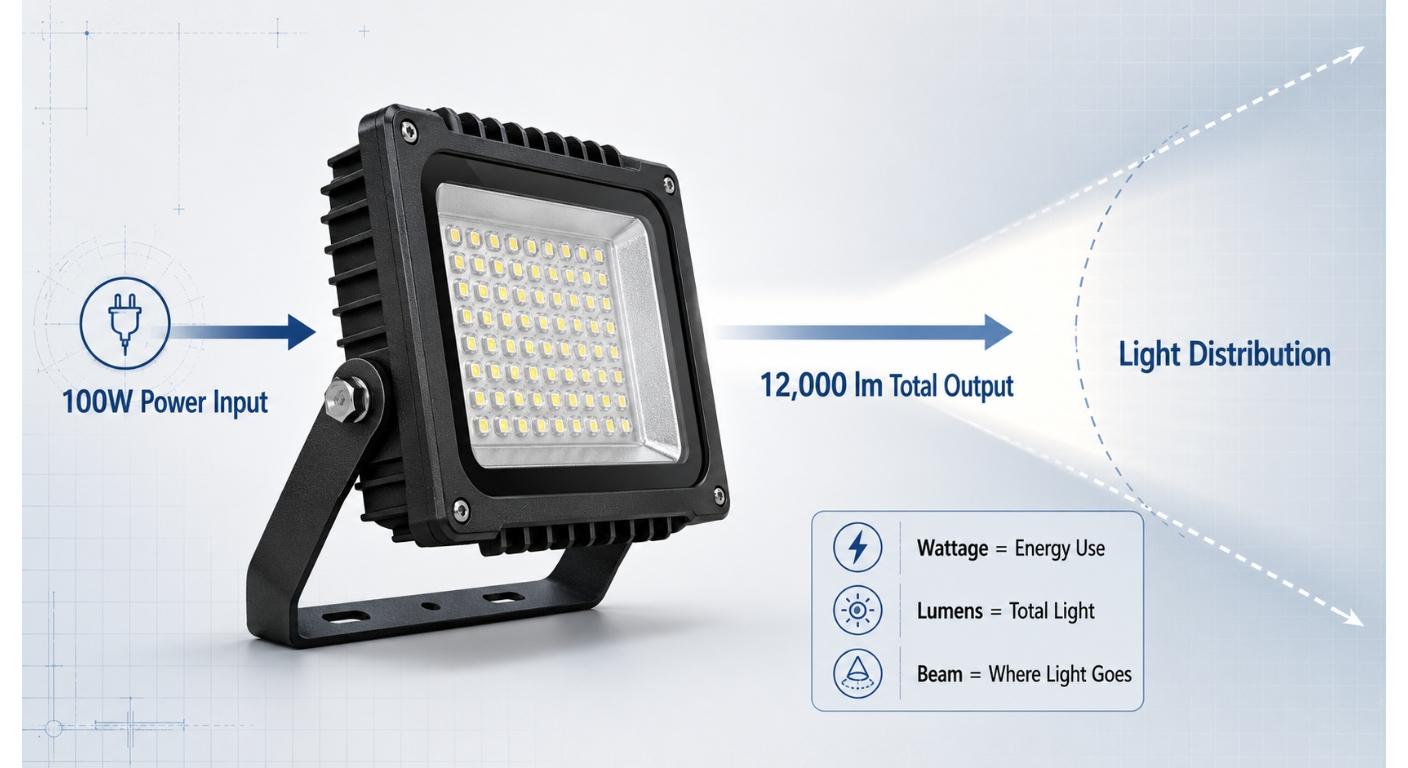
Lumens and watts are not definitive proof of uniformity across the road, sports field coverage, pathway comfort, façade distribution or glare control. Buyers are to ask for IES/ldt files and if required a Dialux/Relux simulation with reality project dimensions.
The proposed fixture, optic, mounting height, spacing, tilt and maintenance assumptions should be utilized in the simulation. Photometric reports from a different model are of little value and generic.
All optical files should also be consistent in the production sample that is approved. Subsequent replacement of the LED / lens / reflector / driver may result in a different lighting effect.
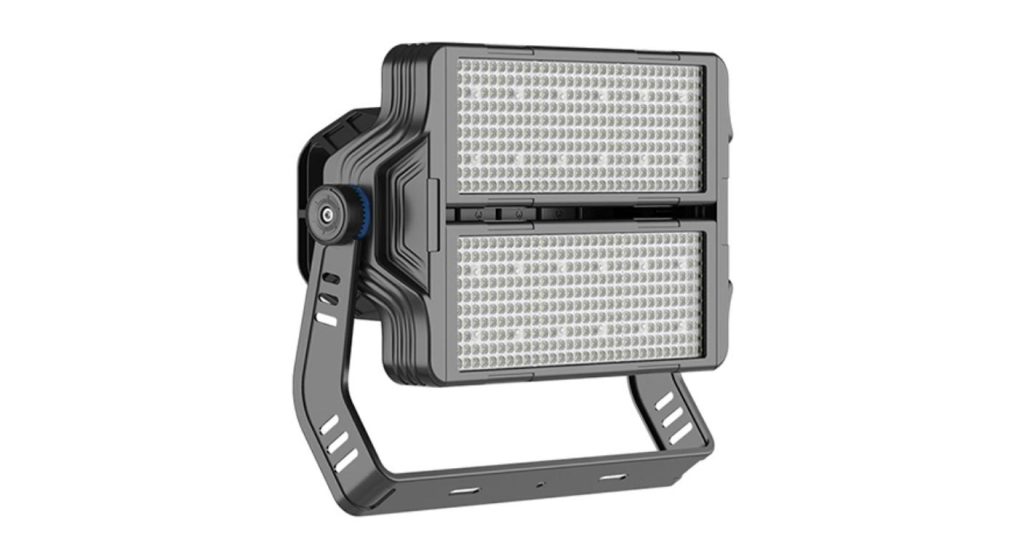
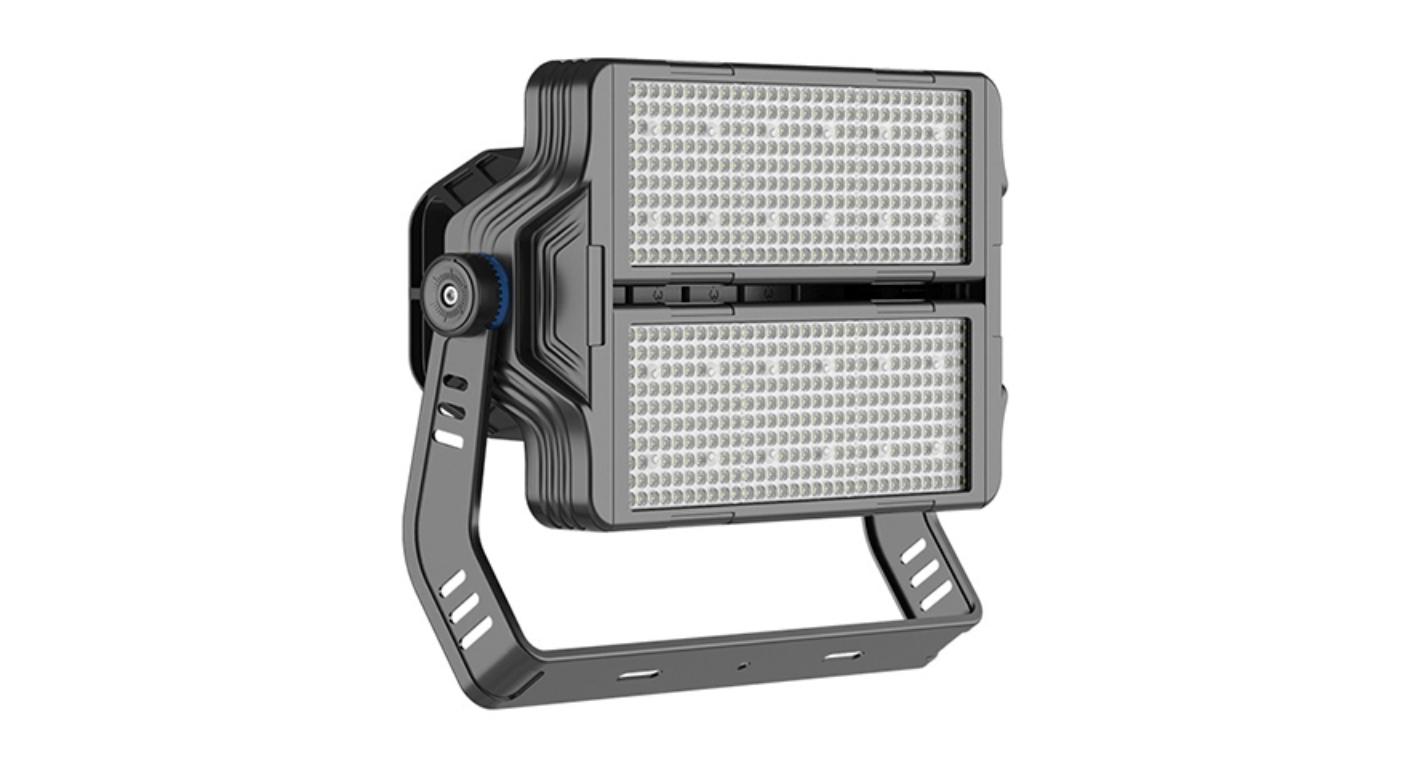
Dawn Lighting’s LED Modular Flood Light series is a demonstration of how beam options, aiming configurations, drivers and output levels can be chosen for challenging outdoor lighting applications.
Structural Design and Thermal Design for Protection of Service Life
There are risks that can be introduced with customization that are not apparent in a rendering.
If you acquire a bigger home, wind area might be increased. When using a new bracket, its load transfer may be different. If heat path is not re-designed, increasing LED power can also increase junction temperature and decrease the LED’s component life. Decorative enclosure can hold water or inhibit air movement.
The engineering review should be done with regards to:
- Bulking and thickness of the materials used in housing.
- Heat-sink area, thermal interfaces
- The force of the brackets and how far they can be moved.
- Fasteners, gaskets, glands and drainage
- Weight and area on top of pole
- Compatibility of corrosion treatment and coating.
- Access to replace driver/battery
Structural coordination plays a crucial role where poles are involved as part of the supply. How much lighting equipment and the structure supporting the pole and bracket must be considered as an installed system can be seen in the pole, arm and bracket products from Dawn Lighting.
Prototypes should be answering specific questions.
A working prototype is not useful in and of itself.
It is important for the buyer and manufacturer to agree on what the sample is required to show prior to sample production. It could be appearance, size, compatibility with mounting holes, light output, dimming characteristics, sealing, temperature characteristics, installation procedures, packaging or brand.
Recordings of the approved sample should include drawings, photographs, specifications, parts lists and test results. Any Any discrepancies or differences between a rapid prototype and proposed production process should be reported.
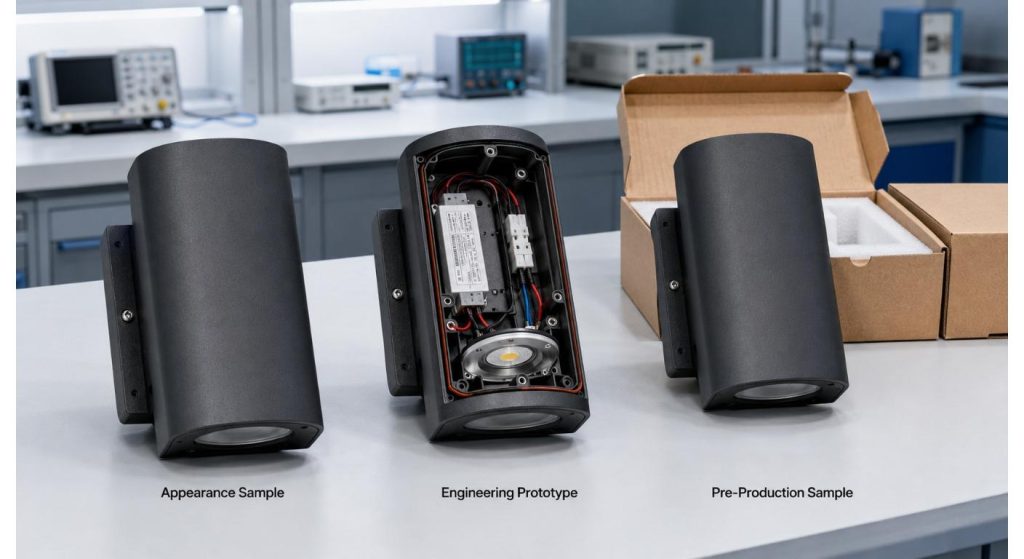
For complex projects, it may be appropriate to use more than one sample stage: appearance sample, engineering prototype, and pre-production sample.
Quality Control MUST follow approved Specification.
Stable volume production cannot be guaranteed from a “polished” showroom sample.
The manufacturer should take the approved design and use controlled drawings, bills of material, assembly instructions, inspection criteria and testing procedures to convert it into a product. Suppliers or approved alternative suppliers for critical components (e.g. LEDs, LED drivers, batteries, lenses, controllers, seals, coatings etc.).
Purchasing parties should specify how goods are received, how the assembly is carried out, how the waterproofing is tested, how electrical safety is tested, how the aging is carried out, how the photometric output is tested and how it is packaged. The inspection plan should indicate the sampling of the items and the testing of all the items.
Traceability is also of benefit. The product labels and production dates, batch records and component information facilitates later quality investigations to be faster and more accurate.
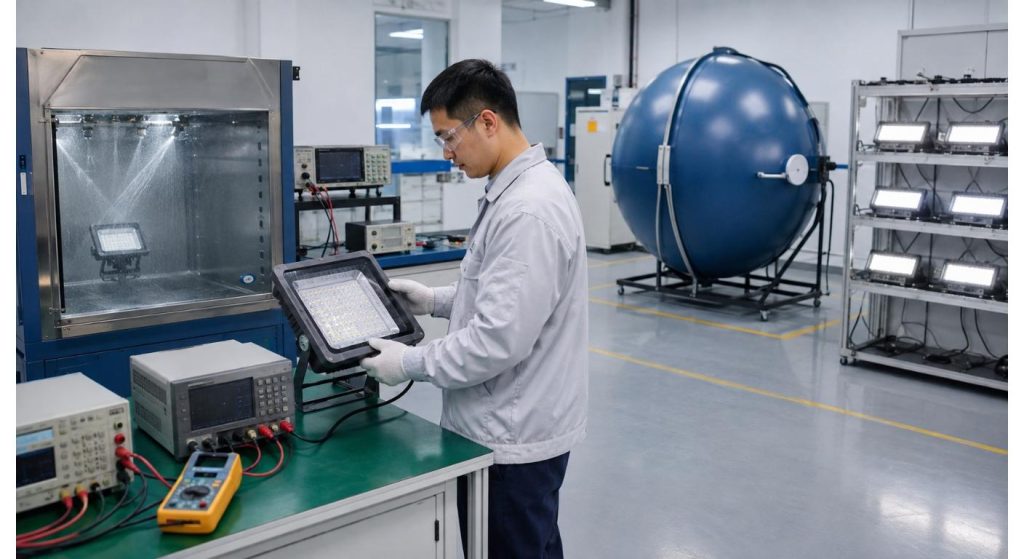
Understand and assess the production capacity as a system
The only indicator of delivery capability is the size of the factory.
What matters is if design, sourcing, tooling, metal work, surface finishing, electronics, assembly and testing, packaging and project coordination can keep pace with required schedule. Too much subcontracting can result in more lines of communication, and less control over change.
Dawn Lighting showcases the all-in-one manufacturing of lighting fixtures, solar products and pole production on its official company website, along with OEM/ODM, and engineering, quality-control and after-sales support.
However, the buyer must confirm the capacity with the actual order in the event of multiple fixture types, custom poles, solar components and/or phased orders.
Changes BEFORE mass production are under control.
A lot of customized projects do not work out because little changes are made without anyone knowing or being aware.
The lens is replaced, a cable is shortened, the colour of the coating changes, or the driver model is changed. These changes, individually, can seem insignificant, but collectively can impact on compliance, installation, appearance and/or performance.
Carry out a written change-control process. Each modification should include reason for the modification, the specification being modified, cost, schedule impact, testing requirements and approval. Only the last revision approved production should be followed.
| Approval Document | Main Purpose | Responsible Party |
| Final specification | Defines performance requirements | Buyer and manufacturer |
| Technical drawing | Controls dimensions and mounting | Engineering teams |
| Approved BOM | Controls components and alternatives | Manufacturer |
| Golden sample | Provides physical reference | Buyer |
| Inspection plan | Defines quality checks | Quality teams |
| Packaging standard | Prevents shipping and labelling errors | Buyer and manufacturer |
Final Supplier Check
The largest amount of modifications doesn’t necessarily make the best Custom Lighting Manufacturer.
It’s the supplier who knows and understands the application, documents decisions, verifies performance, controls production changes and makes consistent products to the required scale. Good customisation will make a project requirement into a manufacturing specification that can be repeated – not a one off sample that cannot be reproduced.
FAQ
Q1. What are some changes a custom light company can make?
Some of the more common include optics, output, CCT, drivers, controls, housing, finish, mounting, cables, branding and packaging. New structural designs and/or tooling may be needed for more advanced projects.
Q2. OEM and ODM lighting, what are the differences?
OEM production is of products according to the buyer’s design or specification. ODM services include product design or adaptation carried out by the manufacturer and the buyer can market it as his/her own product.
Q3. Do I always need to make a mould in order to cast a custom mould?
No, because in many instances optics, electronics, finishes, brackets or branding can be used to adapt existing product platforms. It is justified to use new tooling when a wanted structure cannot be guaranteed with an existing tooling.
Q4. What’s so significant about IES files?
IES files are used for the light distribution characteristics of the fixture, and are used by photometric simulation. They aid in determining if the proposed product will meet coverage and uniformity objectives of the project.
Q5. Should the buyers approve the sample before the production?
Yes. The approved sample should have drawings, specifications, components detail, and test criteria which are necessary for comparison of mass production with a controlled sample.

- 10 Meters Lamp Post
- 10 Meters Pole
- 1000w Led Projector
- 100W LED Tunnel Light
- 12 Meters Lamp Post
- 12 Meters Pole
- 1200w Led Projector
- 15 Light Pole
- 1500w Led Projector
- 150W LED Tunnel Light
- 1800w Led Projector
- 2 In 1 Solar Flood Light
- 200w Led Tunnel Light
- 50w Led Tunnel Light
- 6 Meters Lamp Post
- 6 Meters Pole
- 8 Meters Lamp Post
- 8 Meters Pole
- 800w Led Projector
- 80w Led Tunnel Light
- Colourful Decorative Light
- Conical post
- Courtyard Lamp
- courtyard light
- courtyard lighting fixture
- Decorative Landscape Light
- Decorative road Light
- Flood Light For Courtyard
- Flood Light for Garden
- Flood Light For Outdoor
- Foot Led High Bay Lights
- high bay led lights 100w
- industrial lampshade
- industrial LED shed lights
- industrial magnifying glass with light
- Integrated Solar Flood Light
- led courtyard lamp
- led courtyard light
- led high bay light 100w
- LED Projector For Stadium
- Led UFO High Bay 150W 5000k
- Lighting Plants Mining Price
- Maintenance Free LED Street Light
- Pic Controlling Tunnel Light
- PLC controlling tunnel light
- Post Top Garden Light
- RGB Landscape Light
- Rgbw Decorative Light
- Smart Tunnel Light
- solar courtyard lamp
- solar courtyard light
- Solar LED Road Light
- Solar Street Light For 10 Meter Pole
- Solar Street Light For 12 Meter Pole
- Solar Street Light For 6 Meter Pole
- Solar Street Light For 8 Meter Pole
- Split Type Solar Flood Light
- Sporting Projector
- Stadium Led Projector
- Street Lighting Post
