
 Request A Quote

Industrial Dimming UFO High Bay: Heat Management That Keeps Output Predictable
 FACEBOOK
 TWITTER
 LINKEDIN
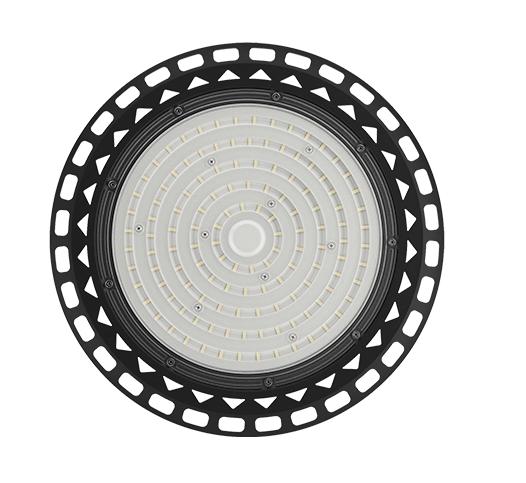
Industrial Dimming UFO High Bay is where “lighting design” becomes “lighting control”—and in factories, that control only works well when the dimming technology matches real conditions like heat, dust, and long operating hours. At Dawn Lighting, we see new buyers focus on wattage first, then discover the hard part later: dimming is a system. It includes the driver, the control signal, the site wiring, and the fixture’s ability to stay stable under stress. In this guide, we explain dimming tech in a practical way and show why IP65 sealing and aluminum heat fins protect dimming performance and output over time.
What Dimming Technology Really Does in Industrial Spaces
Dimming is not just “turning lights down.” In industrial buildings, it is a tool to control energy, comfort, and consistency. Proper dimming reduces glare on reflective floors, prevents over-lighting in low-activity zones, and keeps light levels stable across different shifts. It also helps you maintain a target brightness rather than living with an “all-on, all-the-time” strategy.
For new buyers, the key concept is this: dimming works best when the driver can regulate current smoothly and repeatedly. That smooth regulation depends on clean electronics and stable temperature. If a fixture runs hot or collects contaminants, dimming can become jumpy, uneven, or unreliable. That is why industrial dimming tech must be evaluated together with protection features like IP65 and thermal management.
The Three Most Common Industrial Dimming Methods Explained
Industrial dimming usually comes down to a few control approaches. Each has strengths, limits, and typical use cases.
0–10V Dimming: The Workhorse For Warehouses
0–10V is widely used because it is simple, cost-effective, and compatible with many industrial controls. A low-voltage signal tells the driver how much to dim.
Practical takeaways:
✓ Good for large areas with zone control (aisles, bays, staging areas)
✓ Easy to maintain and expand
✓ Performance depends on wiring quality and signal stability
PWM and “Current Reduction“: Two Ways Drivers Dim LEDs
You will often hear about PWM (Pulse Width Modulation) and current reduction (also called CCR). PWM sets brightness by pulse modulation; current reduction sets brightness by lowering forward current.
Practical takeaways:
✓ Current reduction usually offers better visual comfort
✓ PWM may introduce flicker if not engineered correctly
✓ The driver design is more important than the terminology
Smart Dimming: sensors + schedules + control layers
Smart dimming adds occupancy detection, daylight harvesting, and time-based scheduling. This is where dimming becomes a management strategy, not just a knob.
Practical takeaways:
✓ Best for mixed-use facilities with changing activity
✓ Biggest savings come from “hours reduced,” not tiny dimming percentages
✓ Requires planning: zones, sensor placement, and commissioning
Why Dimming Performance Can Fail Even When the Light “Still Works“
A fixture can still turn on and still be a poor dimming fixture. Many dimming complaints start as “it’s fine,” then shift into operational issues:
✓ Flicker when dimmed low
✓ Uneven brightness between fixtures in the same zone
✓ Dimming delay or sudden steps instead of smooth transitions
✓ Drivers running hotter, leading to early instability
These symptoms are often triggered by environmental stress and heat stress. Dust and moisture can affect connectors and driver electronics. Heat can push components into less stable operating behavior. That is why industrial dimming tech is not only about the control method. It is also about protecting the electronics so the dimming curve stays stable year after year.
How IP65 Protects Dimming Electronics and Control Consistency
An IP65 rating means the fixture is dust-tight and protected against water jets. For dimming tech, that matters because the driver and control connections must remain stable. Contamination does not need to be dramatic to cause problems. Fine dust, humidity, or cleaning moisture can slowly degrade contact quality and insulation performance.
In real factories and warehouses, IP65 helps dimming in a few direct ways:
✓ Keeps dust off driver components that regulate dimming current
✓ Reduces moisture-related corrosion that can introduce instability
✓ Protects cable entry points and sealing interfaces that can become failure points
✓ Maintains consistent performance for low-dim operation, where drivers are more sensitive
Think of IP65 as “keeping the dimming brain clean.” If the driver and its connections remain protected, your dimming control signal stays meaningful and predictable.
How Heat Fins Support Stable Dimming Curves and Output
Dimming is current control, and current control produces heat inside the driver and around the LED board. If heat cannot leave the fixture efficiently, the driver’s behavior can drift and the LED output can become less consistent. Over time, high internal temperatures can shorten component life and increase the chance of dimming instability.
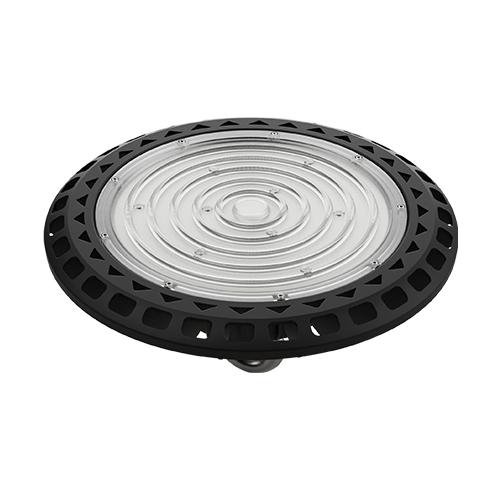
Dawn Lighting’s UFO-style high bay uses an aluminum fin heat dissipation structure designed to increase air contact area. That supports thermal management in high-ceiling spaces where warm air accumulates near the roof. For dimming tech, better thermal control supports:
✓ More stable dimming response across long operating hours
✓ Better consistency between fixtures in the same control zone
✓ Reduced risk of output drop that forces you to “dim less to see more”
✓ Longer driver stability, which is the core of repeatable dimming
In simple terms: heat fins protect the shape of your dimming curve. A stable curve means your 30% setting looks like 30% every day, not 30% today and “who knows” in six months.
A Practical Buying Checklist for Industrial Dimming UFO High Bay Projects
If you are choosing an Industrial Dimming UFO High Bay for a factory, warehouse, or large indoor space, use this checklist to keep the decision grounded in real outcomes.
Start with the dimming plan:
✓ Define zones (aisles vs open floor vs loading) before selecting fixtures
✓ Decide the control style (basic 0–10V zones or smart sensors + schedules)
✓ Confirm your minimum dim level requirement for safety and comfort
Then verify the fixture can support the plan:
✓ Choose IP65 if dust, humidity, or washdown is part of the site reality
✓ Prioritize thermal design (heat fins and housing design) for stable long-term dimming
✓ Look for reliability checks that reduce early failures, such as an 8-hour aging test
✓ Prefer wide voltage tolerance for industrial sites; our input range supports AC90–305Vac
Finally, avoid overbuying with lighting simulation:
✓ Use DIALux to validate spacing, uniformity, and glare control
✓ Use dimming to fine-tune comfort and energy—not to “fix” a poor layout
CTA: If you are planning a dimming upgrade for high-ceiling areas, send Dawn Lighting your ceiling height, layout, and control goal (zones or smart sensors). We will recommend a practical 100–200W UFO high bay configuration and support a DIALux plan so your Industrial Dimming UFO High Bay system delivers smooth dimming, stable output, and measurable energy savings.
- 10 Meters Lamp Post
- 10 Meters Pole
- 1000w Led Projector
- 100W LED Tunnel Light
- 12 Meters Lamp Post
- 12 Meters Pole
- 1200w Led Projector
- 15 Light Pole
- 1500w Led Projector
- 150W LED Tunnel Light
- 1800w Led Projector
- 2 In 1 Solar Flood Light
- 200w Led Tunnel Light
- 50w Led Tunnel Light
- 6 Meters Lamp Post
- 6 Meters Pole
- 8 Meters Lamp Post
- 8 Meters Pole
- 800w Led Projector
- 80w Led Tunnel Light
- Colourful Decorative Light
- Conical post
- Courtyard Lamp
- courtyard light
- courtyard lighting fixture
- Decorative Landscape Light
- Decorative road Light
- Flood Light For Courtyard
- Flood Light for Garden
- Flood Light For Outdoor
- Foot Led High Bay Lights
- high bay led lights 100w
- industrial lampshade
- industrial LED shed lights
- industrial magnifying glass with light
- Integrated Solar Flood Light
- led courtyard lamp
- led courtyard light
- led high bay light 100w
- LED Projector For Stadium
- Led UFO High Bay 150W 5000k
- Lighting Plants Mining Price
- Maintenance Free LED Street Light
- Pic Controlling Tunnel Light
- PLC controlling tunnel light
- Post Top Garden Light
- RGB Landscape Light
- Rgbw Decorative Light
- Smart Tunnel Light
- solar courtyard lamp
- solar courtyard light
- Solar LED Road Light
- Solar Street Light For 10 Meter Pole
- Solar Street Light For 12 Meter Pole
- Solar Street Light For 6 Meter Pole
- Solar Street Light For 8 Meter Pole
- Split Type Solar Flood Light
- Sporting Projector
- Stadium Led Projector
- Street Lighting Post
