
 Request A Quote

Commercial vs. Residential Landscape Lighting: What’s the Difference?
 FACEBOOK
 TWITTER
 LINKEDIN
Lighting is one of the key aspects of outdoor space design. It makes spaces useful and safe, and enhances their beauty. The global landscape lighting market was valued at US$11.6 billion in 2025 and is anticipated to be at US$20.2 billion in 2032. The design, thinking and equipment for commercial and residential lighting vary greatly. Landscape lighting market knowledge is important for property developers and investors when designing and constructing properties.
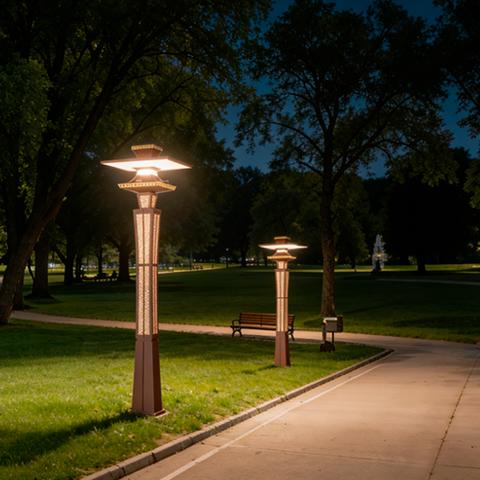
The focus of this guide is on the major differences of commercial and residential landscape lighting, for example the design and scale and the lighting equipment including the durability and standards of the fixtures.
The Core Purpose and Function
The most critical and obvious difference is the core purpose of commercial and residential landscape lighting.
Residential Landscape Lighting is:
•Mainly concerned with aesthetics and the comfort and safety of the residents.
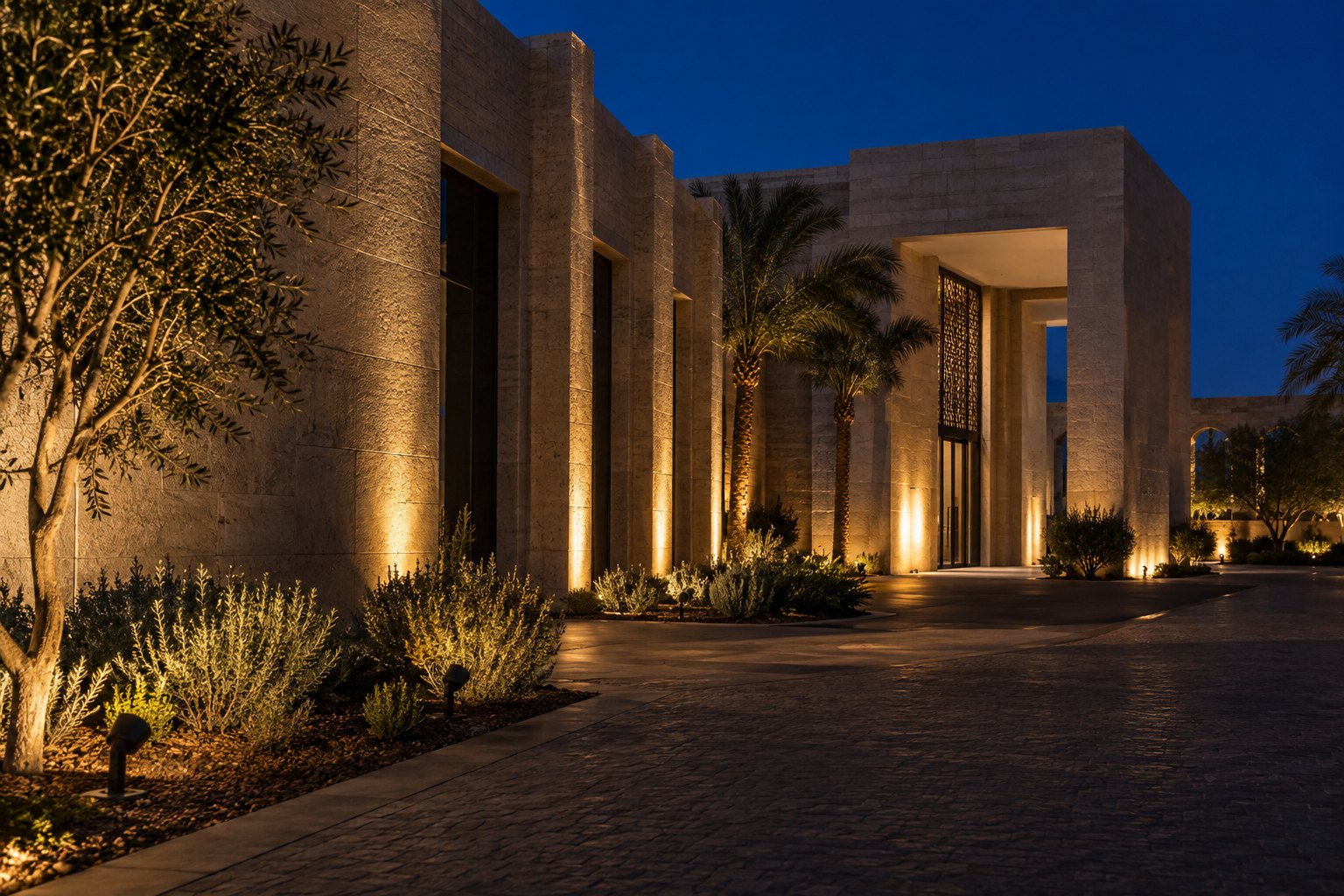
•Used to accent gardens, patios, walkways and the architecture of the residence.
•Mainly used to extend the living space outdoors and produce a warm and inviting atmosphere.
•Personal taste of the resident is reflected along with preferences and priorities.
Commercial Landscape Lighting is used to:
•Provide and prioritize safety and visibility along and across the perimeters of the property.
•Enhance operational functions and publicity of the brand.
•Lighting standards are met and are designed safety and illumination standards that are legislated/mandated.
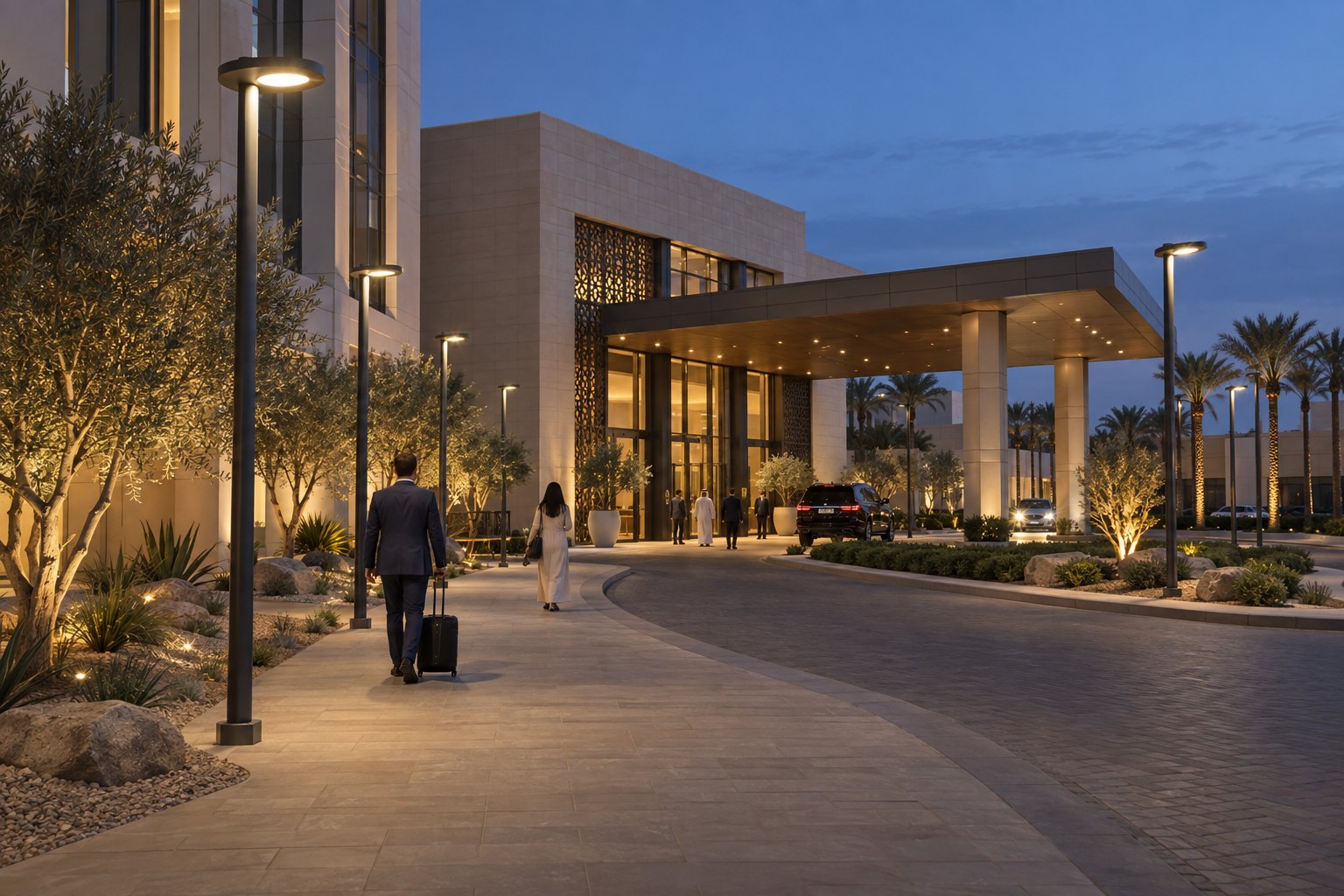
•Commercial Landscape Lighting is used to create a safe and inviting environment for customers, employees and guests, and is designed to be functional lighting infrastructure.
As one industry expert puts it: “Residential lighting is about setting a mood, while commercial lighting ensures a mission.”
Scale and Power Requirements: Size Matters
The scale of landscape lighting projects varies dramatically between residential and commercial settings.
Residential Scale:
•Typical systems range from 100 to 600 total watts.
•A small yard may use 80–150 watts; an average suburban property 150–350 watts; a large luxury landscape 400–600 watts.
•Usually involves dozens of fixtures running on a few transformers.
•LED technology has dramatically reduced per-fixture wattage — today’s LED path lights use only 3–7 watts.
Commercial Scale:
•Often requires several thousand watts distributed across multiple transformers and circuits.
•A small office complex may need 800–1500 watts; a hotel landscape 1500–3500 watts; a corporate campus 3,000–8,000+ watts.
•Can require hundreds or even thousands of fixtures across extensive properties.
•Calls for a complex, high-powered, and well-balanced IT infrastructure.
Brightness and Light Quality: Intensity and Atmosphere
Lumen output and light quality exhibit a striking contrast along a dimension of technical specification.
Residential Lighting:
•Uses low-brightness light sources which create warm, inviting spaces.
•Usually designed to be soft, and work well with other light sources.
•Employs a variety of lighting types (accent, task, and general) in a synergistic manner.
Commercial Lighting:
•Requires, almost without exception, a high level of illumination to light large areas (e.g. parking lots, walkways, the building itself, etc.).
•Illumination needs to be bright to minimize shadows and maximize the visibility of security cameras and to fulfill the lighting requirements of safety in the workplace.
•Uses area lighting, floodlighting, and wall mounted lighting to achieve a high level of illuminative coverage.
Design Philosophy: Personal vs. Public
The design approach displays an almost complete contrast in the philosophy of the two.
Residential Design:
•Highly personal and intimate.
•Homeowners may choose diffused accent lighting to selected plants or a specific detail of the building.
•Garden landscape lighting may create outdoor areas that serve a retreat for family and guests.
Commercial Design:
•Lighting must be highly functional and serve a specific purpose.
•Balancing aesthetics and lighting design may be controlled and programmed to optimize energy consumption.
•Architectural landscape lighting of a building’s exterior serves a large part of the building’s branding.
•Commercial designers have the added responsibility of eliminating a public liability. All areas must meet safety requirements.
Fixture Specifications and Durability: Built for Varying Demands
Hardware in residential and commercial environments are designed for different settings and usage patterns.
Residential-Grade Fixtures:
•Designed primarily with aesthetics in mind.
•Often utilize low-voltage systems which pose less risk for electrical concerns.
•Typically are sufficient for use during the evenings and exposure to moderate weather.
•May incorporate decorative materials and finishes that value aesthetics.
Commercial-Grade Fixtures:
•Designed for use that is continuous and would be considered heavy-duty.
•Require IP65 or higher ratings if the fixture is exposed.
•Must be able to endure harsh environmental conditions including dust, rain, pollution and extreme temperatures.
•Finished in materials that are tough, such as galvanized steel, to eliminate rust and corrosion.
Are designed to endure longer with commercial fixtures frequently having a 50,000 hour lifespan and longer warranty periods.
Installation and Maintenance: Professional Services
There is a noticeable difference in the complexity of installation and maintenance.
Residential:
•Maintenance is often straightforward requiring only that the fixtures are checked (often unobstructed and bulbs are functioning).
•Local landscape lighting professionals are frequently relied upon for consultation and installation.
Commercial:
•Lighting Systems of these Environments are designed to be especially complex and require professional lighting designers and contractors that are especially skillful.
•Must adhere to an array of requirements including laws and codes that govern lighting and electrical systems of the outdoors.
•Maintenance is continually necessary and is a concern due to the potential liabilities that are created from system failures.
•Commercial lighting systems are also frequently more complex lighting systems, with programmable controls that execute fixtures and/or circuits based on time-of-day or occupancy sensors.
Bridging the Gap: Versatile Solutions for Both Worlds
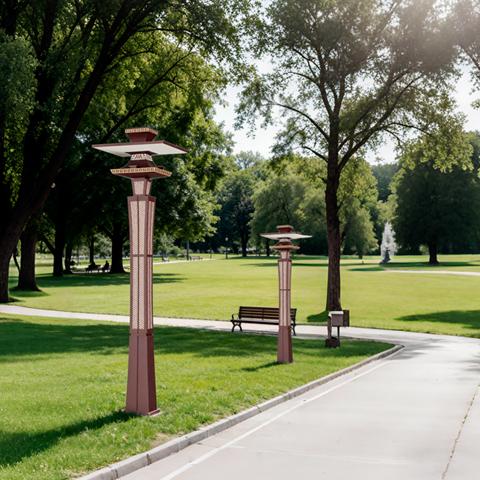
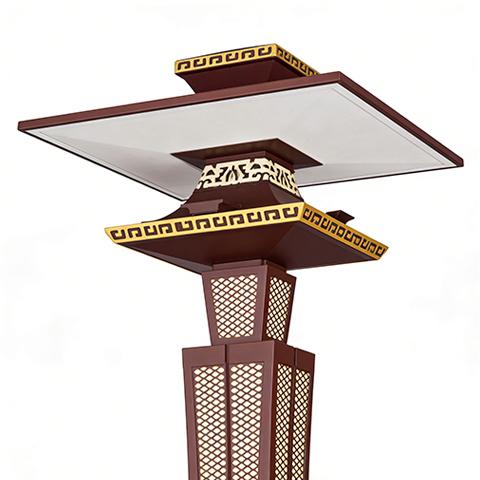
While there are differences in residential and commercial landscape lighting, some fixtures bridge the gap between the two. Dawn Lighting‘s DL01-A03A03-001 illustrates this point:
•Adjustable height (3 m-5 m): Allows for use in smaller areas, like 3 m tall in a garden, yet can be 5 m tall in a wide commercial plaza.
•30W LED with 120 lm/W: Keeps energy costs low with a high return illumination, making this fixture useful for both residential and commercial needs.
•Anti-glare, acrylic lampshade: This feature allows the DL01 to create safe, diffused illumination for all eye-level viewing in a pedestrian space, making it useful in both settings.
•Galvanized steel with an IP65: Rating assures protection from heavy rain and dust and the temperature range from -20°C and 60°C, meaning it meets commercial protection standards and looks good doing it.
•Color temp of 3000K-6000K: 3000K lighting results in a warmer light that is suitable for residential and hospitality settings. In business environments, lighting should be cool, crisp and clear.
•50,000 hours and 3-5 year warranty: This long life product is ideal for the commercial market.
Conclusion: Pick What Works Best for You
It is important to understand the details of the project to determine the best commercial or residential landscape lighting:
When it comes to residential homes, lighting is about the aesthetics, personal tastes, as well as the comfort. It elevates the home’s attractiveness too.
For businesses and other public areas, lighting is about: safety, utility, brand representation and promotion, and good durability. Commercial area lighting needs to serve as durable and dependable infrastructure.
Using residential grade lighting in a commercial setting is a safety hazard because of how fast it will breakdown. On the other hand, commercial-grade fixtures can look stark and industrial in a home setting. Having the right landscape lighting solution can change the experience, space, and even the feeling, whether the solution is commercial or residential.
For projects that require a perfect blend of aesthetic appeal and commercial-grade durability, a good example is the DL01-A03A03-001 product by Dawn Lighting. Solutions like this one offer a great cross over between the two domains.
FAQs
Q1. How do commercial and residential landscape lighting differ?
Safety and durability dominate commercial lighting, while residential lighting emphasizes comfort and aesthetics.
Q2. How do I choose good outdoor landscape lights?
Look for IP ratings of IP65 and higher for lights that are fully dust-tight and safe from low-pressure water jets.
Q3. How do commercial and residential landscape lighting differ in lumen output?
Commercial landscape lighting has a higher lumen output, while residential lighting has a lower output to remain subtle.
Q4. Why is anti-glare necessary in landscape lighting?
Diffusers with anti-glare offer eye comfort and even illumination.
Q5. What is the best pole height for a villa garden?
Residential settings are best with landscape poles of 3 meters, while wider enough settings require 4-5 meter poles.
- 10 Meters Lamp Post
- 10 Meters Pole
- 1000w Led Projector
- 100W LED Tunnel Light
- 12 Meters Lamp Post
- 12 Meters Pole
- 1200w Led Projector
- 15 Light Pole
- 1500w Led Projector
- 150W LED Tunnel Light
- 1800w Led Projector
- 2 In 1 Solar Flood Light
- 200w Led Tunnel Light
- 50w Led Tunnel Light
- 6 Meters Lamp Post
- 6 Meters Pole
- 8 Meters Lamp Post
- 8 Meters Pole
- 800w Led Projector
- 80w Led Tunnel Light
- Colourful Decorative Light
- Conical post
- Courtyard Lamp
- courtyard light
- courtyard lighting fixture
- Decorative Landscape Light
- Decorative road Light
- Flood Light For Courtyard
- Flood Light for Garden
- Flood Light For Outdoor
- Foot Led High Bay Lights
- high bay led lights 100w
- industrial lampshade
- industrial LED shed lights
- industrial magnifying glass with light
- Integrated Solar Flood Light
- led courtyard lamp
- led courtyard light
- led high bay light 100w
- LED Projector For Stadium
- Led UFO High Bay 150W 5000k
- Lighting Plants Mining Price
- Maintenance Free LED Street Light
- Pic Controlling Tunnel Light
- PLC controlling tunnel light
- Post Top Garden Light
- RGB Landscape Light
- Rgbw Decorative Light
- Smart Tunnel Light
- solar courtyard lamp
- solar courtyard light
- Solar LED Road Light
- Solar Street Light For 10 Meter Pole
- Solar Street Light For 12 Meter Pole
- Solar Street Light For 6 Meter Pole
- Solar Street Light For 8 Meter Pole
- Split Type Solar Flood Light
- Sporting Projector
- Stadium Led Projector
- Street Lighting Post
