
 Request A Quote

outdoor garden lighting ideas
 FACEBOOK
 TWITTER
 LINKEDIN
Outdoor landscape lighting can make a big difference in the appearance, security and usability of your property. A well-lit outdoor area can accentuate architectural features, display gardens, provide security, and be an inviting outdoor living space that can be enjoyed well after dark.
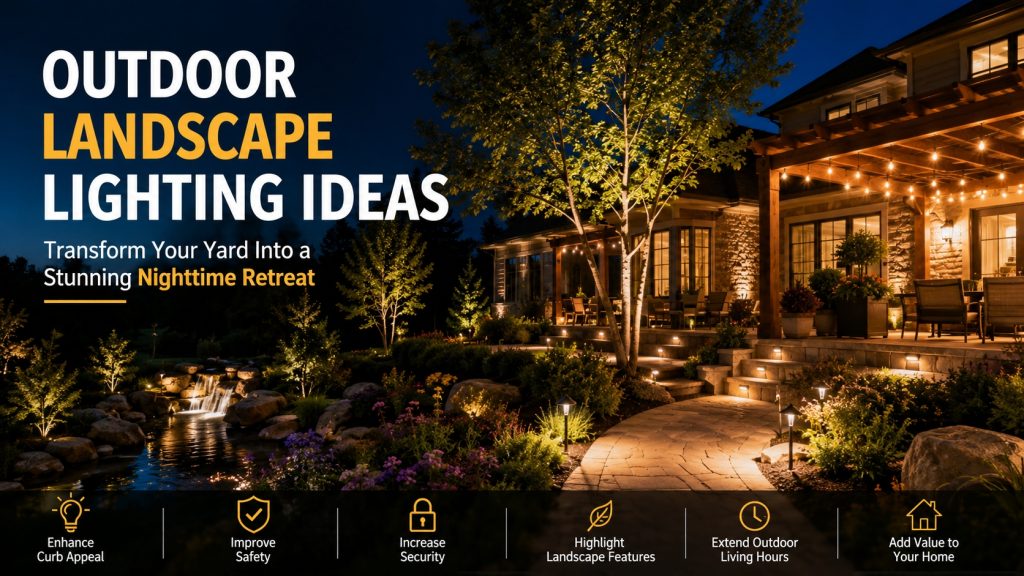
From a modest backyard to a huge garden or a contemporary outdoor entertaining space, the right exterior lighting design can make all the difference in your home’s appearance. This guide will discuss some creative ideas using outdoor landscaping lighting that are both functional and beautiful.
Why Landscape Lighting Matters
A lot of people spend a lot of money on their landscaping but fail to think about their property in the evening. There are a number of significant advantages to good landscape lighting:
- Improves curb appeal
- Enhances outdoor safety
- Increases home security
- Highlights landscape features
- Extends outdoor living hours
- Adds value to your property
With high tech LED technology and smart lighting systems, it is more convenient than ever to design professional outdoor lighting, while conserving power usage. The best lighting is layered lighting which uses ambient, task and accent lighting together.
1. Illuminate Walkways With Path Lights
Path lighting continues to be one of the most popular types of landscape lighting. Path lights can be used to create a welcoming feel by providing safe navigation.
Best achieved when:
- Space fixtures evenly along walkways
- Use warm white LED bulbs
- Avoid placing lights directly across from each other
- Choose low-profile fixtures for a modern appearance
Path lights work exceptionally well along garden paths, driveways, and front walkways.
2. Highlight Trees With Uplighting
Tree uplighting produces dramatic effect and adds dimension to landscapes.
Put spotlights at the foot of trees and to illuminate them at an upwards angle:
- Trunk texture
- Branch structure
- Canopy shape
- Seasonal foliage
When these are uplighted, they can be a big focal point with large oak, maple and ornamental trees. This is a technique that is widely used in professional landscape lighting designs since it produces an impressive architecture within the garden at night.
3. Create a Moonlighting Effect
When it comes to lighting, moonlighting is an elegant effect that replicates natural moonlight.
Fixtures are placed above in the older trees and angled downward to allow soft shadows to fall through the branches. The result is a soft and natural light that creates a calm environment.
Moonlighting is a good way of working for:
- Large lawns
- Garden seating areas
- Outdoor dining spaces
- Walking paths
The effect is luxurious but not too shiny for the landscape.
4. Add Warmth With String Lights
Patio strings, pergola strings, and outdoor gathering string lights are still popular strings to use for patios and outdoor spaces.
Benefits include:
- Affordable installation
- Flexible placement options
- Soft ambient lighting
- Decorative appeal
Hang string lights above:
- Outdoor dining areas
- Decks
- Pergolas
- Courtyards
- Poolside lounges
The warm glow instantly creates a cozy atmosphere ideal for entertaining guests or relaxing with family.
5. Install Step and Stair Lighting
Outdoor Lighting Safety is Always a Priority.
Recessed step lights offer a gentle light for a contemporary architectural style, decreasing the chances of falls and trips.
Ideal locations include:
- Deck stairs
- Stone stairways
- Retaining walls
- Multi-level patios
Choose fixtures that direct light downward to minimize glare while maximizing visibility.
6. Accent Architectural Features
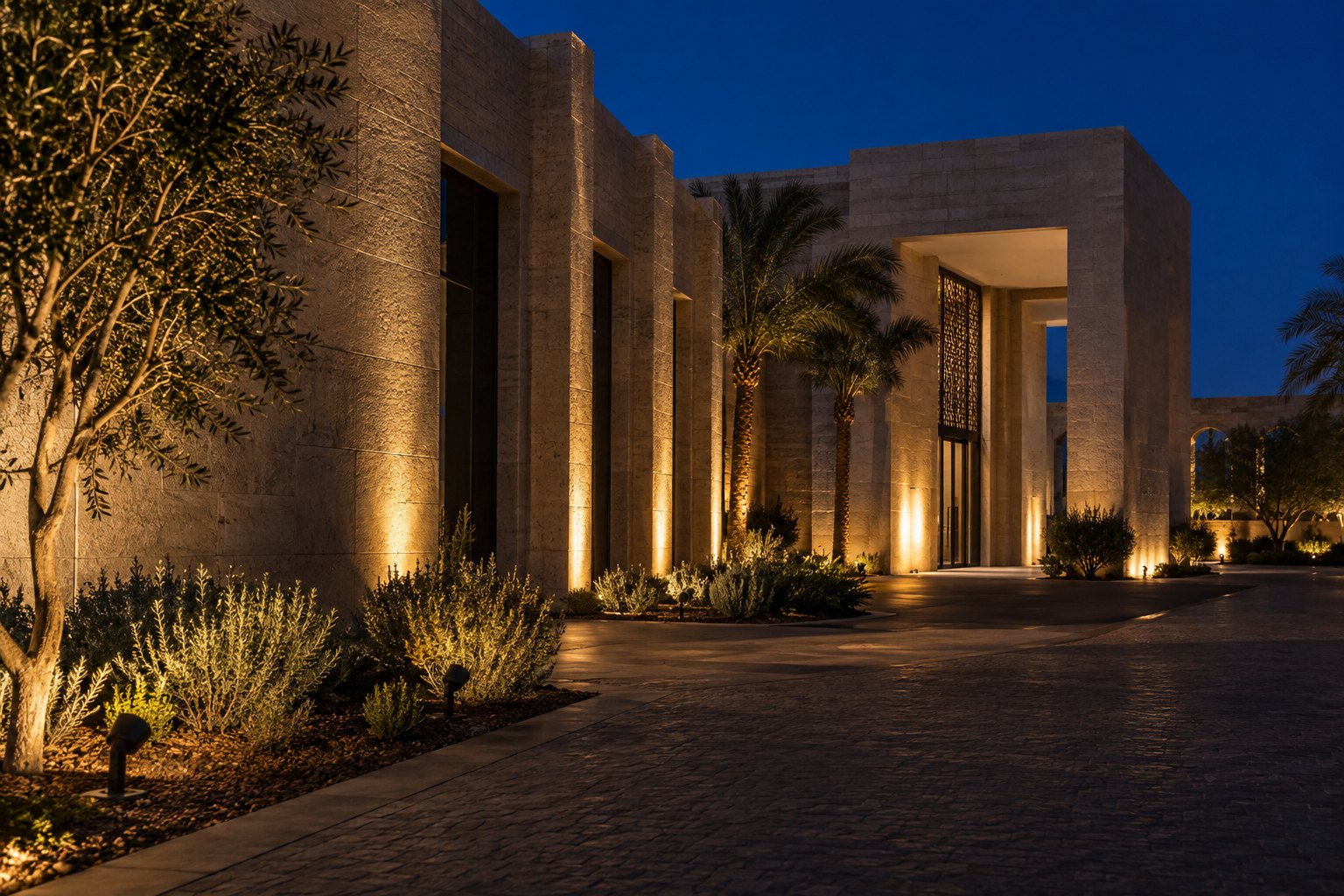
Landscape lighting doesn’t have to be confined to plants and pathways. The beauty of architectural lighting is that it can make a night difference in the way an architectural building looks like.
Consider highlighting:
- Stone facades
- Columns
- Entryways
- Arches
- Decorative walls
Directional spotlights and wall wash lights enhance the texture and add interest after dark. Combining architectural lighting into landscape lighting makes for a well-balanced and professional look.
7. Showcase Garden Beds
Ornamental plantings and plant beds are also places to consider at night!
Spotlights or mini accent lighting to light:
- Colorful flowers
- Decorative shrubs
- Ornamental grasses
- Sculptures
- Water features
Strategic garden lighting adds depth and draws attention to focal points that can be lost after dark.
8. Illuminate Water Features
Ponds, fountains, waterfalls and pools are transformed into magnificent features when lit up.
Popular techniques include:
- Underwater lighting
- Edge lighting
- Accent spotlights
- Reflection lighting
Water naturally reflects light, creating movement and visual drama that enhances the overall landscape experience.
9. Incorporate Deck and Patio Lighting
Outdoor space lighting that is functional and helps support evening activities.
Some of the most popular deck lighting options include:
- Recessed floor lights
- Under-rail LED strips
- Post cap lights
- Wall-mounted fixtures
The aim is to achieve comfortable illumination, but without causing a glare problem.
Ambient and task lighting can be combined to make an outdoor kitchen, dining area and lounge space more functional all evening long.
10. Use Smart Landscape Lighting Systems
Technology has transformed outdoor lighting.
Today’s smart systems offer features such as:
- Smartphone control
- Automated schedules
- Motion sensors
- Brightness adjustment
- Voice assistant integration
Smart controls enhance convenience, energy efficiency and offer homeowners the ability to create various lighting scenes for different uses. Smart LED is becoming a big trend in today’s modern outdoor lighting design.
Best Practices for Landscape Lighting Design
To achieve professional-looking results, follow these principles:
Layer Your Lighting
Combine three lighting types:
- Ambient lighting for overall illumination
- Task lighting for functional areas
- Accent lighting for focal points
Layering creates depth and visual balance.
Choose Warm Color Temperatures
The general consensus of most landscape professionals is to use LEDs ranging from 2700K to 3000K.
Warm light brings out the best in natural materials, greenery and architectural texture, and makes for a pleasant ambiance.
Avoid Overlighting
Higher light doesn’t always mean a better design.
Brightness can cause glare, discomfort to the eyes, and diminish a landscape lighting’s dramatic effect.
Focus on Key Features
Rather than illuminating everything, highlight your property’s most important elements:
- Signature trees
- Entryways
- Water features
- Outdoor living areas
- Architectural details
This approach produces a cleaner, more sophisticated appearance.
Conclusion
Any outdoor landscape lighting is an investment that increases beauty, safety and functionality. Whether you are looking for a sophisticated path light, dramatic tree light up, warm string lights or advanced smart systems, the possibilities are endless to lit up your property after dark.
Best designs incorporate several lighting methods for depth, balance, and interest. With careful choice of fixtures and correct placements in your garden, you can have a beautiful landscape that is just as beautiful at nighttime as it is in the daytime.
The right landscape lighting scheme can transform the entire outdoor experience, whether you’re looking to upgrade your backyard, enhance your home’s curb appeal or design a welcoming space for outdoor entertaining.
- 10 Meters Lamp Post
- 10 Meters Pole
- 1000w Led Projector
- 100W LED Tunnel Light
- 12 Meters Lamp Post
- 12 Meters Pole
- 1200w Led Projector
- 15 Light Pole
- 1500w Led Projector
- 150W LED Tunnel Light
- 1800w Led Projector
- 2 In 1 Solar Flood Light
- 200w Led Tunnel Light
- 50w Led Tunnel Light
- 6 Meters Lamp Post
- 6 Meters Pole
- 8 Meters Lamp Post
- 8 Meters Pole
- 800w Led Projector
- 80w Led Tunnel Light
- Colourful Decorative Light
- Conical post
- Courtyard Lamp
- courtyard light
- courtyard lighting fixture
- Decorative Landscape Light
- Decorative road Light
- Flood Light For Courtyard
- Flood Light for Garden
- Flood Light For Outdoor
- Foot Led High Bay Lights
- high bay led lights 100w
- industrial lampshade
- industrial LED shed lights
- industrial magnifying glass with light
- Integrated Solar Flood Light
- led courtyard lamp
- led courtyard light
- led high bay light 100w
- LED Projector For Stadium
- Led UFO High Bay 150W 5000k
- Lighting Plants Mining Price
- Maintenance Free LED Street Light
- Pic Controlling Tunnel Light
- PLC controlling tunnel light
- Post Top Garden Light
- RGB Landscape Light
- Rgbw Decorative Light
- Smart Tunnel Light
- solar courtyard lamp
- solar courtyard light
- Solar LED Road Light
- Solar Street Light For 10 Meter Pole
- Solar Street Light For 12 Meter Pole
- Solar Street Light For 6 Meter Pole
- Solar Street Light For 8 Meter Pole
- Split Type Solar Flood Light
- Sporting Projector
- Stadium Led Projector
- Street Lighting Post
