
 Request A Quote

How Does a Self-Cleaning LED Solar Street Light Work? – A Deep Dive into the Automatic Cleaning System
 FACEBOOK
 TWITTER
 LINKEDIN
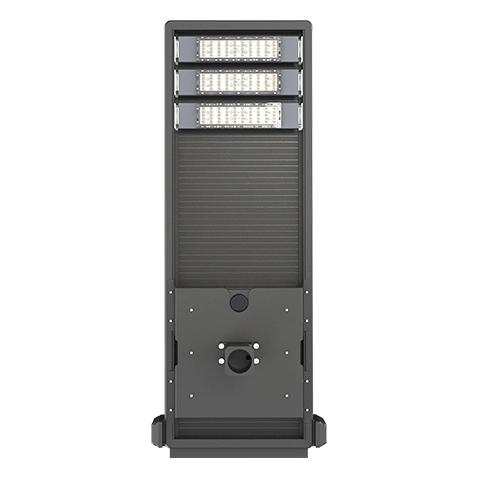
Street lamps harnessing LED lights and solar energy can easily become dirty due to dust and bird droppings. This can cause a decrease in energy output by as much as 30% and can obstruct 55% of the sunlight. Dawn Lighting has designed the self-cleaning solar street lamp which has a sweeper feature that activates daily to clean the solar panels. This ensures the solar panels are kept clean and maintained. However, this system is more than just a sweeper. It has a design and a logic control system that we will examine now.
Why Cleaning Solar Panels is Important
Before we can begin to see how this system operates, we also need to understand the impact that soiled solar panels can create. Naturally, solar panels are always exposed to the outside and various forms of environmental conditions can lead to a buildup of blockage on a glass surface. Here are examples of what that blockage can be and how it can affect a solar panel’s efficiency:
•Dust and dirt are physically blocking and scattering sunlight from reaching the solar cells. When dust and dirt build up to 10 g/m², it reduces the panel’s output by 15% to 34%.
•Bird droppings not only block and reduce light transmission. They can also cause “hot spots” which can permanently damage the solar cells. With bird droppings present, a module’s efficiency drops to 15% at most.
•Pollen and other organic matter create a sticky surface film on the solar panels that can block light and trap other debris.
•In a coastal environment, deposits from sea spray along with salt can be damaging to the solar panels.
Standard solar street lamps require manual cleaning, and are difficult to maintain on a large-scale or remote setup. This self-cleaning technology was developed to address this major operational problem.
Main Parts That Make Up A Self-Cleaning System
There are many parts that make up a self cleaning solar street light that help to fully automate the cleaning process.
1. The Cleaning Mechanism (There are many ways to clean)
Generally, there are three ways that a self cleaning solar panel can be physically cleaned:
•A rotating brush system includes a small, soft, motor-driven brush that traverses the panel surface at designated time intervals to remove debris. To prevent the contaminating material (that is usually soft) from scratching the glass surface, contaminating materials are often constructed from ultrafine fiber or other soft materials like silicone.
•A wiper system uses a mechanism similar to that of automotive windshield wipers to remove dust, bird droppings, or any other debris that settles on the surface.
•Some designs include small motors that can be caused to vibrate or air jets introduced into the system to dislodge contaminating materials that settle on the surface of the panel.
2. The Drive Motor
The cleaning mechanism is driven by a small, low-power, energy-efficient DC motor. The motor is often designed to dissipate energy in the form of heat. The motor can be designed in terms of (and not limited to) the length of the shaft, the shape of the shaft, the speed at which the motor operates, and its working voltage.
3. The Control Unit (Microcontroller)
The control unit of the system is often a microcontroller. It governs the operation of the system and controls the movement of the drive motor. The control unit can be set to a cleaning schedule prior to the actual time of cleaning or can be activated to a cleaning schedule based on other sensors that are in real time.
4. Sensors for Smart Activating
Getting the most out of automated cleaning systems calls for the use of advanced technologies. This category consists of:
•PT and RTC timers: Set up time specific cleaning activities (e.g., during sunrise/sunset).
•Dust sensors: Sense dust or dirt covering the panel.
•Irradiance or power sensors: Reduce the output of solar panels. Cleaning cycle will be shifted when output drop is observed.
•Rain sensors: Cleaning cycle will be initiated to take advantage of the rain helping with the cleaning process.
5. Power Supply
The battery that is meant for storing of solar energy. It powers the cleaning system which allows this system to work in remote areas since there is no need for external power supply.
How the Self-Cleaning System Works
The operation logic looks like the following list:
Step 1: Detection or Timer Activation
The system decides when to clean using one of the following methods:
•A set schedule (for example: the system self-cleans every day at 6:00 AM).
•Sensor-active cleaning when the dust level is above a set limit or when the output of the panel is below a set limit.
•Rain sensors detect when it is raining.
Step 2: Motor Activation
Cleansing the command signals the system to send a message to a drive motor. The motor then shifts the cleaning device toward the solar panel.
Step 3: Physical Cleaning
The cleaning device collects dust and debris off of the solar panel by brushing it. The cleaning device is cleaned afterwards by assisted-rain cleaning.
Step 4: Completion and Reset
The motor halts when the cleaning device reaches its end position for the cleaning cycle. The system is prepared for the next scheduled cleaning or can be set to clean in response to a sensor signal.
Intelligent Trigger Mechanisms: Beyond Simple Timers
The self-cleaning systems that are less expensive tend to rely more on simple timers. Those that are a bit more costly tend to incorporate more sophisticated trigger mechanisms that include:
•Timer activated cleaning: This method, used the most frequently and widely, is the simplest and most effective. The cleaning devise could be set to clean at a certain time, such as once a day, but could also be set to clean too often, or clean when there is too little dirt on the solar panel to justify cleaning.
•Sensor activated cleaning: The system cleans itself when the output goes beyond a specified limit.
•Rain-activated cleaning: A sensor is used to detect the presence of precipitation. Cleaning during rain is also ideal, as it takes little work to accomplish cleaning, and is not a waste of resources.
•Dusty environment: Daily scheduled + on-demand methods are utilized to a greater extent to improve cleaning efficiency.
•In rainy areas: Rain initiated “wet wiping” is employed to optimize cleaning and avoid scratching.
•In high-altitude with condensation: Low-speed, low-torque is used in “wiping mode” after sunrise to clear dust and dew.
Design Considerations: Self-Shading Constraint
Self-shading is the most important design obstacle for self-cleaning solar street lights. The cleaning apparatus can block sunlight to the solar panels, which can decrease the charging rate.
Dawn Lighting solves this with its auto open-close cleaning design. When not actively cleaning, the cleaning design moves to a location that does not shade the solar panels. This lets the cleaning design not interfere with the safeguarding of solar panel energy.
The bilateral (dual) solar panel setup increases energy collection even more. By capturing light from multiple solar apparatuses, the system is up to 20% more efficient and offsets the minor impacts of shading from the cleaning design.
Dawn Lighting‘s Implementation: An Analysis
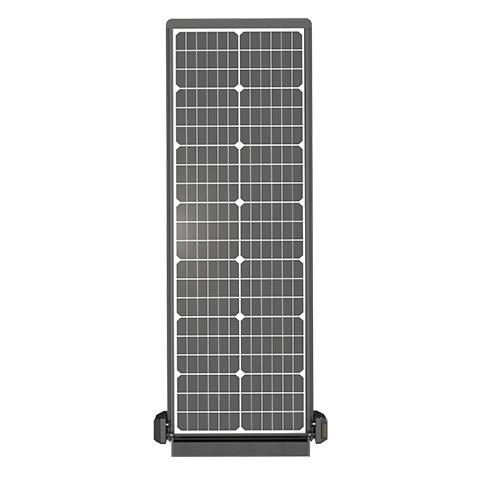
Dawn Lighting‘s “Clean The Solar Panels All In One Solar Street Light“ demonstrates what a perfect combination of self-cleaning and advanced LED lighting looks like. Some attributes of this implementation are:
•Self PV sweeper: An automated mechanism that daily cleans the panels.
•Bilateral solar panels: A dual panel structure that increases the efficiency of the charge by 20% by capturing sunlight coming from multiple directions.
•Auto open-close cleaning system: The cleaning mechanism self-retracts to prevent self-shading
•Built-in rain Sensor: Keeps the panels clean by doing the work of daily maintenance when it rains.
•High-Lumen Brand LEDs: Gives more than 190 lm/W and thus gives a better and stronger light.
•100W Nominal Power with 21,600lm: Provides bright and sufficient light to Roads, Parks, and all the Public Places.
•140W PV Peak Power: Offers enough charge potential to do the work of lighting and cleaning.
•10 Years Designed Lifespan: Built with an aluminum die-casting construction for long durability.
Self-Cleaning Solar Street Lights: A Boon
This new automatic cleaning technology gives a lot of benefits:
•Solar efficiency is always optimum: This is the main goal of this technology. In urban areas with high dust and in other industries, the lack of cleaning can be compensated by this automatic cleaning technology.
•Lower maintenance costs : Large systems that are hard to access make cleaning them a big commitment of time and money. Our system reduces the need for regular maintenance and cuts down costs.
•Constant light: Uniformity of light is maintained through the continual cleaning of the panels.
•Improved system longevity: The balance of energy and proper charging scheme helps safeguard the LEDs and batteries within the system, improving the longevity of the entire lighting system.
•Eco-friendly use: Continuous use of only solar energy and a lack of chemicals or water used for cleaning fosters assurance of eco-friendly industrial development in urban areas.
Final Thoughts
Dirt and dust on the solar panels are a significant loss issue for most photovoltaic street lights, and Dawn Lighting’s design helps solve this problem with smart sensors, a robust motor-driven cleaning brush, and an automatic open-close system to eliminate self-shading. This design results in a fully autonomous LED lamp and is very reliable, even in the most dusty and harsh coastal or variable environments. Also like in the case of innovation in solar heating technology, the likelihood is that, in time, a self cleaning system will be the standard for solar panels to ensure that they remain clean and therefore perform optimally throughout their service lifetime.
FAQs
Q1: How is the cleaning mechanism activated?
A: There are several built-in features that automate cleaning. These include a dust/irradiance sensor, a programmable timer, and a rain sensor.
Q2: Does cleaning the panels use up a lot of battery power?
A: Not at all. The panels use a really low power motor. The amount of energy drawn is significantly less than the amount gained by keeping the panels clean.
Q3: Will the cleaning mechanism shade the solar panels?
A: No. The design of the mechanism automatically retracts the cleaning device to avoid self-shading.
Q4: How does the system perform in rainy weather?
A: The rain sensor will activate cleaning during rain. In this case, the panels will be cleaned using the rain water rather than the device expending its own water.
Q5: Does this technology work in extremely dusty or coastal areas?
A: Yes. The sensor-based adaptive cleaning along with the rugged design are perfect for use in dusty, desert or coastal environments.


- 10 Meters Lamp Post
- 10 Meters Pole
- 1000w Led Projector
- 100W LED Tunnel Light
- 12 Meters Lamp Post
- 12 Meters Pole
- 1200w Led Projector
- 15 Light Pole
- 1500w Led Projector
- 150W LED Tunnel Light
- 1800w Led Projector
- 2 In 1 Solar Flood Light
- 200w Led Tunnel Light
- 50w Led Tunnel Light
- 6 Meters Lamp Post
- 6 Meters Pole
- 8 Meters Lamp Post
- 8 Meters Pole
- 800w Led Projector
- 80w Led Tunnel Light
- Colourful Decorative Light
- Conical post
- Courtyard Lamp
- courtyard light
- courtyard lighting fixture
- Decorative Landscape Light
- Decorative road Light
- Flood Light For Courtyard
- Flood Light for Garden
- Flood Light For Outdoor
- Foot Led High Bay Lights
- high bay led lights 100w
- industrial lampshade
- industrial LED shed lights
- industrial magnifying glass with light
- Integrated Solar Flood Light
- led courtyard lamp
- led courtyard light
- led high bay light 100w
- LED Projector For Stadium
- Led UFO High Bay 150W 5000k
- Lighting Plants Mining Price
- Maintenance Free LED Street Light
- Pic Controlling Tunnel Light
- PLC controlling tunnel light
- Post Top Garden Light
- RGB Landscape Light
- Rgbw Decorative Light
- Smart Tunnel Light
- solar courtyard lamp
- solar courtyard light
- Solar LED Road Light
- Solar Street Light For 10 Meter Pole
- Solar Street Light For 12 Meter Pole
- Solar Street Light For 6 Meter Pole
- Solar Street Light For 8 Meter Pole
- Split Type Solar Flood Light
- Sporting Projector
- Stadium Led Projector
- Street Lighting Post
