
 Request A Quote

The 5 Golden Rules of Landscape Flood Lights Design
 FACEBOOK
 TWITTER
 LINKEDIN
Landscape lighting uses art, science and ingenuity. Floodlights can transform spaces, and in some cases, can make perception-altering experiences. The Illuminating Engineering Society (IES) describes five principles in creating responsible illumination. Here, I will examine the five principles and show how the engineering in the Dawn Lighting DL01-A07A10-002 100W LED floodlights adheres to the IES principles.
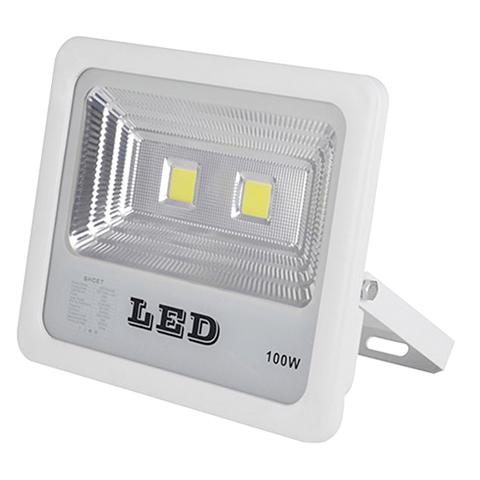
Golden Rule 1: Useful — Every Source Must Have a Purpose
Usefulness is the most basic consideration in landscape illumination design. Every illumination application must have a rationale. If a space does not have a purpose of being lit, it should not be. Waste illumination can disrupt the experience of both of the users of the space and the surrounding eco-systems.
How Professional Landscape Flood Lights Adhere to This Rule:
•Purpose-driven illumination: The design of the DL01-A07A10-002 is such that it can be used to illuminate sports courts, billboards along a highway, and the borders of an industrial space, to name a few examples.
•Targeted, high efficiency illumination: The illumination carried by the flood light is designed to be maximally efficient, with a 100W consumption limit and COB technology.
•Functional mounting: The design of the mounting bracket is such that, by changing the position where it can be mounted (able to be mounted on a wall, a ceiling, or the floor), the flood light can be positioned to shine illumination where it is most necessary.
•Thoughtful designers ask: “Does this light serve a safety function, highlight a landscape feature, or enable a specific activity?” If the answer is no, the fixture should not be installed.
Golden Rule 2: Targeted – Light Only Where It Is Needed
The second principle emphasizes precision. When lighting outside areas, it is necessary to aim light only where needed. Light can easily spill outside the desired area and create unwanted light, otherwise known as “light trespass.”
How our Professional Landscape Flood Lights accomplish this:
•Center-beam punch: With Epistar COB (Chip-on-Board) technology, we can offer customers a uniform beam with a high level of intensity with a long-range. Because of this, light can be concentrated on a flood target.
•Control scatter: Those who use SMD light arrays that scatter light are at a disadvantage. COB technology allows for illumination to be scattered as needed.
•Fully shielded: Our technology is waterproof and sealed due to a tempered glass face. Because of this, we can control the light in only the desired area.
•Adjustable: Our customers are able to precisely aim the light beams to align their edges with our technology.
Fully shielded fixtures that aim light below the horizontal plane help prevent light pollution. This is especially important in residential areas where light trespass can affect neighbors.
Golden Rule 3: Low Light Levels – No Brighter than Necessary
Too harsh of lighting can create a disorienting glare that ultimately leads to a lack of safety and a low aesthetic pleasantness. Because of this, lighting in outdoor areas should be kept to a minimum.
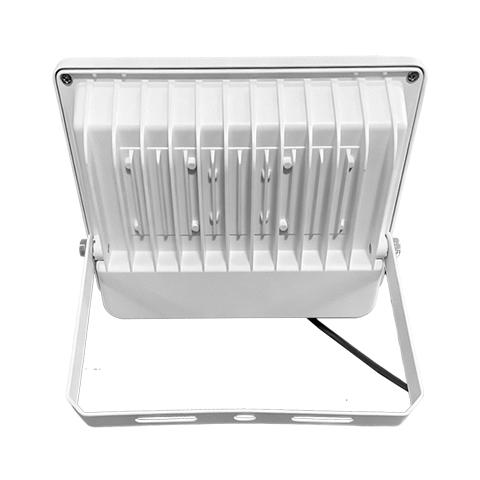
How do professional Landscape Flood Lights support this principle?
•Luminous efficacy options: The DL01-A07A10-002 has two choices for efficacy at 80-85 LM/W and 90-100 LM/W, giving designers the flexibility to select the best brightness for the application.
•Efficient light output: 100W LED provides the needed uplighting and can easily replace 300W floodlights, providing the same effect at 100W less light.
•Adjustable wattage configurations: Changes to wattage can be used to adjust brightness, helping designers avoid the danger of over-lighting.
•Reduced light pollution: With the use of landscape flood lights at the correct lumen output, designers can reduce sky glow and maintain the dark at night.
When considering the principle of “lowest light level”, surface reflectivity must also be factored. Dark surfaces typically absorb light and may require a somewhat higher output, while light surfaces may need less lighting.
Golden Rule 4: Controlled – Lighting Only When Useful
This principle relates to the control systems in place. Lighting should only be utilized when it is actually beneficial. There are many ways to control lighting intentionally, the most common being turning fixtures on and off. Time-controlled outdoor lighting actively reduces disturbances to the surrounding community and conserves energy.
How Professional Landscape Flood Lights Support This Principle:
•Reliability through Surge Protection: 10KV Surge Protection Devices (SPD) ensure that professional landscape flood lights don’t catastrophically fail when there is a lightning strike or a surge in the grid and are therefore always available when needed.
•Tier-1 Driver Integration: Professional landscape flood lights support control systems with stable, controlled operation and reduced risk of failure due to the mean well or Inventronics Tier-1 drivers.
•Long Lifespan: With a 50,000 hour lifespan and a 3-5 year warranty, these fixtures are a dependable source of illumination.
•Dusk to Dawn Ready: Automatic on/off operation is also possible with the addition of a photocell sensor.
Effective control systems then also mean that lighting, especially safety and security lighting, is designed to turn on when motion is detected and turn off after a set time has elapsed. Timers can also be used to turn lighting off during peak no-wildlife activity hours of the night.
Golden Rule 5: Color – Use Warmer Color Temperatures When Possible
This principle is about control of Color Temperature. Control and consideration of the Color Temperature of lighting are crucial because it has significant impacts on the health of both the community and the ecosystems we support. The use of warmer color temperatures, which range between 2700K – 3000K, help in avoiding or limiting the impacts on the community and the ecosystems we support.
How professional Landscape Flood Lights exhibit this principle:
•Warm Color Temperature Choices: Professional landscape flood lights offer options in 2700K-3000K range. This temperature is excellent for residential landscape lighting and is very complementary to wood, stone, and all types of plant material.
•CRI for True to Life Color: These fixtures have a 70 Ra (and there are options higher) and help landscape colors look real and accurate. For specific areas such as a gathering or event space, 90+ CRI is recommended.
•Less Blue Light: Lights with a warm color temperature have a diminised blue light which is known to disrupt circadian rhythms, affect bird navigation, and draw insects away from their habitat.
•Professional Optics: The COB engine provides illumination that is color enhancing and distortion free.
Cooler color temperatures (those above 3000K) tend to provide an unnatural/sickly look, which is unsettling. For all Landscape applications, warm white is best.
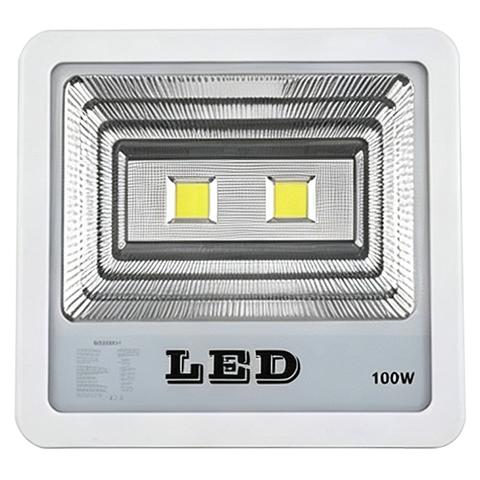
Engineering Excellence: The Five Golden Rules and Dawn Lighting
An example of good engineering and design combined with the five golden rules is the Dawn Lighting DL01-A07A10-002 100W Outdoor LED Flood Light:
• Thermal Management for Continued Usefulness: Managing 100W of LED power design employs a thickened die-cast aluminum housing coupled with deep striped thermal management to ensure a long useful light lifespan of 50,000 hours. Spread across this time LED Flood Lights are designed to retain their brightness.
• Targeted Illumination Using Premium COB Engine: Rather than using a dispersed SMD array, this design employs focused Chip-On-Board LEDs from Epistar. Utilizing COB technology results in a highly uniform, intense beam with exceptional center-beam punch which is ideal for projecting light great distances, whether that is washing large building facades or lighting up sports courts.
• IP66 Construction for Performance with Control: The fully tempered glass face with waterproofing silicon rubber gaskets is fully integrated in the aluminum frame, achieving a strict IP66 rating. It is fully dust tight, and can sustain the impacts of high-pressure water jets during extreme storm conditions while maintaining controlled and consistent performance.
• Tier 1 Drivers with 10KV SPD for Controlled Operation: High-mast and roof mounted fixtures are especially susceptible to lightning and grid voltage spikes. The Tier 1 (Meanwell and Inventronics) drivers with 10KV SPD allows these landscape floodlights to function in extremely harsh conditions.
Final Thoughts
When designing outdoor landscape lighting, the five design principles of being Useful, Targeted, Low Light Levels, Controlled, and Color are considered. Landscape floodlights, such as the DL01-A07A10-002, from Dawn Lighting, are professionally designed using COB optics which, in combination with SPD protection and warm CCT, provide controlled beams of light with high output and excellent thermal management. Landscape lighting, whether used in an outdoor residential light display or fencing security illumination, can be beautifully designed and safe through the use of well designed lighting rather than high intensity lighting.
Frequently Asked Questions
Q1: What are the 5 golden rules of landscape lighting design?
A: Useful, Targeted, Low Light Levels, Controlled, and Color.
Q2: What is the significance of warmer color temperature in landscape flood lights?
A: It minimizes light pollution and provides a more natural inviting atmosphere.
Q3: What is the benefit of using COB technology over traditional SMD?
A: COB technology provides a more even and bright lighting with a long distance projection.
Q4: Why is an IP66 rating a must for flood lights?
A: It provides a dust-tight seal and can withstand high-pressure water jets in extreme weather.
Q5: What is the advantage of using surge protection in landscape flood light installations?
A: It protects the driver from lightning strikes and voltage spikes from the grid.
- 10 Meters Lamp Post
- 10 Meters Pole
- 1000w Led Projector
- 100W LED Tunnel Light
- 12 Meters Lamp Post
- 12 Meters Pole
- 1200w Led Projector
- 15 Light Pole
- 1500w Led Projector
- 150W LED Tunnel Light
- 1800w Led Projector
- 2 In 1 Solar Flood Light
- 200w Led Tunnel Light
- 50w Led Tunnel Light
- 6 Meters Lamp Post
- 6 Meters Pole
- 8 Meters Lamp Post
- 8 Meters Pole
- 800w Led Projector
- 80w Led Tunnel Light
- Colourful Decorative Light
- Conical post
- Courtyard Lamp
- courtyard light
- courtyard lighting fixture
- Decorative Landscape Light
- Decorative road Light
- Flood Light For Courtyard
- Flood Light for Garden
- Flood Light For Outdoor
- Foot Led High Bay Lights
- high bay led lights 100w
- industrial lampshade
- industrial LED shed lights
- industrial magnifying glass with light
- Integrated Solar Flood Light
- led courtyard lamp
- led courtyard light
- led high bay light 100w
- LED Projector For Stadium
- Led UFO High Bay 150W 5000k
- Lighting Plants Mining Price
- Maintenance Free LED Street Light
- Pic Controlling Tunnel Light
- PLC controlling tunnel light
- Post Top Garden Light
- RGB Landscape Light
- Rgbw Decorative Light
- Smart Tunnel Light
- solar courtyard lamp
- solar courtyard light
- Solar LED Road Light
- Solar Street Light For 10 Meter Pole
- Solar Street Light For 12 Meter Pole
- Solar Street Light For 6 Meter Pole
- Solar Street Light For 8 Meter Pole
- Split Type Solar Flood Light
- Sporting Projector
- Stadium Led Projector
- Street Lighting Post
