
 Request A Quote

Smart LED Flood Light: Better Control for Wide Outdoor Areas
 FACEBOOK
 TWITTER
 LINKEDIN
But a “smart” LED flood light is best when it addresses a straightforward site issue: a vehicle driving into a parking lot, people wanting to cross a courtyard, visitors approaching a doorway, or even a guard wanting to see a dark perimeter.
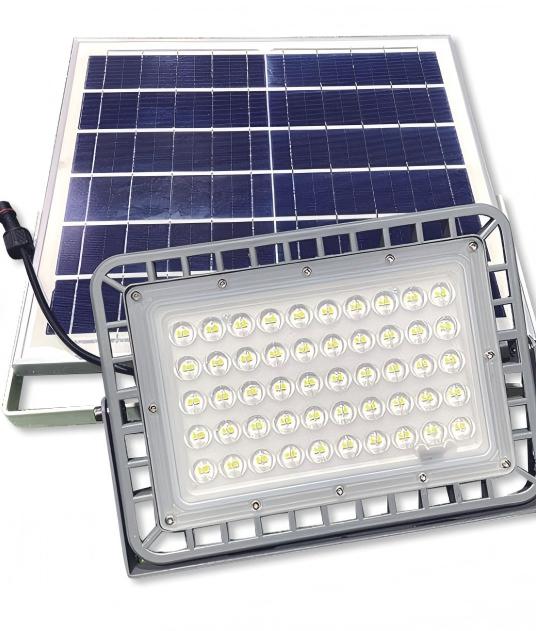
The project’s starting point shouldn’t be the app functions. It should start with the area, mounting position, traffic pattern, beam direction and level of light required prior to and upon detection of movement.
Always begin with the actual size and traffic of the area.
The lighting requirements of parking lots, private yards, building entrances, security gates and industrial parks all vary. A parking lot requires sightlines through multiple light bays, a courtyard requires a comfortable pedestrian light and a doorway requires visibility of the face but not into windows.
The same flood light can provide access for deliveries during working hours and be used for security patrols after hours on a factory or campus site. This typically needs to be scheduled separately or set on different zones instead of one all-or-nothing setting to power the entire property.
Before choosing fixture, verify if the fixture is actually being used:
- Parking bays, Vehicle lanes/turning areas
- Courtyards and private yards (and pedestrian routes)
- Furnishing of building entrances, door canopies and storefront fronts
- Security gates, fences and property boundaries are covered by the insurance.
- Campus roads, circulation areas of an industrial park
- Loading, maintenance and emergency access points are provided to maintain the safety of the building.
- Façades or signage in need of controlled accent lighting.
Fixture should provide a helpful ground, wall or access area for lighting. Bright luminaire visibility is not equal to route, person or vehicle of interest.
Correspond the angle and height of the beam to the scene
Optics control the direction of light; intelligent control determine when and the intensity of the light. Both decisions shall be based upon the layout of the site. A wide parking area will generally require beams to overlap and a narrow entry will require narrower beams and greater shielding.
Fixing a fixture that points at a bedroom window, or a road user/security camera cannot be corrected with an app. The bracket, mounting height and beam angle shall not allow useful light to spill over the property, or to exceed normal viewing directions.
When comparing fixture types, use the commercial flood light range, and compare the photometric file with the parking layout, courtyard size or entrance setback.
Compact LED COB flood lights can also be appropriate for wall-mounted lights in the entrances and in smaller yards. Evaluate the suggested aiming location from parking areas, pedestrian accesses, windows and guard areas prior to accepting the quantity.
Parking lots do not require full power, only low level standby, all night.
Parking lots with unparalleled changes between dark and bright can seem brutal and may cause drivers to temporarily lose their ability to read the darker side of the parking lot. However, with continuous full output, there is energy waste when there is no movement.
One possible control sequence is:
- The background level as determined during normal night operation of the project.
- Ramp Up when a Vehicle or Pedestrian Enters the Zone
- Adequate hold time for parking, walking or opening a gate
- Easy return to standby when the area is clear.
This ensures the passageways and entrances are clear, but saves the higher output for when it is needed. Use the scene to determine the background level and trigger level, not a default for a residence.
A less busy industrial parking lot might have a lower standby level and hold time for a quiet courtyard. Security personnel may also need to do a manual override and reversion to the approved program.
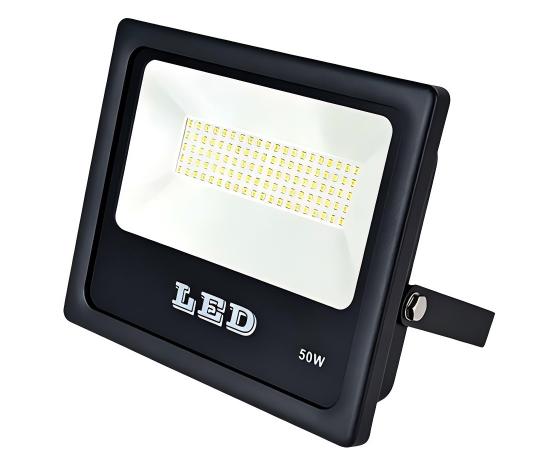
Set the motion zone prior to setting the timer.
The detection zone shall be along the actual approach route. Vehicles on the public road should not be detected by a parking-lot sensor, just vehicles entering the site. If an entrance sensor is installed it should be made to cover visitors approaching the doorway and not trees moving next to the building.
| Item | Project Data |
| 1. Scope | Use: ☑ Parking lot ☑ Courtyard ☑ Storefront/entrance ☑ Security perimeter ☑ Site/campus; area dimensions and key activity: by project. |
| 2. Mounting | Mounting height, fixture count, target illuminance, beam/optic, and aiming direction: lighting design. |
| 3. Sensor Zone | Vehicle entry, pedestrian approach, sensor range/angle, and roads/plants/adjacent areas to exclude: site check. |
| 4. Timing | Standby/trigger levels, hold time, and weekday/weekend/night schedules: project settings. |
| 5. Security & Control | Camera/alarm: optional; local offline operation, remote monitoring, recipients, and account permissions: by project. |
| 6. Site Checks | Ambient temperature, IP rating, and power/network: by model and project; check glare, false triggers, camera image, and network recovery: ☑ Yes. |
Road traffic, moving branches, animals, rain, insects or warm exhaust or reflections are common causes of false triggers. In commissioning, minimize unwanted zone prior to decreasing the hold time or decreasing sensitivity throughout the entire area.
The light must come on in time for safe braking, walking and door access without being activated when action is taking place outside of the property.
If the product can make separate zones then try to create one for vehicles and a separate zone for pedestrians or the doorway. The examples of practical applications in the flood light use guide can serve as a guide to determine the intended area, but the actual sensor behaviour still needs to be tested on site.
| Planning Area | Main Control | Main Site Check |
| Parking lot | Standby level + vehicle trigger | Coverage, glare and dark gaps |
| Courtyard | Pedestrian zone + short hold time | Windows and false triggers |
| Entrance / door canopy | Scheduled background + doorway boost | Face visibility and camera exposure |
| Security gate / boundary | Controlled vehicle and perimeter zones | Road traffic, plants and animal triggers |
| Campus / industrial park | Profiles by area, time and user role | Overrides and network range |
| Offline and night test | Local control + walk and drive test | Cloud failure, glare and late response |
Floodlights with a camera require a security plan.
A camera-installed flood light can integrate flood lighting, recording, notifications or an alarm, at entrances, gates and perimeters. Security lighting and covering of security surveillance also require separate checks.
According to the principle of the game, the best location for the camera may not be the best location for lighting. A unit set up too high may not capture facial features and a beam pointed at the lens can cause glare in the lens, reflections or overexposed faces around the doorway.
Try out the night picture using dark clothing, vehicle headlights, wet surfaces and side approaches. Test to see if the camera can detect movement from the desired distance.
The project should also specify who is alerted, who will be able to access recordings, how long recordings are kept and whether local privacy legislation will impact the use of audio and/or video recordings.
Maintain essential lights as back-up power sources.
A parking entrance or security route should not become dark due to the failure of the router, gateway or cloud service.
Where the product architecture permits, basic motion response and manual switching and approved schedules should be available locally. The remote viewing and notifications may not function temporarily, however, the basic lighting should function.
Test the results following a failure of a router, lockout of an account, failure of a gateway, loss of power, or cloud service. Recovery steps to be written up for site manager.
LED modular flood lights may be able to provide wider or scalable layouts for multi-zone campuses or industrial parks, but the ability to provide gateway range and local control and communication between buildings need to be field-tested.
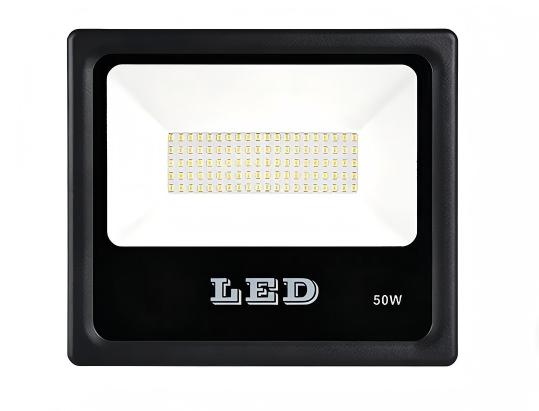
Oversee access to the property and security personnel
A smart flood light is a flood light that is both an outdoor light and a connected device. Property Managers, Guards, installers and maintenance personnel shouldn’t share one unmanaged administrator account.
Some issues include weak account control, unknown firmwares and having previous employees still have access and temporary settings still on. Make controls as obvious to the next maintenance crew as possible.
The handover record should include model, firmware, account owner, handover plan and the name of the person who will be responsible for the handover.
Inspect for heat, rain and cable entry on location
Flood light fixtures in the parking lot and on campus can be in use for extended periods of time at high intensities. The amount of heat that is required depends on the housing, driver, mounting surface, and airspace behind the fixture.
Never put the heat-dissipating surface into contact with insulation, dense plants or a closed recess. Verify mounting direction, temperature range and maintenance access approved.
Outdoor protection consists of housing seam, lens, cable gland, sensor joint, adjustment bracket, junction box and camera/antenna opening.
Install fixture to prevent rain water from accumulating around cable entry or aiming pivots. Solar Flood Lights can be used for the remote boundaries where convenient grid cabling cannot be found, however, separate calculations of panel exposure to the sun, battery reserves and local security needs should be done before using.
Follow schedules in keeping with property
Timers, photocells, occupancy sensors and dimming can help minimize operation when full lighting is not needed. The schedule shall be based on actual working hours, delivery times, resident use and security patrols.
Steady lighting can be used in parking lot during arrival time and motion based boost can be used later. Residents can enjoy a courtyard that fades after they come home and a building entrance maintains a low level of light for visitors and cameras.
Industrial parks have the option to create various workday, weekend, delivery, holiday and security patrol profiles. When setting up an initial output range, refer to the outdoor flood-light lumen guide, and check the actual output with a site calculation and night test.
After Dark Commissioning for complete commissioning.
Daylight work can’t confirm actual beam, glare, camera exposure or false triggers, but can confirm wiring, brackets and communication.
Take a normal speed walk through all pedestrian approaches and drive through the vehicle zone. Repeat test from public road, parked vehicles, windows, guard post and entrance doorway.
Check:
- Parking bays, parking lanes, parking gates and walkways thoroughly covered
- Bright lights and spill light from neighbouring viewpoints
- Dark area within the target zone that is not wanted.
- The response of the sensor prior to the user entering the dark area.
- False alarms caused by traffic, vegetation, animals and rain
- Seamlessly switch between standby and active brightness
- The picture quality that the camera achieves at each light level.
- App, local switch and authorised manual override.
- Works offline without access to the internet/gateway
- Self-power recovery upon power outages
NEVER quit on one successful motion event. Watch for traffic, wind, deliveries and security activity; then make zone, hold time, brightness adjustments.
Conclusion
With the exception of glare, false alarms, and cloud dependent failure, a smart LED flood light should make parking lots, courtyards, entrances, security and industrial parks easier to use later in the day.
The final selection should fit the size of the area, the height of the mounting, the angle of the beam, the illumination of the target area, the routes of the moving areas, the schedule and maintenance capability. Predictable to drivers, pedestrians and security staff are good projects.
FAQs
Q1. In what ways can smart LED flood lights be most beneficial?
Typically employed for parking lots, courtyards, building entrances, security gates, property boundaries and industrial / campus circulation areas.
Q2. Does a smart flood light need to remain illuminated throughout the night?
Not necessarily. When a project is defined, many sites work well with a standby level and programmed output which takes a motion-based trip-up to increase output when vehicles or pedestrians are approaching.
Q3. Why is a floodlight continually turning on?
These can be caused by public-road traffic, moving plants, animals, insects, rain, exhaust heat, reflections or a detection zone that is outside of the site.
Q4. Are there any smart flood lights that can be integrated with security cameras?
Yes, but the beam position, camera angle, face visibility, headlight glare and wet-ground reflections are separate tests, as are alerts, storage and privacy requirements.
Q5. Before choosing a smart flood light what information should be obtained?
Include area of application, size, height of mounting, desired illumination, direction of beam, paths of movement, schedule, standby and trigger levels, and network conditions and night-test requirements.
- 10 Meters Lamp Post
- 10 Meters Pole
- 1000w Led Projector
- 100W LED Tunnel Light
- 12 Meters Lamp Post
- 12 Meters Pole
- 1200w Led Projector
- 15 Light Pole
- 1500w Led Projector
- 150W LED Tunnel Light
- 1800w Led Projector
- 2 In 1 Solar Flood Light
- 200w Led Tunnel Light
- 50w Led Tunnel Light
- 6 Meters Lamp Post
- 6 Meters Pole
- 8 Meters Lamp Post
- 8 Meters Pole
- 800w Led Projector
- 80w Led Tunnel Light
- Colourful Decorative Light
- Conical post
- Courtyard Lamp
- courtyard light
- courtyard lighting fixture
- Decorative Landscape Light
- Decorative road Light
- Flood Light For Courtyard
- Flood Light for Garden
- Flood Light For Outdoor
- Foot Led High Bay Lights
- high bay led lights 100w
- industrial lampshade
- industrial LED shed lights
- industrial magnifying glass with light
- Integrated Solar Flood Light
- led courtyard lamp
- led courtyard light
- led high bay light 100w
- LED Projector For Stadium
- Led UFO High Bay 150W 5000k
- Lighting Plants Mining Price
- Maintenance Free LED Street Light
- Pic Controlling Tunnel Light
- PLC controlling tunnel light
- Post Top Garden Light
- RGB Landscape Light
- Rgbw Decorative Light
- Smart Tunnel Light
- solar courtyard lamp
- solar courtyard light
- Solar LED Road Light
- Solar Street Light For 10 Meter Pole
- Solar Street Light For 12 Meter Pole
- Solar Street Light For 6 Meter Pole
- Solar Street Light For 8 Meter Pole
- Split Type Solar Flood Light
- Sporting Projector
- Stadium Led Projector
- Street Lighting Post
