
 Request A Quote

Smart Landscape Lights: Planning Control Around the Outdoor Experience
 FACEBOOK
 TWITTER
 LINKEDIN
Smart landscape lights are helpful when the control system alters the landscape scene’s ambiance and functionality once the sun sets. A phone app is but one interface, the real work is zoning, the scene logic, the sensing and the guaranteed local operation.
When purchasing offsite, buyers need to inquire about the needs for the specific “entrance, paths, planting, seating areas and water features” at each phase of night. This allows them to concentrate on the experience and operation and not on a long list of functions that a device can perform.
Operating scenes instead of functions of devices
The sequence of the night is the first part of the practical control brief.
Walk around the site with the owner/operator and assure:
- What will you want to see when guests come in?
- Which way(s) are open after normal closing time?
- What is the seating, eating, waiting or meeting area?
- Are there trees, walls, sculptures or water features that should be emphasized?
- Where can standby be maintained when no-one is there?
- Who or what changes at events, during security checks or during maintenance?
- What type of circulation lighting should be used to stay on all night?
The answers should be the easily recognisable scene names, by staff. It’s much easier to use a scene than dozens of individual dimming values.
Arrival, Dinner, Event and Late Night and Maintenance are all hotel uses. Opening Hours, Quiet Evening, Path Guidance and Security are available to a park. The transitions time, brightness and which zones are active should be given for each scene.
Before determining fixture quantities and controller addresses, discuss the scenes to be used in a new landscape lighting project.
Break the site up into areas that are meaningful to people
Typically, an entire property is treated as a single control group resulting in over-lighting. Different areas have different timetables and safety requirements including entrances, paths, planting, seating, water features, facades and service areas.
Describe each zone in terms of physical boundaries and the functions of the zone. Document: Fixture Group, Normal Scene Level, Late Night Level, Sensor Response, Manual Override and User Responsible.
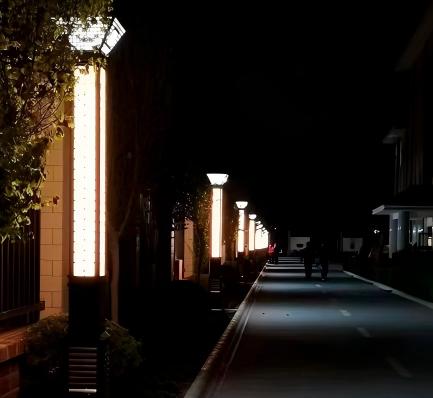
For instance, bollard lights can be temporarily brightened if they sense movement is occurring on the path, while pillar lights can stay bright at the entrance, maintaining a clear arrival point.
Commissioning and maintenance time is also decreased with clear zoning. A fault or an unwanted command can be isolated by staff rather than searching all addresses on the network for the flaky address, for North Path or Pool Terrace.
Dimming creates atmosphere – don’t just do it for conservation.
“Smart” control can’t compensate for bad pointing or spill light/direct glare. Where the light goes is still dictated by optics, shielding and mounting positions.
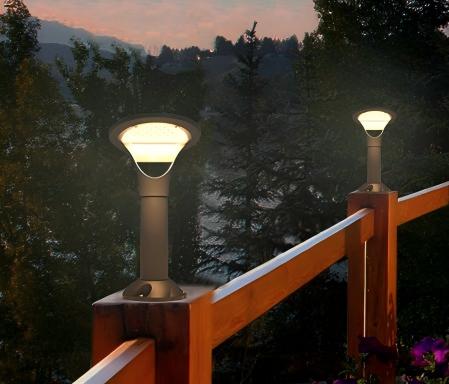
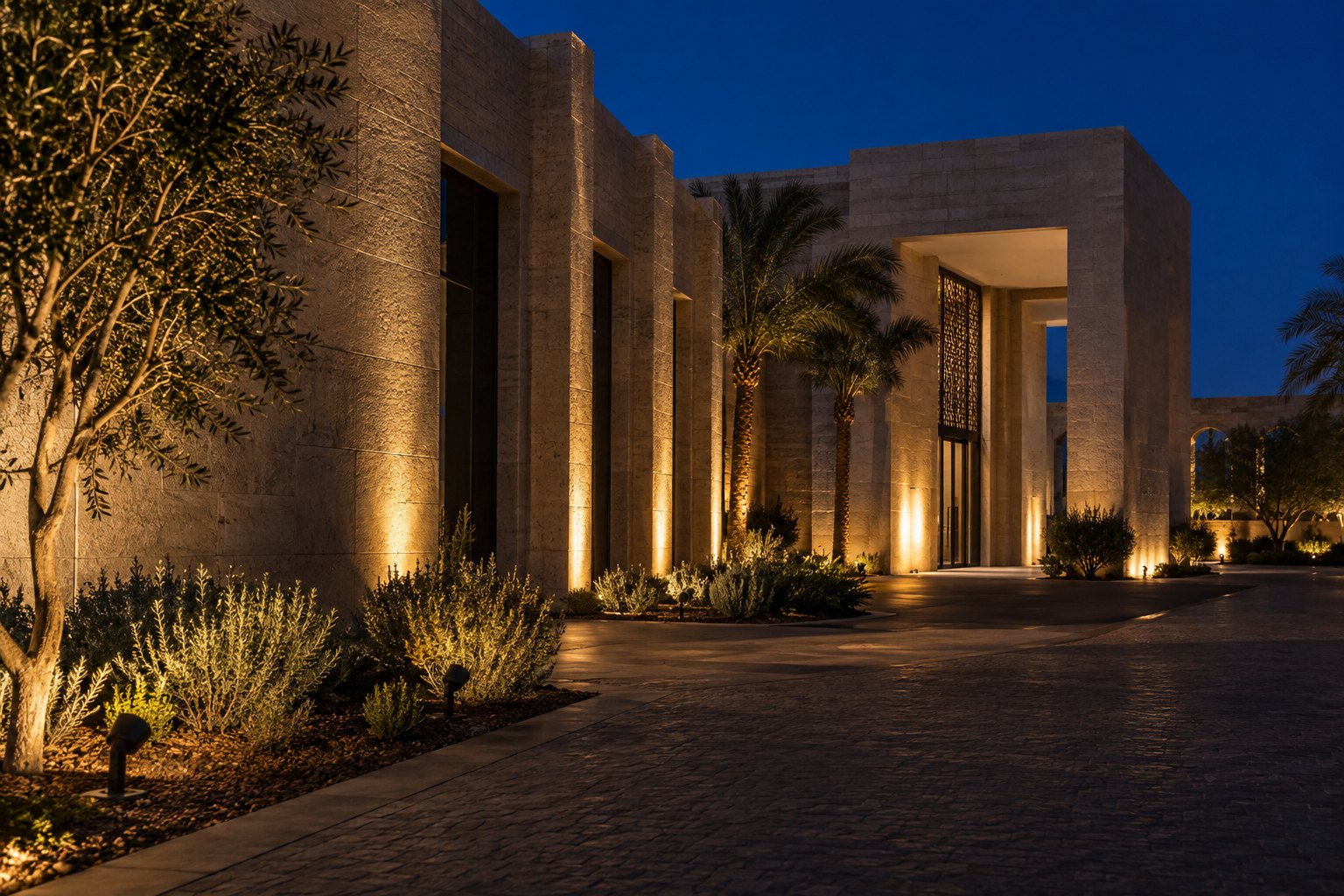
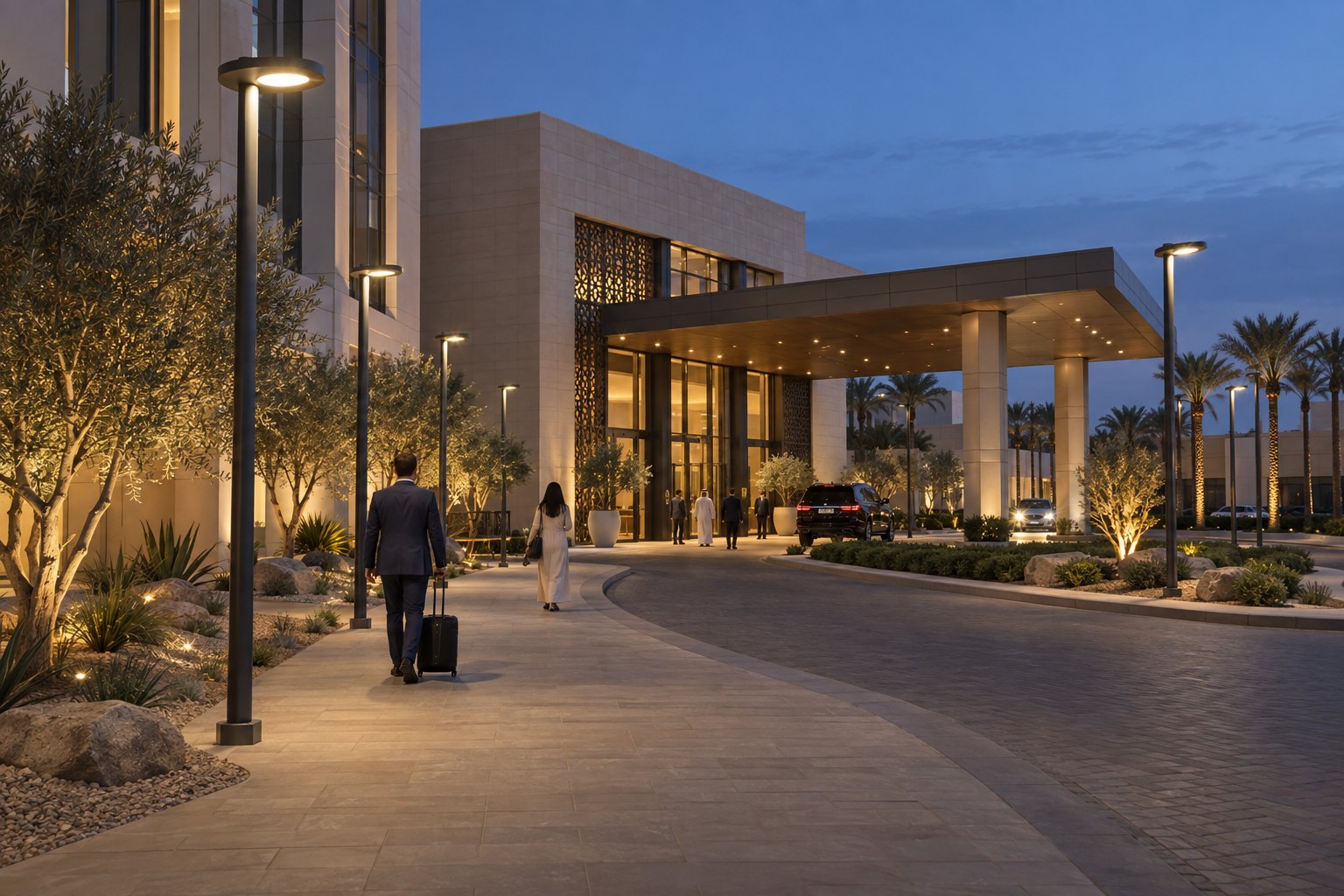
With residential and garden lights, hierarchy is important – entrances and pathways should be obvious, planting and background should be softer.
Document the real-life output for each zone for each of the principle scenes. Don’t copy dimming percentages from another website as they will be different depending on the colour of the surface, how dense the planting is and how far it is from the viewer.
Colour temperature/rgb/rgbw should also be for a specific reason. Late night use can often be best suited by warm, contained light and it is not a long term solution to be temporary event colour.
Enjoy a natural change of scenes after dark.
Transition is detectable as a change of mood, NOT a jump from bright to dark.
The path from an evening activity to a late night standby position can include reduced output, warmer colour temperature and fewer active feature areas around a garden landscape light. The fade time should be determined on site and not rely on the controller default.
Schedules should be based on the actual operating hours, seasonal events and local sunset changes. Client should specify the time the programme is required from and to, the sequence of scenes and any days requiring a varying programme.
| Item | Project Data |
| 1. Zones | Project: ☑ Residential garden ☑ Hotel/resort ☑ Park/scenic site ☑ Commercial plaza ☑ Community/industrial park; zones: entrance, paths, planting/trees, leisure areas, and water features, by project. |
| 2. Scene Schedule | Scenes: ☑ Welcome ☑ Daily ☑ Event ☑ Late night ☑ Security/maintenance; active hours: site operating schedule. |
| 3. Dimming | Brightness by zone/scene: project values; CCT/color mode: by model; dimming interface: control system; fade time: by project. |
| 4. Sensors | Sensor: ☑ Motion/microwave ☑ Daylight ☑ Timer; location, range, hold time, standby level, and false-trigger risks: site check. |
| 5. Controls | Control: ☑ Wired ☑ Wireless ☑ Hybrid; protocol, maximum range, controller/gateway count, and app/cloud access: by project. |
| 6. Handover | Offline functions, manual-control point/users/permissions, night commissioning time, and configuration-backup owner: handover plan. |
Select the control system design around the site
Smart landscape lighting can be wired, wireless or a combination of the two. There are three answers to this question: the right answer will depend upon the routes of cables, distances, obstructions, possible future expansion and the operator’s capacity to commission the system.
The wired control is sometimes used when new conduits are available and communication reliability is crucial. Although control line can be minimized with wireless control, signal coverage should be checked for wall, metal enclosures, heavy planting and grade changes.
Bluetooth Mesh can enable group communications and relaying of messages between various nodes. It is only applicable if the node spacing, as well as the access/recovery procedures match the site.
DALI provides the ability to address, group, scene and sensor inputs. For projects where DALI or D4i is used it is advisable that the driver configuration, method of addressing, data requirements and who will be responsible for post handover maintenance of the system be confirmed.
No universal choice of protocol. Inquire about the control topology, the maximum distance of communication, the number of gateway, the capacity of the controller and the compatible dimming interface and the limit of expansion.
Ensure key services are provided locally.
The landscape should not be lost due to lack of internet connectivity, cloud account or mobile application.
Cloud access should be coupled with remote monitoring, notifications and reporting, but should not be the only way to operate the site.
Check with them what will happen in case of a gateway failure, router replacement or loss of the app account or end of cloud support. The answer should NOT say that the student can access it remotely, but say that there is a local backup.
Utilize sensors for lighting changes with movement.
When the motion and daylight sensors are used to help enforce a clearly-defined operational rule, they can be very effective. However, a side path that is on low output, may be raised when someone approaches; a decorative tree does not need to be treated the same.
Branches, pets, vehicles, outside rain or movement may cause sensors to trigger outdoors. After planting and furniture is set up, detection range, mounting position, direction, hold time and return level must be verified.
Assign the zone to a sensor. An arrival scene might be necessary for entrance detection, and just a temporary boost in brightness might be required for a quiet entrance.
Project data should include the type of sensor, height of sensor, area of sensor, delay time, level when sensor is ‘standby’ and known false sources for activation.
Typically, the most comfortable answer lies somewhere between the extremes: slowly rise to a level that is adequate for visibility, stay there for a set period of time, and slowly decrease back to the previous scene rather than cut out.
Provide easy manual control for site personnel
If nobody but the original programmer understands a smart system it’s a risk.
Avoid having to enter an engineering menu for site staff to be able to select an approved event scene, expand the operating hours, isolate a faulty zone, boost the circulation light for security and then return the system to normal operation.
Don’t use device numbers, use names like Main Entrance, East Path and Pool Terrace. Drawings, controller pages and handover records should be the same names.
Apply monitoring information to aid in operations
The best use of connected lighting is when it draws attention to a particular issue and doesn’t generate a barrage of technical information.
Some project data that might be useful is:
- This is the status of communication between the controller and gateway.
- Fixture-group communication faults
- Activated sensors and/or unusual activities
- Areas of operation (by time)
- Trends of energy available for metering
- Manual override(s) and length of each override period
- Schedule/Scene change
- Any commands that are not successful and recovery status
Only luminaire information, energy or diagnostic data that is necessary for the operator should be enabled, and compatible drivers and controllers should provide these data.
Alerts to include affected area, probable cause and action necessary. The message East Path gateway offline is more beneficial than a device code without a explanation.
The final site plan should contain the names of the zone(s), fixture group(s), controller address, cable routing, gateway locations, sensor locations, and manual-control locations.
Shoot all the scenes at nighttime!
Wiring and communication can be tested during the day, but it can’t be determined if the night atmosphere is balanced.
Commission after planting, furniture, signs and water features are completed to a great degree. Stroll the property as both a guest and resident as well as a security guard and maintenance worker.
Check wireless on the furthest fixtures and behind buildings, walls or planting. A signal that is working along the gateway may not work at the edge of the project.
The final configuration is backed up and software versions, passwords, addresses, zone names and the person authorised to make future changes are recorded.
Make adjustments to scenes for seasons and events
Landscape situation post handover.
Foliage changes, hours of outdoor dining in restaurants change, sunset times change and temporary events call for different scenes. These changes include changes in sensor cover, brightness, and feature/circumference lighting.
Re-check the system more than once in the first year. Alter the schedules, fade times and sensor area and zone levels from usage rather than keeping all the commissioning values.
The beauty of smart landscape lighting is that the control plan can be adjusted, without having to rebuild the entire landscape lighting installation.
Conclusion
Smart landscape lighting should enhance an outdoor space while making it a safer, quieter and more pleasant experience for staff who need to control each light individually.
A great project begins by creating named zones and true night scenes and then setting dimming levels, transition types, sensors, communication and local fallback and user permissions.
The system is intelligent when the lighting changes quietly, responds only if necessary and is understandable even after the programmer has left the site.
FAQs
Q1. What are the best ways to zone a smart landscape lighting project?
Establish areas around actual functions like entrances, active routes, seating, planting areas, water features and service areas. A unique scene level, schedule, sensor response and manual-control rule should be used for each zone.
Q2. Are smart lights for the landscape dependent on Wi-Fi?
Not always. Wired control, DALI, Bluetooth Mesh or another wireless control system or a combination of the above can be used by a project. Remotely manage by Wi-Fi or cloud with no requirement of it being the basic control path.
Q3. What’re some things that should still be functional if the internet goes down?
The schedules and approved scenes, sensor responses and manual overrides should be accessible locally where the system architecture permits.
Q4. What should be the control method of path lighting using motion sensors?
Utilize a specified detection area, hold time, temporary brightness level and smooth return to standby. Check for false activation caused by planting, animals, vehicles and juxtaposed activity.
Q5. When is the right time to hire a smart landscape lighting?
Final planting and site features will be mostly complete, final scene, sensor and dimming checks after dark will be complete. Perform back up of approved configuration prior to handing over.
- 10 Meters Lamp Post
- 10 Meters Pole
- 1000w Led Projector
- 100W LED Tunnel Light
- 12 Meters Lamp Post
- 12 Meters Pole
- 1200w Led Projector
- 15 Light Pole
- 1500w Led Projector
- 150W LED Tunnel Light
- 1800w Led Projector
- 2 In 1 Solar Flood Light
- 200w Led Tunnel Light
- 50w Led Tunnel Light
- 6 Meters Lamp Post
- 6 Meters Pole
- 8 Meters Lamp Post
- 8 Meters Pole
- 800w Led Projector
- 80w Led Tunnel Light
- Colourful Decorative Light
- Conical post
- Courtyard Lamp
- courtyard light
- courtyard lighting fixture
- Decorative Landscape Light
- Decorative road Light
- Flood Light For Courtyard
- Flood Light for Garden
- Flood Light For Outdoor
- Foot Led High Bay Lights
- high bay led lights 100w
- industrial lampshade
- industrial LED shed lights
- industrial magnifying glass with light
- Integrated Solar Flood Light
- led courtyard lamp
- led courtyard light
- led high bay light 100w
- LED Projector For Stadium
- Led UFO High Bay 150W 5000k
- Lighting Plants Mining Price
- Maintenance Free LED Street Light
- Pic Controlling Tunnel Light
- PLC controlling tunnel light
- Post Top Garden Light
- RGB Landscape Light
- Rgbw Decorative Light
- Smart Tunnel Light
- solar courtyard lamp
- solar courtyard light
- Solar LED Road Light
- Solar Street Light For 10 Meter Pole
- Solar Street Light For 12 Meter Pole
- Solar Street Light For 6 Meter Pole
- Solar Street Light For 8 Meter Pole
- Split Type Solar Flood Light
- Sporting Projector
- Stadium Led Projector
- Street Lighting Post
