
 Request A Quote

Anti-Corrosion Solutions for Outdoor Lighting
 FACEBOOK
 TWITTER
 LINKEDIN
Failure is unlikely to be caused by the total failure of the housings of outdoor luminaires, which very seldom rust all at once. The initial warning sign is typically relatively minor, like white aluminium corrosion around a stainless steel screw, blistered edges at a fabricating point or rust stains underneath a bracket, or water gathering behind a cable gland. With coastal projects, these details can degrade significantly before the casting appears to be compromised.
For this reason corrosion protection needs to be specified as a system. Grade of materials, pre-treatment, coating, fasteners, joint isolation, cable entry and drainage and maintenance needs to match the actual exposure. A thick powder coat cannot remove trapped salt water, or help an unprotected cut edge.
Begin with an Exposure and not the Catalogue Finish.
The term “outdoor” is not a useful term in the corrosion category by itself. ISO 9223 takes into account moisture, airborne salinity and the atmospheric pollution as they are the factors that determine the wetness period of a metal surface and the aggressiveness of the deposits.
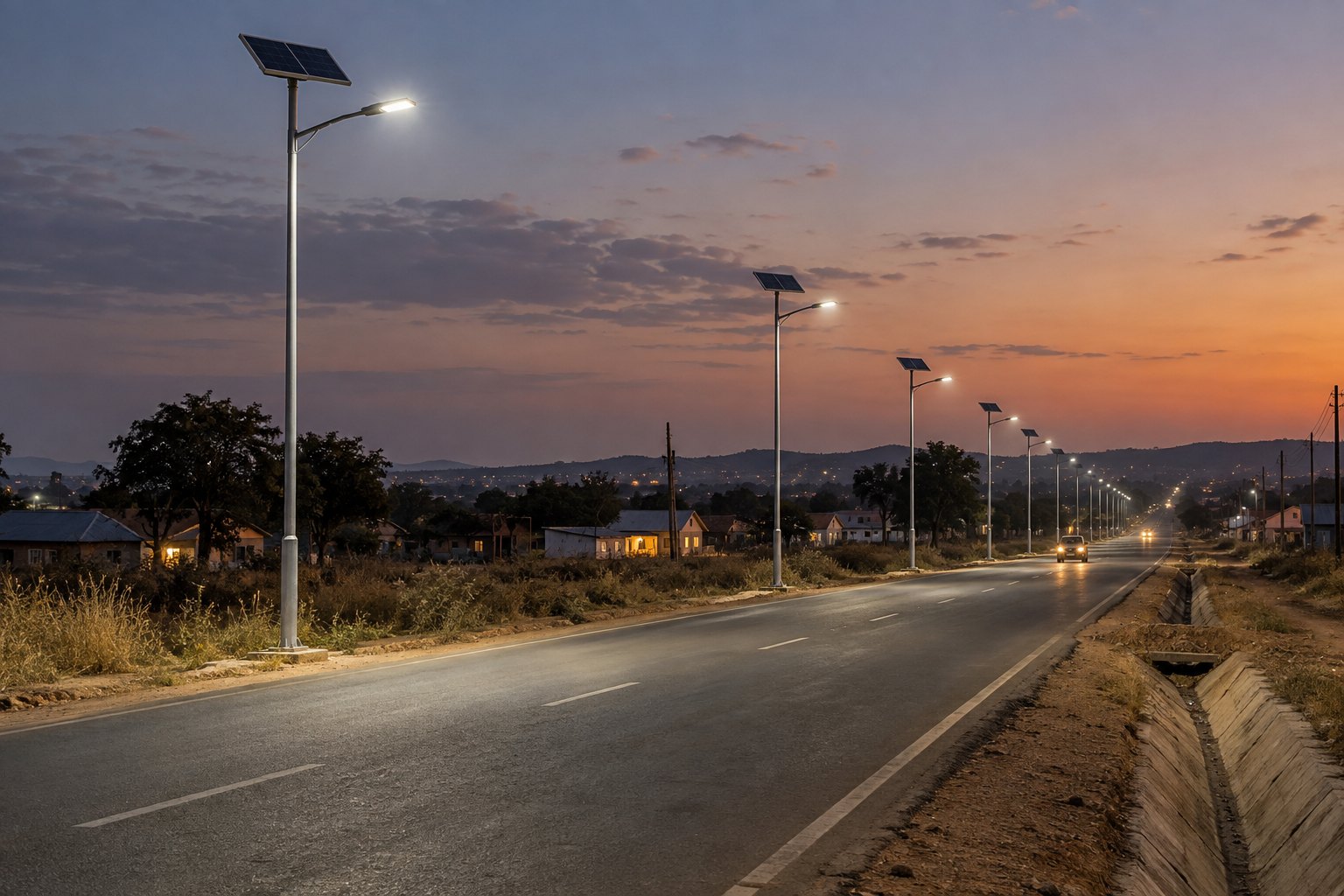
The amount of salt that a promenade off the ocean can get is often much more than a fixture the same distance away from the ocean but behind buildings. Other local conditions can be as bad as irrigation spray, pool chemicals, road de-icing salt and industrial emissions. At the time of the site visit indicate the source of water, if the fixture does not dry out between wetting cycles, and if the surface is washable. These inspections are particularly important for road and street lights that are subject to wind, or traffic spray, especially if in coastal environments.
Which Projects Corrode more?
In some instances, projects make recurring early corrosion claims on the same model of luminaire which is doing well in other projects:
- Coastal boardwalks and marinas: wind-blashed salt accumulates on screws, seams and mounting surfaces on the back, which rain never washes away.
- Exposed joints and sheltered crevices from chlorides and cleaning chemicals found around swimming-pool perimeters.
- Roadside and car-park lights: de-icing salts and dirty water are thrown onto these lights that are located close to the ground.
- Landscape installations: bases and cable entries remain damp due to irrigation, wet soil, mulch and blocked drainage.
- Industrial sites: Sulphur containing pollution or process chemicals may be more important than salinity.
- Mixed metals: stainless fasteners and aluminium housings, plated glands and copper grounding parts can form galvanic paths in the presence of moisture.
- Repeated impact or maintenance damage: scratched coating, tool marks, cut edges result in small active areas which corrode rapidly.
A comparison is made between material and environment.
The table below is a guide only and should not be used as a substitute for the project specification.
| Exposure / project | Housing and structure | Fasteners and joints | Main design focus |
| Sheltered urban park | Coated aluminium; coated or galvanized steel structure | Accessible stainless fasteners matched to housing | Repairable finish, drainage and routine cleaning |
| Open coastal or marine | Project-approved aluminium or stainless grade with controlled pretreatment | Corrosion-resistant fasteners; isolate dissimilar metals | Salt retention, cut edges, sealed joints and freshwater washing |
| Pool perimeter | Coating and seal materials compatible with chlorides and cleaning chemicals | Avoid unverified plated-metal combinations | Crevices, splash zones and chemical cleaning |
| Road or car park | Impact-resistant coated housing and protected steelwork | Protected heads, washers and bracket edges | De-icing salt, tyre spray and coating damage |
| Industrial atmosphere | Material and coating selected for identified pollutants | Joint materials checked against process chemicals | Deposits, washability and inspection access |
| Landscape / irrigation | Raised or drained base; washable surfaces | Keep hardware clear of standing water and soil | Irrigation direction, mulch, mud and blocked outlets |
What is needed is the control of the pretreatment process so that the coating will work.
The quality of the coating starts with the powder or paint before it is put on the object. Moisture at an edge can cause poor adhesion after shipment, when an acceptable finish is obtained at shipment due to oil, casting residue, oxide, and poor conversion treatment.
The specification should specify the type of aluminium, type of cleaning, type of pretreatment system, type of chemistry involved, window for curing and method of inspection. QUALICOAT documents are valuable reference documents for coated aluminium processes. ISO 12944 offers a useful way to choose a surface preparation and paint system for a corrosive environment for steel poles, arms and brackets.
Don’t take the term “marine-grade powder coating” as an adequate description. Request the steps involved in the phrase and verify their method of repair for machined surfaces, threads, welds and post coating damage. It is important that the supplier records their normal surface-treatment procedure and checks.
Invisible but powerful small metals in the environment!
Galvanic corrosion requires three elements: different metals, electrical contact and an electrolyte, which is rainwater, condensation, or saline droplets. All three can be found in outdoor lights.
A typical instance is a stainless screw flange that is bolted straight to an aluminium housing. It is possible for the screw to stay clean while the aluminium pits around the washer. The risk is greater when a small active-metal surface is in contact with a large surface of a noble metal.
Compatible metal selection, insulating washers or sleeve, coated contact faces, sealed joints and a geometry of a joint that can dry are examples of practical controls. The parts of the isolation must withstand UV, compression, temperature and installation torque. Assembly with a washer split in the middle will not offer long-term separation. That means the full stack up of the coastal landscape lighting should be made apparent, not just the housing material that’s visible.
Cable Entries, Screws & Drainage
Whether the fixture can be used, is determined by small components.
- Fasteners: state the grade, finish, head style, washer material and washer tightening. The coating can be cut through by tool slip or by using a washer that is too large.
- Brackets: keep bends, welds, slots and edges of fabricated parts protected after manufacture. Water can not be pooled in the channel that is facing up or behind an overlapping plate.
- Cable entries: Ensure that the gland body, locknut, thread and seal match the housing. Pay attention to the whole assembly as a plated gland, aluminium wall and stainless locknut can make a joint that is susceptible to corrosion.
- Drainage: choose either a sealed cavity or a deliberately drained cavity. Never make a partially enclosed space which allows the vapor to enter, but will not permit the release of the condensate. Drain holes should be located at the true low place in the orientation used and should not be clogged by mulch, leaves or sealant.
- internal parts: check grounding points, driver brackets and connectors and terminals. It doesn’t even have to be raining to get contaminants in, condensation can bring it in. Outdoor flood lights should be considered for drainage and condensation control and for ingress protection.
Use Salt Testing as Evidence NOT as a Lifetime Claim.
While salt-spray data can be used to compare finishes or to identify readily apparent assembly shortcomings, it cannot be used as a direct correlation for an outdoor service life.
The ASTM B117 specification outlines the operation of the salt spray chamber, but doesn’t specify a common amount of time or a common pass criterion for all luminaires. Cyclic salt-mist exposure with controlled drying/humidity stages are used in IEC 60068-2-52. Only a test report is meaningful if it includes the following: Method, sample configuration, scratches or cut edges, installed fasteners and glands, acceptance criteria, and post-exposure electrical function.
The claim “passed 1,000 hours” shouldn’t therefore be a statement, it should be a question. Was a flat coupon tested or the production fixture itself with the production coating and hardware?
Project Corrosion Specification Sheet: Please provide actual information needed
The supplier and project team should complete the following sheet with real project and production data before quotation and/or approval. The bracketed wording is a required value, not a target value.
| Item | Project Data |
| 1. Exposure | Primary use: ☑ Urban areas ☑ Humid/rainy regions ☑ Coastal salt-spray areas □ Industrial zones □ Pools/chlorinated areas ☑ Other: tailored to the site. |
| 2. Materials | Housing: die-cast aluminum; bracket/mounting plate: aluminum alloy or steel, depending on model; process: ☑ Die casting □ Extrusion □ Sheet metal □ Other. |
| 3. Coating | Pretreatment: degreasing + phosphating/passivation; coating: ☑ Outdoor powder coating □ Liquid paint □ Anodizing □ Other; thickness: 60–80 μm (≥80 μm recommended for coastal sites); primer: ☑ Yes, based on corrosion class. |
| 4. Fasteners | Screws/nuts: 304 stainless steel recommended; isolation between aluminum and stainless steel: ☑ Yes—washers, sleeves, or barrier coating, subject to design. |
| 5. Cable & Drainage | Cable gland: outdoor waterproof type; gasket: weather-resistant; fixture rating: IP65; drain holes: ☑ Yes, quantity/location by model; internal design: ☑ Drainage structure. |
| 6. Corrosion Test | Standard: per test report (e.g., ISO 9227 / ASTM B117); duration/cycles: per report; samples: ☑ Components ☑ Coated panels; acceptance: internal or third-party report; post-test lighting/electrical check: ☑ Yes. |
Inspection and Maintenance
Inspection should begin before visual damage has progressed to structural damage. On exposed sites inspect coating chips, rust stains, aluminium pitting around fasteners, discolouration around welds, corrosion around cable glands and blocked drain openings.
Cleaning should be done according to actual dirt accumulation. Coastal fixtures might require freshwater washing and industrial or pool facilities might require a cleaning method appropriate to the finish. If using low mounted residential and garden light fixtures, note irrigation direction, soil contact and blocked drain openings. Report any recurring failures by exact location, as a fixture by an irrigation head, or by the road’s edge, may deteriorate a lot faster than the same fixture a few metres away.
Conclusion
Don’t rely on the selection of one “corrosion-proof” metal, but remove all weak interfaces between the material, for reliable anti-corrosion performance. The project team needs to tie in the site exposure, the alloy grade, the pretreatment, the coating, fasteners, galvanic isolation, cable entry, testing and maintenance.
The best specification is the one that will allow water to flow through rapidly, will prevent incompatible metals from touching, will prevent cutting edges and will allow the technicians to inspect and repair the fixture during its useful life.
FAQs
Q1. What is the best corrosion-resistant material for outdoor lighting?
There is no universal choice. Select the housing, bracket and fastener system according to salinity, humidity, pollution, chemicals, structural loads, coating process and metal-to-metal contacts.
Q2. Is powder coating corrosion-proof?
No. Its performance depends on clean metal, suitable pretreatment, full coverage, correct curing, protected edges and careful assembly. Damage or poor adhesion can allow corrosion to spread beneath the coating.
Q3. Can stainless steel fasteners be used with aluminium housings?
Yes, but the joint may need isolation and sealing. Review the stainless grade, aluminium alloy, contact-area ratio, moisture exposure, washer or sleeve material and installation method.
Q4. Does a long salt-spray result prove outdoor lifetime?
No. It provides controlled comparison data. The result must identify the standard, cycle, specimen, production hardware, acceptance criteria and electrical checks.
Q5. How should coastal outdoor lights be protected?
Use appropriate alloys, controlled pretreatment and coating, compatible fasteners, isolated mixed-metal joints, sealed cable entries, effective drainage, and a planned freshwater cleaning and inspection schedule.
- 10 Meters Lamp Post
- 10 Meters Pole
- 1000w Led Projector
- 100W LED Tunnel Light
- 12 Meters Lamp Post
- 12 Meters Pole
- 1200w Led Projector
- 15 Light Pole
- 1500w Led Projector
- 150W LED Tunnel Light
- 1800w Led Projector
- 2 In 1 Solar Flood Light
- 200w Led Tunnel Light
- 50w Led Tunnel Light
- 6 Meters Lamp Post
- 6 Meters Pole
- 8 Meters Lamp Post
- 8 Meters Pole
- 800w Led Projector
- 80w Led Tunnel Light
- Colourful Decorative Light
- Conical post
- Courtyard Lamp
- courtyard light
- courtyard lighting fixture
- Decorative Landscape Light
- Decorative road Light
- Flood Light For Courtyard
- Flood Light for Garden
- Flood Light For Outdoor
- Foot Led High Bay Lights
- high bay led lights 100w
- industrial lampshade
- industrial LED shed lights
- industrial magnifying glass with light
- Integrated Solar Flood Light
- led courtyard lamp
- led courtyard light
- led high bay light 100w
- LED Projector For Stadium
- Led UFO High Bay 150W 5000k
- Lighting Plants Mining Price
- Maintenance Free LED Street Light
- Pic Controlling Tunnel Light
- PLC controlling tunnel light
- Post Top Garden Light
- RGB Landscape Light
- Rgbw Decorative Light
- Smart Tunnel Light
- solar courtyard lamp
- solar courtyard light
- Solar LED Road Light
- Solar Street Light For 10 Meter Pole
- Solar Street Light For 12 Meter Pole
- Solar Street Light For 6 Meter Pole
- Solar Street Light For 8 Meter Pole
- Split Type Solar Flood Light
- Sporting Projector
- Stadium Led Projector
- Street Lighting Post
