
 Request A Quote

Solar Street Light 200W/500W, A New Trend or A Trap?
 FACEBOOK
 TWITTER
 LINKEDIN
Introduction: The Glow of Opportunity
The global solar street lighting market is growing rapidly. From an estimated USD 1.55 billion in 2025 and growing to USD 3.43 billion by 2032 at an estimated CAGR of 11.96%. Some estimates of the market are close to USD 12.23 billion in 2025 and an estimated CAGR of 11.76% through 2034. Within this environment, high-wattage models, specifically Solar Street Light 200W/500W, are marketed as high powered and economical models for use across various types of corridors, parking lots, and across business zones.
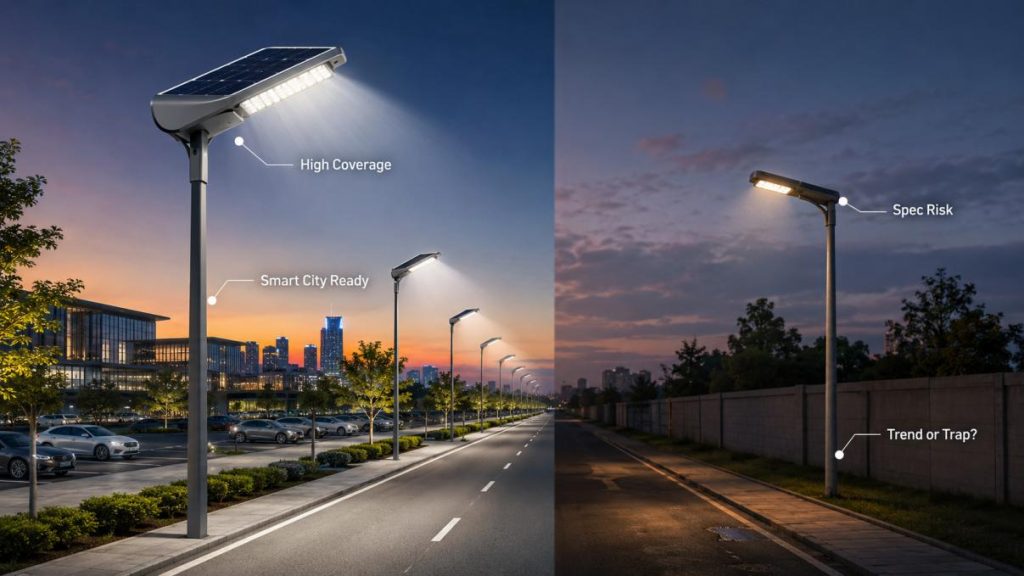
But the big question that every buyer should ask is: is the Solar Street Light 200W/500W an example of a new trend in lighting technology, or is it a well-designed and well-crafted trap?
In true lighting industry fashion, the answer lies somewhere in the middle. Now let’s examine both sides in question.
1. Justifying the “Trend” – The Popularity of the 200W/500W Solar Street Lights
Market Forces
Some of the factors that have been, or are beginning to be, synergistic in shifting the market to higher wattage in solar street lights are:
•Continued improvements in technologies increase customer confidence in lighting system integrations.
•Solar street lighting, and its design objectives of safety and security protection, and socially resilient infrastructures, is an appealing option for both municipal and commercial urban developers.
•The operational challenges presented by the conventional electric grid are mitigated with the use of integrated, solid-state lighting systems.
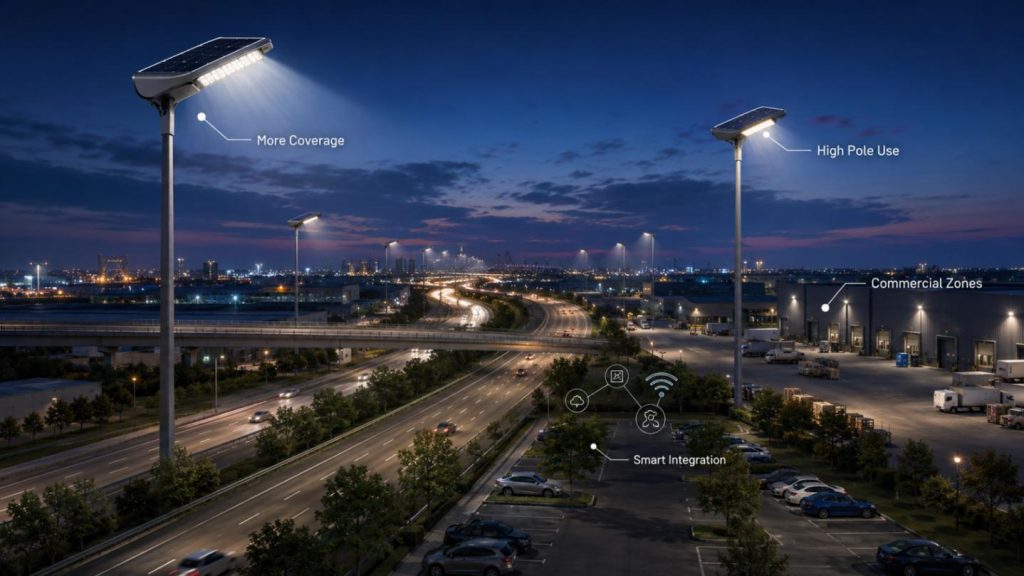
Smart city integration: Street lighting has become a key component allowing smart city technologies, safety improvements, and public displays of sustainability.
Why “High-Wattage” Models?
Why exactly is 200W and 500W?
•More coverage: These high wattages allow for lighting that is suitable for highways, high-pole applications, large industrial yards and lighting for interchanges.
•Better performance: The assumption is that more wattage will allow better performance of the lights, and manufacturers will take advantage of this assumption.
•More differentiation: The market is becoming competitive for street lighting technologies and these high wattages allow brands to take advantage of that where other brands are using lower wattages.
2. The Case for “Trap“ — What Buyers Need to Look Out For
This is where things are going to get tricky. The high-wattage segment of the solar street light market, for instance, is one of those areas where a seemingly “good” purchase can quickly turn into a very expensive mistake.
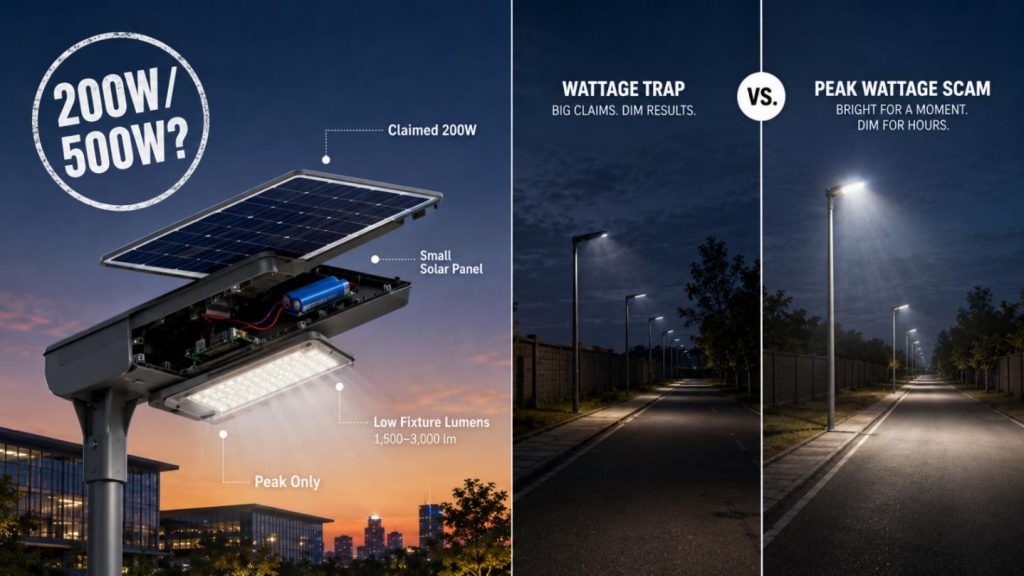
Trap #1: The Wattage Trap
•Where the deception lies: Many suppliers will market their lights as being 200W, while in truth, they have very low lumen chips and therefore are not even close to being that bright.
•What the reality is: Some companies will sell you a solar street light that they are marketing as being 200W, which in reality probably doesn’t even surpass 20W. One of those “10,000 lumen” budget lights is probably only putting out 1,500 to 3,000 lumens, leaving you with a 70 to 85 percent disparity from what they are claiming.
•Why this is the reality: Companies will use the marketing ploy of throwing around “LED chip lumens” which is a lab test in a very controlled environment, whereas they should be providing lumens of the fixture, where it actually loses some of those lumens in the heat, in the optical, and as well in the driver.
Trap #2: The “Peak“ Wattage Scam
•Where the deception lies: A light that is marketed as an “180W Solar Street Light” will have a solar panel that is likely only 20 to 30W.
•What the reality is: An 180W solar street light should have a solar panel that can completely charge the street light to a full 180W LED panel. Therefore, a 20W solar panel cannot power an 180W light, because it is likely only an 15 to 25W LED.
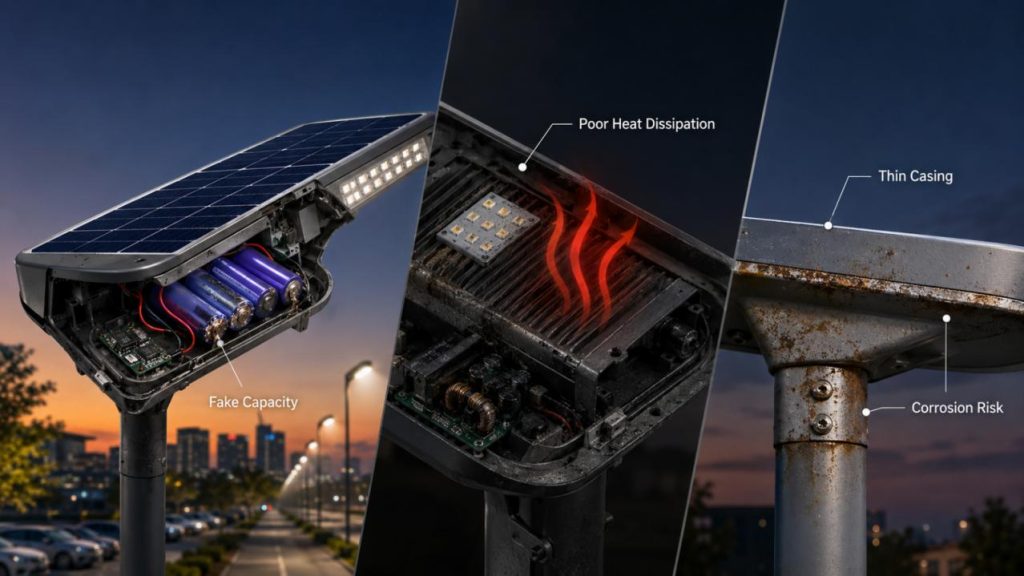
Trap #3: Fake Battery Capacity and Substantially Poor Battery Cells
•Where the deception lies: Suppliers will inflate battery capacity (they will say they are 60Ah when in reality they are 30Ah), while providing lead acid batteries and selling them off as lithium.
•What this means to the average buyer: You will end up with a very poor lighting solution that will not last the night, and will only get worse as the weather deteriorates.
Trap #4: Poor Heat Dissipation Design
•The science: The thermal management design of LED light sources is very important. Every 10 degrees increase in the temperature of the PN junction of an LED chip reduces the life of a semiconductor device by multiple levels.
•The reality: LED solar street lights work in tough outdoor conditions. If the heat management design is not done right, the LEDs age quickly and the system becomes unstable.
Trap #5: Inflated Configuration Parameters
•The trick: In order to survive fierce competition, a lot of companies will do things like sacrifice the solar panel wattage, the battery capacity, or even the light pole thickness.
•The challenge: There is no uniformity of industry standards, so it is difficult for customers to test these claims.
Trap #6: Poor Casing and Corrosion
•The trick: A thin case of aluminum or plastic will lower costs but will have less functionality.
•The consequence: Overheating will cause early failure of the LEDs. In a humid climate, poor anti-corrosion will mean rapidly degrading quality.
3. How to Process Authentic, Quality Products
Often, trends and traps can be differentiated by the producer of the product. One example of a reputable, high-quality producer of high-wattage solar lighting is Dawn Lighting.
Dawn Lighting: Quality, Without Compromise
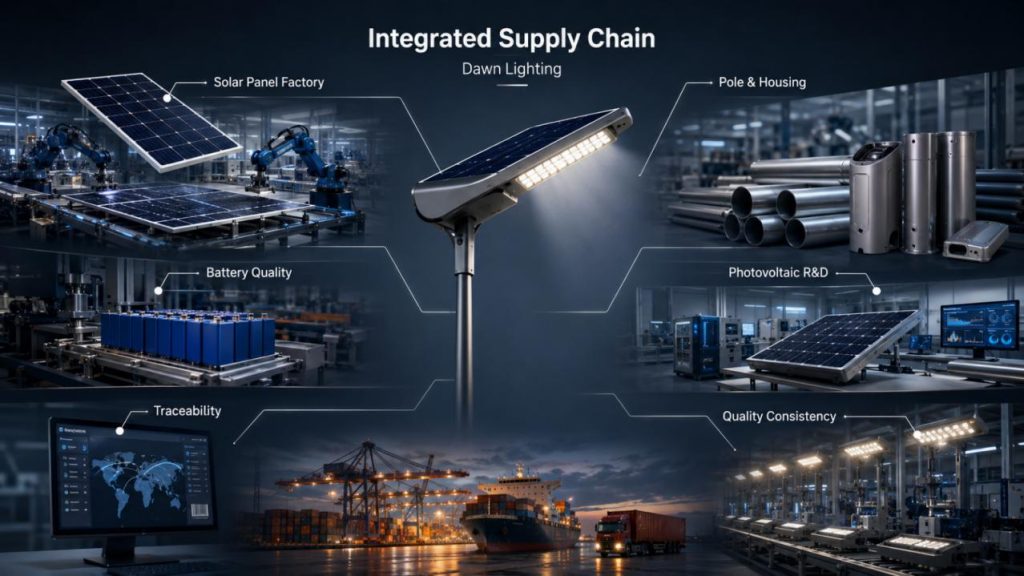
Dawn Lighting has focused exclusively in the field of LED and solar lighting since its founding in 2011. Rapid development in the field of LED and solar lighting has allowed Dawn Lighting to evolve into a modern enterprise of the Dawn Group, integrating Research and Development, production, sales, and services.
Dawn Lighting is a leader in this market without quality compromise, for one main reason:
•Fully Integrated Industrial Chain
•Multiple subsidiaries within the Dawn Group provide:
•The Dawn Lighting LED/solar lighting factory — the core of lighting manufacturing
•DAWN New Energy — the solar panel factory
•Noonsun Metal Factory — the factory for poles and housings
•BAIMU Photovoltaic Technology — research and development for photovoltaic technologies
•Topack Industries (Hong Kong) — international trade and logistics
Dawn Group’s vertical integration enables manufacturing of over 1 million street poles a year. Each pole factory has pipe rolling, welding, and powder coating production line facilities, over 10,000 square meters of space dedicated to poles, and an almost 2,000 square meter photovoltaic factory equipped with cutting edge technology. Since 2018, Dawn Energy has been fully dedicated to its innovative energy storage solutions and has implemented an advanced management system to ensure 100% quality in battery pack production.
What This Means for Buyers
•Component traceability: This ensures components won’t be switched because Dawn Lighting controls solar panel and battery production, as well as metal fabrication.
•Quality consistency: Supply chain uncertainty leads to mismatch in quality. This is eliminated with vertical integration.
•Cost transparency: Middlemen are eliminated, allowing Dawn Lighting to charge less for its products.
Certifications and Compliance
Along with their affordable costing, Dawn Lighting offers products with ISO 9001-14001, CE, FCC, RoHS, ETL certifications. This shows their quality and offers third-party verification which is not available with most budget manufacturers.
After-Sales Commitment
•Before sales: VIP service and 1-to-1 exclusive sales follow-up
•During order fulfillment: Production stage reporting and video oversight
•After sales: 1+1 after-sales warranty with guaranteed response and problem-solving in 24 hours
4. Making an Informed Decision
Questions Every Buyer Should Ask
•What should be clarified before ordering a Solar Street Light 200W/500W?
•Is the stated wattage the chip or fixture lumen rating? If you do not get a clear answer, refuse the deal.
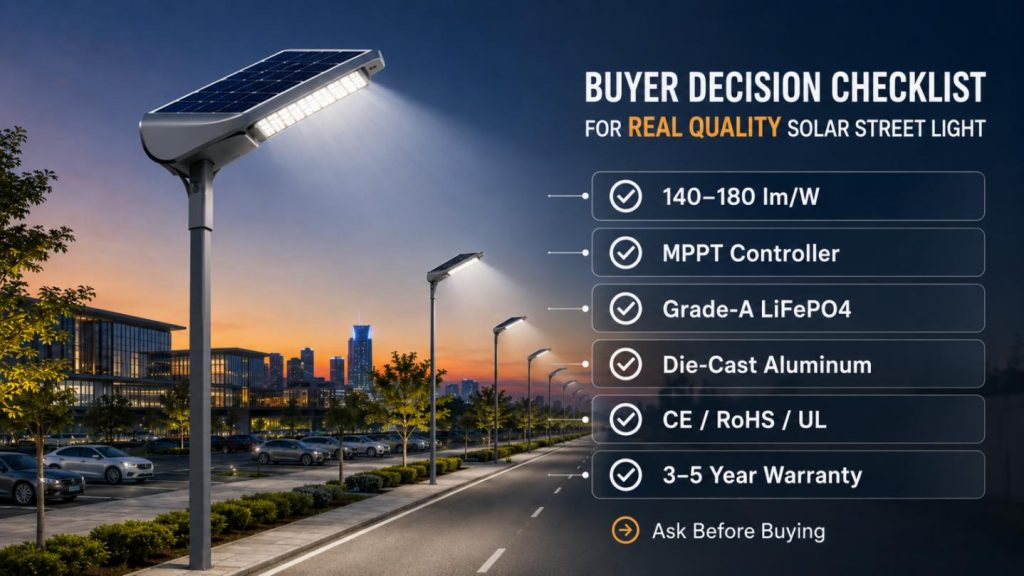
•What is lumen output per watt? Look for fixtures rated 140–180 lm/W.
•Which brand of LED chips are used?
•What type of controller is used? MPPT or PWM. MPPT is superior in efficiency by approximately 30% as PWM.
•What is battery chemistry and capacity? Grade-A LiFePO4.
•What is the casing material and thickness? To achieve durability, this should be anti-corrosion treated die-cast aluminum.
• What warranties and certifications are offered? 3–5 year warranties and third-party certifications (CE, RoHS, IEC, UL) are indicators of quality.
The Bottom Line
Solar Street Light 200W/500W is neither inherently a trend nor inherently a trap—it depends entirely on who makes it and how it’s specified.
The high-wattage segment has seen a real evolution in the market spurred by real innovations and growing demand for improvements in outdoor lighting. Unfortunately, with little standardized regulations and unethical tactics, it is the consumer who has to work the hardest for their money.
Manufacturers like Dawn Lighting have fully integrated industrial capabilities and have built reputation over a more than a decade-long track record with verifiable certifications and transparent after-sale support. We are innovators and have brought value to the industry. Ditto for the unnamed competitors with no certifications and bogus claims, just cut-rate pricing.
Conclusion: Shedding Light on the Future
The outdoor lighting market is projected to grow from $13.67B to $33.26B in the next 10 years. This prospect will attract both real innovators and con artists. The value of an outdoor lighting system is not only in the specifications, but also in the integrity of the manufacturer, especially when seen alongside sustainable and transparent verticals and certified product samples. There will always exist both trends and traps; when choosing partners, remember to make informed decisions, as these will truly make the difference.
FAQs
Q1. What exactly is “200W/500W”?
It primarily indicates the wattage of LED chips, not overall power draw. Always ask for the lumens and the actual input power for the fixture.
Q2. What are the ways to ensure correct wattage?
You can ask for a test report for the sample, measure power with a wattmeter on the sample, or calculate the lumen per watt ratio (quality should be 140 to 180 lm/W).
Q3. What should I look at in the certifications?
The CE, RoHS, ETL, UL, and ISO 9001 to 14001 show that a product is compliant and the manufacturer is certified.
Q4. What should I choose – all-in-one or split type?
All-in-one systems are smaller and easier to install, while split systems offer larger and more powerful panels and batteries.
Q5. What is an acceptable warranty?The common warranty period is 2 to 5 years, but a longer warranty is a sign of a manufacturer that believes in their components and products.

- 10 Meters Lamp Post
- 10 Meters Pole
- 1000w Led Projector
- 100W LED Tunnel Light
- 12 Meters Lamp Post
- 12 Meters Pole
- 1200w Led Projector
- 15 Light Pole
- 1500w Led Projector
- 150W LED Tunnel Light
- 1800w Led Projector
- 2 In 1 Solar Flood Light
- 200w Led Tunnel Light
- 50w Led Tunnel Light
- 6 Meters Lamp Post
- 6 Meters Pole
- 8 Meters Lamp Post
- 8 Meters Pole
- 800w Led Projector
- 80w Led Tunnel Light
- Colourful Decorative Light
- Conical post
- Courtyard Lamp
- courtyard light
- courtyard lighting fixture
- Decorative Landscape Light
- Decorative road Light
- Flood Light For Courtyard
- Flood Light for Garden
- Flood Light For Outdoor
- Foot Led High Bay Lights
- high bay led lights 100w
- industrial lampshade
- industrial LED shed lights
- industrial magnifying glass with light
- Integrated Solar Flood Light
- led courtyard lamp
- led courtyard light
- led high bay light 100w
- LED Projector For Stadium
- Led UFO High Bay 150W 5000k
- Lighting Plants Mining Price
- Maintenance Free LED Street Light
- Pic Controlling Tunnel Light
- PLC controlling tunnel light
- Post Top Garden Light
- RGB Landscape Light
- Rgbw Decorative Light
- Smart Tunnel Light
- solar courtyard lamp
- solar courtyard light
- Solar LED Road Light
- Solar Street Light For 10 Meter Pole
- Solar Street Light For 12 Meter Pole
- Solar Street Light For 6 Meter Pole
- Solar Street Light For 8 Meter Pole
- Split Type Solar Flood Light
- Sporting Projector
- Stadium Led Projector
- Street Lighting Post
