
 Request A Quote

what size transformer for landscape lighting
 FACEBOOK
 TWITTER
 LINKEDIN
Landscape lighting can really make a difference in your garden, pathways and backyard ambiance to create something spectacular. However, one question that confuses homeowners and landscapers is, what size transformer should be used to run my landscape lighting plan? The selection of a transformer is a critical decision to make not only for the correct operation of all your lights, but also for the outdoor lighting system’s longevity.
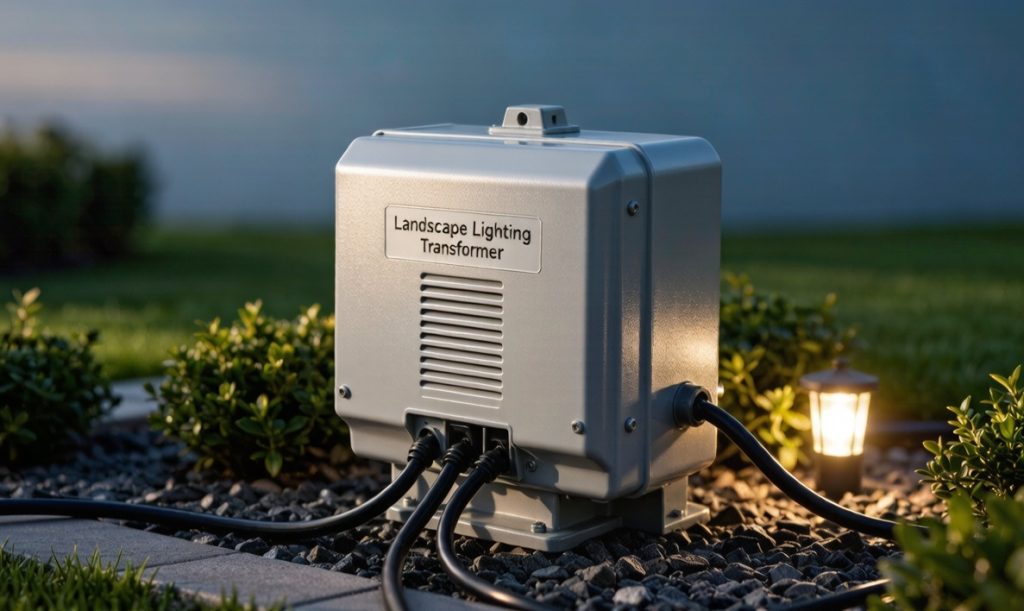
This guide covers the steps to take to get the right size transformer for your landscape lights, things to avoid, and some tips to get the best out of your landscape lighting system.
Understanding Landscape Lighting Transformers
The landscape lighting transformer is really the central component of an outdoor lighting system. Changes a standard household voltage (usually 120V) into a safer low voltage (usually 12V) that is acceptable for garden light fixtures. A transformer guarantees a steady and safe amount of voltage to your lights, and prevents damage to your lighting system.
Transformers are available in various sizes (in watts). Choosing the correct wattage is important because it will allow a given number of lights to be installed without overloading the transformer.
Calculating the Right Transformer Size
The secret in the selection of the correct transformer is knowing the entire wattage that your lighting system needs. The following are steps:
1. List All Your Fixtures
The first step is to catalogue all the lights that you want to put up: spotlights, path lights, deck lights, underwater lights, and so on. There will be a maximum wattage for each fixture, usually on the box or product manual.
2. Add Up the Total Wattage
After you have the wattage of each light, add them together to find out how many watts your system will require. For instance, if you have 10 20 watt path lights and 5 35 watt spotlights, the total wattage is:(10×20)+(5×35)=200+175=375 watts
3. Apply a Safety Margin
It’s important not to run a transformer at 100% of its capacity. There are safety guidelines that experts suggest: Only use 80% of the transformer’s wattage for safety and to maximize the transformer’s lifespan. If you total load is 375 watts, then divide by 0.8:
375÷0.8=468.75
A transformer with capacity of roughly 475-500 watts might be adequate to power your system safely.
Choosing the Right Type of Transformer
There are several types of landscape lighting transformers, each suited for different setups:
1. Plug-In Transformers
These are small, compact transformers that plug directly into an outdoor outlet. Ideal for small lighting setups, they usually range from 50W to 300W.
2. Hardwired Transformers
For larger, permanent installations, hardwired transformers are installed directly into your home’s electrical system. They can handle 600W, 1000W, or more, depending on your design.
3. Digital and Smart Transformers
Some modern transformers allow dimming, scheduling, and even remote control via smartphone apps. They are perfect for energy-conscious homeowners or those who want dynamic lighting effects.
Tips for Optimizing Your Landscape Lighting Design
Selecting the right transformer is only part of the process. Proper planning can improve both performance and aesthetics.
1. Consider Fixture Placement
Don’t set lights too close to transformer. The longer the wire run, the more voltage drop will occur and this can lower the illumination of your lights. This can be avoided by using thicker gauge wires.
2. Avoid Overloading Circuits
Don’t connect more lights than your transformer can handle. This overloading can result in flickering, dimming or even permanent damage to the lighting system.
3. Use LED Lights
Unlike halogen lights, LED lights require less wattage, so you can use more lights on a transformer.
4. Zone Your Lighting
If you have a larger space, opt for zoning your lighting with a transformer for each zone. This gives more control, scheduling and eliminates the risk of overload.
5. Regular Maintenance
Regularly inspect your transformer and connections for any corrosion, loose wires or damage. Scheduling maintenance services to ensure longevity and consistency of performance.
Common Mistakes to Avoid
Even experienced landscapers sometimes make mistakes when sizing transformers. Avoid these pitfalls:
- Underestimating Total Wattage: Always double-check the total wattage of all fixtures, including future additions.
- Ignoring Voltage Drop: If lights are far from the transformer, consider using a larger transformer or thicker wire.
- Using the Wrong Type of Transformer: Don’t use a plug-in transformer for a large, permanent installation—hardwired units are safer.
- Skipping Safety Margin: Running a transformer at full capacity can shorten its life and increase risk of failure.
Conclusion
When it comes to landscape lighting, selecting the appropriate transformer is crucial for a safe, efficient and attractive outdoor lighting design. If you can determine the total wattage, use a safety margin and choose the right transformer type, you can be sure your lights will illuminate for years.
From small backyard lighting to a large garden, planning is the key to make it all the difference. Pair your transformer with energy-efficient LEDs, the correct wiring, and careful placement and your outdoor area could be a gorgeous nighttime haven.
Just keep in mind that a well-powered landscape lighting system not only looks beautiful, it can also make your home safer, more secure and even more valuable.

- 10 Meters Lamp Post
- 10 Meters Pole
- 1000w Led Projector
- 100W LED Tunnel Light
- 12 Meters Lamp Post
- 12 Meters Pole
- 1200w Led Projector
- 15 Light Pole
- 1500w Led Projector
- 150W LED Tunnel Light
- 1800w Led Projector
- 2 In 1 Solar Flood Light
- 200w Led Tunnel Light
- 50w Led Tunnel Light
- 6 Meters Lamp Post
- 6 Meters Pole
- 8 Meters Lamp Post
- 8 Meters Pole
- 800w Led Projector
- 80w Led Tunnel Light
- Colourful Decorative Light
- Conical post
- Courtyard Lamp
- courtyard light
- courtyard lighting fixture
- Decorative Landscape Light
- Decorative road Light
- Flood Light For Courtyard
- Flood Light for Garden
- Flood Light For Outdoor
- Foot Led High Bay Lights
- high bay led lights 100w
- industrial lampshade
- industrial LED shed lights
- industrial magnifying glass with light
- Integrated Solar Flood Light
- led courtyard lamp
- led courtyard light
- led high bay light 100w
- LED Projector For Stadium
- Led UFO High Bay 150W 5000k
- Lighting Plants Mining Price
- Maintenance Free LED Street Light
- Pic Controlling Tunnel Light
- PLC controlling tunnel light
- Post Top Garden Light
- RGB Landscape Light
- Rgbw Decorative Light
- Smart Tunnel Light
- solar courtyard lamp
- solar courtyard light
- Solar LED Road Light
- Solar Street Light For 10 Meter Pole
- Solar Street Light For 12 Meter Pole
- Solar Street Light For 6 Meter Pole
- Solar Street Light For 8 Meter Pole
- Split Type Solar Flood Light
- Sporting Projector
- Stadium Led Projector
- Street Lighting Post
