
 Request A Quote

A Tree-Style Landscape Light: Designing a Lighting Landmark That Still Works as a Luminaire
 FACEBOOK
 TWITTER
 LINKEDIN
There are two tasks to be designed when it comes to landscape light, that is for a tree. During the day, it is a landscape installation or piece of street furniture that you can see. At night, it transforms into a functional light fixture, and should be able to light walkways, plazas, seating areas and entrances without creating a light display.A tree-style Landscape Light.
This is a dual light function that is not found in a typical pole light. Wind loading, internal wiring, access, glare, balance and ground level, building and route views are all affected by the branching form.
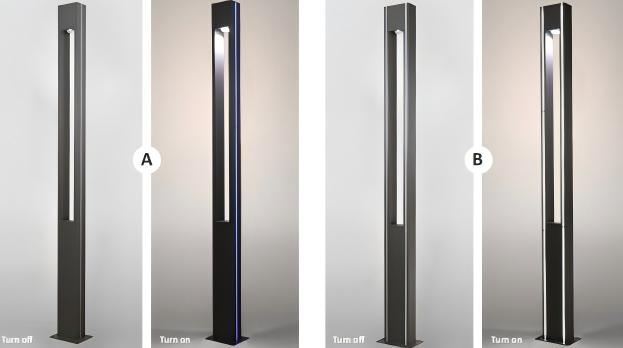
Design therefore starts with the surrounding space, and its daytime and nighttime activities, not the number of branches or numbers of decorative light heads.
Talk about the Daytime and Nighttime Roles First.
Tree-type lighting is installed in parks, Resort entrances, Pedestrian streets, Commercial plazas, Residential communities and Cultural districts. Some projects require a bold visual statement, others require a more subdued form to fit in with planting and architecture.
In the day, check the silhouette, height, size of canopy, finish and rhythm of branches in relation to buildings, signs, real trees, cameras and pedestrian sightlines. Even when all of the LEDs are not illuminated, the fixture should look like it was designed that way.
The same structure should be useful at night by providing useful light on the ground. The brief should include a description of what the light is for – a path, seating edge, entrance, plaza or feature – and what the brightness, colour temperature, glare limit and control schedule requirements are.
When selecting a product, look at our decorative landscape lighting, garden landscape lighting, LED garden street lighting, aluminum garden light or waterproof outside garden lights and compare them to the project brief, don’t just choose them by the look.
Create the design for the Canopy for People Below It
Tree-shaped fixture typically supports a number of small light heads at varying levels and angles. If no lighting plan is used for each branch, people will be able to see exposed light sources from various angles and still be able to see dark spots on the ground.
It is important to ensure that the daytime canopy is controlled and has a natural rhythm and not a random mix of parts. Its size should be appropriate for the plaza/park, preserve the visibility of signs/cameras, and complement significant architecture and established trees.
Each head should be protected and directed towards a fixed surface at night. Useful and effective low-level, controlled light is particularly significant here since several small beams can cause a greater glare and spill than a single well directed luminaire.
The desired outcome is obvious: to be a familiar landscape feature during the day and then a safe pedestrian light at night, without an intrusive head on a strong beam of light into people’s windows or their normal field of vision.
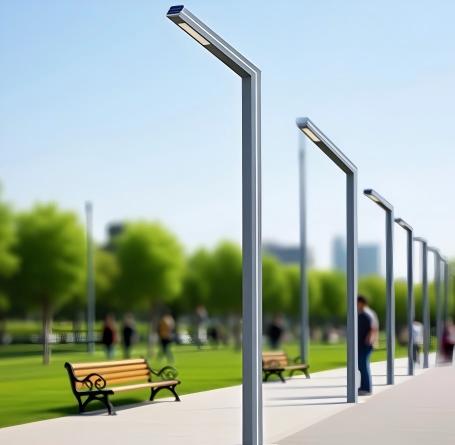
Don’t use random branches use Controlled Variation
Real trees are not perfect in their symmetry and variation is desirable in the structure in daylight. There is still a need for repeatable modules, known dimensions and predictable connection points for that visual freedom.
Manufacturing tolerances, internal cable routing and replacement parts are easier to control with approved branch types and structural calculations are also easier. The result is an organic looking final solution with no improvisation at the location.
For custom projects make a branch layout and an assembly drawing prior to production. This will maintain the intended silhouette and light direction and will stop installation teams from altering the light balance or direction.
The more distinctive branches there are, the more tooling, wiring, spares and repairs that will be needed, but this does not necessarily make them look better in the day or better lit at night.
Wind Load should be a part of the Landscape Design.
The tree type fixture holds more surface and provides more leverage than just a pole fixture. All branches, light heads, decorative panels and cable enclosures should be considered to be loading on the trunk and foundation.
| Item | Project Data |
| 1. Role | Setting: ☑ Park ☑ Commercial plaza ☑ Resort entrance ☑ Pedestrian street ☑ Community; daytime role: ☑ Landmark ☑ Background feature ☑ Wayfinding node. |
| 2. Daytime Form | Height, canopy, branch modules/count, materials/colors, and blocked sightlines/signs/cameras: project design. |
| 3. Night Lighting | Lit area, average/minimum illuminance, beam angle, CCT, and dimming schedule: lighting design. |
| 4. Wind & Exposure | Wind speed/zone, exposure, salt/corrosion class, and foundation: local code and structural design. |
| 5. Electrical | Input voltage/load, driver location, cable route, service height, and access equipment: by project. |
| 6. Delivery | IP rating, joint sealing/drainage, controls, quantity, and spares: final design and order specification. |
The trunk, branch joints, welds, fasteners, mounting plates and anchor bolts and foundation should be considered as one structure. Vibration, corrosion and repeated access for maintenance can all impact long-term alignment and safety, as can wind.
Avoid late additions of additional branches or larger heads without checking in the structure. A raised plaza or open boulevards or waterfront can be exposed to a much greater extent than a sheltered courtyard.
| Design Area | Daytime Landscape Role | Nighttime Lighting Requirement |
| Overall | Landmark or quiet street furniture | Defined ground lighting |
| Canopy | Controlled natural silhouette | Shielded, balanced beams |
| Placement | Match buildings and sightlines | Avoid windows and cameras |
| Branches | Intentional modular variation | Stable, replaceable heads |
| Structure | Wind-rated trunk and foundation | Hold aiming under vibration |
| Wiring | Hidden routes | Labelled service access |
| Joints | Clean protected finish | Seal, coat and drain |
| Base | Integrated with paving | No trips; accessible panel |
| Controls | Lights remain off by day | Test dimming, CCT and glare |
Plan Wiring and Driver Access – Prior to Fabrication.
Cables can run down the trunk, multiple branch joints and multiple LED modules. The route should be planned in advance to the fabrication, to avoid improvised cable bending, entries and strain relief at the assembly.
Make sure to have protected cable runs, labels at cable connections and sufficient access to allow for the replacement of one light head without having to disassemble the whole canopy. Service personnel should be able to pick out each branch and circuit from the base compartment/drawing.
Central driver compartment is more accessible but is longer cable runs. Distributed drivers can provide shorter connections, but more difficult to seal enclosures at certain heights. Choose the layout based on heat, voltage drop, equipment access, equipment replacement.
Verify the ultimate outdoor configuration, operating temp/cooling path. Decorative covers are not to be designed or located in such a way that they trap driver heat or prevent access to terminals and control modules.
There must be a co-ordination between mechanical and electrical design.
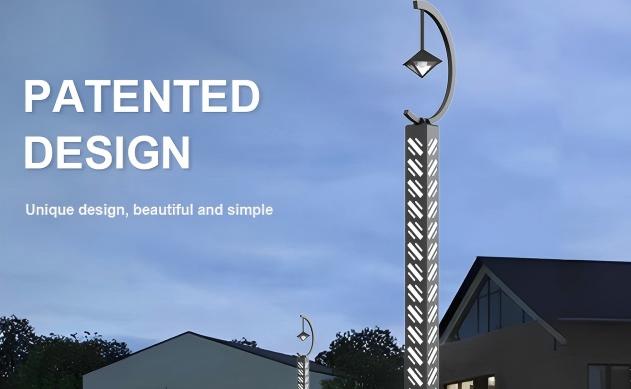
Keep All Branch Junctions Water and Corrosion Free
The branching structure provides additional seams, fasteners, cable entries and potential water paths in comparison to a standard pole light. Any extra joints must be considered as part of the outdoor enclosure system.
The tested configuration has an IP rating. Even if the original light head is rated, field-drilled holes, changed glands, loose covers or modified branch joints can decrease the protection.
Bend branches and joints to prevent the rain from puddling. Choose coatings, fasteners, isolation washers and seals and drainage details in conjunction with each other, particularly for coastal, humid or irrigated locations.
Joints, drivers and access covers that could need maintenance should be accessible without having to remove the entire canopy or harm the decorative finish.
Repair the Base, Make it Safe to Service.
The trunk and foundation are located where pedestrians walk, sit, ride and clean and move equipment. The daytime base should not appear as “unfinished engineering,” but should be in harmony with the paving or planting.
The same area must be free of trip edges, protruding bolts, sharp corners and dark recesses for maintenance at night. Access panels must be tamper resistant and be readily openable without the removal of surrounding paving.
Plan foundation, cable entry, drainage and service compartment to coincide with irrigation, root zones and future planting. Only practical maintenance route must be visible for a decorative skirt.
The Daytime Form and Nighttime Light are both to be commissioned together.
Inspect fixture from main entrances, seating areas, top floor windows and roads. Inspect silhouette, scale, finish, blockage of signs, cameras and/or significant landscape views; inspect branch balance.
Do the review again at night. Check all light heads, dimming capabilities and colour consistency, ground cover, glare, spill, drainage, branch joint, and building access from the pedestrian and building perspective.
The majority of the final corrections should be done by adjusting the aiming, output or scenes not by changing the branch structure after installation.
Planning for individual part replacement.
LED modules, LED driver, seal, branch cover and control unit can malfunction at various points in time while the main structure remains in good working condition.
Label and number branches, lights, heads and keep assembly drawings, wiring diagrams, finish references, control settings, spare part codes.
The modular design should enable replacement of one damaged head, branch or driver without having to remove the whole tree. This is key in the case of custom public-space projects.
Conclusion
When the two identities of a tree are clear, a tree like landscape lighting will succeed. It is a conscious and conscious landscape element by day, and sited with command over silhouette, finish and relationship. At night, it’s a light fixture that provides useful, shielded and maintainable illumination.
Wind load, protected wiring, sealed and drained joints and safe foundations as well as realistic parts replacement access must also be addressed in the design. Never let decorative form obscure basic lighting, or make basic maintenance more difficult.
The best projects don’t opt for “sculpture or lighting” but both. They do both of these so quietly and coordinate the fixture so that it is in the landscape during the day and works quietly at night.
FAQs
Q1. In which places are landscape lights used in the form of trees?
They are applied in parks and plazas, resort entrances, pedestrian streets, residential communities and commercial public places, where a recognizable daytime feature and functional night lighting is required.
Q2. Do more branches provide better lighting?
Not necessarily. Excessive branches cause greater wind load, wiring, glare and maintenance. The quantity of heads needed should be based on the desired amount of ground cover and desired daytime look.
Q3. What needs to be considered during the day time design?
Look at height, canopy width, shape of the canopy, finish, surrounding structures, real tree, signage, cameras, pedestrian access and off-base look without lights on.
Q4. Which of the following should be assessed during a night test?
Check for ground coverage, glare, colour consistency, dimming, branch direction, light spills, drainage and path/road/other window vistas.
Q5. What is the care that should be taken for a custom tree shape light?
Maintain an inventory of numbered branches, wiring diagrams and spare-part codes and inspect joints, fasteners, coatings, seals, drainage, drivers and individual light heads based on a planned inspection schedule.
- 10 Meters Lamp Post
- 10 Meters Pole
- 1000w Led Projector
- 100W LED Tunnel Light
- 12 Meters Lamp Post
- 12 Meters Pole
- 1200w Led Projector
- 15 Light Pole
- 1500w Led Projector
- 150W LED Tunnel Light
- 1800w Led Projector
- 2 In 1 Solar Flood Light
- 200w Led Tunnel Light
- 50w Led Tunnel Light
- 6 Meters Lamp Post
- 6 Meters Pole
- 8 Meters Lamp Post
- 8 Meters Pole
- 800w Led Projector
- 80w Led Tunnel Light
- Colourful Decorative Light
- Conical post
- Courtyard Lamp
- courtyard light
- courtyard lighting fixture
- Decorative Landscape Light
- Decorative road Light
- Flood Light For Courtyard
- Flood Light for Garden
- Flood Light For Outdoor
- Foot Led High Bay Lights
- high bay led lights 100w
- industrial lampshade
- industrial LED shed lights
- industrial magnifying glass with light
- Integrated Solar Flood Light
- led courtyard lamp
- led courtyard light
- led high bay light 100w
- LED Projector For Stadium
- Led UFO High Bay 150W 5000k
- Lighting Plants Mining Price
- Maintenance Free LED Street Light
- Pic Controlling Tunnel Light
- PLC controlling tunnel light
- Post Top Garden Light
- RGB Landscape Light
- Rgbw Decorative Light
- Smart Tunnel Light
- solar courtyard lamp
- solar courtyard light
- Solar LED Road Light
- Solar Street Light For 10 Meter Pole
- Solar Street Light For 12 Meter Pole
- Solar Street Light For 6 Meter Pole
- Solar Street Light For 8 Meter Pole
- Split Type Solar Flood Light
- Sporting Projector
- Stadium Led Projector
- Street Lighting Post
